 Blaine Exterior
 Roof Repair Built for Birch Point's Coastline, Not a Generic Climate
Birch Point sits right up against the water in Whatcom County, and that location shapes everything about how a roof ages here. Homes a few miles inland deal with rain. Birch Point roofs deal with rain riding in sideways off the Strait, salt-laden air working on every exposed fastener and flashing seam, and enough shade and moisture cycling to keep moss and algae growing nearly year-round. A roof repair that would hold up fine in a drier, more sheltered part of Blaine can fail here in a season or two if it wasn't done with this specific exposure in mind.
That's the difference between a repair that's technically finished and one that's actually correct for this address. We work Birch Point regularly, so we're not guessing at how a roof behaves here — we've seen which failure points show up first, which materials hold up, and which shortcuts come back to bite a homeowner within a year or two.
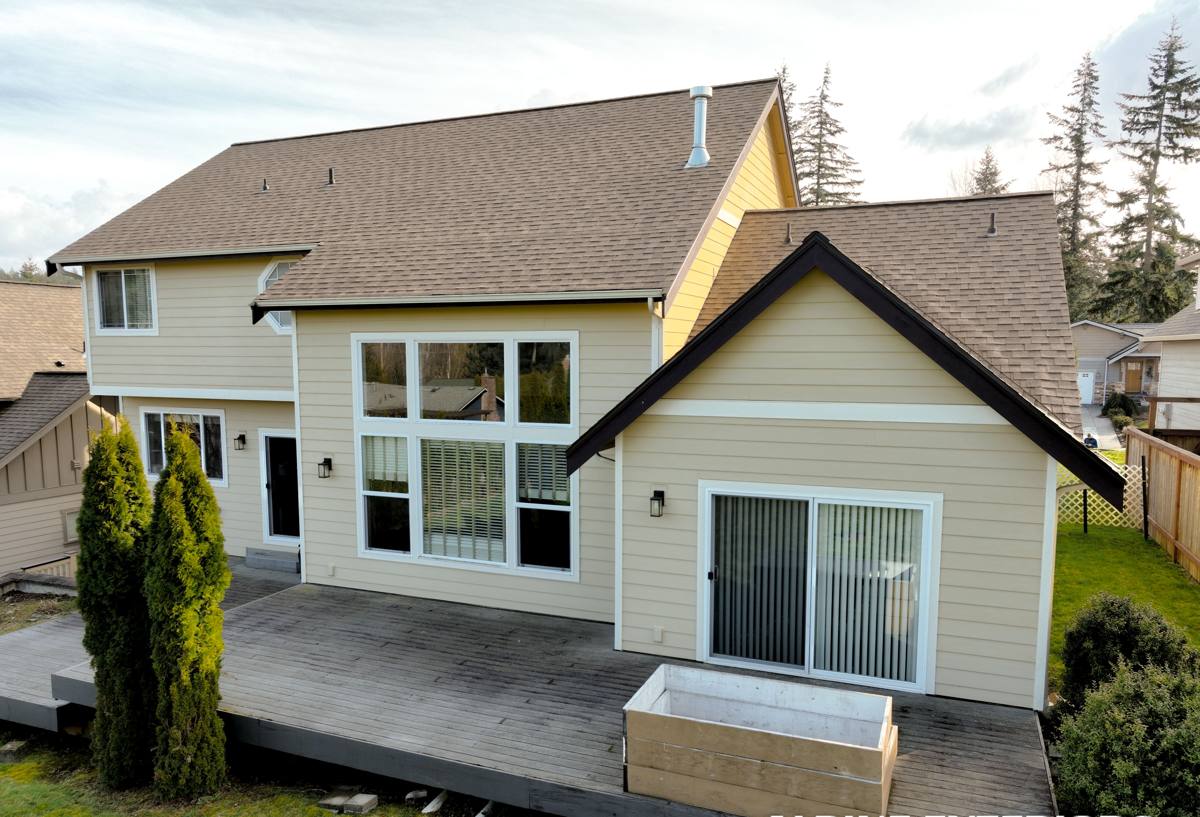
Why Salt Air, Driving Rain, and Moss Season Matter More Here
Salt Air and Corrosion
Airborne salt from the water doesn't just affect siding and metal railings — it accelerates corrosion on roofing fasteners, flashing, vent caps, and any exposed metal edge. Galvanized nails and lower-grade flashing that would last decades further inland can start rusting and losing their seal years earlier on a waterfront-facing roof. Once a fastener corrodes and loosens, or a flashing seam pits and opens up, water has a path in — usually long before there's an obvious sign from the ground.
Driving Rain and Wind-Driven Water
Storms coming off the water don't just drop rain straight down — wind pushes it sideways and up under shingle edges, around chimney flashing, and into any gap that a calmer rain would never find. Repairs that only address the visible leak point, without accounting for wind-driven water intrusion, tend to fail again the next time a real storm rolls through.
A Long Moss Season
Cool, damp, and often shaded conditions here mean moss and algae have a long growing window — realistically most of the year on north-facing slopes or roofs under tree cover. Moss isn't just cosmetic. It holds moisture against the roofing material, works its way under shingle edges as it grows, and can lift or crack aging shingles over time. A repair that patches a leak but ignores established moss nearby is treating the symptom, not the cause.
What a Correct Roof Repair Actually Involves
Diagnosing the Real Source First
The spot where water shows up on a ceiling is rarely the spot where it's actually getting in — water travels along rafters, sheathing, and underlayment before it finds a gap to drip through. A rushed repair patches the visible symptom. A correct one traces the path back to the actual entry point, which is often several feet away — commonly at a flashing seam, a nail pop, a valley, or a penetration like a vent or chimney.
Flashing First, Shingles Second
Most roof leaks in this climate trace back to flashing, not the shingles themselves — the metal or membrane detailing around chimneys, skylights, vent pipes, valleys, and roof-to-wall transitions. Shingles shed water in the field of the roof; flashing is what keeps water out at every place the roof plane is interrupted. If flashing is corroded, poorly lapped, or was never properly integrated with the underlayment, replacing shingles alone won't fix the leak.
Matching the Repair to the Roof's Age and Type
An isolated repair on a roof with useful life left is a different job than a repair on a roof that's already near the end of its service life. We factor in how the existing roofing is holding up overall, not just the immediate problem area, so a homeowner isn't paying for a patch that's about to be surrounded by new problems.
Moss and Algae: Removal Without Damaging the Roof
Why Moss Keeps Coming Back
Moss doesn't grow because a roof is dirty — it grows because conditions stay damp and shaded long enough for spores to establish. In a spot like Birch Point, with marine humidity and mature tree cover common along the shoreline and surrounding neighborhoods, those conditions are hard to eliminate entirely. That's why moss control here is an ongoing maintenance conversation, not a one-time fix.
Doing Removal the Right Way
Improper moss removal — aggressive scraping, high-pressure washing, or the wrong chemical treatment — can strip granules off shingles, crack aging roofing material, or drive moisture further under the surface. Correct removal uses gentle methods and roof-safe treatments, timed so the roof isn't left wet and unprotected, and paired with a plan to keep growth from re-establishing as fast.
Common Roof Repair Issues We See in Birch Point Homes
| Issue | Typical Cause | What Correct Repair Involves |
|---|---|---|
| Leak near a chimney or vent | Corroded or poorly lapped flashing | Remove and replace flashing, re-integrate with underlayment, not just re-caulk the seam |
| Curling or lifted shingle edges | Wind-driven rain plus age, or moss lifting edges | Replace affected shingles, address moss at the root, check underlayment condition |
| Rusted or loose fasteners | Salt air corrosion over time | Replace with corrosion-resistant fasteners rated for coastal exposure |
| Valley leaks | Undersized or damaged valley flashing, debris buildup | Clear debris, inspect and repair or replace valley metal or membrane |
| Dark streaking or moss patches | Algae/moss growth in shaded, damp areas | Gentle removal, roof-safe treatment, address contributing shade/drainage where possible |
| Soft or sagging sheathing | Long-term undetected leak | Open the area, replace damaged decking, then correct the original leak source |
Our Roof Repair Process
- Inspection and diagnosis — we look at the whole roof, not just the reported leak, including flashing, vents, valleys, and any moss or algae presence.
- Honest explanation — we tell you what's actually causing the problem, what it will take to fix it correctly, and what it costs, before any work starts.
- Repair the source, not just the symptom — flashing, underlayment, and decking get addressed alongside any shingle work so the fix actually holds.
- Material selection for the exposure — fasteners and flashing chosen with salt air and wind-driven rain in mind, not just the lowest-cost standard option.
- Clean job site — old material and debris removed, gutters checked and cleared if they were part of the problem.
- Follow-up guidance — straightforward advice on what to watch for and when, if anything, the roof will likely need attention again.
Materials We Use and Why
For a coastal property, material choice matters as much as workmanship. We use corrosion-resistant fasteners and flashing rated for marine and coastal exposure rather than standard-grade materials that are fine inland but underperform here. On underlayment, we favor products with proven moisture resistance for our climate over the cheapest option available, since a repair is only as good as what's underneath the visible shingles.
We're selective about lower-maintenance roofing products in high-moss, high-moisture settings like this one. Products that trap moisture, require unusually frequent upkeep to avoid premature wear, or have installation tolerances that are easy to get wrong aren't a good match for a coastal Whatcom County roof, in our professional judgment — regardless of how they perform in a drier climate. We'll always explain the trade-offs of any material we recommend or steer you away from, so the decision is yours with full information.
Repair vs. Replacement: How We Help You Decide
Not every roof problem calls for a full repair job, and not every roof is worth continuing to patch. We look at a few honest factors before recommending either direction:
| Factor | Leans Toward Repair | Leans Toward Replacement |
|---|---|---|
| Roof age | Well within expected service life | At or near the end of its typical lifespan |
| Extent of damage | Isolated to one area (flashing, one section) | Widespread wear, multiple problem areas |
| Underlying decking | Sound, no rot or soft spots | Soft, rotted, or repeatedly repaired decking |
| History of repeat leaks | First occurrence or clearly isolated cause | Recurring leaks in different spots over time |
We'd rather do an honest, well-executed repair on a roof that has years left than push a replacement it doesn't need — and we'll tell you plainly if a roof is past the point where repair is the smart financial move.
Why It Matters to Hire a Crew That Already Works Birch Point
A roofer who mostly works drier, more sheltered neighborhoods can still do competent general roofing work, but coastal exposure has specific failure patterns — where moss establishes fastest, how far wind-driven rain travels under an edge, which flashing details hold up against salt air and which don't. Crews who work Birch Point and the surrounding Blaine shoreline regularly recognize these patterns quickly instead of treating every job as a first encounter. That familiarity shows up in fewer callbacks and repairs that are sized correctly the first time, instead of a series of smaller fixes that never quite solve the underlying issue.
Keeping a Birch Point Roof Healthy Between Repairs
Good repair work goes further when it's paired with basic upkeep suited to this climate. A short seasonal checklist:
- Clear gutters and downspouts regularly — clogged gutters push water back under roof edges, especially during heavy coastal storms.
- Trim back overhanging branches where practical to reduce shade and speed roof drying between rain events.
- Have moss and algae addressed early, before it establishes heavily or lifts shingle edges.
- Schedule a visual inspection after major windstorms, since wind-driven rain events are when small flashing or fastener issues tend to turn into active leaks.
- Don't ignore small interior signs — a faint stain, a musty smell in an attic space — since coastal leaks often travel before they show up clearly.
If you're dealing with a leak, visible moss buildup, or just want an honest read on where your roof stands, we're happy to take a look. Reach out for a free, no-pressure estimate using the form below — we'll tell you what we actually find, not just what's easiest to sell.