 Blaine Exterior
 Metal Roofing for Nooksack Homes Near Blaine
Nooksack sits close enough to Semiahmoo Bay and the Strait of Georgia that homes here deal with a combination most inland Whatcom County properties don't: salt-laden marine air, wind-driven rain that gets pushed sideways under poorly flashed edges, and long stretches of gray, damp weather that keep roof surfaces wet for days at a time. That last part matters more than most homeowners realize. Moss and algae don't need a rainstorm to spread — they need moisture that lingers, and around Blaine that's most of the fall through spring. A metal roof, installed correctly for this specific environment, handles all three of those stressors better than most other roofing materials. Installed incorrectly, it can actually make the salt-air and moisture problems worse. The difference is almost entirely in the details of the install, not the metal itself.
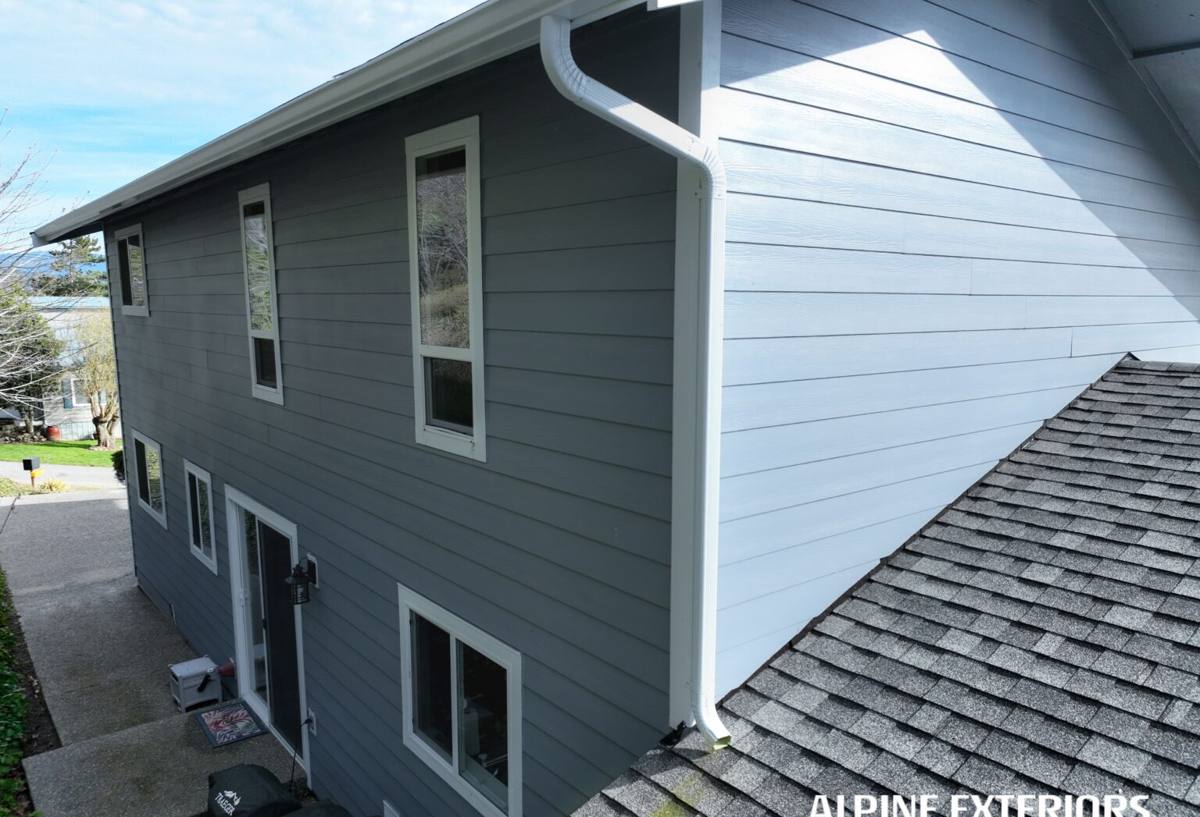
What Nooksack's Climate Actually Does to a Roof
Before talking about metal specifically, it's worth being clear about what local weather does to any roofing system, because it explains every recommendation that follows.
Salt Air and Corrosion
Proximity to the water means airborne salt settles on every exterior surface, including fasteners, flashing, and any exposed metal edges. Salt accelerates corrosion in fasteners and connectors that aren't rated for it, and it can pit unprotected or poorly coated metal over years of exposure. This is a bigger factor for homes closer to the water, but Nooksack is close enough that it should always be part of the material and fastener conversation.
Driving, Wind-Pushed Rain
Storms coming off the Strait don't always drop rain straight down. Wind pushes it sideways and up under laps, ridge caps, and around penetrations like vents and chimneys. A roof that only shields against vertical rain will eventually leak here. Underlayment choice and lap direction matter as much as the roofing material itself.
Extended Moss and Algae Season
Shade from mature trees, persistent cloud cover, and high humidity give moss a long runway to establish itself, especially on north-facing slopes and anywhere debris collects. Moss holds moisture against the roof surface, and on materials that trap or absorb water, that's a slow path to rot and granule loss. Metal doesn't feed moss the way organic materials can, but it isn't immune — moss can still take hold in accumulated debris on a metal roof, particularly in valleys and behind chimneys.
Why Metal Fits This Environment Well
Metal roofing's core advantages line up directly with Nooksack's climate challenges when the product and installation are matched to the site.
- Steel panel systems shed water fast off a hard, smooth, non-porous surface, which limits the time moss and algae have to grab hold.
- Properly coated and fastened metal resists the slow corrosion that salt air causes in cheaper or mismatched hardware.
- A correctly lapped and sealed standing seam or screw-down panel system holds up against wind-driven rain far better than a roof relying on gravity alone.
- Metal roofing typically outlasts asphalt shingles by decades when installed and maintained properly, which matters on a coastal property where re-roofing is disruptive and costly.
- Lighter-weight panel systems reduce structural load compared to some other durable roofing options, which can matter on older Nooksack-area framing.
None of that happens automatically just because the material is metal. It happens because of specific choices in coating, fastening, and flashing detail — which is where most of the real work, and most of the real risk, actually is.
Getting the Details Right for a Coastal Job
Coatings and Metal Grade
Not all coated steel or aluminum panels handle salt exposure the same way. We select coating systems and metal gauges suited to a marine-influenced environment rather than defaulting to whatever is cheapest to source. This is a bigger factor here than it would be for a roof going up thirty miles inland.
Fasteners Rated for Salt Air
Standard fasteners can corrode well before the panels around them show any wear, and a corroding fastener is a future leak point. We use fastener and clip hardware rated for coastal exposure, matched to the panel metal to avoid galvanic corrosion between dissimilar metals — a detail that's easy to overlook and expensive to fix once panels are down.
Underlayment and Ice-and-Water Protection
Given how often rain here arrives at an angle, we install a synthetic underlayment with self-adhered protection at eaves, valleys, and penetrations — the spots most exposed to wind-driven moisture. This layer is what protects the roof deck if wind ever forces water past the panel laps themselves.
Flashing at Penetrations and Transitions
Chimneys, vents, skylights, and wall-to-roof transitions are where the overwhelming majority of roof leaks start, metal or otherwise. Flashing details need to account for both gravity drainage and wind-driven intrusion, with proper laps, sealants rated for exterior UV and moisture exposure, and mechanical fastening that won't work loose over time.
Ventilation
Trapped moisture under a metal roof deck causes its own problems — condensation, deck rot, and reduced insulation performance. We check that ridge and soffit ventilation is adequate for the home before panels go on, not after.
Panel Systems: What Fits a Nooksack Home
| System | How It's Fastened | Best Fit | Trade-Offs |
|---|---|---|---|
| Standing seam | Concealed clips, no exposed fasteners on the field | Homes prioritizing longevity and minimal maintenance | Higher upfront cost; requires precise installation |
| Screw-down panel | Exposed fasteners through the panel face | Budget-conscious projects, outbuildings, shops | Exposed fasteners need periodic inspection and eventual replacement |
| Stone-coated steel | Exposed or concealed depending on profile | Homeowners wanting a traditional shingle or shake look | More surface texture can collect debris that feeds moss if not kept clear |
We'll walk through which of these makes sense for your roof's pitch, exposure, and budget — there's rarely one "best" answer, only the best fit for a given house.
Our Process for a Metal Roof Install
- On-site assessment. We inspect the existing roof deck, ventilation, flashing points, and exposure direction — particularly which slopes take the most wind-driven rain and which stay shaded and damp longest.
- Material and system selection. Based on that assessment, we recommend panel type, gauge, and coating suited to the home's exposure, not a one-size-fits-all package.
- Tear-off and deck inspection. Old roofing comes off and the deck is checked for rot or soft spots before anything new goes down — a step that's easy to skip and costly to skip on a coastal property.
- Underlayment and flashing installation. Self-adhered protection goes in at vulnerable points first, then flashing at every penetration and transition.
- Panel installation. Panels are set with fasteners and clips matched to the metal, laid to shed water in the direction of prevailing wind and rain.
- Final inspection and walkthrough. We check seams, fastener seating, and flashing before calling the job finished, and walk the homeowner through what maintenance, if any, the system needs going forward.
Maintenance That Actually Matters
Metal roofing is low-maintenance, not no-maintenance, especially this close to the water.
- Clear debris from valleys and behind chimneys or vents where moss and organic buildup tend to collect.
- Rinse off accumulated salt film periodically, particularly on roofs with more direct water exposure.
- Have fasteners and flashing sealant checked every few years — this is quick to inspect and cheap to correct early, expensive if ignored.
- Trim back overhanging branches that keep sections of the roof shaded and damp longer than the rest.
- Watch for any granule loss or coating wear at panel edges after major storms and have it looked at promptly.
Why Local Experience on Metal Roofing Matters Here
A metal roof installed to a generic national spec sheet can still fail early in a place like Nooksack if the crew hasn't accounted for salt exposure, wind direction off the water, and how long moisture actually sits on a roof surface here compared to a drier inland climate. We work on homes throughout the Blaine and Whatcom County area and adjust material selection, fastener choice, and flashing detail to what this specific coastline actually does to a roof over time — not just what a spec sheet says should work in average conditions.
Get a Straightforward Estimate
If you're weighing a metal roof for a Nooksack-area home, we're happy to take a look, walk you through what your specific roof needs given its exposure and layout, and give you a clear, no-pressure estimate. There's no cost or obligation to have us out — just an honest assessment based on what we see on your roof.