 Blaine Exterior
 Why Decks in the Nooksack Area Wear Out Faster Than You'd Expect
A deck built in a dry inland climate can go a decade or more with minimal attention. A deck in the Nooksack area near Blaine doesn't get that luxury. Whatcom County sits right up against the Salish Sea and the Canadian border, and that combination brings a specific mix of punishment: salt-laden air off the water, long stretches of driving rain in fall and winter, and a moss and algae season that can run eight months or longer on shaded or north-facing structures. Wood and even engineered decking absorb moisture, swell, dry, and swell again through that cycle, and every round of it loosens fasteners, opens joints, and gives moss and rot a foothold.
None of that means a deck here is doomed — it means a deck here needs to be built and repaired with that climate in mind, not treated the same way a contractor would treat a deck in a dry climate. That's the difference between a repair that lasts one season and one that lasts ten.
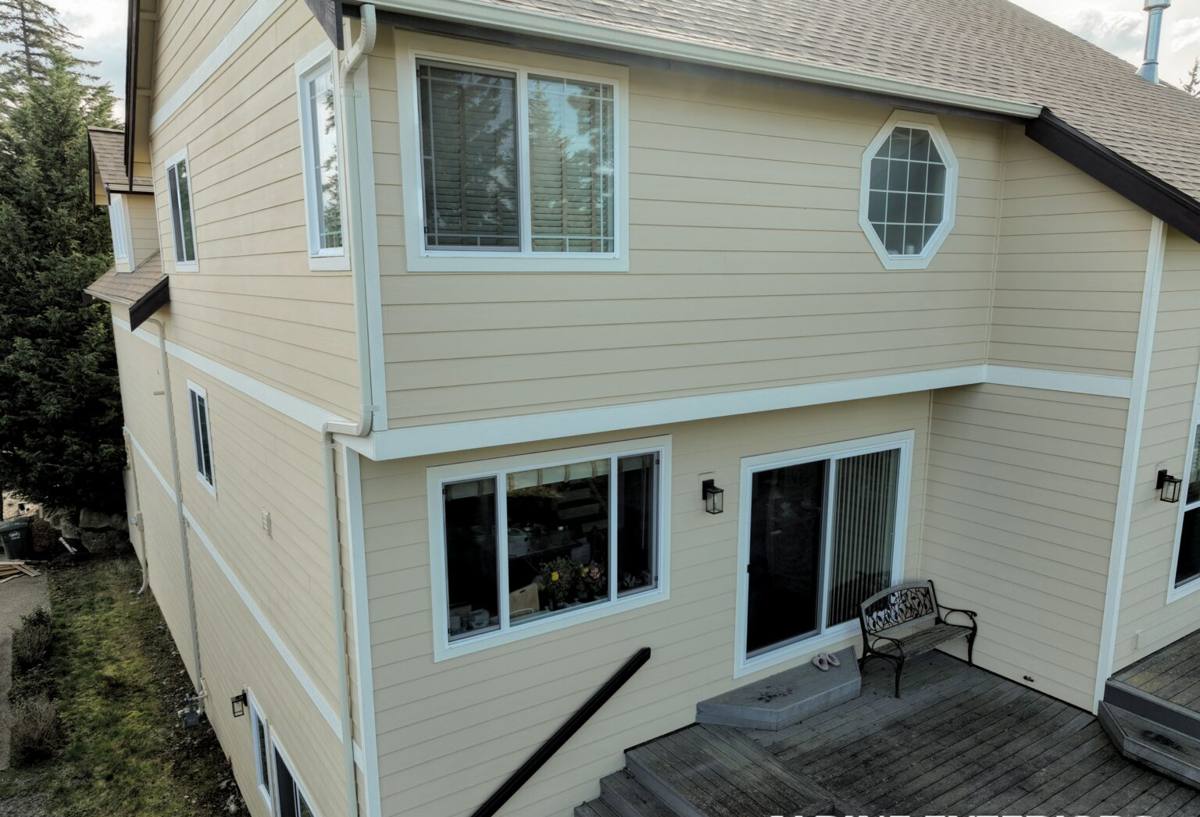
Signs Your Deck Needs Repair — And When It's More Than That
Most deck problems we see start small and get expensive if they sit through a wet season unaddressed. Here's what typically shows up first, and what it usually means:
- Soft or spongy decking boards — usually surface or subsurface rot from trapped moisture; often a board-level fix if caught early.
- Rust streaks around fasteners — a sign the wrong fastener grade was used originally, or coatings have failed; left alone, it weakens the connection itself.
- Green or black film on boards and stairs — moss and algae growth, which holds moisture against the wood and makes surfaces slick and dangerous underfoot.
- Gaps or movement where the deck meets the house (the ledger board) — one of the most serious issues we look for, since a failed ledger connection is a structural safety issue, not a cosmetic one.
- Wobbly railings or posts — often a sign of post-base rot below the surface, which isn't visible until you know where to check.
- Cracked or split joists under the deck — usually from long-term water exposure where boards overlap or where drainage was never planned for.
Some of these are straightforward repairs. Others — particularly ledger board separation, widespread joist rot, or a substructure that was undersized to begin with — are signals that repair isn't the right call and replacement is the more honest recommendation. Part of our job on the first visit is telling you which situation you're actually in.
Repair vs. Replace: What Actually Drives the Decision
| Factor | Leans toward repair | Leans toward replacement |
|---|---|---|
| Substructure (joists, posts, ledger) | Solid, dry, structurally sound | Rot, splitting, or undersized framing found |
| Decking surface condition | Isolated soft boards or moss staining | Widespread rot across most boards |
| Age of the deck | Under 15 years, built to code | Older, or built without proper flashing/drainage |
| Fastener condition | Localized rust, easily swapped | Corrosion throughout the connection points |
| Cause of damage | Isolated leak or impact | Long-term moisture exposure from poor design |
What a Correct Deck Repair Actually Involves
A repair that only replaces what's visibly rotted is a repair that ignores why the rot happened in the first place. In a climate that gets as much driving rain as Blaine and the surrounding Nooksack area, the cause is almost always water finding a path it shouldn't have — through a gap in flashing, a fastener that never sealed properly, or decking installed too tight to drain and dry between storms.
A repair done right addresses both:
- The damaged material — boards, joists, posts, or ledger connections that are actually compromised.
- The water path that caused it — flashing, spacing, drainage, or fastener choice that let moisture sit where it shouldn't.
Skip the second part and you'll be back in the same spot in two or three wet seasons, patching the same area again.
Ledger Board Connections Get Special Attention
The ledger board — where the deck attaches to the house — is the single most important structural connection on most decks, and it's also the one most exposed to water intrusion because it sits directly against the building envelope. Proper flashing at this joint is what keeps rain from tracking behind the siding and into the rim joist. When we find a ledger board repair, we check flashing and fastener spacing against current code, not just against however it was originally built, since a lot of older decks in this region were never flashed correctly to begin with.
Fastener and Hardware Grade Matters More Here Than Inland
Salt air off the water accelerates corrosion on standard fasteners and hardware. We use fasteners and structural connectors rated for coastal or high-moisture exposure on repair work — it costs a little more up front than standard-grade hardware, but standard-grade hardware in this environment is often the actual reason a deck needed repair in the first place.
Moss, Algae, and the Long Wet Season
Whatcom County's moss season is long enough that it's not really a seasonal nuisance here — it's an ongoing maintenance factor. Moss holds moisture against wood surfaces, keeps boards from drying between rain events, and makes stairs and walking surfaces genuinely slick, which is a safety issue as much as a cosmetic one. Where a deck sits shaded by trees or on the north side of a house, moss can establish itself within a single wet season if it isn't kept in check.
Part of a proper repair visit includes clearing moss and algae buildup from affected areas and treating surfaces so the problem doesn't just return in a few months. On decks with chronic moss issues, we'll also flag whether trimming back nearby vegetation or improving airflow underneath the deck would help — sometimes the fix isn't just the deck itself.
Our Repair Process
1. On-Site Inspection
We walk the full deck — surface, railings, stairs, and underneath where accessible — checking framing, ledger connection, post bases, and fastener condition. Rot isn't always visible from the top, so we check where water actually collects, not just where it's easy to see.
2. A Clear, Written Scope
You get a straightforward explanation of what needs repair, what's optional, and what we'd flag as a bigger structural concern if applicable. No pressure to upgrade beyond what the deck actually needs.
3. The Repair Itself
Damaged material is removed and replaced, water paths are corrected (flashing, spacing, drainage), and fasteners and hardware are upgraded to a grade appropriate for a marine climate where that's the source of the problem.
4. Cleanup and Walkthrough
We clear debris, wash down the work area, and walk the repair with you before we consider the job done.
Materials We Use — And the Trade-Offs We're Honest About
Wood decking is still common in this area and holds up fine when it's properly maintained, sealed on a reasonable schedule, and built with correct drainage. Composite decking costs more up front but needs less ongoing maintenance and handles the wet-dry cycle differently — it doesn't rot, though it can still trap moisture against fasteners or framing if it's installed without attention to spacing and airflow underneath. Neither material is a fix for bad installation; the installation is what determines how a deck holds up here, more than the decking material alone. We'll talk through the honest trade-offs — maintenance burden, upfront cost, appearance over time — for your specific deck rather than pushing one material as a blanket answer.
Homeowner Maintenance Checklist Between Visits
A few habits go a long way toward stretching the life of a repair in this climate:
- Sweep leaves and debris off the deck surface regularly, especially in fall — trapped organic matter holds moisture and feeds moss growth.
- Check for standing water after heavy rain; pooling in one spot usually means a drainage or slope issue worth addressing before it causes rot.
- Look at fastener heads once or twice a year for rust streaking or backing out.
- Keep nearby vegetation trimmed back to let airflow and sunlight reach shaded sections.
- Re-seal or re-stain wood decking on the schedule appropriate for the product — skipping a cycle in this climate shows up faster than it would inland.
- Address soft spots or movement as soon as you notice them rather than waiting for the next dry season.
Why a Crew That Already Works the Nooksack Area Matters
Deck repair isn't the same job everywhere. A contractor who mostly works dry, inland climates will often underestimate what salt air and sustained wet seasons do to fasteners, framing, and finishes over time — and that shows up as repeat repairs a few years later. Working regularly in and around Blaine and the broader Whatcom County area means knowing which fastener grades actually hold up here, which flashing details matter most against this weather pattern, and which parts of a deck fail first in a climate like this one. That's knowledge that comes from doing the work locally and repeatedly, not from a general specification sheet.
If you're dealing with a soft board, a wobbly rail, moss that keeps coming back, or you just want an honest read on whether your deck needs repair or replacement, we're glad to take a look. Fill out the form below for a free, no-pressure estimate — we'll tell you what we actually find, not just what's easiest to sell.