 Blaine Exterior
 Roofing in Lynden: What Whatcom County Weather Actually Does to a Roof
Lynden sits inland from Blaine, tucked against the farmland of the Nooksack River valley close to the Canadian border. That inland position means Lynden roofs see a little less direct salt exposure than homes right on Semiahmoo Bay or Drayton Harbor — but they still sit under the same marine-influenced weather pattern that defines Whatcom County: long stretches of drizzle, heavy fog off the surrounding fields and river bottoms, and a moss season that can run nine months out of the year in shaded, north-facing roof planes. Add in the seasonal outflow winds that funnel down from the Fraser Valley in winter, and a Lynden roof is doing real work every single day, not just during storms.
What that means in practice: roofing materials and details that work fine in a dry inland climate often underperform here. Underlayment that's rated for occasional rain gets tested by weeks of continuous damp. Flashing details that are "good enough" elsewhere become the first place a Lynden roof leaks, because the assembly rarely gets a full dry-out cycle between rain events. A correct install in this area isn't about upgrading everything to a premium tier — it's about getting the moisture-management details right, every time, because the climate doesn't give a roof much room for error.
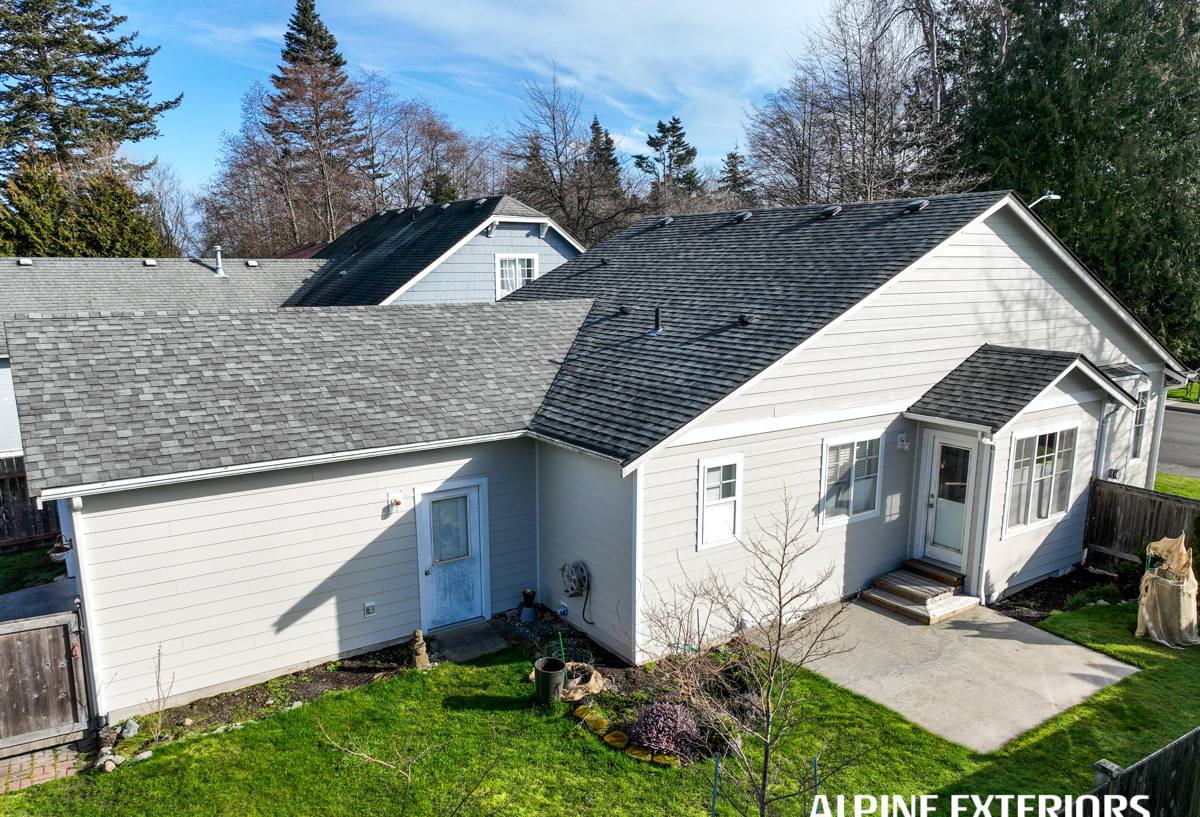
Signs a Lynden Home Needs a New Roof, Not Another Repair
Roof repairs make sense when a problem is isolated — a cracked pipe boot, a lifted shingle tab, a small flashing gap. A full replacement becomes the honest recommendation when the damage is systemic rather than local. Some signs we look for on Lynden roofs specifically:
- Granule loss heavy enough that you can see bare asphalt mat in the gutters or at the downspout splash areas, especially after a wind event
- Persistent moss or algae staining that comes back within a season or two of cleaning, which usually means the roof is holding moisture longer than it should
- Soft or spongy decking felt underfoot near valleys, chimneys, or skylights — a sign water has already gotten past the roofing layer
- Daylight visible through the roof deck from inside the attic, or attic insulation that's damp or matted down
- Shingles that are curling, cupping, or brittle to the touch — a sign the asphalt has lost its oils and the material is at the end of its service life
- A roof that's 20+ years old with multiple prior repairs, where the cost of chasing one more leak starts to rival a fair share of a full replacement
None of these on their own is automatically a "replace it" verdict — that's a judgment call that should come from an actual inspection, not a sales pitch. But when several of them show up together, patching usually just delays the inevitable and adds cost on top of the eventual full job.
What a Correct Roof Installation Actually Involves
Tear-Off and Deck Inspection
We don't install new roofing over old. A full tear-off is the only way to actually see the deck, the flashing, and any hidden rot before it's covered up again for another 20-30 years. In a wet climate like Whatcom County's, deck rot around valleys, chimneys, and old skylight curbs is common enough that skipping this step is a false economy — any soft or delaminated sheathing gets cut out and replaced before anything new goes down.
Underlayment and Ice/Water Barrier
This is the layer that matters most in a climate that rarely gets a full dry-out. We use synthetic underlayment across the field for its tear resistance and consistent water-shedding, and self-adhered ice-and-water membrane at the eaves, valleys, and around every roof penetration — the spots where wind-driven rain and standing moisture cause the most trouble. This is the step that separates a roof that stays dry for decades from one that starts leaking at year eight.
Flashing Details
Chimneys, skylights, sidewalls, and valleys are where the vast majority of roof leaks actually start — not in the open field of shingles. Step flashing, counter-flashing, and valley metal get formed and installed correctly, not just caulked and hoped for. Caulk is a maintenance item, not a waterproofing strategy.
Ventilation
A roof deck that can't breathe stays damp longer after every rain, which is exactly what feeds moss and accelerates shingle aging from underneath. We balance intake at the eaves with exhaust at the ridge so air actually moves through the attic space, rather than installing vents for the sake of having vents.
Comparing Roofing Materials for Lynden's Climate
There's no single "best" roofing material — there's the material that fits a given home's roof pitch, budget, and how much long-term maintenance the owner wants to take on. Here's how the common options stack up for this area:
| Material | Typical Lifespan | How It Handles Moss & Moisture | Maintenance Burden |
|---|---|---|---|
| Architectural asphalt shingle | 25-30 years | Good with proper ventilation; algae-resistant granule options help on shaded slopes | Low to moderate |
| Standing seam metal | 40-50+ years | Sheds moisture fast, very little surface for moss to root into | Low |
| Synthetic composite (rubber/polymer) | 30-50 years | Good moisture resistance; install quality matters more than with other materials | Low |
| Cedar shake | 20-30 years with upkeep | Attractive but moss-prone in shaded, damp conditions without regular treatment | High |
We don't push one material as universally "right." Cedar has a look plenty of homeowners love, but we're upfront that it demands real ongoing maintenance in this climate to keep moss and moisture from shortening its life. Architectural asphalt remains the most common choice on Lynden homes because it balances upfront cost with solid performance when it's installed with the right underlayment and ventilation. Metal and synthetic composites cost more up front but ask for the least from the homeowner over the following decades.
Moss, Moisture, and Why Ventilation Isn't Optional Here
Moss doesn't just sit on a roof looking bad — its root structure holds moisture directly against the shingle surface and can work its way under tabs, lifting them over time. On tree-shaded Lynden lots, or roof planes that face away from the sun, moss can establish itself in a single wet season if the roof surface stays damp too long. Zinc or copper strips near the ridge help suppress regrowth going forward, and we can include that detail on request, but it's not a substitute for a roof that dries out properly between rain events in the first place. That's why ventilation and underlayment choices get more attention on a Lynden install than they might on a roof in a drier part of the state — the details that manage moisture are doing more work here, more often.
Our Installation Process, Step by Step
- On-site inspection and estimate. We walk the roof, check the attic for ventilation and moisture signs, and give an honest assessment of repair vs. replacement.
- Material selection. We go over the options in the table above against your budget, roof pitch, and how much maintenance you want to take on long-term.
- Permitting. We pull the required permit through the applicable jurisdiction before work begins.
- Tear-off. Old roofing comes off down to the deck, with debris contained and hauled off-site.
- Deck repair. Any soft, rotted, or delaminated sheathing is cut out and replaced.
- Underlayment and ice/water barrier installation. Applied across the field and at every vulnerable point — eaves, valleys, penetrations.
- Flashing and ventilation install. Step flashing, valley metal, and intake/exhaust ventilation go in before the new roofing surface.
- New roofing material installation. Installed to manufacturer specification, not shortcuts, so the warranty stays intact.
- Final walkthrough. We inspect the finished roof with you, clean the property, and go over care and warranty paperwork.
Permits and Timeline for a Lynden Roof Replacement
A roof replacement in Whatcom County requires a building permit, and we handle that as part of the job rather than leaving it to the homeowner. Permit turnaround varies by jurisdiction and season, so we build that into the schedule up front rather than promising a start date we can't guarantee. Once work begins, a typical single-family roof replacement takes one to three days depending on roof size, pitch, and how much deck repair turns up once the old roofing comes off — which is exactly why we don't quote a final price until after that first inspection.
Timing the Job Around Whatcom County Weather
Roofing can be done through most of the year here, but we plan around the wettest stretches when possible, since a tear-off leaves a home exposed until the new underlayment goes down. We tarp and sequence work to limit that exposure window, and we're upfront if a forecast means pushing a start date rather than rushing a job in weather that compromises the install.
Why Hiring a Crew That Already Works Lynden Matters
Roofing crews that mostly work drier inland climates sometimes treat ventilation, underlayment upgrades, and flashing details as optional add-ons. In Lynden and the rest of Whatcom County, those aren't upgrades — they're the baseline for a roof that actually lasts through this area's rain and moss cycles. A crew that regularly works this area also has a working sense of what local building departments expect for permitting and inspection, and isn't guessing at how a given roof pitch or shade pattern will behave once winter sets in. That familiarity shows up less in any single dramatic decision and more in a dozen small ones — where the ice-and-water barrier extends to, how the ridge vent gets tied into the existing attic airflow, which valley details need extra attention on a shaded north slope.
What to Ask Before Hiring Anyone for a Roof Replacement
A few questions worth asking any contractor, us included, before signing a contract:
- Are you licensed and insured in Washington State, and can you provide proof?
- Does the estimate include a full tear-off, or is there an option to install over the existing roof?
- What underlayment and ice-and-water barrier products are included, and where specifically will they be installed?
- Who pulls the building permit, and is that included in the quoted price?
- What does the manufacturer's material warranty require in order to stay valid, and does your workmanship warranty match it?
- What happens if deck rot is discovered once the old roofing comes off?
A straight answer to every one of these is a reasonable baseline to expect. Vague answers on tear-off, underlayment, or permitting are worth pausing on before signing anything.
Caring for a New Roof in a Wet Climate
A correctly installed roof still benefits from basic upkeep, especially with Whatcom County's moss pressure. Keep gutters clear so water isn't backing up under the eaves, trim back overhanging branches that keep a roof section shaded and damp longer than the rest, and have the roof looked at after any major windstorm rather than waiting for a visible leak. A new roof installed with the right underlayment, flashing, and ventilation should need very little beyond that for its first decade or more.
If you're weighing repair versus replacement, or just want an honest read on where your roof actually stands, we're happy to come out, walk the roof, and give you a straightforward estimate — no pressure, no upsell. Use the form below to get started.