 Blaine Exterior
 Why Grandview Roofs Wear Differently Than Roofs Inland
Grandview sits close enough to the water and open farmland around Blaine that its roofs take a different kind of beating than a roof twenty miles inland. Salt-laden air off the Strait of Georgia and Semiahmoo Bay works on exposed fasteners and metal flashing year-round, not just during storms. Add Whatcom County's long, wet fall-through-spring stretch and the moss growth that follows, and you have a roofing environment that punishes shortcuts. A roof system that would hold up fine in a dry inland climate can fail early here if the underlayment, ventilation, and flashing details aren't matched to what this specific area throws at a house.
We install new roofs across Blaine, but Grandview homes get a specific set of considerations built into the plan before a single shingle goes down: how close the property sits to open wind exposure, how much tree cover feeds moss growth, and how the existing roof has actually performed over its life. That last part matters more than people expect — the old roof usually tells you exactly where the next one needs to be stronger.
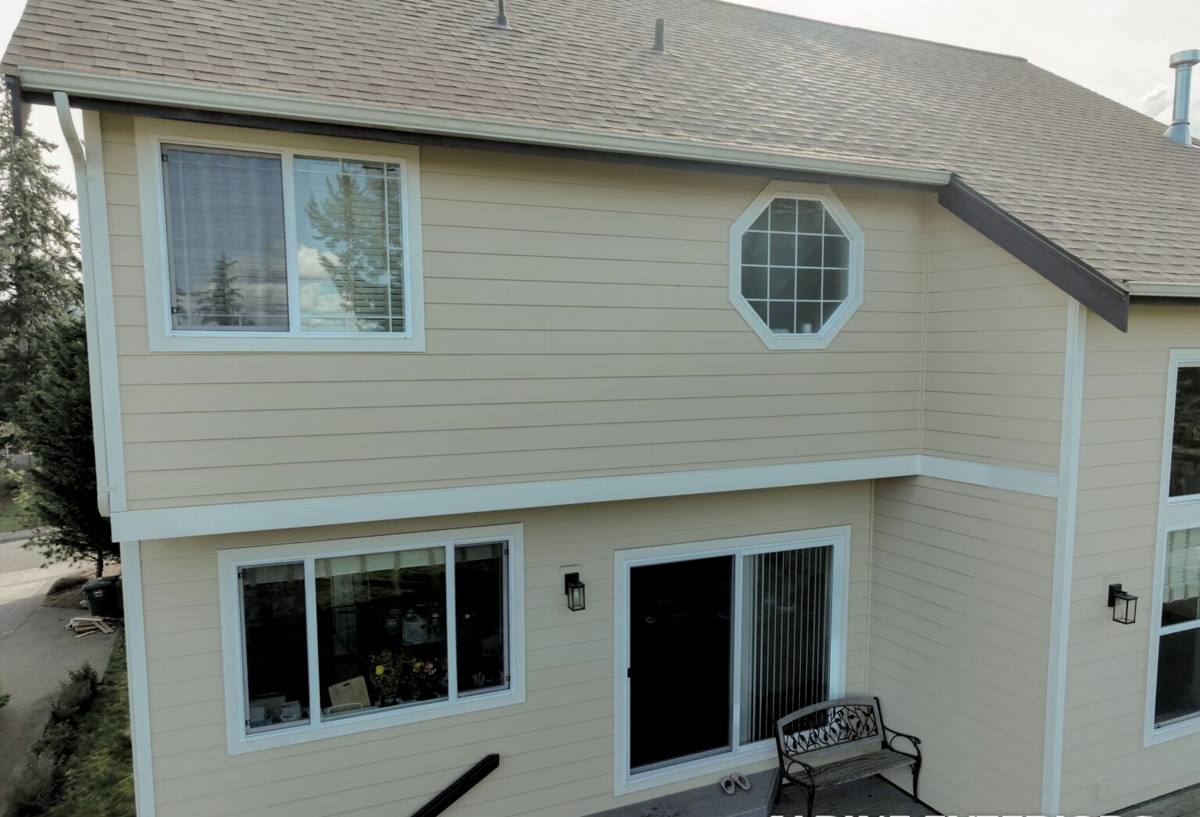
What Salt Air, Driving Rain, and Moss Actually Do to a Roof
Salt Air and Metal Components
Salt in the air accelerates corrosion on any exposed metal — nail heads, flashing, drip edge, and vent stacks. Standard electro-galvanized fasteners can start showing rust streaks on a shingle roof well before the shingles themselves are due for replacement. The fix isn't complicated, but it has to be specified up front: corrosion-resistant fastener coatings and flashing metals rated for coastal exposure, not whatever is cheapest at the supply house.
Driving Rain and Wind-Driven Water
Blaine's storms frequently come in sideways off the water, which means rain doesn't just fall on a roof — it gets pushed up under laps, around penetrations, and into any gap that a calmer climate could get away with ignoring. This is why underlayment choice and fastening pattern matter as much as the shingle brand. A roof designed for driving rain uses sealed or taped underlayment seams, properly lapped flashing at every valley and wall intersection, and ice-and-water shield in the vulnerable spots — not just at the eaves, but at valleys, chimneys, skylights, and low-slope transitions.
Moss and Moisture Retention
Whatcom County's moss season is long, and shaded, north-facing roof slopes in and around Grandview are especially prone to it. Moss isn't just cosmetic — it holds moisture against the roof surface, lifts shingle edges as it grows, and shortens the life of the granule surface underneath it. A new roof installed without attention to ventilation and slope-specific material choices will grow moss just as fast as the old one did.
What a Correctly Installed New Roof Includes
A new roof is a system, not a single product. Skipping any one layer undermines the rest, and in a climate like this the weak layer usually fails within a few years, not decades.
- Tear-off and deck inspection — full removal of the old roofing so the deck can be checked for rot, soft spots, and delamination before anything new goes on top.
- Deck repair — replacing any damaged sheathing rather than roofing over it, which is a common shortcut that causes soft spots and leaks later.
- Ice-and-water shield at eaves, valleys, and around every penetration — the first line of defense against wind-driven rain.
- Synthetic underlayment with sealed or taped seams across the full roof, not just the felt paper approach that leaves seams exposed to capillary action.
- Corrosion-resistant flashing and fasteners at chimneys, walls, valleys, and vents — sized and specified for coastal air, not generic hardware.
- Balanced ventilation — intake at the soffits and exhaust at the ridge, sized to the attic volume, so moisture doesn't build up and feed moss or rot from underneath.
- Correct shingle or material installation — proper nail placement, exposure, and starter course, since even a premium material fails early if it's installed off-spec.
Choosing the Right Roofing Material for a Grandview Property
There isn't one universally "best" roofing material — the right choice depends on the home's exposure, roof pitch, and how much upkeep the owner wants to take on. We walk through the honest trade-offs rather than pushing whatever has the best margin.
| Material | Coastal/Moisture Performance | Maintenance | Typical Lifespan |
|---|---|---|---|
| Architectural asphalt shingle | Good with proper underlayment and flashing; algae-resistant granules help in moss-prone areas | Low to moderate — periodic moss and debris removal | 25–30 years |
| Standing seam metal | Excellent water shedding; needs coastal-rated fasteners and coatings to manage salt exposure | Low | 40–50+ years |
| Cedar shake | Attractive but holds moisture longer, which raises rot and moss risk in a wet, shaded climate | High — regular treatment and inspection | 20–30 years with upkeep |
| Synthetic/composite shingle | Good moisture resistance, consistent performance in wet climates | Low | 30–50 years depending on product |
For most Grandview homes, we lean toward architectural shingles or standing seam metal specifically because they handle driving rain and salt exposure with the least ongoing maintenance. Cedar shake can still be the right call for a homeowner who wants the look and is willing to keep up with treatment, but we'll say so plainly if the roof's shading and pitch make that upkeep heavier than it needs to be.
Ventilation: The Detail Most Roofs Get Wrong
An improperly ventilated attic is one of the most common reasons a "new" roof underperforms in this climate. Without balanced intake and exhaust airflow, moisture from daily living gets trapped in the attic, condenses against the cold roof deck in winter, and creates the damp conditions moss and mold both thrive in. We calculate ventilation based on the actual attic square footage and existing soffit conditions rather than assuming the old system was adequate — often it wasn't, which is part of why the old roof needed replacing in the first place.
Our Installation Process for Grandview Homes
- On-site assessment — we inspect the existing roof, deck, ventilation, and flashing details, and note the property's specific exposure to wind, salt air, and shade.
- Material and system recommendation — based on that assessment, not a standard package, we recommend the material and underlayment approach that fits the roof's actual conditions.
- Written estimate — clear scope, materials, and pricing so there are no surprises once work starts.
- Tear-off and deck repair — full removal and any necessary sheathing replacement, done before new material goes down.
- System installation — underlayment, flashing, ventilation, and roofing material installed to manufacturer spec and local conditions.
- Final walkthrough — we review the completed roof with the homeowner and confirm everything matches what was scoped.
Why Local Experience in This Area Matters
A crew that only occasionally works Whatcom County's coastal edge can install a technically correct roof on paper and still miss the details that matter here — which slopes need extra moss-resistant treatment, where wind-driven rain actually gets pushed on a given lot, which fastener grade holds up against the salt air instead of just meeting minimum code. Working Grandview and the surrounding Blaine area regularly means we've seen how roofs in this specific environment age, not just how they're supposed to perform in a manufacturer's spec sheet. That experience shapes decisions on ventilation sizing, flashing details, and material choice before the job ever starts, rather than getting learned the hard way after a callback.
Signs a Grandview Home May Need a New Roof Soon
- Granule loss showing up in gutters or downspouts
- Persistent moss on north-facing or shaded slopes that keeps coming back after cleaning
- Curling, cracked, or missing shingles, especially after a windy winter
- Rust staining around flashing, vent stacks, or fasteners
- Daylight visible through the attic roof deck, or damp insulation
- Interior ceiling stains, especially near chimneys, skylights, or valleys
Any one of these on its own isn't necessarily an emergency, but a few of them together usually mean the roof system is past the point where patching makes financial sense.
Getting a Straight Answer on Timing and Cost
Roof replacement cost depends on roof size, pitch, material choice, and how much deck repair is needed once the old roofing comes off — we won't know the last part for certain until tear-off, but a careful inspection beforehand gives a realistic range. Timing matters too: scheduling major roof work before the wettest stretch of the year, where possible, reduces weather delays and gives the new system a chance to be fully sealed before it's tested by the season it was built for.
If your Grandview roof is showing its age, or you just want an honest read on how much life it has left, we're glad to take a look. A free, no-pressure estimate is a straightforward way to find out what your roof actually needs — with a form just below to get that scheduled.