 Blaine Exterior
 Sandy Point Sits Right at the Edge of the Weather
Sandy Point is one of the more exposed residential pockets in the Blaine area — close enough to the water that salt-laden air, wind-driven rain, and long stretches of shade and dampness are just part of living there. A roofing material that performs fine three miles inland can struggle here. Fasteners corrode faster, moss gets a head start in shaded, moisture-holding areas, and wind uplift on gables and eaves is a bigger factor than most homeowners expect until they've been through a few winters.
Metal roofing has become a popular answer for Sandy Point homes because, done correctly, it handles all three of those pressures better than most other roofing materials available at a similar price point. The key phrase is "done correctly" — metal roofing is far less forgiving of a rushed or generic install than asphalt shingles, and in a marine environment like this, the mistakes show up sooner.
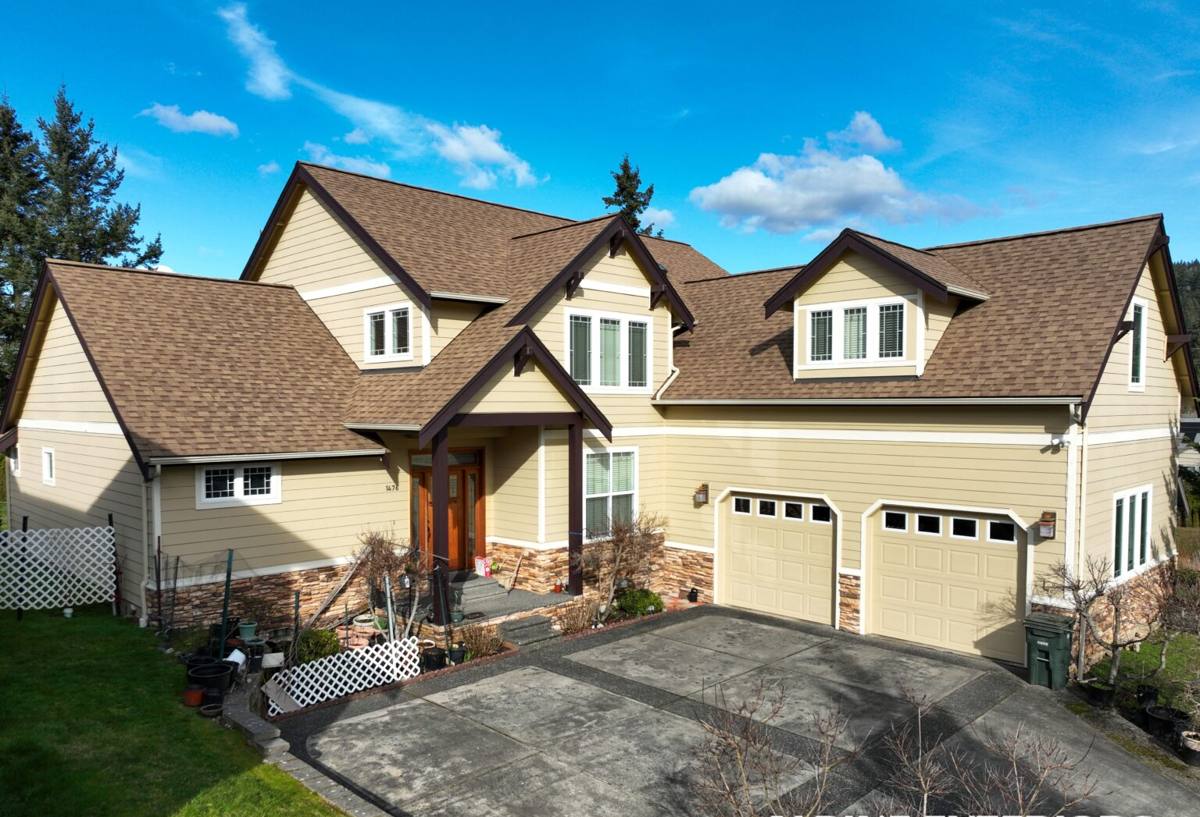
What Salt Air and Driving Rain Actually Do to a Roof
It helps to understand the specific mechanisms at work, because they shape almost every material and detail decision on a Sandy Point metal roof.
Salt Air and Corrosion
Airborne salt is conductive and mildly corrosive. It settles on exposed metal — fasteners, flashing, panel edges — and accelerates oxidation, especially where two dissimilar metals touch (a common cause of premature rust that has nothing to do with the roofing panel itself). This is why fastener and flashing selection matters as much as the panel material in a coastal setting like Blaine.
Driving Rain
Storms off the water don't just fall straight down — wind pushes rain sideways and up under laps, ridges, and penetrations. A roof that's watertight in a calm rain can still leak in a wind-driven one if laps, underlayment, and flashing details weren't built with that in mind.
Moss and Shade
Whatcom County's long wet season and the tree cover common around Sandy Point properties mean moss and algae get plenty of time to establish, particularly on north-facing slopes and anywhere debris collects. Moss holds moisture against the roof surface far longer than the surface would otherwise stay wet, which is a slow but steady threat to fasteners, seams, and the material underneath.
Why Metal Holds Up Well Here — When Specified Right
Metal roofing's core advantages line up well with Sandy Point's climate: it sheds water fast, doesn't absorb moisture the way organic shingle materials can, gives moss less to grip onto, and — with the right coating and fastener system — resists corrosion for decades rather than years. But "metal roofing" isn't one product. The differences between systems matter a lot in a salt-air environment.
| System | Coastal Durability | Maintenance | Typical Lifespan |
|---|---|---|---|
| Standing seam (concealed fastener) | Best — no exposed screws to work loose or corrode over time | Low | 40–60+ years |
| Exposed-fastener metal panel | Good, but exposed screws and washers are the first thing to fail in salt air | Moderate — gaskets need periodic checking | 25–40 years |
| Stone-coated steel | Good; coating protects the steel but cut edges and fasteners still need attention | Moderate | 30–50 years |
We don't install exposed-fastener systems on a home's primary roof surfaces in this area as our default recommendation — not because the panel itself is bad, but because exposed fasteners are the first failure point in a salt-air climate, and replacing worn-out neoprene washers on a roof every decade is a maintenance burden most Sandy Point homeowners would rather avoid. Standing seam's concealed fastening avoids that problem entirely, which is why it's our go-to recommendation for waterfront and near-waterfront properties.
What a Correct Metal Roof Installation Involves
The panel is only one piece. In a coastal environment, the assembly underneath and around it is what determines whether the roof performs for decades or develops problems in five years.
- A synthetic underlayment rated for high wind and moisture exposure, not a basic felt product
- Ice-and-water shield or equivalent self-adhered membrane at eaves, valleys, and penetrations, where wind-driven rain is most likely to find a way in
- Stainless steel or coated fasteners matched to the panel metal, to avoid galvanic corrosion between dissimilar metals
- Properly lapped and sealed flashing at every wall intersection, chimney, vent, and skylight
- Ridge and hip vents that allow airflow without becoming an entry point for wind-blown rain
- Panel layout and seam direction planned around prevailing wind and water flow, not just the shortest path across the roof
- Adequate structural fastening at gable ends and eaves, where uplift forces concentrate during coastal storms
Skipping any one of these doesn't usually show up as an immediate leak — it shows up two, five, or ten winters later, which is exactly why it's worth getting right the first time rather than treating metal roofing as a simple panel swap.
Moss, Drainage, and Ongoing Roof Health
Metal sheds moss more easily than asphalt or wood shakes, but it isn't moss-proof, especially in shaded areas or where debris collects against a ridge or in a valley. Good roof design reduces the problem before it starts:
Proper slope and panel overlap keep water moving instead of pooling. Clear valleys and well-placed gutters keep organic debris from building up in the first place. And where tree cover is heavy, we'll sometimes recommend simple maintenance steps — a seasonal debris check, keeping overhanging branches trimmed back — that do more for a metal roof's long-term performance than any coating ever will.
Flashing and Fasteners: The Detail That Actually Determines Coastal Performance
If there's one thing that separates a metal roof that lasts 50 years near the water from one that needs early repairs, it's the flashing and fastener details — not the panel brand. We spec fasteners and flashing metals to be compatible with the panel material specifically to avoid galvanic corrosion, use butyl or high-grade sealants rated for UV and salt exposure rather than generic caulk, and treat every penetration — plumbing vents, chimneys, skylights — as a place that needs its own flashing plan rather than a one-size seal.
How We Approach a Sandy Point Metal Roofing Project
Every metal roof job we take on in Sandy Point starts with an on-site look at the specific exposure of that property — how close it sits to open water, how much tree cover shades the roof, which slopes take the worst of the driving rain, and what the existing roof's failure points tell us about that particular site. From there:
- We assess the existing roof deck and structure, since metal roofing performs only as well as what it's fastened to
- We recommend a system and panel profile suited to that home's specific wind and moisture exposure
- We plan flashing, underlayment, and fastener details before the first panel goes up — not as an afterthought
- We install with attention to seam direction, ventilation, and structural fastening at vulnerable edges
- We walk the finished roof with the homeowner and explain what maintenance, if any, it actually needs
Why a Crew That Already Works Sandy Point Matters
Roofing crews that mostly work inland don't run into salt-air corrosion or wind-driven rain problems often enough to build habits around them. A crew that regularly works Blaine's coastal neighborhoods already knows which fastener finishes hold up, which flashing sequences actually keep wind-driven rain out, and which roof slopes and orientations around Sandy Point tend to collect moss or debris. That familiarity shows up in fewer callbacks and a roof that's built for the specific conditions of the property, not a generic spec sheet.
What to Expect for Cost
Metal roofing costs more upfront than asphalt shingles — generally somewhere in the range of two to four times a comparable shingle roof, depending on the panel system, roof complexity, and access. Standing seam runs toward the higher end of that range because of the labor involved in forming and installing concealed-fastener seams correctly. The tradeoff is a roof that, installed correctly for this climate, should require far less maintenance and last two to three times as long as asphalt — which matters even more on a property exposed to the kind of salt air and weather Sandy Point sees.
Get a Straight Answer for Your Roof
If you're weighing metal roofing for a Sandy Point home, the right system and details depend on your specific roof's exposure, slope, and condition — not a one-size answer. We're happy to take a look and give you a straightforward, no-pressure estimate using the form below.