 Blaine Exterior
 Everson's Climate Puts Real Demands on a Roof
Everson sits along the Nooksack River in Whatcom County, tucked between farmland and forest with the Cascade foothills close by. That setting means long stretches of steady, soaking rain through fall, winter, and spring, plus the kind of shaded, moisture-holding conditions that keep moss and moss spores active most of the year. Even this far inland, Whatcom County's marine-influenced weather still carries damp, salt-tinged air up the valley on windy days off the Strait of Georgia and Puget Sound, which adds a slow corrosive edge to anything metal or fastener-based on a roof that isn't built for it.
None of that is dramatic on its own. It's the accumulation that causes problems — years of wet-dry cycling, shaded roof planes that never fully dry out, and gutters and valleys that collect debris from surrounding trees. A roof in Everson doesn't usually fail from one bad storm. It fails slowly, from materials and details that were never matched to this specific climate.
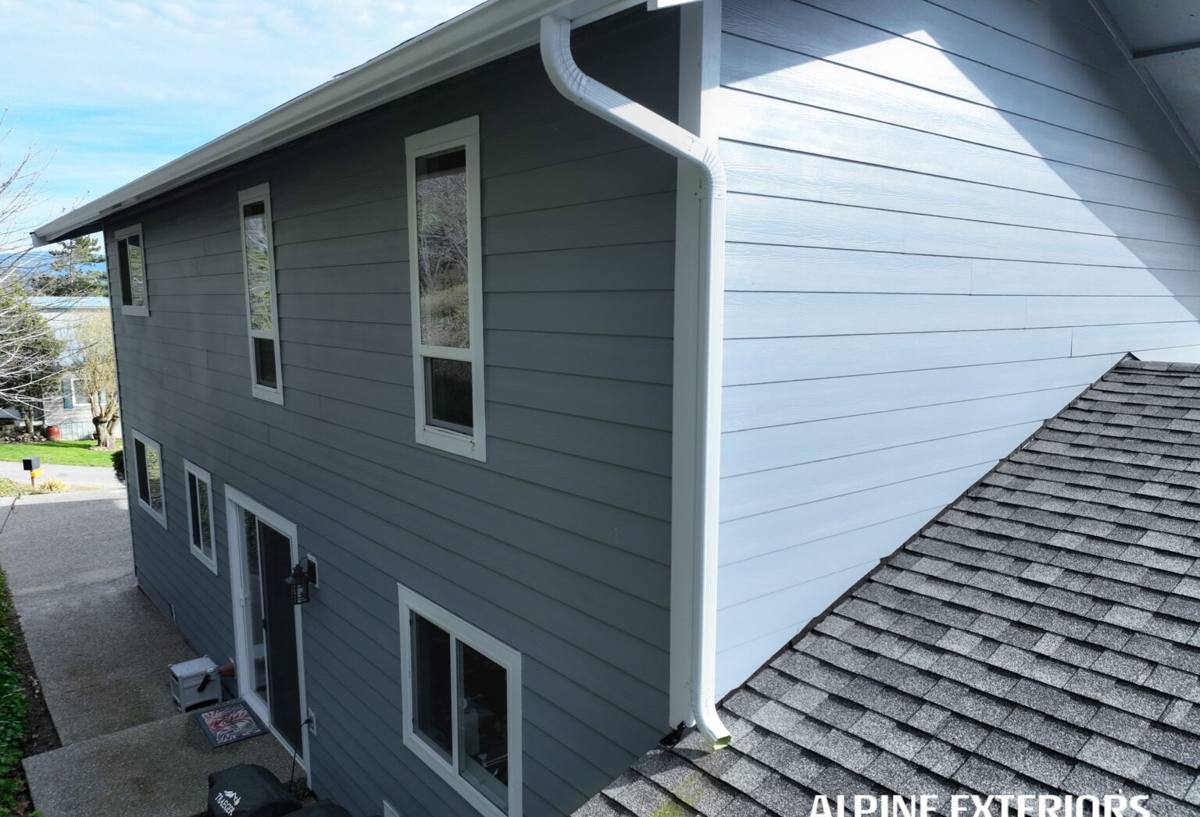
What Rain and Moss Actually Do to a Roof Over Time
Driving rain in this part of Whatcom County doesn't just fall straight down — wind pushes it sideways into laps, seams, and fastener points that were designed for a drier climate. On asphalt shingles, that means granule loss accelerates, and any nail that's slightly underdriven or overdriven becomes a slow leak path. On older or poorly maintained metal roofs, it means fasteners with worn-out washers start letting water track backward under the panel.
Moss is the other half of the equation. Everson gets enough shade and moisture on north-facing and tree-covered roof planes that moss can establish itself within a couple of seasons if a roof isn't shedding water cleanly. Moss holds moisture directly against the roofing material, which is bad news for shingles and wood, and it can work its way under lapped edges and around fasteners over time. It also adds weight and traps debris, which backs up water in valleys and behind moss mats instead of letting it run off.
A correctly installed metal roof addresses both problems directly: it sheds water fast off a hard, unbroken surface, and it gives moss very little to hold onto compared to a textured, granular, or wood-based surface.
Why Metal Roofing Is a Strong Fit for This Area
We don't push metal roofing on every home — it's not the right call for every budget or every roof style. But for Everson's combination of persistent rain, moss pressure, and steep seasonal temperature swings, it holds up better than most alternatives with less ongoing maintenance.
- Steep water shed: Smooth panels move water off the roof quickly, reducing the standing moisture that lets moss and algae take hold.
- Long service life: A properly installed steel roof with a good coating system typically outlasts asphalt shingles by decades, which matters given how often reroofing disrupts a household.
- Snow and ice performance: Whatcom County gets occasional cold snaps and wet snow; metal sheds both more predictably than shingles, reducing ice-dam risk at eaves.
- Fire and ember resistance: A non-combustible roof surface is a genuine advantage during dry-season wildfire smoke and ember events, which have become more common regionally in late summer.
- Lower moss maintenance: Metal doesn't give moss and lichen the textured surface they need to anchor the way shingles or wood shakes do.
Standing Seam vs. Exposed-Fastener Panels
Most metal roofing on homes falls into one of two categories, and the choice matters a lot for a climate like this one.
Standing seam panels use hidden clips and interlocking seams with no exposed fasteners on the roof face. Water runs off the panel and never touches a screw head. This is our default recommendation for Everson homes because it removes the single biggest long-term failure point on a metal roof — fastener washers that dry out, crack, and start leaking after years of sun and rain cycling.
Exposed-fastener panels cost less up front and are a reasonable option for outbuildings, shops, or budget-conscious projects. They use screws with rubber washers driven directly through the panel face. Those washers are a wear item — they will eventually need inspection and replacement, and in a climate with this much annual rainfall, that maintenance schedule tends to arrive sooner than homeowners expect. We're upfront about that trade-off rather than letting it surprise someone five or ten years in.
What a Correct Metal Roofing Job Actually Involves
The panels themselves get most of the attention, but the details underneath and around them are what actually determine whether a metal roof performs for 40-plus years or develops problems in year eight. On every Everson project, our process covers:
Tear-Off and Deck Inspection
We remove the old roofing down to the deck and check for soft spots, rot, or moisture damage — common on older homes in this area where a slow leak may have gone unnoticed under shingles or moss for a while. Any compromised sheathing gets replaced before anything new goes down; installing metal over a soft deck just hides a problem instead of fixing it.
Underlayment Suited to the Climate
We use a high-temperature synthetic or self-adhered underlayment rated for use under metal, with extra protection at eaves, valleys, and any low-slope transitions where wind-driven rain is most likely to be pushed backward under the panel edge.
Ventilation Check
Metal roofs perform best over an attic or roof assembly with proper intake and exhaust ventilation. Poor ventilation traps moisture underneath the deck, which can cause condensation issues regardless of how good the roof surface is. We evaluate existing venting and recommend corrections when it's undersized or blocked.
Panel Installation and Fastening
Panels are run, cut, and fastened to the manufacturer's specifications for our wind and snow-load conditions, with attention to expansion and contraction — metal moves with temperature swings, and fastening it wrong leads to oil-canning or stress cracking over time.
Flashing, Valleys, and Penetrations
This is where most roof leaks actually originate, on any roofing material. Chimneys, vents, skylights, and valleys get custom-formed flashing installed in the correct sequence with the panels and underlayment, not caulked on as an afterthought.
Final Walkthrough
We walk the finished roof, check fastener torque and seam integrity, clear the site of debris, and go over maintenance expectations with the homeowner before we call the job done.
Comparing Roofing Options for an Everson Home
| Material | Moss Resistance | Typical Lifespan | Maintenance in This Climate |
|---|---|---|---|
| Asphalt shingle | Low — textured surface holds moisture and debris | 15–25 years | Periodic moss treatment, higher risk of granule loss from driving rain |
| Wood shake | Low — organic material, retains moisture | 20–30 years with upkeep | Regular treatment and inspection required; high moss and rot risk in shade |
| Exposed-fastener metal | High | 30–40 years | Periodic washer inspection and replacement |
| Standing seam metal | High | 40–60+ years | Minimal — occasional debris clearing and gutter checks |
What Drives Cost on a Metal Roofing Project
Every Everson home is different, and we don't quote a job without seeing the roof, so we won't put a specific number here. What we can tell you is what actually moves the price up or down, so you're not surprised either way:
| Factor | Effect on Cost |
|---|---|
| Panel type (exposed-fastener vs. standing seam) | Standing seam costs more upfront but reduces long-term maintenance and fastener replacement work |
| Roof complexity (valleys, dormers, penetrations) | More cuts, flashing, and labor time on a complex roofline |
| Deck condition | Rot or soft sheathing found during tear-off adds repair cost before installation continues |
| Roof pitch and access | Steep or hard-to-access roofs require more safety setup and time |
| Ventilation upgrades | Adding or correcting intake/exhaust venting is worth the modest added cost for long-term performance |
| Panel gauge and coating | Heavier gauge steel and better paint systems cost more but hold up longer against coastal-influenced moisture |
How We Work With Everson Homeowners
We start with an on-site inspection, not a phone estimate — a metal roofing quote that doesn't account for your specific deck condition, roof complexity, and ventilation isn't a real number. From there we walk you through panel options, show you where your roof is most exposed to wind-driven rain or shade-driven moss, and give you a written scope before any work starts. Because we work regularly in Everson and the surrounding parts of Whatcom County, we're familiar with the moss patterns, tree cover, and rain exposure that show up on roofs in this area, and we plan around them rather than treating every job like a generic install.
Once work begins, we keep the property protected — tarps and debris containment for landscaping, magnetic sweeps for stray fasteners, and a clear daily line of communication so you know what's happening on your roof and when.
Keeping a Metal Roof Performing After Installation
Metal roofing is low-maintenance, not no-maintenance. A little attention keeps it performing at its best for decades:
- Clear leaves, needles, and debris from valleys and gutters at least twice a year, more often if your property has heavy tree cover.
- Trim back overhanging branches that keep roof sections shaded and slow to dry.
- Have exposed-fastener roofs inspected periodically for washer wear, especially after year ten.
- Check flashing around chimneys, vents, and skylights after major storms.
- Avoid pressure washing the roof surface directly — it's rarely necessary and can drive water into seams or under flashing.
Why It Matters That We Already Work in Everson
A metal roof installed to spec in a dry climate and one installed correctly for Whatcom County's rain and moss pressure aren't the same job, even if the materials on the invoice look identical. Underlayment choices, flashing sequencing, ventilation, and even panel fastening tolerances shift when the roof has to deal with this much sustained moisture and shaded roof area. A crew that's done this work across Everson and the rest of the county already knows which details matter here and doesn't have to learn it on your roof.
If you're weighing a metal roof for your Everson home, we're happy to take a look and walk you through what your specific roof needs — no pressure, no obligation. Reach out through the form below and we'll set up a time to come take a look.