 Blaine Exterior
 Building Decks That Hold Up in Lynden's Climate
Lynden sits in a part of Whatcom County that gets more rain than most homeowners realize until they start looking closely at their own backyard structures. Between the driving rain off the Pacific, the humid marine air that drifts inland from the Strait of Georgia and Puget Sound, and a moss season that can stretch from October well into spring, a deck here works harder than a deck built in a drier climate. Wood that would be fine in eastern Washington cups, checks, and grays out faster in Lynden. Fasteners that would last decades elsewhere start weeping rust stains within a few seasons if the wrong hardware gets used. None of this is exotic knowledge — it's just what happens when you build outdoor structures in a marine-influenced climate, and it's exactly why a deck built for Lynden needs different choices than a generic deck built anywhere.
We build decks for homeowners throughout the Blaine and greater Whatcom County area, and Lynden jobs come with their own set of considerations: yard drainage patterns typical of the area's flatter agricultural-adjacent lots, mature trees that shade decks and slow down drying time, and the reality that a deck left unsealed or poorly ventilated will grow moss and algae faster here than almost anywhere else in the state.
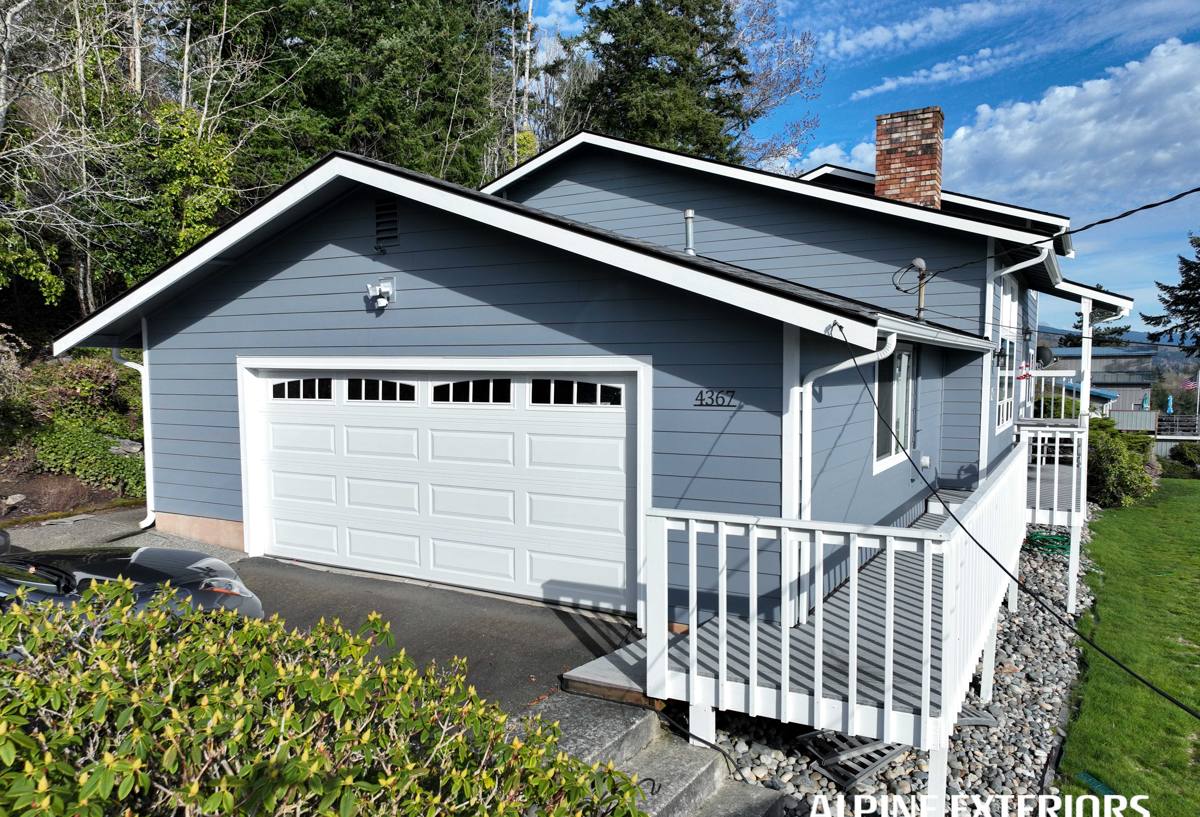
What a Lynden Deck Actually Needs
Moisture Management First
The single biggest factor in how long a deck lasts in this climate isn't the decking material on top — it's what happens underneath and between the boards. A deck that traps water against the frame, ledger board, or footings will rot from the inside long before the surface looks worn. Every deck we build accounts for proper drainage away from the house, adequate airflow underneath the structure, and flashing details at the ledger board that keep water from wicking into the rim joist. This is the part of the job that doesn't show up in a photo but determines whether a deck lasts 10 years or 30.
Moss and Algae Resistance
Moss doesn't just make a deck look neglected — it holds moisture against the surface and accelerates decay, and on stairs and ramps it becomes a genuine slip hazard. Board spacing, surface texture, and how much shade a deck sits in all affect how fast moss takes hold. We factor this into material choice and design so the deck sheds water and dries out between rain events instead of staying damp for days.
Hardware That Won't Bleed or Fail
Galvanized or plain steel fasteners corrode faster in this region's humid, salt-tinged air, and corroding fasteners don't just look bad — they lose holding strength and stain the wood around them. We use fasteners and structural connectors rated for the moisture exposure a Lynden deck actually sees, matched to whatever decking and framing material is going in, so the hardware isn't the weak point in an otherwise solid build.
Decking Material Options for This Climate
There's no single "best" decking material — the right choice depends on budget, how much upkeep a homeowner wants to take on, and how the deck will be used. Here's how the common options actually compare once you factor in Whatcom County's wet, moss-prone conditions.
| Material | Moisture & Moss Behavior | Maintenance | Typical Lifespan Here |
|---|---|---|---|
| Pressure-treated wood | Resists rot when properly sealed, but end grain and cut edges need ongoing attention | Annual cleaning and re-sealing recommended | 15-20 years with upkeep |
| Cedar | Naturally moisture- and insect-resistant, but surface grays and softens without regular sealing | Sealing every 1-2 years to hold color and resist moss | 15-25 years with upkeep |
| Composite decking | Doesn't absorb water or rot, but can still grow surface moss/algae if not periodically cleaned | Occasional washing; no sealing or staining | 25-30+ years, manufacturer-dependent |
| PVC/capped polymer | Fully sealed surface resists moisture and staining best of the synthetic options | Lowest maintenance; occasional cleaning | 25-30+ years, manufacturer-dependent |
We walk homeowners through these trade-offs honestly rather than steering everyone toward the highest-margin product. A family that wants the classic look of real wood and doesn't mind seasonal upkeep is often happiest with cedar. A homeowner who wants to spend weekends doing anything other than deck maintenance usually leans composite or PVC. Both are legitimate choices — it comes down to what you're willing to maintain.
Framing and Structure: Where Corners Get Cut
A lot of deck problems we get called out to inspect aren't decking problems at all — they're framing problems that were hidden under nice-looking boards for years. In a wet climate, the frame is doing the real work of keeping the deck safe, and it's also the part most vulnerable to moisture damage if it's under-built or improperly protected.
- Ledger board properly flashed and bolted to the house structure, not just nailed
- Footings sized and set below frost depth, appropriate for local soil conditions
- Joist spacing that matches the actual decking material's span rating, not a generic spacing
- Joist tape or equivalent protection on top of framing members to slow water intrusion at fastener points
- Proper clearance between the deck frame and the ground for airflow and drainage
- Stair and railing connections built to current code, not just "looks sturdy"
Skipping any of these to save time or money doesn't show up right away — it shows up in year five or eight, as soft spots, rust streaks, or a railing that's gone loose. We build the frame to last as long as the surface material on top of it.
Our Process for a Lynden Deck Build
1. On-Site Assessment
We walk the property, look at drainage patterns, sun and shade exposure, existing structures, and how the space will actually be used — entertaining, grilling, a quiet spot off a bedroom, whatever the goal is. This shapes the design before we talk materials.
2. Honest Material Conversation
Based on the site conditions and the homeowner's maintenance appetite and budget, we lay out real options with real trade-offs — no upselling a product that doesn't fit the situation.
3. Design and Permitting
Deck size, height, and railing requirements often trigger permitting requirements depending on the scope of the project. We handle that process so the finished deck is built to code, not just built to look right.
4. Build, With Attention to What's Underneath
Framing, flashing, and drainage details get done right first, since that's the part that determines longevity in this climate. Then decking, railing, and finish work go in.
5. Walkthrough and Care Guidance
We show the homeowner what maintenance the specific material they chose actually needs — cleaning schedule, sealing schedule if applicable, and what to watch for as the seasons change.
Why Local Experience Matters for This Job
A crew that's built decks across Whatcom County has already seen how moss takes hold on a shaded north-facing deck versus a sun-exposed one, which framing details actually hold up after a few wet winters, and which fastener and coating combinations avoid streaking and premature corrosion in this air. That's not something you learn from a spec sheet — it's something you learn from callbacks and repeat jobs in this exact climate. Hiring a crew without that regional experience often means a deck that looks great the first summer and starts showing problems by the third or fourth wet season.
Signs an Existing Deck Needs Attention
If you already have a deck in Lynden, here's what's worth checking before it becomes a bigger problem:
- Soft or spongy spots underfoot, especially near the house or at stair landings
- Persistent moss or algae that returns quickly after cleaning
- Rust streaking around fasteners or connectors
- Gaps opening up between boards, or boards that have cupped or crowned
- Railings or stair stringers that feel loose or flex under weight
- Standing water that doesn't drain within a few hours of a rain event
Some of these are simple maintenance fixes. Others point to framing or drainage issues that are worth addressing before they get more expensive to repair.
Cost Factors Worth Understanding Upfront
Every deck project is different, but the same handful of factors drive most of the cost variation we see on Lynden jobs:
| Factor | Why It Matters |
|---|---|
| Decking material choice | Composite and PVC cost more upfront than wood but less in long-term maintenance |
| Deck height and grade change | Taller decks need more substantial framing, footings, and stair structures |
| Site access and drainage work | Poor existing drainage may need grading or additional work before building |
| Railing style and code requirements | Height above grade determines what railing code requires |
| Size and footprint complexity | Multi-level decks or non-rectangular shapes add framing complexity |
We give straightforward, itemized estimates so homeowners understand exactly what they're paying for and why — not a vague lump sum.
If you're planning a new deck or need an honest opinion on one that's showing its age, we're happy to come take a look. Reach out for a free, no-pressure estimate using the form below.