 Blaine Exterior
 Birch Bay's Climate Is Harder on Siding Than Most Homeowners Realize
Birch Bay sits right on the water, and that location cuts both ways. The same views that make it a great place to live also mean homes here take a beating that inland Whatcom County properties don't see nearly as much. Salt-laden air moves off the bay and settles on everything it touches, wind-driven rain gets pushed sideways into laps and seams that were never designed to handle it, and the long stretch of damp, low-light months from fall through spring keeps moss and algae actively growing on north- and west-facing walls for most of the year. Siding that isn't built for this exact combination — salt, wind, water, and shade — tends to show its age early, whether that's fading, swelling, soft spots at the bottom courses, or green streaking that keeps coming back no matter how often it's washed.
We install fiber cement siding on homes throughout the Blaine and Birch Bay area specifically because it's one of the few exterior products engineered to stand up to this environment without constant babysitting. This page covers what Birch Bay homes actually need from their siding, what a correct installation looks like out here, and how our process is built around the realities of this coastline rather than a generic install checklist.
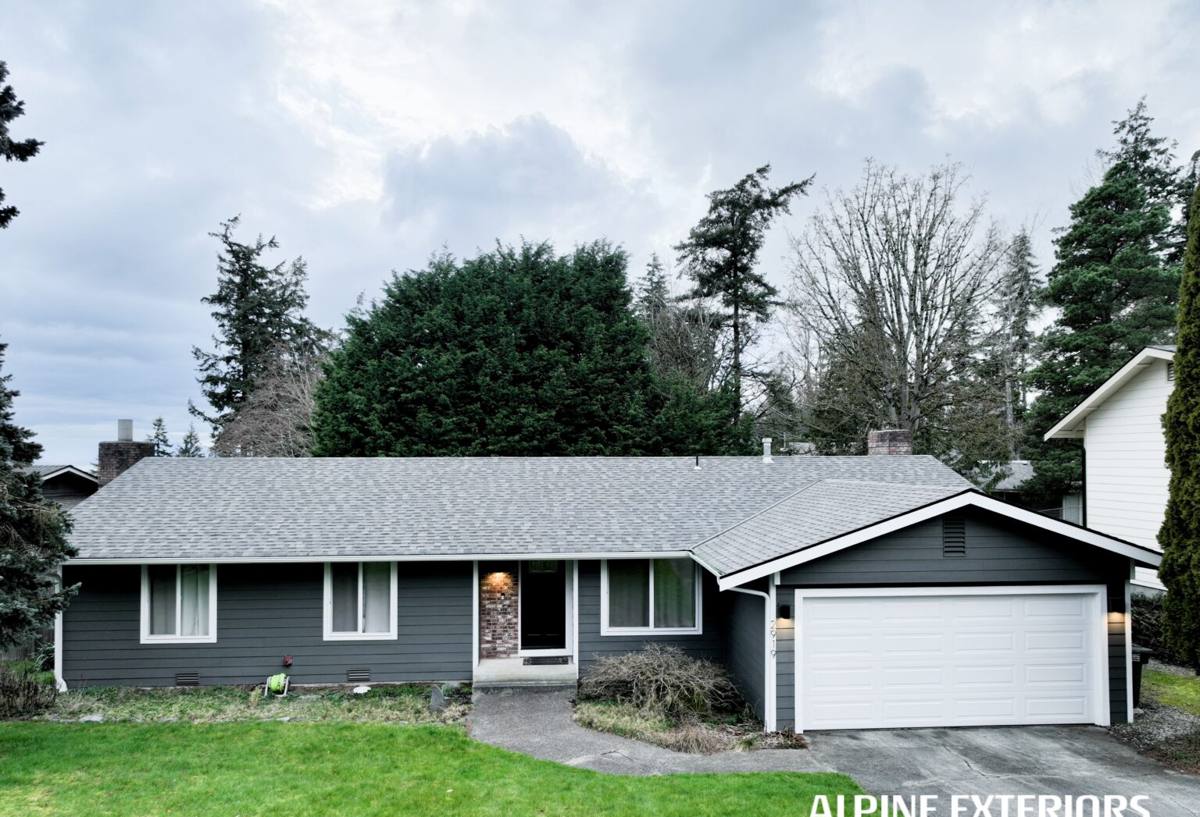
What Salt Air and Driving Rain Actually Do to a House
Salt Air
Airborne salt is corrosive to fasteners, flashing, and any metal trim that isn't rated for a marine-influenced environment. Over time it also breaks down cheaper paint films, leaving a chalky, faded surface years before a comparable product would fade further inland. Homes closer to the water tend to show this first, but the effect reaches well back from the shoreline whenever storms push spray inland.
Driving Rain
Wind off the water rarely comes straight at a wall — it comes at an angle, which forces water up and under laps, around window and door trim, and into any gap in the weather barrier that a calmer climate might get away with. This is why flashing details and lap clearances matter more here than they would on a sheltered inland lot.
Moss and Algae
Shaded, damp walls in Birch Bay stay wet longer after every rain, and with rain a regular presence for much of the year, that adds up to near-constant moisture exposure on certain elevations. Porous or absorbent siding materials hold that moisture and become a growth surface for moss and algae; a dense, factory-finished surface sheds it instead.
Why Fiber Cement Fits This Environment
James Hardie fiber cement siding is made from cement, sand, and cellulose fibers, which gives it a dense, stable core that doesn't absorb water the way wood-based or foam-core products can. It won't rot, and it isn't a food source for the organisms that cause the green staining common on wood and some engineered products in coastal, shaded conditions. Hardie's HZ5 product line is specifically engineered for cooler, wetter climates like the Pacific Northwest, with moisture and freeze-thaw performance built into the formulation rather than added on after the fact.
Just as important is the factory-applied ColorPlus finish. Because it's baked on in a controlled environment rather than brushed or sprayed on site, it holds color and resists the chalking and fading that salt air accelerates on field-applied paint. That matters on a shoreline property in a way it simply doesn't on a home twenty miles inland.
What a Correct Installation Involves Out Here
Clearance and Drainage
Every course needs proper clearance from grade, roof lines, decks, and other siding to keep water moving down and away rather than pooling or wicking up into the board. On a property exposed to driving rain, sloppy clearances are usually the first thing that fails.
Flashing and the Weather Barrier
A correctly lapped weather-resistant barrier and properly integrated flashing at every window, door, and penetration is what actually keeps wind-driven rain out of the wall assembly. The siding itself is the visible layer; the flashing and barrier behind it are what do the real work in a storm.
Fasteners and Trim
In a salt-air environment, fastener selection isn't optional. We use fasteners and trim hardware rated for corrosion resistance, not the minimum spec that would pass inspection inland. Corroded fasteners are one of the more common causes of streaking and loosened boards we see on older installs near the water.
Joints and Caulking
Butt joints and trim transitions need to be treated with a quality sealant rated for the movement and moisture cycling this coastline sees. We follow manufacturer-specified joint treatment rather than relying on caulk alone to bridge gaps that were cut or spaced incorrectly.
Our Process for a Birch Bay Project
Assessment
We start by looking at the specific exposure of your home — which walls take the brunt of the weather off the bay, where existing moss or moisture staining already shows up, and what condition the sheathing and framing are in underneath the current siding.
Removal and Inspection
Old siding comes off so we can actually see the wall assembly. This is where hidden moisture damage from years of wind-driven rain often turns up, and it needs to be addressed before anything new goes back on.
Weather Barrier and Flashing
We install or correct the weather-resistant barrier and flashing at every penetration before the first piece of Hardie siding goes up. This step matters more here than almost anywhere else in the county.
Installation
Siding, trim, and accessories go on to Hardie's fastening and clearance specifications, using corrosion-resistant hardware suited to the coastal exposure.
Final Walkthrough and Warranty Registration
We walk the finished job with you, and register the installation for the manufacturer's transferable warranty, which depends on the product being installed to spec in the first place.
Choosing the Right Hardie Product for Your Home
Not every Hardie profile suits every home the same way, and exposure matters when picking one. Here's a general comparison of the lines we install most often in the Birch Bay area:
| Product | Look | Best Suited For |
|---|---|---|
| HardiePlank Lap Siding | Traditional horizontal lap | Most home styles; the standard choice for full re-sides |
| HardiePanel Vertical Siding | Clean vertical lines | Modern homes, gable accents, mixed-material facades |
| HardieShingle Siding | Staggered or straight-edge shingle look | Craftsman and cottage-style homes common in the area |
| Board and Batten | Vertical panel with raised battens | Accent walls, garages, and farmhouse-style exteriors |
All of these are available in Hardie's ColorPlus factory finishes, which is the finish option we recommend for any home exposed to salt air, since it holds up better over time than site-applied paint.
Living With Fiber Cement Siding on the Water
Fiber cement is low-maintenance, not no-maintenance. A few habits keep it performing the way it's designed to in this climate:
- Rinse salt spray off exterior walls a few times a year, especially on elevations facing the water
- Check caulking at trim and joints annually and have any cracked or separated sealant redone before the wet season
- Keep an eye on shaded, north-facing walls for early moss or algae growth and clean it before it spreads
- Keep gutters and downspouts clear so roof runoff isn't dumping extra water onto siding below
- Trim back vegetation that keeps a wall shaded and damp longer than it needs to be
What Affects the Cost of a Birch Bay Siding Project
Every home is different, but the same handful of factors drive cost on most projects in this area:
| Factor | Why It Matters |
|---|---|
| Square footage and home shape | More corners, gables, and dormers mean more cutting, trim, and labor |
| Tear-off and substrate condition | Hidden moisture damage found during removal adds repair work before new siding can go on |
| Product line and profile | Lap, panel, shingle, and board-and-batten carry different material and labor costs |
| Trim and accessory scope | Corner boards, window trim, and fascia work add to the total beyond the field siding itself |
| Access and site conditions | Waterfront lots, steep grades, and tight setbacks can affect staging and labor time |
We give every homeowner a straightforward, itemized estimate rather than a rough number, since the details above genuinely change the price from one house to the next.
Why Local Experience in Birch Bay Matters
A crew that's worked this specific stretch of Whatcom County coastline already knows which walls on a typical Birch Bay lot take the worst of the wind and rain, which fastener and flashing choices actually hold up against salt air over the years, and how the wet season here affects install timing and drying conditions. That local knowledge shows up in the details — flashing laps, fastener selection, joint treatment — that don't show up on a spec sheet but make the difference between siding that looks good for a few years and siding that performs for decades. It also means fewer surprises with local permitting and inspection expectations, since we're not learning the area on your project.
If your Birch Bay home is due for new siding, or you want a straight answer on whether your current siding is holding up the way it should, we're glad to take a look. Reach out for a free, no-pressure estimate using the form below.