 Blaine Exterior
 Why Ferndale Roofs Take a Different Kind of Beating
Ferndale sits close enough to the water that salt-laden air is a constant, low-grade stressor on every roof in town, not just the ones facing the Strait of Georgia directly. Add Whatcom County's habit of throwing wind-driven rain sideways during winter storms, and you've got a climate that doesn't just rain on a roof — it works its way into every gap, lap, and fastener a roof has. Most storm damage here isn't one dramatic event. It's a windstorm that lifts a few shingle tabs, followed by weeks of driving rain finding that opening before anyone notices a problem inside.
Then there's moss. Whatcom County's moss season runs long — realistically from early fall through late spring — and a roof that stays damp and shaded for that many months a year is going to grow something. Moss alone doesn't cause storm damage, but it sets the stage for it: it holds moisture against shingles, lifts edges, and clogs the drainage paths a roof needs to shed water fast during a real storm. A roof that's already compromised by moss handles wind and rain far worse than a clean one.
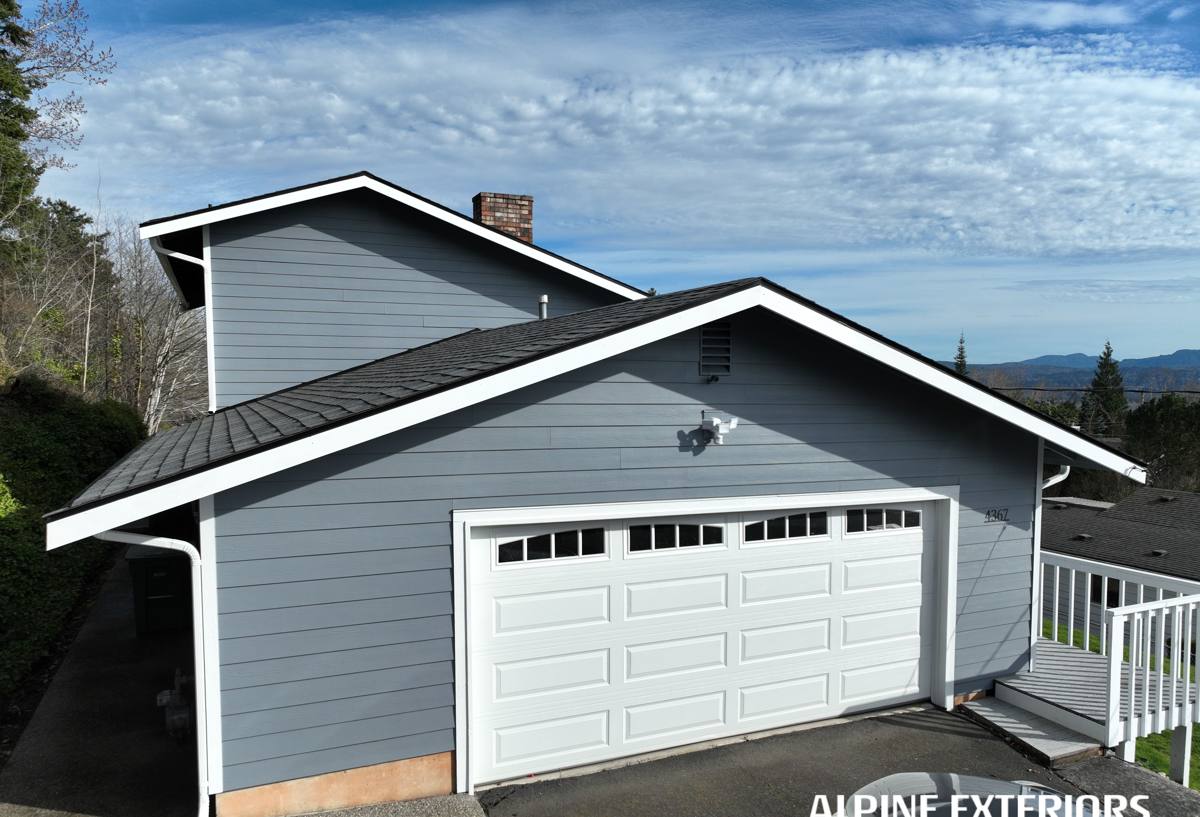
What Storm Damage Actually Looks Like on a Ferndale Roof
Wind Damage
Wind rarely tears a roof apart in one obvious move. More often it lifts a shingle tab just enough to break the seal, cracks the adhesive bond along a ridge line, or pulls a section of flashing loose at a wall or chimney. From the ground, none of that looks urgent. Left alone, it's exactly where the next rain gets in.
Rain and Moisture Intrusion
Driving rain off the water doesn't fall straight down — it comes in at an angle and pushes under shingle edges, around vent boots, and into any flashing joint that's lost its seal. This is why a roof can pass a casual visual check and still be leaking into the attic. The failure point and the visible stain rarely line up directly.
Moss and Debris Damage
Storms drop branches, needles, and debris that trap moisture against the roof surface long after the weather clears. Combined with moss growth, this creates soft spots where shingle granules wear away faster and the underlying material starts to degrade well before its expected lifespan.
The Damage You Can't See From the Ground
This is the part that catches Ferndale homeowners off guard most often. A storm blows through, a few shingles look out of place, and it's tempting to call it cosmetic. But wind and water damage almost always extends past what's visible from the driveway. Underlayment can be torn beneath intact-looking shingles. Decking can be softened by weeks of slow moisture intrusion nobody noticed. Flashing can be bent just enough to redirect water into the wall assembly instead of off the roof.
That's why we don't estimate storm repairs from photos or a quick look from the ground. A proper inspection means getting on the roof, checking the attic side for staining or damp insulation, and testing suspect areas rather than assuming a shingle that looks fine underneath is fine.
Our Storm Damage Repair Process
1. Inspection
We walk the roof and the attic, not just one or the other. Ground-level and drone photos are useful for records, but they don't tell us whether decking has softened or whether a flashing joint has separated under a shingle that still looks intact.
2. A Clear Repair Plan
Before any work starts, you get a plain-English explanation of what's actually damaged, what caused it, and what it will take to fix — including whether the fix is a targeted repair or something larger. We document findings with photos, which also supports an insurance claim if you're filing one.
3. The Repair Itself
Repairs are matched to the existing roof wherever possible — same shingle profile, correct flashing details, proper underlayment at the repair area — so the fix blends in and performs as well as the surrounding roof rather than becoming the next weak point.
4. Cleanup and Follow-Up
We clear debris and fasteners from the property before we leave, and we're available afterward if you have questions once you've lived with the repair through the next round of weather.
Repair or Replace? How We Help You Decide
Not every storm-damaged roof needs replacing, and not every roof that "just needs a patch" should be patched. The right call depends on the roof's age, how widespread the damage is, and what condition the rest of the roofing system is in.
| Factor | Favors Repair | Favors Replacement |
|---|---|---|
| Roof age | Under 10-12 years, in otherwise good condition | Near or past expected shingle lifespan |
| Extent of damage | Isolated to one section or slope | Spread across multiple slopes or the whole roof |
| Decking condition | Solid, no soft spots found | Soft or water-damaged decking discovered underneath |
| Moss and granule loss | Minimal, surface-level only | Heavy moss history with significant granule loss |
| Prior repair history | First storm-related repair on this roof | Repeated patch jobs in the same area |
We'll tell you honestly which side of that table your roof falls on. A well-targeted repair is often the right, cost-effective answer — we're not going to push a full replacement when a proper repair will hold up.
Materials and Methods We Use in a Salt-Air, High-Moisture Climate
The materials that hold up best in Ferndale aren't necessarily the cheapest or the most premium — they're the ones that handle sustained moisture and salt exposure well and that we can install correctly for this climate. We favor asphalt shingle systems with good wind-resistance ratings and proper sealant strips, paired with correctly detailed metal flashing at every penetration and transition. Flashing gets extra attention here: it's usually the first thing to fail under repeated wind-driven rain, and it's often the difference between a repair that lasts and one that leaks again next winter.
We're selective about ventilation and underlayment details too, since a roof that traps moisture underneath is setting itself up for the same moss and rot problems that caused the original damage. A repair that ignores ventilation is a repair that ages faster than it should.
Working With Your Insurance Company
Most storm damage claims in this area come down to documentation. Insurers want clear evidence of cause and extent — not just "the roof leaks now." Our inspection reports and photos are built with that in mind: dated documentation of the damage, its likely cause, and the scope of repair needed. We're happy to walk an adjuster through what we found on the roof, but the final claim decision is always between you and your insurer — our job is to make sure you're walking into that conversation with accurate, honest information rather than guesswork.
Why It Matters to Hire a Crew That Already Works in Ferndale
A roofer who mostly works drier inland climates can still do competent work, but they're often learning Whatcom County's moisture and salt-air behavior on your roof instead of already knowing it. We're used to what driving rain off the water does to flashing details, how long moss season really runs here, and which repair shortcuts simply don't hold up through a Whatcom County winter. That experience shows up in fewer callbacks and repairs that are built for the conditions your roof actually faces, not generic conditions from somewhere else.
Local also means practical: we can typically respond faster after a storm, we're familiar with permitting expectations in the area, and we're not disappearing to another region once the job's done if you have a follow-up question.
After the Storm: A Homeowner's Checklist
- Check your attic for damp insulation, water stains, or daylight showing through the roof deck
- Look at gutters and downspouts for shingle granules, which can signal accelerated wear
- Scan the roofline from the ground for lifted, missing, or visibly displaced shingles
- Note any new soft spots, sagging, or discoloration on ceilings inside the home
- Photograph visible damage promptly, before debris is cleared or weather changes conditions
- Avoid walking the roof yourself after a storm — wet, damaged roofing is unsafe underfoot
- Get a professional inspection before assuming damage is only cosmetic
Let's Take a Look
If your Ferndale home has been through recent weather and you're not sure whether what you're seeing is cosmetic or something more, we're glad to come take an honest look. The estimate is free, there's no pressure, and you'll get a clear explanation of what we find either way. Use the form below to get started.