 Blaine Exterior
 Siding Built for Everson's Weather, Not Just Its Curb Appeal
Everson sits inland from Blaine but still lives under the same weather system that shapes exterior work across Whatcom County: long stretches of driving rain from fall through spring, moisture-laden marine air pushing in off the Salish Sea, and a moss season that can run eight months or more in shaded, north-facing exposures. Siding here isn't just a design choice — it's the first line of defense between that weather and the framing, sheathing, and insulation behind it. When it's installed correctly, it holds up for decades. When it's installed with shortcuts, the failures usually show up exactly where you'd expect: behind trim, under windows, and at the bottom courses closest to grade.
This page is about one thing specifically: what siding installation should look like on a home in the Everson area, and why the details matter more than the material's marketing.
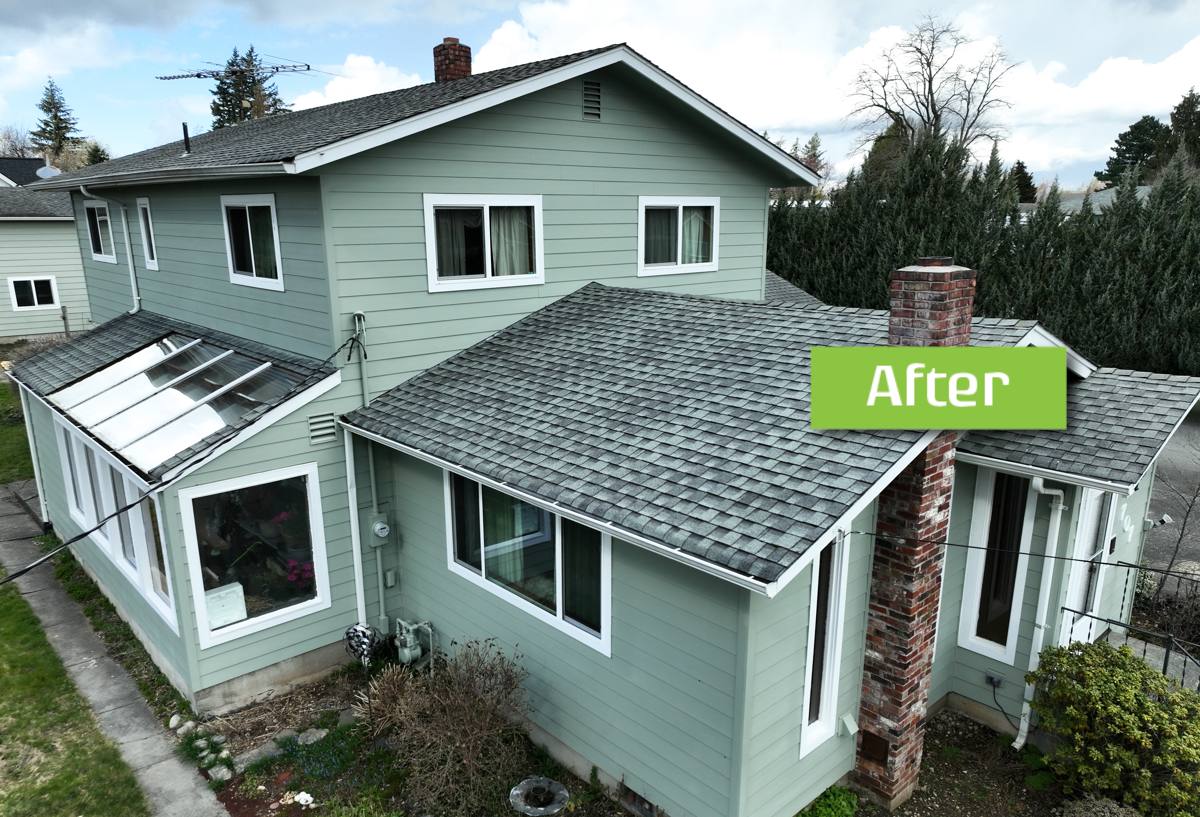
What Everson's Climate Actually Does to Siding
Three conditions do most of the damage over time, and they compound each other.
Driving Rain and Wind-Driven Moisture
Rain that falls straight down is easy to shed. Rain pushed sideways by wind — which is common in open, rural stretches of Whatcom County — gets forced up under laps, around trim, and into any gap a crew left unsealed. Siding that isn't backed by a properly installed drainage plane and weather-resistant barrier will eventually let that water reach the sheathing, even if the surface material itself is fine.
Persistent Moss and Algae Growth
Shaded walls, tree cover, and long damp stretches without a real drying period all favor moss and algae. On porous or absorbent siding materials, that growth holds moisture against the surface for extended periods, which accelerates rot, delamination, and coating failure. On a properly finished, factory-sealed material, moss and algae stay a surface-level cleaning issue instead of a structural one.
Salt-Influenced Marine Air
Whatcom County's proximity to the Salish Sea means even inland communities like Everson deal with salt-tinged air during onshore weather patterns. That air is harder on fasteners, flashing, and any exposed metal than most homeowners expect — corroded fasteners are a common, preventable cause of siding call-backs.
What a Correct Siding Installation Involves
The siding panel itself gets all the attention, but most siding failures we get called out to inspect trace back to what's underneath it, not the panel. A correct installation on an Everson home includes:
Drainage Plane and Water-Resistive Barrier
A continuous, properly lapped weather-resistant barrier goes over the sheathing before any siding goes up. Seams are taped or shingled correctly — upper courses over lower — so water is directed out and down, never trapped behind the panel. On homes with more wind and rain exposure, a rainscreen gap between the barrier and the siding gives any moisture that does get behind the cladding a real path to drain and dry.
Flashing at Every Penetration
Windows, doors, hose bibs, light fixtures, and vents are the most common leak points on any home. Each one needs proper head flashing and integration with the weather barrier — not just a bead of caulk. Caulk is a maintenance item, not a waterproofing strategy, and it should never be the only thing standing between a penetration and the wall cavity behind it.
Correct Fastening
Fiber cement siding has specific fastener requirements — type, length, spacing, and how far from the panel edge — and they're not optional. Under-driven or over-driven nails, fasteners in the wrong location, or the wrong fastener material entirely (especially given the area's salt-influenced air) all shorten the life of the installation, sometimes dramatically.
Proper Clearances
Siding installed too close to grade, roofing, decks, or walkways wicks up moisture and stays wet longer than it should. Manufacturer-specified clearances exist for a reason, and skipping them to make a home look a certain way is one of the most common corners cut in this trade.
Why We Install Only James Hardie Fiber Cement
We don't install vinyl, LP SmartSide, primed wood, cedar, or other fiber cement brands. That's a deliberate standard, not a sales pitch. For Everson's climate specifically, the reasons come down to a few practical points:
- Non-combustible material — fiber cement doesn't feed a fire the way wood-based products can, which matters more each year as regional wildfire smoke and dry-season risk increase even in the Pacific Northwest.
- Engineered for moisture, not just coated against it — Hardie's fiber cement is manufactured to resist swelling, cracking, and moisture intrusion at the material level, rather than relying entirely on a surface coating to keep water out.
- Factory-applied ColorPlus finish — a baked-on finish applied under controlled conditions holds up better against UV, moisture cycling, and the kind of prolonged dampness Everson sees than most field-applied paint systems.
- HZ5 product engineering for this region — Hardie's climate-specific product lines are built around real regional weather data, including the cold, wet conditions common to the Pacific Northwest.
- A strong, transferable warranty — backed by a manufacturer with decades in the fiber cement category, which matters when a product is expected to last 30-plus years on the wall.
We're honest that other products have real strengths — vinyl is inexpensive and low-maintenance in mild climates, cedar has a look some homeowners love. But for the specific combination of driving rain, moss, and salt air that Everson deals with, we've made fiber cement our standard and we stand behind that choice on every job we take on.
Our Installation Process for Everson Homes
- On-site assessment. We look at existing siding condition, sheathing health, moisture history, sun and wind exposure, and any problem areas specific to the property.
- Tear-off and sheathing inspection. Once old siding is off, we check the sheathing underneath for rot or damage before anything new goes up. Covering a compromised wall with new siding just hides the problem.
- Weather barrier and drainage plane installation. This step happens before a single piece of visible siding is installed, and it's the step that determines how the wall performs for the next several decades.
- Flashing integration. Every window, door, and penetration gets flashed and tied into the barrier system correctly.
- Siding installation to manufacturer spec. Correct fasteners, spacing, clearances, and lap details, installed by a crew trained specifically on Hardie's requirements.
- Trim, caulking, and final detailing. Caulk gets used where it belongs — as a finishing detail, not a substitute for proper flashing.
- Final walkthrough. We go over the completed work with the homeowner before calling the job done.
Signs Your Everson Home May Need New Siding
- Persistent moss or algae staining that comes back within weeks of cleaning
- Soft, spongy, or crumbling spots when you press on the siding surface
- Visible warping, buckling, or gaps between panels
- Peeling or bubbling paint, especially near seams and trim
- Rising energy bills without another clear explanation
- Water stains or discoloration on interior walls near exterior corners
- Siding that's original to a home built more than 20-25 years ago
What Drives Cost on a Siding Installation
Every Everson property is different, but the cost of a job is driven by a consistent set of factors. This is meant to help you understand what you're pricing, not to promise a specific number for your home.
| Factor | Why It Affects Cost |
|---|---|
| Home size and wall complexity | More square footage and more corners, gables, and dormers mean more material and labor |
| Existing sheathing condition | Rot repair or sheathing replacement adds cost but is essential — it can't be skipped safely |
| Siding profile and accessories | Lap width, trim details, and accent choices (like batten or panel systems) vary in material and labor cost |
| Removal and disposal | Tear-off of existing siding, especially older or hazardous materials, adds labor and disposal fees |
| Access and site conditions | Steep grades, tight lot lines, or limited equipment access can add time to a project |
| Window and door count | Each opening requires flashing work, which adds labor regardless of siding material |
Why Hire a Crew That Already Works in Everson and Whatcom County
Siding installed correctly for a mild, dry climate isn't automatically correct for a region that sees Everson's combination of sustained rain, moss growth, and marine air influence. A crew that regularly works Whatcom County homes already knows which details can't be shortcut here — the flashing at a window that faces prevailing wind-driven rain, the clearance needed above a walkway that stays shaded most of the year, the fastener choice that won't corrode prematurely in this air. That local pattern recognition is hard to replace with a generic installation crew working from a national playbook, and it's usually the difference between a siding job that looks good at handoff and one that still performs correctly ten or twenty years later.
Living With Fiber Cement Siding After Installation
Correctly installed James Hardie siding is low-maintenance, not no-maintenance. A rinse with a garden hose once or twice a year keeps moss and grime from building up, especially on shaded, north-facing walls that are most prone to it in this climate. Caulked joints and trim should be visually checked periodically, since caulk is a wear item even when the siding and flashing behind it are performing exactly as designed. Keeping gutters clear and vegetation trimmed back from exterior walls also goes a long way toward extending the life of any siding system, fiber cement included.
If you're weighing a siding replacement or repair on an Everson home, we're happy to take a look and give you a straightforward, no-pressure estimate — including an honest read on what your current siding and sheathing actually need. Use the form below to get started.