 Blaine Exterior
 Building a Deck That Actually Holds Up Out Here
Everson sits inland from Blaine but shares the same weather pattern that shapes construction decisions across Whatcom County: long stretches of driving rain, humidity that never fully lets up, and a moss season that can run from fall through spring. A deck built with generic, one-size-fits-all methods might look fine the day it's finished and still show real problems — soft framing, lifting fasteners, slick moss buildup, failing rail connections — within a few wet seasons. A deck built for this climate, with the right materials and structural details from the start, is a different story.
This page covers what we actually do differently when we build a custom deck for a home in the Everson area, why it matters, and what you should expect from the process.
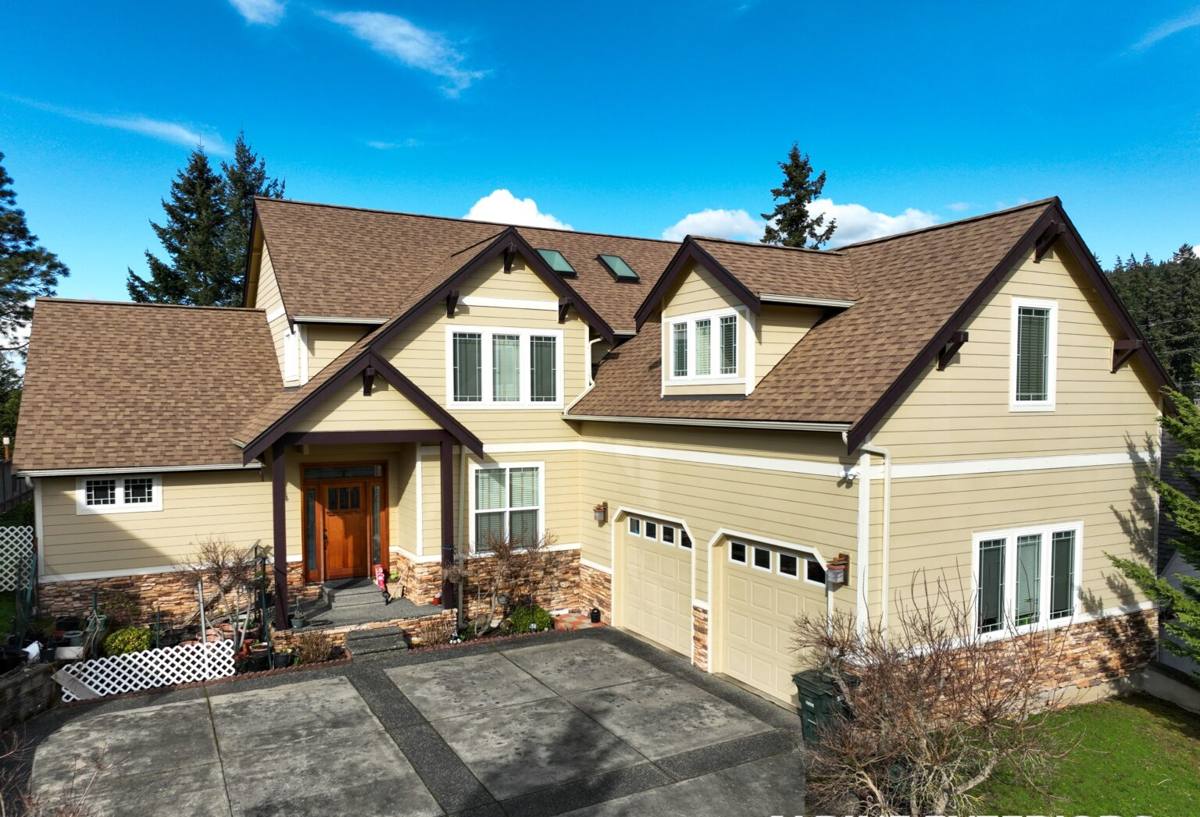
What Local Conditions Do to a Deck Over Time
Wood and even composite decking don't fail because of one bad storm. They fail from repeated cycles — wet, then dry, then wet again — combined with organic growth that most homeowners underestimate.
Moisture Cycling
Northwest Washington rain isn't just frequent, it's persistent. Decking boards, joists, and ledger connections spend long periods saturated, then get brief drying windows before the next system rolls through. That cycle is what causes wood to cup, crack, and eventually rot at connection points if the framing wasn't detailed to shed water and dry out.
Moss, Algae, and Organic Growth
Shaded yards, tree cover, and consistent moisture make moss and algae a near-guarantee on any horizontal wood or composite surface that isn't ventilated or maintained. Beyond looking bad, moss holds moisture against the board surface and turns a dry deck surface into a genuine slip hazard, especially on stairs.
Salt-Influenced Air
Homes closer to the water around the Blaine and Whatcom County coastline deal with salt-laden air that accelerates corrosion on exposed fasteners and metal hardware. Even for inland properties like many in the Everson area, we spec hardware rated for coastal-adjacent conditions rather than standard interior-grade fasteners, since regional humidity alone is enough to shorten the life of the wrong hardware.
What a Correctly Built Deck Includes
A deck that's going to hold up here isn't just about picking a nice decking board. The visible surface is maybe a third of what determines how long the deck lasts.
Framing and Structure
This is where most deck failures actually start, and it's the part homeowners can't see once the decking is down. Correct framing means pressure-treated lumber rated for ground contact where it touches masonry or soil, joist tape or flashing on top of every joist to keep water from wicking into end grain, and a ledger board attached with proper flashing and structural fasteners — not just lag bolts into siding.
Footings
Footings need to be sized and set to local frost depth and soil-bearing requirements, not guessed at. Undersized or shallow footings are a common shortcut on lower-cost deck jobs, and they're the reason some decks develop a noticeable bounce or lean within a few years.
Fasteners and Hardware
Structural connectors, joist hangers, and screws should be hot-dip galvanized or stainless-rated for exterior, moisture-heavy use. Cheaper coated fasteners can corrode and stain the decking around them well before the wood itself would have needed replacing.
Ventilation Underneath
Decks built low to the ground, or over patios and low-airflow areas, need enough clearance and venting to let the structure dry between rain events. Skipping this is one of the quiet reasons decks rot from the underside first, out of sight.
Choosing a Decking Material for This Climate
There's no single "best" decking material — it depends on how much upkeep you want to do, your budget, and how the deck will be used. Here's how the common options actually compare under Whatcom County conditions.
| Material | How It Handles Local Moisture | Maintenance | General Cost Position |
|---|---|---|---|
| Pressure-treated wood | Good if properly sealed and re-coated; end grain and fastener points are the weak spots | Annual cleaning, periodic sealing/staining | Lowest upfront cost |
| Cedar | Naturally moisture- and insect-resistant, but still needs finish maintenance to prevent graying and moss growth | Regular cleaning and refinishing | Mid-range |
| Composite decking | Very stable in moisture cycling; won't rot or splinter, but can still grow surface moss/algae if not cleaned | Periodic washing, no staining or sealing required | Higher upfront, lower long-term labor |
| PVC decking | Fully moisture-resistant surface; performs well in sustained wet conditions | Low — occasional washing | Highest upfront |
We'll walk through these tradeoffs honestly based on your budget and how much maintenance you actually want to do — a lower-maintenance material is often worth the extra upfront cost for a deck that gets shaded or doesn't dry quickly.
Why We're Selective About Composite Installation
Composite and PVC decking are excellent products, but they're less forgiving of installation shortcuts than solid wood. Improper spacing, inadequate ventilation, or the wrong fastening system can trap moisture against the board or void the manufacturer's warranty entirely. We follow manufacturer installation specs closely — proper board gapping for expansion, hidden fastener systems rated for the product, and ventilation clearances — because the warranty on these products is only as good as the install underneath it.
Railings, Stairs, and Code Requirements
Railing and stair details aren't optional extras — they're safety-critical and inspected. Whatcom County building requirements govern guard height, baluster spacing, stair rise and run, and handrail graspability, and a deck built or modified above a certain height typically needs a permit and inspection. We handle the permitting conversation upfront so there are no surprises mid-project, and we build railings and stairs to hold up structurally, not just pass a walkthrough.
Stair treads deserve particular attention in this climate. A smooth composite or painted wood tread that's fine in dry weather can become genuinely dangerous once moss or algae sets in. We can spec textured or grooved tread surfaces specifically to reduce that risk on stairs.
Our Process, Start to Finish
- On-site assessment — we look at grade, drainage, sun/shade exposure, existing structure (if replacing a deck), and how you actually plan to use the space.
- Design and material walkthrough — we talk through layout, decking material, railing style, and any structural considerations specific to your lot.
- Written estimate — clear scope, materials, and timeline before anything is signed.
- Permitting — we handle the permit application and coordinate required inspections where applicable.
- Demolition and site prep — removal of any existing structure, grading and drainage corrections as needed.
- Footings and framing — the structural work that determines how long the deck actually lasts.
- Decking, railing, and stairs — installed to manufacturer spec and local code.
- Final walkthrough — we go over the finished deck with you, including care and maintenance specific to the material chosen.
Maintaining a Deck Through Moss Season
Even a well-built deck needs some seasonal attention in this climate. This isn't about heavy upkeep — it's a short list that prevents most of the problems we see on older decks.
- Sweep leaves and debris off the surface regularly through fall — trapped organic matter is what feeds moss and algae growth.
- Rinse or wash the deck surface at least once or twice a year to interrupt moss and algae before it takes hold, more often in heavily shaded yards.
- Check and clear any gaps between boards so water can drain rather than pool.
- Inspect fasteners and hardware annually for corrosion, especially on decks closer to the water.
- Re-seal or re-stain wood decking on the manufacturer or product-recommended schedule — don't wait until it's visibly gray and dry.
- Keep vegetation trimmed back from the deck edges to improve airflow and sun exposure where possible.
Why Hire a Crew That Already Works This Area
A deck contractor who mostly builds in drier climates will often use the same details everywhere — because in a lot of the country, they get away with it. Out here, those shortcuts show up early. Knowing which framing details actually matter in sustained Northwest moisture, how to spec hardware that won't corrode, and how to build in the ventilation and drainage a deck needs isn't something you learn from a spec sheet — it's something you learn from callbacks and repeat customers over years of building in exactly this climate.
We also know the practical side of building in Whatcom County: what the local permitting process expects, what inspectors are looking for, and how to sequence a project around the wet season rather than fighting it. That local familiarity saves time and avoids the kind of mid-project surprises that drive costs up.
Getting Started
If you're planning a new deck or replacing one that's showing its age, we're happy to come take a look, talk through material options honestly, and put together a straightforward estimate — no pressure, no obligation. Use the form below to request a free estimate for your Everson-area property.