 Blaine Exterior
 Roofing in the Everson Area Has to Answer to the Weather
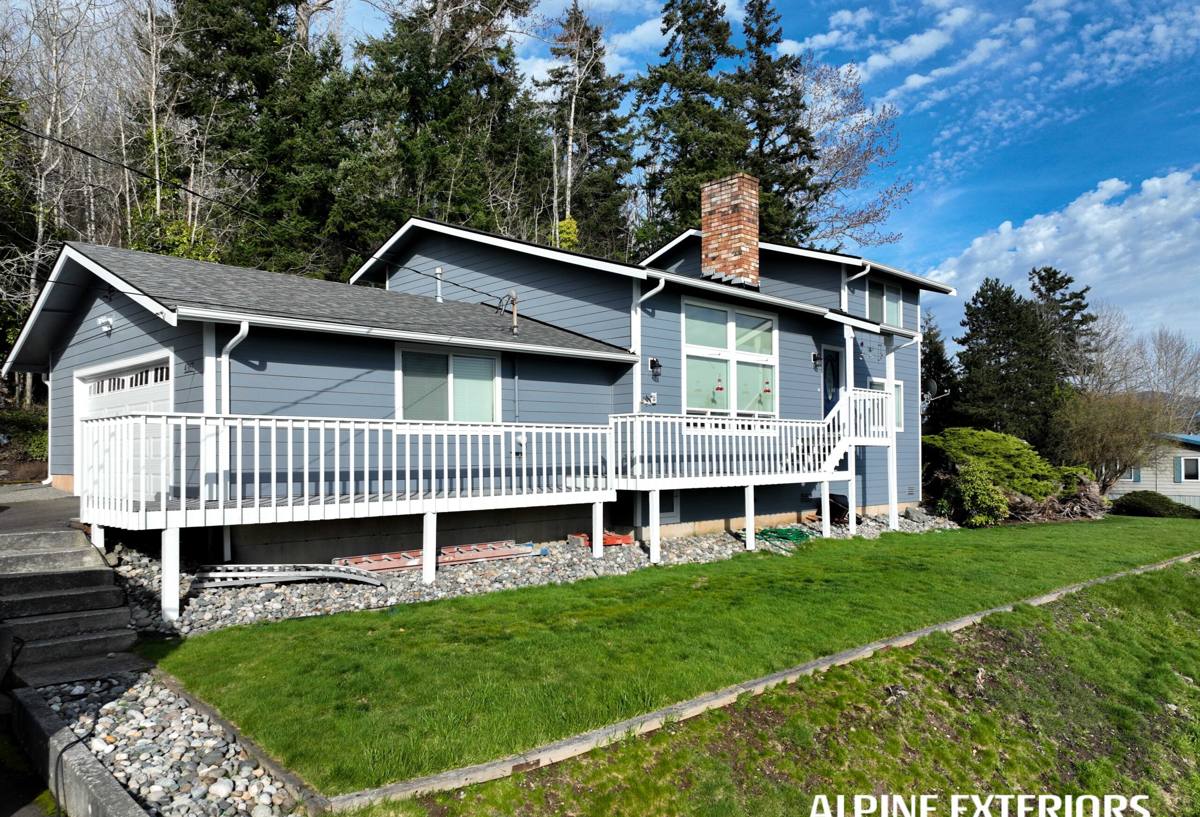
Homes in the Everson area of Whatcom County sit under a roof that works harder than most people realize. The same weather pattern that shapes the rest of the Blaine service area — salt-tinged air moving in off the water, long stretches of driving rain, and a moss season that seems to start earlier every fall — hits Everson roofs just as hard. Asphalt shingle roofing is still the most practical, cost-effective choice for the majority of homes here, but only when it's installed and maintained with this specific climate in mind. A shingle roof built the same way you'd build one in a dry inland climate will not last as long or perform as well once it's up against a Whatcom County winter.
This page is about one thing: asphalt shingle roofing, done right, for homes in and around Everson. Not a generic overview of roofing in general — the specific decisions, materials, and maintenance habits that make the difference between a shingle roof that holds up for its full service life and one that starts showing problems in year eight or nine.
What This Climate Actually Does to a Shingle Roof
Salt Air and Metal Components
Everson isn't right on the coastline, but the broader region still carries salt-laden moisture inland on a regular basis. That air doesn't damage the shingles themselves as much as it accelerates corrosion on the metal parts of the roof system — flashing, drip edge, nail heads, vent stacks, and gutter hardware. Low-grade or under-coated metal will start rusting years before the shingles above it are due for replacement, and once flashing corrodes, water finds its way underneath the shingle field even if the shingles look fine from the ground.
Driving Rain, Not Just Rain
Whatcom County doesn't just get a lot of rain — it gets wind-driven rain, which behaves differently on a roof than a straight-down downpour. Wind-driven rain pushes up and under shingle edges, works its way into fastener penetrations, and finds any gap in the underlayment or flashing detail around chimneys, skylights, and valleys. A roof system that's only designed for vertical rainfall will leak in this climate. Everything from underlayment choice to fastening pattern needs to account for sideways-driven moisture, not just volume.
Moss, Shade, and a Long Wet Season
Everson's tree cover and the region's extended damp season give moss everything it needs to establish itself on a roof — shade, moisture that doesn't fully dry out for weeks at a stretch, and organic debris collecting in valleys and against roof-to-wall transitions. Moss isn't just a cosmetic issue. It holds moisture against the shingle surface, lifts shingle edges as it grows, and over time works its way under tabs, which shortens the life of an otherwise sound roof.
What a Correctly Installed Asphalt Shingle Roof Actually Involves
A shingle roof is a system, not a single product. Every layer matters, and skipping or shortcutting any one of them is where premature failures start.
Deck Inspection and Tear-Off
A proper re-roof starts with a full tear-off down to the decking, not a layer installed over old shingles. This is the only way to actually see the roof deck — soft spots, rot around penetrations, or damage that's been hidden under the old roofing. Any compromised decking gets replaced before anything new goes down. Installing new shingles over a weak deck just locks the problem in.
Underlayment and Ice/Water Protection
Given how much wind-driven rain this area sees, underlayment choice matters more here than in drier climates. Self-adhering, waterproof underlayment belongs at eaves, valleys, and any area prone to wind-driven moisture, with synthetic underlayment across the rest of the field. This is the roof's backup layer — if wind ever forces water past the shingles themselves, a correctly installed underlayment is what keeps that water out of the house.
Flashing Done Right
Flashing around chimneys, skylights, sidewalls, and roof valleys is where the majority of shingle roof leaks actually originate — not in the open shingle field. Properly formed, correctly lapped, corrosion-resistant flashing, integrated with the underlayment rather than just caulked over old flashing, is non-negotiable in a climate that drives rain sideways for months at a time.
Ventilation
A shingle roof without adequate intake and exhaust ventilation traps heat and moisture in the attic, which shortens shingle life from underneath and contributes to moisture problems in the attic space itself. Balanced ventilation is part of a correct installation, not an optional add-on.
Choosing the Right Shingle for an Everson Home
Not every asphalt shingle product is built the same way, and in a climate with this much moisture exposure and moss pressure, the differences matter more than they would somewhere drier.
| Shingle Type | Typical Lifespan | Moss/Algae Resistance | Best Fit |
|---|---|---|---|
| Standard 3-tab | 15–20 years | Low unless algae-resistant granules specified | Budget-focused re-roofs, secondary structures |
| Architectural/laminate | 25–30 years | Moderate to good with algae-resistant granules | Most primary homes in this climate |
| Impact-resistant, algae-resistant | 30+ years, often with enhanced warranty | Best available in shingle products | Shaded lots, heavy tree cover, longer-term ownership |
For most Everson homes, especially those with significant shade or tree cover, we steer people toward architectural shingles with algae-resistant granules at minimum. The upfront cost difference over standard 3-tab is modest compared to the added years of service life and the reduced moss maintenance burden over the life of the roof.
Repair, Re-Roof, or Replace?
Not every roofing problem in Everson means a full replacement. The right call depends on the age of the roof, how localized the damage is, and what's happening underneath the shingles.
- Repair makes sense when the roof is under roughly 12–15 years old, the damage is localized (a section of wind-lifted shingles, a single failed flashing detail, isolated moss damage), and the decking underneath is sound.
- Re-roof is the right call when the shingles are past their practical service life, granule loss is widespread, or multiple areas are showing separate problems even if no single one is severe yet.
- Replace with upgraded materials is worth considering when a home has chronic moss problems, poor original ventilation, or flashing details that were never done correctly the first time — patching those same weak points again just delays the same failure.
Cost for asphalt shingle work varies with roof size, pitch, number of penetrations, decking condition, and material tier — broad ranges are the honest answer until a roof has actually been walked and measured. We give straight numbers after inspection, not estimates padded to cover surprises we should have caught upfront.
Our Process, Start to Finish
The same process applies whether the job is a repair or a full re-roof — the steps just scale to the scope of work.
- On-roof inspection. We walk the roof, not just look at it from the ground, and check the deck, flashing, ventilation, and shingle condition together — not the shingles in isolation.
- Written scope and honest options. We explain what we found, what it means for the roof's remaining life, and what the realistic options are — repair, partial re-roof, or full replacement — without pushing toward the most expensive option by default.
- Material selection. We help match the shingle product to the specific exposure of that roof — shade, wind exposure, and how long the homeowner plans to stay in the home all factor in.
- Installation, done to manufacturer spec. Tear-off, deck repair where needed, underlayment, flashing, shingle installation, and ventilation are handled as one connected system, not a checklist of separate tasks.
- Cleanup and final walkthrough. Magnet sweep for nails, debris hauled off, and a final walk of the finished roof before we consider the job done.
Maintaining an Asphalt Shingle Roof in This Climate
A correctly installed shingle roof still needs regular attention in a climate this wet. Homeowners who stay ahead of small issues consistently get more years out of their roof than those who wait until there's a visible leak.
- Have gutters and valleys cleared of debris at least twice a year — clogged valleys hold water against shingles and accelerate moss growth
- Have moss treated and removed before it establishes under shingle tabs, not after it's visibly thick
- Check flashing around chimneys, skylights, and sidewalls annually for early signs of corrosion or separation
- Keep overhanging branches trimmed back to reduce shade, debris, and physical abrasion on the shingle surface
- Address minor shingle damage (lifted tabs, exposed nail heads, cracked shingles) promptly rather than waiting for it to become a leak
- Have the attic checked periodically for signs of moisture or inadequate ventilation, which shorten shingle life from below
Why It Matters That We Already Work in Everson
Roofing crews who work this specific stretch of Whatcom County regularly know things that a crew based elsewhere has to learn on your roof. We know which shingle products actually hold up against this level of moss pressure and driving rain, which flashing details fail first in this climate, and what a healthy attic ventilation setup looks like on homes built to this region's older and newer construction standards alike. That local, repeated experience is the difference between a roof that's technically installed to code and one that's actually built for what Everson weather does to it year after year.
It also means straightforward answers about permitting, realistic timelines around the wetter months of the year, and a crew that's still local and reachable if a question comes up after the job is finished.
If you're dealing with an aging shingle roof, ongoing moss problems, or you just want an honest read on where your roof actually stands, we're glad to take a look. Fill out the form below for a free, no-pressure estimate — we'll walk the roof, tell you what we see, and lay out your real options.