 Blaine Exterior
 Why Decks in the Sumas Area Wear Out Faster Than Expected
Homeowners near Sumas often assume a deck should last 20-plus years without much thought. In this corner of Whatcom County, that assumption doesn't always hold up. Between salt-laden air moving in off the coast, driving rain that comes in sideways more often than straight down, and a moss season that can stretch from fall through spring, decks here take on moisture and organic growth at a pace that surprises a lot of owners. A deck built with the wrong materials, or built correctly but never maintained, can start showing real structural problems well before its expected lifespan is up.
This page is about one job, done right, in this one area: replacing a worn-out or failing deck for a home in or around Sumas, with a build that's actually suited to what this climate does to wood, fasteners, and framing over time.
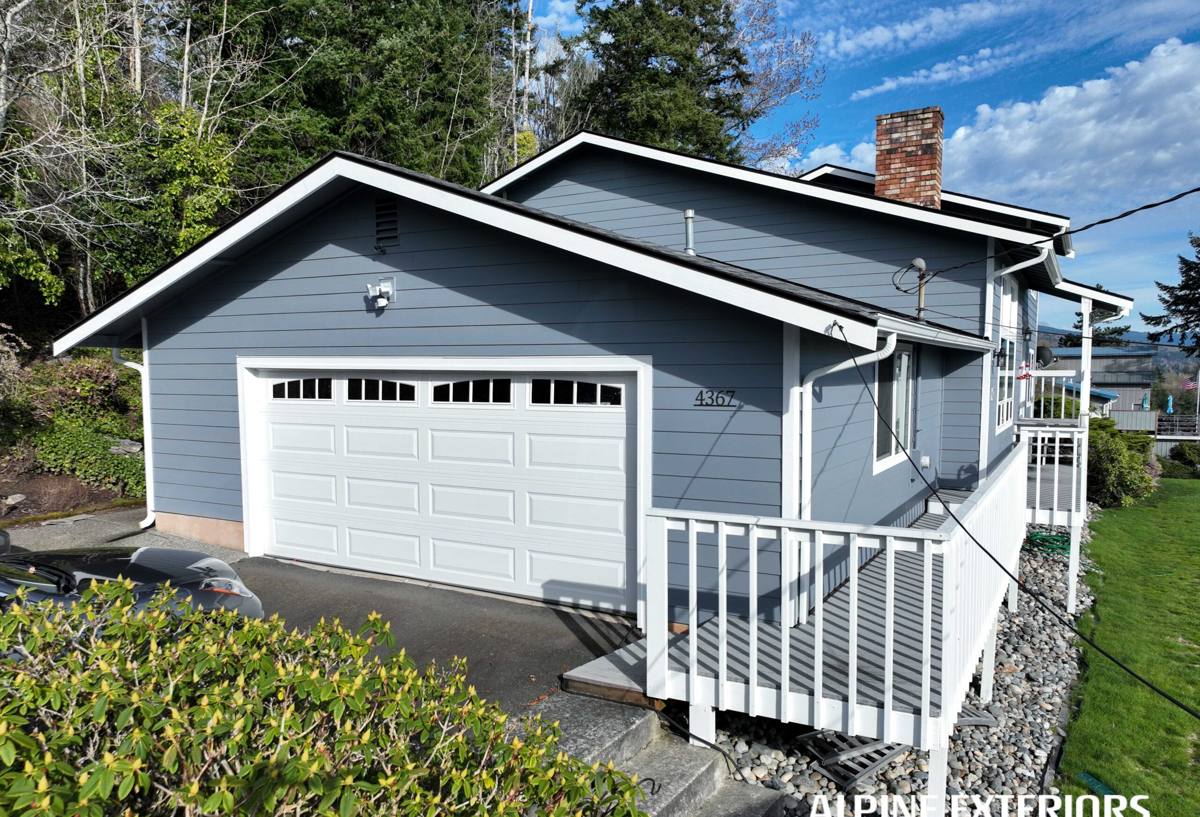
What This Climate Actually Does to a Deck
Moisture That Doesn't Let Up
Driving rain doesn't just fall on a deck — it gets pushed under railings, into ledger board connections, and between decking boards that are spaced too tight. Over years, that moisture works into end grain, fastener holes, and any spot where two pieces of material meet without proper flashing or a gap to dry out. This is where rot usually starts, and it's almost always hidden until a board or joist is soft enough to notice by feel.
Salt Air and Metal Fatigue
Being close enough to the water to get salt air in the mix speeds up corrosion on anything metal — nails, screws, joist hangers, structural connectors. A fastener that would hold for decades inland can weaken years sooner out here. When a deck is framed with the wrong grade of hardware, the wood can still look fine while the connections holding it together are quietly failing.
Moss, Algae, and a Long Wet Season
Moss doesn't just look bad — it holds moisture directly against the decking surface for months at a time, and it makes boards dangerously slick underfoot. A long moss season here means any deck surface that doesn't shed water and dry out between rains is going to grow something on it, whether that's algae film, moss, or mildew staining. Left alone, that constant damp layer accelerates surface decay.
Signs a Deck Needs Replacement, Not Another Repair
Not every issue means a full tear-off. But there's a point where patching individual boards is throwing money at a structure that's past saving. Before we recommend replacement over repair, we're looking for:
- Soft or spongy spots in decking boards, especially near the house or at board ends
- Visible rot, splitting, or crumbling at the ledger board where the deck attaches to the house
- Rusted, corroded, or missing joist hangers and structural fasteners
- Railings or posts that flex or wobble more than they should
- Persistent moss or algae growth that returns within weeks of cleaning
- Gaps or cupping in boards that trap standing water instead of shedding it
- A deck more than 15-20 years old built with untreated or minimally treated lumber
- Any sign of movement or separation where the deck meets the house's siding or foundation
If a deck is showing two or more of these, especially anything involving the ledger board or structural framing, replacement is usually the more honest recommendation — repairs on a failing frame just delay the same conversation a year or two later, often at a higher cost.
Choosing Materials That Hold Up Here
There's no single "best" decking material — every option is a trade-off between upfront cost, maintenance, and how it handles constant damp and salt exposure. Here's how the common choices compare for a climate like this one:
| Material | How It Handles This Climate | Maintenance |
|---|---|---|
| Pressure-treated lumber | Good rot resistance when properly sealed; needs the end cuts and fastener holes treated on-site, not just the factory treatment | Annual cleaning, re-sealing every 1-2 years |
| Cedar | Naturally rot- and insect-resistant, ages gracefully with driving rain, but softer surface can hold moss if not cleaned | Periodic cleaning and oil or stain every 1-3 years |
| Composite decking | Doesn't rot or absorb water into the board itself; still needs proper spacing and airflow underneath to prevent mold on the surface | Occasional washing, no sealing or staining |
| Structural framing (any decking choice) | Should be pressure-treated lumber or approved alternative with corrosion-resistant, coated fasteners throughout | Inspect connections every few years |
Our standard is to match the material to how the homeowner actually plans to use and maintain the deck — a low-maintenance composite surface over a properly built pressure-treated frame is a common, reliable combination for this area, but cedar remains a solid choice for owners who want a natural look and are willing to keep up with oiling.
What a Correct Deck Replacement Actually Involves
Starting With the Framing, Not the Surface
A new deck is only as good as what's underneath it. That means sizing joists and beams correctly for the span and load, using lumber rated for ground contact where it touches or sits near soil, and never reusing old framing just because it's "still there." If the existing structure has any rot or corrosion, it gets replaced — building a nice new surface over a compromised frame just hides the problem for a while.
Ledger Board and Flashing
The connection between the deck and the house is the single most common failure point we see, and it's almost always a flashing or waterproofing issue, not a wood-quality issue. Proper flashing directs water away from the ledger board and the house's wall assembly instead of letting it pool and soak in over time. This is not a place to cut corners, especially with the amount of driving rain this area gets.
Fasteners and Hardware
Given the salt air, we use corrosion-resistant, coated fasteners and structural connectors rated for exterior and coastal-influenced exposure — not standard interior-grade hardware. This is a small cost difference upfront and a major difference in how long the connections actually hold.
Board Spacing and Drainage
Decking boards need consistent gaps to let water drain through and air circulate underneath, which cuts down on moss and rot both. Underneath, grading and any drainage system should direct water away from the house foundation and the deck's support posts, not let it collect and sit.
Our Process, From First Look to Finished Deck
- Free on-site assessment — we look at the current deck's framing, ledger connection, and overall condition, not just the surface boards
- Honest repair-vs-replace recommendation — with the reasoning explained, not just a sales pitch
- Material and design conversation — matching decking material, railing style, and layout to how the space is actually used
- Permitting — pulling any required permits and building to current code before work starts
- Tear-off and structural rebuild — old material removed, framing rebuilt to spec with treated lumber and corrosion-resistant hardware
- Decking, railing, and finish work — installed with proper spacing, fastening, and attention to drainage
- Final walkthrough — going over the finished deck and basic maintenance expectations for this climate
Permits and Local Code Considerations
Deck replacement projects in Whatcom County typically require a permit, particularly when the structure is being rebuilt rather than just re-surfaced, or when railing height, guard spacing, or footing depth are involved. Requirements can vary by jurisdiction and by the specifics of the project, so we handle the permitting conversation as part of the process rather than leaving homeowners to sort it out themselves. Building to code isn't just paperwork — it's a big part of what keeps a deck safe and structurally sound for the long run.
Why It Matters to Hire a Crew That Already Works This Area
A deck built with a generic, one-size-fits-all approach can look fine on install day and still fail early once it's exposed to a real Whatcom County winter. A crew that already does this work around Blaine and Sumas knows which fastener grades hold up against the salt air, how much slope and drainage detail actually matters given the rain patterns here, and which materials tend to disappoint homeowners once moss season hits. That local, repeated experience shows up in the details — flashing, hardware choice, board spacing — that aren't always obvious from a finished deck's surface but make the difference between a deck that lasts and one that needs attention again in a few years.
If your deck in the Sumas area is showing wear, feels less solid than it used to, or you're just planning ahead, we're glad to come take a look. Our estimates are free, there's no pressure to move forward, and you'll get a straight answer on whether repair or full replacement makes more sense for your situation.