 Blaine Exterior
 Building Decks for Sandy Point's Waterfront Conditions
Sandy Point sits right up against the water on low-lying, wind-exposed ground, which puts every deck in this community under a different kind of stress than a deck ten miles inland in Blaine or Ferndale. Salt-laden air moves through constantly, wind-driven rain finds its way into joints and fastener holes that would stay dry elsewhere, and the long wet season here in Whatcom County keeps wood surfaces damp for months at a time. A deck built to a generic spec doesn't hold up well under those conditions. A deck built for Sandy Point specifically does.
This page covers what we actually do differently when we build a deck for a Sandy Point home — the materials we choose, the framing and fastener decisions that matter most, and the maintenance reality homeowners in this neighborhood should plan for.
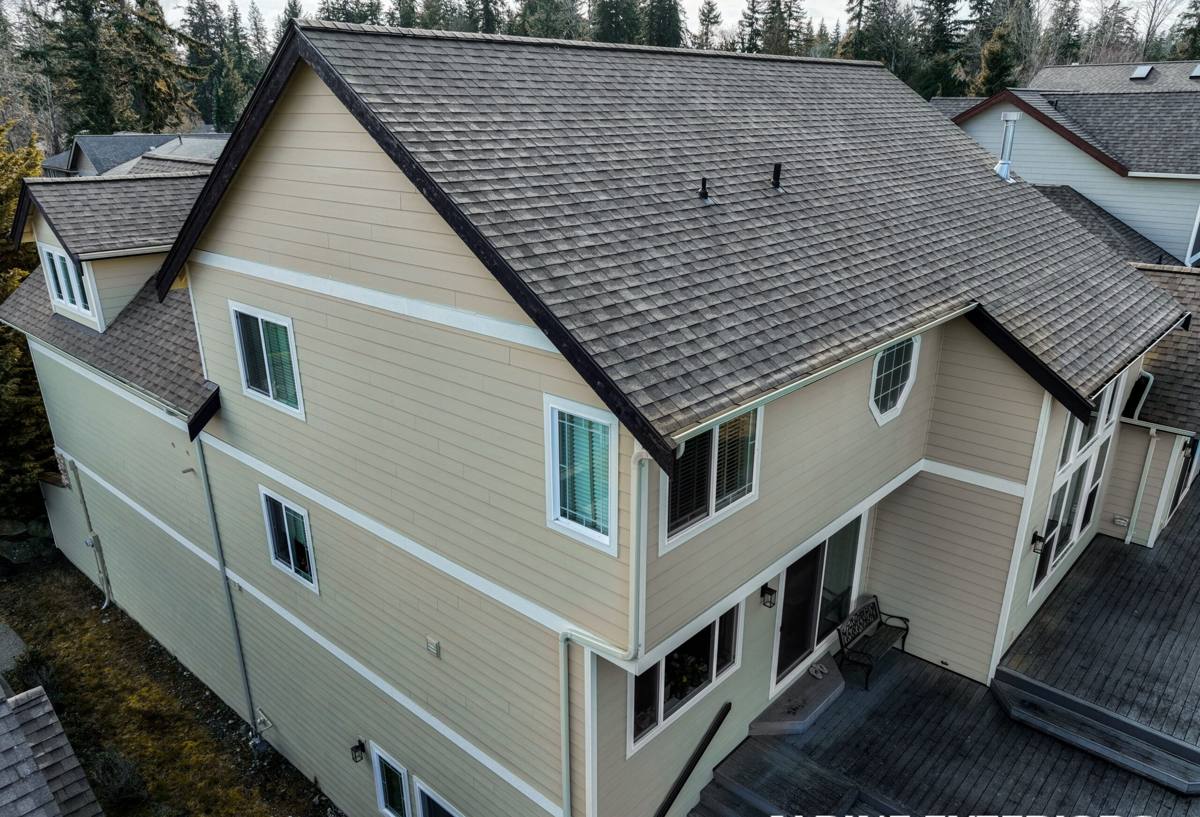
What Salt Air, Wind, and Moss Season Do to a Deck
Three regional factors drive almost every deck problem we see in this part of Whatcom County:
- Salt air corrosion — airborne salt accelerates corrosion on fasteners, brackets, and any hardware that isn't rated for coastal exposure. Standard interior-grade screws and joist hangers can start showing rust streaks and pitting well before a deck's structural life is over.
- Driving, wind-blown rain — rain here doesn't just fall straight down. Wind pushes it sideways into rail posts, ledger connections, and butt joints, which means water intrusion points that would be minor on a sheltered inland deck become real entry points at Sandy Point.
- Extended moss and algae season — cool, damp, low-light stretches let moss and algae establish on horizontal wood and composite surfaces for a good chunk of the year, not just a few weeks. Moss holds moisture against the decking surface and, left alone, contributes to slip risk and surface breakdown.
None of this means a deck at Sandy Point can't last — it means the build has to account for these forces from the framing up, not just at the surface finish.
Materials That Actually Hold Up Here
Fasteners and Hardware
We spec stainless steel or heavy hot-dip galvanized fasteners and connectors rated for coastal/marine exposure on every Sandy Point deck. This isn't an upsell — in a salt-air environment, the hardware is usually the first thing to fail, and a corroded joist hanger or bracket compromises the whole structure regardless of how good the decking looks. Cutting corners on hardware here shows up as rust stains and loosening connections within a few seasons, not decades.
Decking Surface
Composite and PVC decking generally perform better than untreated wood in this specific environment because they don't absorb moisture the way wood fibers do, which limits swelling, cupping, and rot risk. Well-maintained cedar or pressure-treated wood can still work for homeowners who prefer the look and are willing to keep up with sealing and cleaning — it's a legitimate choice, just one with a higher upkeep bar in a salt-air, high-moisture setting. We lay out the honest trade-offs before you decide rather than pushing one product on every job.
Framing and Substructure
Pressure-treated framing lumber rated for ground contact and coastal exposure, proper flashing at the ledger board, and a drainage plan underneath the deck matter more here than almost anywhere else we work in Whatcom County. Water that gets trapped under a deck near the water table doesn't evaporate as quickly as it would on higher, drier ground, so we build in airflow and drainage paths rather than assuming the substructure will dry out on its own.
| Deck Element | Standard Approach | Sandy Point-Adjusted Approach |
|---|---|---|
| Fasteners | Standard exterior-grade coated screws | Stainless or marine-grade hot-dip galvanized throughout |
| Decking material | Homeowner preference, minimal guidance | Composite/PVC recommended first; wood option discussed with maintenance plan |
| Ledger flashing | Basic flashing tape | Full flashing system plus gap venting behind ledger |
| Substructure airflow | Standard joist spacing | Drainage and ventilation planned around low-lying grade |
| Rail posts/hardware | Standard exterior hardware | Coastal-rated post bases and connectors |
Design Choices That Reduce Long-Term Problems
Beyond material selection, a few design decisions make a measurable difference in how a Sandy Point deck ages:
- Gapping decking boards slightly wider where moss and algae are a known issue, to help surfaces dry faster between wet stretches.
- Sloping the deck surface a small amount away from the house so water doesn't pool near the ledger connection.
- Keeping vegetation and ground cover pulled back from the deck perimeter so airflow underneath isn't blocked.
- Positioning rail and post hardware to shed water rather than trap it in horizontal seams.
None of these add significant cost to a project. They're decisions we make by default because we've seen what happens when they're skipped on a waterfront build.
Our Process for a Sandy Point Deck Build
1. On-Site Assessment
We look at grade, drainage, sun and wind exposure, and how close the deck will sit to the water and prevailing weather. Every lot in Sandy Point has slightly different exposure, and that shapes the material and framing recommendations we make.
2. Honest Material Walkthrough
We go over composite, PVC, and wood options with real maintenance expectations for this specific environment — not a sales pitch, a straight comparison so you can pick based on how much upkeep you actually want to do.
3. Framing and Flashing Built for the Conditions
Ledger flashing, coastal-rated hardware, and a drainage-aware substructure go in before any decking is installed. This is the part of the job that determines whether the deck is still solid in fifteen years, even though it's invisible once the project is done.
4. Surface Installation and Detail Work
Decking, rails, and stairs go in with attention to board gapping, water shedding at joints, and consistent fastener spacing — details that matter more under driving rain than they would in a drier climate.
5. Walkthrough and Maintenance Guidance
We walk the finished deck with you and explain what upkeep actually looks like for the material you chose, including realistic cleaning frequency for this area's moss season.
Maintenance Reality for Sandy Point Decks
Every deck, regardless of material, needs some ongoing attention in this climate. Here's what that honestly looks like:
- Composite/PVC: periodic washing to clear algae and salt residue, checking that drainage gaps stay clear of debris.
- Wood decking: more frequent cleaning, plus re-sealing or staining on a regular cycle to keep moisture out of the wood fibers.
- All deck types: keeping gutters and downspouts near the deck clear so runoff isn't dumping extra water onto or under the structure, and checking fastener and connector condition every year or two for early signs of corrosion.
- All deck types: clearing moss and algae buildup before it has a chance to hold moisture against the surface for extended periods.
Why Local Experience at Sandy Point Matters
A contractor who mostly builds decks in drier, inland parts of Whatcom County can still do competent general carpentry, but they may not default to coastal-rated hardware, ledger flashing details, or drainage planning unless they're specifically thinking about it. We work this stretch of the Blaine area regularly, so those decisions are built into our standard process rather than something we have to be reminded to consider. That familiarity shows up in fewer callbacks for corrosion, water intrusion, or premature surface breakdown down the road.
Questions to Ask Any Deck Contractor Before You Hire
Whether you go with us or someone else, a few questions separate a contractor who understands this environment from one who doesn't:
- What fastener and hardware grade do you use, and is it rated for coastal/salt-air exposure?
- How do you flash and vent the ledger board connection?
- What's your plan for drainage and airflow under the deck given the grade of my lot?
- Can you walk me through the real maintenance difference between composite and wood for a property this close to the water?
- Do you carry proper licensing and insurance for exterior construction work in Washington?
If a contractor can't answer the hardware and drainage questions specifically, that's worth noting before you sign anything.
Get an Honest Estimate for Your Sandy Point Deck
Every lot at Sandy Point handles wind, moisture, and salt air a little differently, so we'd rather look at your specific site than quote off a generic template. If you're planning a new deck or need to know whether an existing one is holding up the way it should, reach out for a free, no-pressure estimate — the form below gets you started.