 Blaine Exterior
 Windows Built for Birch Point's Exposure to the Water
Birch Point sits close enough to the water that homes here take a different kind of weathering than houses even a few miles inland. Salt-laden air moves in off the bay, wind-driven rain comes in sideways during winter storms, and the damp, shaded stretches of the year let moss and algae get a foothold on anything that stays wet too long. Windows are one of the first parts of a house to show the wear from all of that — and one of the most expensive parts to get wrong.
Blaine and the rest of Whatcom County share a marine climate, but properties directly exposed to open water or tidal flats, like many in Birch Point, see accelerated versions of the same problems: faster corrosion of hardware, more aggressive moisture intrusion at poorly sealed joints, and a shorter window (no pun intended) between maintenance cycles before small issues become rot. Custom window work out here isn't about upgrading style for its own sake. It's about matching the window unit, the frame material, and the installation detailing to what this specific stretch of coastline actually does to a house year after year.
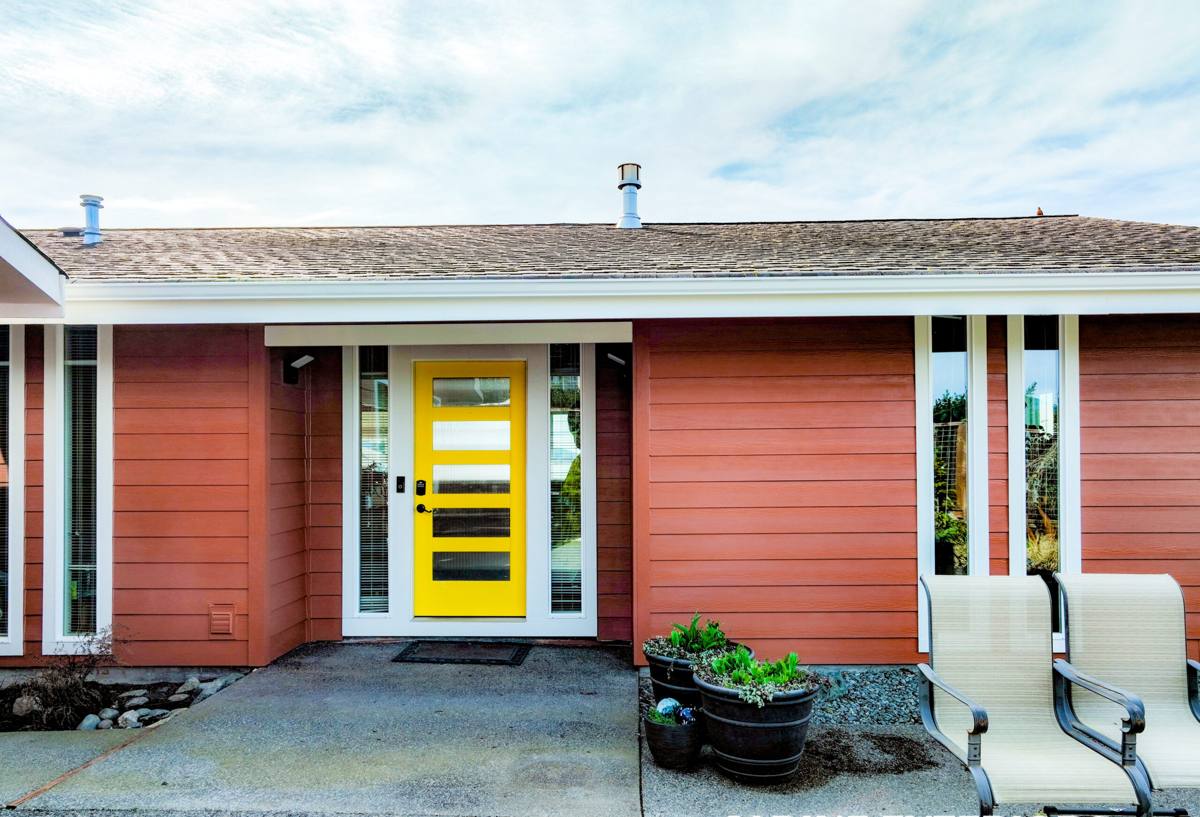
What Salt Air, Driving Rain, and Moss Actually Do to a Window Over Time
It helps to understand the specific failure modes we're designing against, rather than just hearing "coastal climate" as a vague warning label.
Salt Air and Metal Hardware
Airborne salt accelerates corrosion on exposed fasteners, hinges, and lower-quality cladding. Cheaper aluminum components and unprotected steel screws are the first things to show pitting and rust streaks. Over a few seasons, corroded hardware can bind, making windows harder to open and seals harder to maintain — which then lets in more moisture.
Driving Rain and Wind-Loaded Water
Most rain in this region doesn't just fall — it's pushed sideways by wind coming off the water, which means it hits window assemblies at an angle rather than draining straight down. That puts real pressure on flashing details, sill pans, and the seal between the window unit and the rough opening. A window that would perform fine in a sheltered inland location can leak here if the water management around it wasn't built for wind-driven exposure.
Moss, Algae, and Prolonged Dampness
Whatcom County's long wet season means anything that holds moisture — wood sills, unsealed trim, north-facing frames that never fully dry — becomes a place for moss and algae to establish. Beyond the cosmetic issue, sustained dampness against wood components is what leads to soft, rotting sills and frames over time, especially where finishes have worn thin.
What a Correct Custom Window Installation Involves Here
"Custom" doesn't just mean a non-standard size or a nicer grille pattern. In a Birch Point installation, it means every layer of the assembly is chosen and detailed for wind-driven moisture, starting well before the window itself goes in.
- Proper rough opening preparation — sound framing, no hidden rot from a prior leak, correct sizing with appropriate shim space
- Sill pan flashing — a sloped, sealed pan under the window so any water that does get past the frame drains outward instead of into the wall cavity
- Weather-resistive barrier integration — house wrap or building paper lapped correctly with the window flanges so water sheds down and out, shingle-style, at every layer
- Correct flashing tape and sealants — products rated for the temperature range and UV exposure here, applied in the right order (this is where a lot of failures start, even on otherwise good window units)
- Interior and exterior sealing — a continuous air seal on the interior and a drainage-friendly seal on the exterior, not caulk used as the only line of defense
- Hardware and finish selection — corrosion-resistant fasteners and cladding suited to salt exposure, not just whatever's standard for an inland spec
Skip or rush any one of these steps and the window itself can be excellent quality and still fail early. This is the part of the job that doesn't show up in a product brochure but determines whether the installation lasts fifteen years or five.
Choosing Window Materials for a Birch Point Exposure
There's no single "best" window material for every home — it depends on sun exposure, how directly the house faces the water, upkeep the homeowner wants to take on, and budget. Here's how the common options generally hold up in this kind of coastal, wet climate:
| Material | Salt Air Resistance | Moisture Behavior | Maintenance |
|---|---|---|---|
| Vinyl | Good — won't corrode | Handles moisture well; no rot risk | Low — occasional cleaning |
| Fiberglass | Very good — dimensionally stable, resists pitting | Excellent; holds paint/finish well over time | Low to moderate |
| Aluminum | Fair to good if properly coated; lower-grade finishes corrode faster near salt air | Prone to condensation without thermal breaks | Moderate — watch for pitting over years |
| Wood-Clad | Depends heavily on cladding quality and seal integrity | Interior wood vulnerable if any moisture gets behind cladding | Higher — needs monitoring at joints and sills |
For homes with direct, unshielded exposure to wind off the water, we generally steer clients toward vinyl or fiberglass frames with quality corrosion-resistant hardware, simply because they hold up with less ongoing maintenance. Wood-clad windows can still be the right call for a specific architectural look, but we're honest with clients up front that they require more diligence in this exposure — that's a maintenance conversation, not a knock on the product.
Glass Packages and Sealing for Wind and Moisture
The glass unit matters as much as the frame. In a driving-rain climate, we look at a few things beyond basic energy ratings:
Insulated glass unit (IGU) seal quality. A failed seal on a double- or triple-pane unit shows up as fogging or moisture between the panes — it's a sign of premature seal breakdown, often accelerated by sustained damp exposure and temperature swings near the water. Quality spacer systems and warranty-backed seals matter more here than in drier inland areas.
Weatherstripping at operable sashes. Casement and awning-style windows tend to seal more tightly against driving rain than sliders, simply because the sash compresses against the frame rather than sliding past a track. That's worth weighing against ventilation preferences and the home's existing window style.
Low-E coatings and gas fills. These affect comfort and heating costs more than moisture resistance directly, but they're part of a complete custom window spec and worth discussing for west- or water-facing rooms that see more temperature swing.
Our Installation Process
Every custom window job follows the same sequence, whether it's one window or a full-home replacement:
- On-site assessment — we look at existing framing condition, any signs of past water intrusion, sun and wind exposure for each opening, and the home's specific architecture
- Material and glass selection — matched to that specific opening's exposure, not a one-size spec for the whole house
- Removal and opening inspection — old units come out carefully so we can check the framing underneath before anything new goes in; this is often where hidden moisture damage from prior installations turns up
- Repair of any compromised framing — addressed before the new window goes in, never covered over
- Flashing, sealing, and installation — following the sequencing described above, built for wind-driven rain
- Interior and exterior finish work — trim, caulking, and touch-up so the finished opening looks correct inside and out
- Final walkthrough — operation check on every window, sealed and ready before we consider the job done
Living With Moss Season: What Homeowners Can Do Between Visits
Even a correctly installed, well-chosen window benefits from a bit of seasonal attention in a climate like this. A short annual routine goes a long way:
- Rinse sills and frames periodically during the wettest months to keep organic buildup from taking hold
- Check weep holes (the small drainage openings at the base of the frame) for debris or moss blockage — these are what let intruded water escape instead of pooling
- Watch for soft spots or discoloration at wood sills or trim, especially on north- or water-facing walls that dry out slowest
- Test operable hardware once or twice a year — hinges and locks are where salt-air corrosion shows up first
- Have any caulking or exterior sealant inspected every few years, since UV and moisture cycling break it down faster here than inland
None of this replaces correct installation — it just protects the investment once the windows are in.
Why Local Experience in This Exposure Matters
A window installer who mostly works drier, more sheltered inland jobs isn't necessarily going to detail flashing and sealing the same way a crew that regularly works Birch Point and the rest of Blaine's waterfront properties will. The difference isn't the window brand — most reputable manufacturers make solid products. The difference is in the details that don't show up until year three or four: how the sill pan was sloped, whether the weather barrier was lapped correctly, whether hardware was specified for salt exposure instead of a generic inland package.
We work this stretch of Whatcom County regularly, which means we've seen how different framing conditions, exposures, and prior workmanship hold up (or don't) against this specific climate. That's the kind of judgment that only comes from doing the work here repeatedly, not from a general product spec sheet.
Get a Straightforward Estimate for Your Birch Point Home
If you're dealing with drafty, fogged, or hard-to-operate windows, or you're planning ahead of the next wet season, we're happy to take a look and walk you through options honestly — including what does and doesn't make sense for your home's specific exposure. Reach out for a free, no-pressure estimate using the form below.