 Blaine Exterior
 Building Decks for Ferndale Homes in Whatcom County's Marine Climate
Ferndale sits close enough to the water that homes here deal with a different set of conditions than a deck built twenty miles inland. Salt-tinged air off Bellingham Bay and the Strait, long stretches of driving rain from fall through spring, and a moss and algae season that can run most of the year all put real stress on outdoor structures. A deck that's framed, fastened, and finished without accounting for that will show it within a few seasons — soft spots, rust streaks at the fastener heads, green film on the boards, and finishes that peel instead of wear evenly.
We're a Blaine-based crew that already works this stretch of Whatcom County, so Ferndale isn't a detour for us — it's part of our regular territory. That matters more than it sounds like it should, because a deck built by someone unfamiliar with local moisture and salt exposure tends to get built like it's going in Spokane. It isn't.
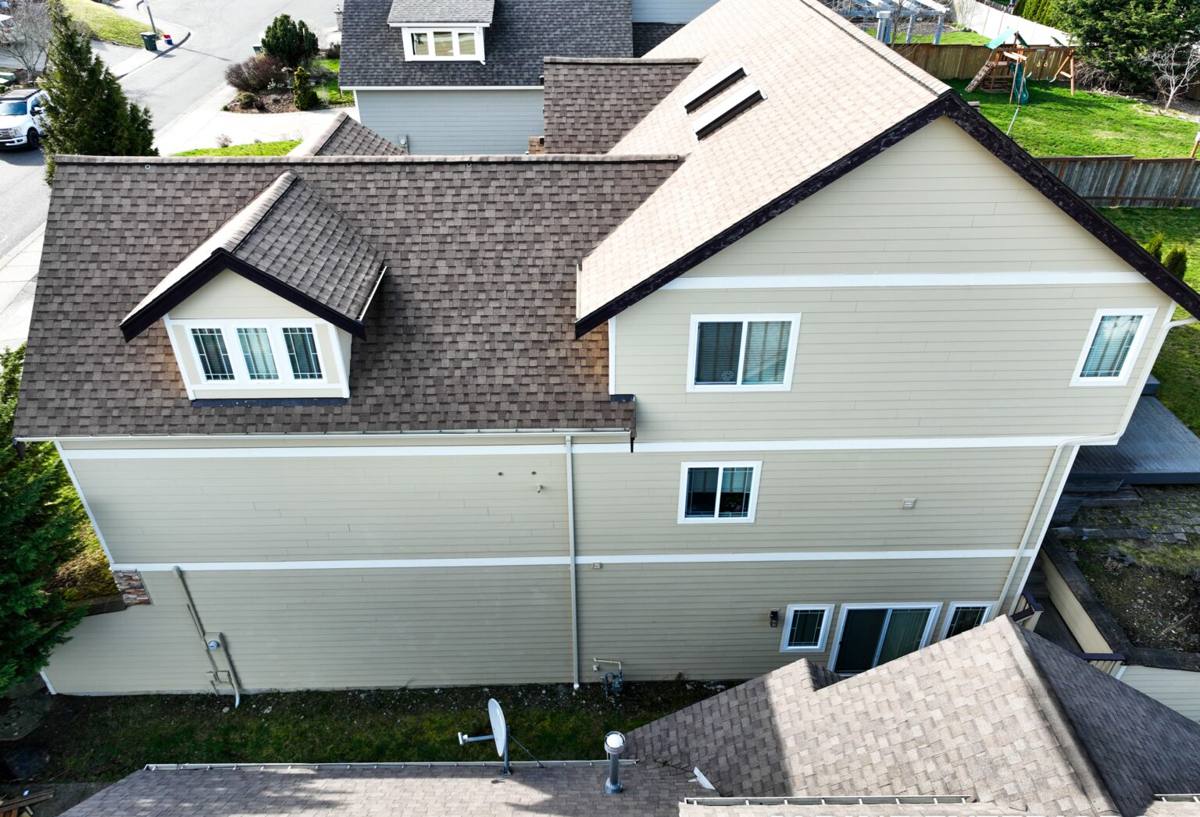
What Ferndale's Climate Actually Does to a Deck
Salt Air and Metal Fasteners
Ferndale isn't right on the water the way some Blaine-area properties are, but prevailing westerlies still carry a measurable amount of salt inland, especially on exposed or elevated lots. Standard zinc-coated screws and nails corrode faster under that kind of exposure. Once a fastener starts rusting, it weakens, stains the surrounding wood or composite, and eventually needs to be dug out and replaced — often after the surface finish has already been compromised around it.
Driving Rain and Standing Moisture
Whatcom County gets a lot of rain, and a lot of it comes in sideways during winter storms. That means moisture doesn't just fall on a deck's surface, it gets driven into ledger connections, under rail posts, and into any gap where end grain is exposed. Framing lumber that isn't properly flashed and sealed at the house connection is one of the most common failure points we see on decks that weren't built with this climate in mind.
Moss, Algae, and Slip Risk
Shaded decks, north-facing decks, and anything under tree cover in Ferndale will grow moss and algae if the surface can't shed water and dry out between rain events. Beyond the cosmetic issue, a mossy deck surface is a genuine slip hazard on stairs and near door thresholds — something worth planning for at the design stage, not just treating after the fact with a pressure washer every spring.
What a Correctly Built Deck Looks Like Here
None of this means a deck can't hold up well in Ferndale — it means the build has to account for the conditions from the ground up. A correct job includes:
- Stainless steel or heavy-duty coated structural fasteners at all critical connections, not standard exterior-grade hardware
- Proper ledger board flashing where the deck attaches to the house, so driven rain can't work its way behind the siding
- Joist tape or a sealed top edge on framing lumber to keep water out of end grain and fastener penetrations
- Adequate airflow underneath the deck so the structure can dry out between storms instead of staying damp
- A decking material and finish schedule matched to how much shade and moisture exposure that specific spot on the property actually gets
- Post bases set to keep wood off grade contact, reducing rot risk at ground level
Skipping any one of these doesn't usually show up as a problem in year one. It shows up in year three or four, and by then the fix is more invasive and more expensive than it would have been to do right the first time.
Choosing Materials for This Climate
There's no single "best" decking material — there's a best material for a given budget, maintenance appetite, and how exposed the deck is to sun, shade, and moisture. Here's how the common options actually compare for a Ferndale property.
| Material | Moisture & Moss Resistance | Maintenance | Typical Lifespan Here |
|---|---|---|---|
| Pressure-treated wood | Good if sealed regularly; end grain is vulnerable | Annual cleaning and re-sealing recommended | 15-20 years with upkeep |
| Cedar | Naturally decay-resistant, but surface still needs care | Periodic cleaning, oil or stain every 1-2 years | 15-25 years with upkeep |
| Composite decking | Very good; doesn't absorb water like wood | Occasional washing to prevent surface algae | 25-30+ years, brand-dependent warranty |
| PVC/capped polymer | Excellent; fully sealed surface | Low; periodic rinsing | 25-30+ years, brand-dependent warranty |
Composite and capped polymer boards tend to be the lower-maintenance choice for Ferndale's rain and moss exposure, since they don't take on water the way wood does and won't develop soft spots from repeated wetting. Wood costs less up front but asks for a real annual maintenance commitment — skip a year or two of sealing here and moss gets a foothold fast. We'll walk through the honest trade-offs for your specific site rather than pushing one product line across the board.
Framing and Substructure — The Part Nobody Sees
The decking surface gets all the attention, but the framing underneath is what determines whether the deck is still solid in fifteen years. In a climate like this, we pay particular attention to:
- Joist spacing and sizing appropriate to the decking material being installed over it
- Ledger attachment and flashing detail at the house — the single most common source of hidden rot on older decks
- Fastener selection rated for the moisture and salt exposure at that specific site
- Post footings set below frost depth and properly drained
- Under-deck drainage or ventilation where the space below will be enclosed or used for storage
A deck that looks great on top but was framed with mismatched or corner-cut hardware underneath is a deck that's going to cost more to fix than it would have cost to build correctly.
Our Process for a Ferndale Deck Project
1. On-Site Assessment
We look at sun and shade exposure, drainage on the lot, proximity to trees, and how the deck ties into the existing structure. This tells us which moisture and moss risks actually apply to your specific property, rather than assuming a one-size-fits-all approach.
2. Material and Design Discussion
We go over decking, railing, and fastener options against your budget and how much upkeep you actually want to take on. This is where we're direct about trade-offs — a lower-maintenance material costs more up front but saves time and money over the life of the deck.
3. Permitting
Deck projects in Whatcom County frequently require a building permit depending on size, height, and attachment to the structure. We handle that process as part of the job rather than leaving it to the homeowner to sort out.
4. Build
Framing first, with attention to flashing and fastener selection as outlined above, then decking, railing, and any finish work. We keep the site clean and communicate on timeline as the work progresses.
5. Final Walkthrough
We walk the finished deck with you, cover any maintenance recommendations specific to the material you chose, and make sure everything meets the standard we'd want on our own home.
Why a Local Blaine Crew Makes a Difference
A contractor who works Ferndale and the rest of Whatcom County regularly has already seen how decks in this specific climate age — which fastener types hold up, which framing shortcuts cause problems, and which materials perform the way they're supposed to under this much rain and salt exposure. That's different from general deck-building knowledge applied to a coastal Pacific Northwest site for the first time. Being local also means faster response for warranty questions, easier scheduling around Whatcom County's wetter months, and a crew that's accountable to a reputation in the community, not just a one-off job.
Maintenance That Actually Fits This Climate
Whatever material you choose, a few habits go a long way in Ferndale's conditions:
- Clean debris out of gaps between boards each fall before the heavy rains start, so water can drain instead of pooling
- Rinse or lightly scrub shaded areas periodically to keep moss and algae from establishing
- Check and re-seal wood decking on the schedule recommended for that specific product — don't stretch it
- Inspect fasteners and connections annually for early rust or movement, especially at the ledger and stair stringers
- Keep gutters and downspouts near the deck clear so runoff isn't dumping extra water onto or under the structure
None of this is complicated, but it does need to actually happen on a schedule — that's usually the difference between a deck that looks good at year ten and one that doesn't.
If you're planning a new deck or replacing one that hasn't held up to Ferndale's weather, we're happy to come take a look and talk through what makes sense for your property. The estimate is free, there's no pressure, and you'll get a straight answer about materials, cost factors, and timeline before you decide anything.