 Blaine Exterior
 Composite Decking in Bellingham: Built for the Climate You Actually Have
Bellingham decks sit under a different set of pressures than decks a hundred miles inland. Marine air off Bellingham Bay carries a steady trace of salt, rain here tends to arrive on a slant instead of straight down, and the mild, damp stretch that passes for a "dry season" still leaves enough moisture in the air to keep moss and algae going for most of the calendar year. A deck board that performs fine in a drier part of Whatcom County can still cup, gray, splinter, or grow a slick green film on a shaded Bellingham property within a few seasons. We install composite decking here because it's the material that best absorbs that specific combination of punishment without asking the homeowner to keep up a maintenance schedule that real life rarely allows for.
This page is about composite decking specifically for Bellingham homes — not a general decking overview. The framing choices, drainage details, and board selection that make sense on a shaded, moss-prone lot near the bay are not always the same choices that make sense on a dry, sun-exposed lot elsewhere in the county.
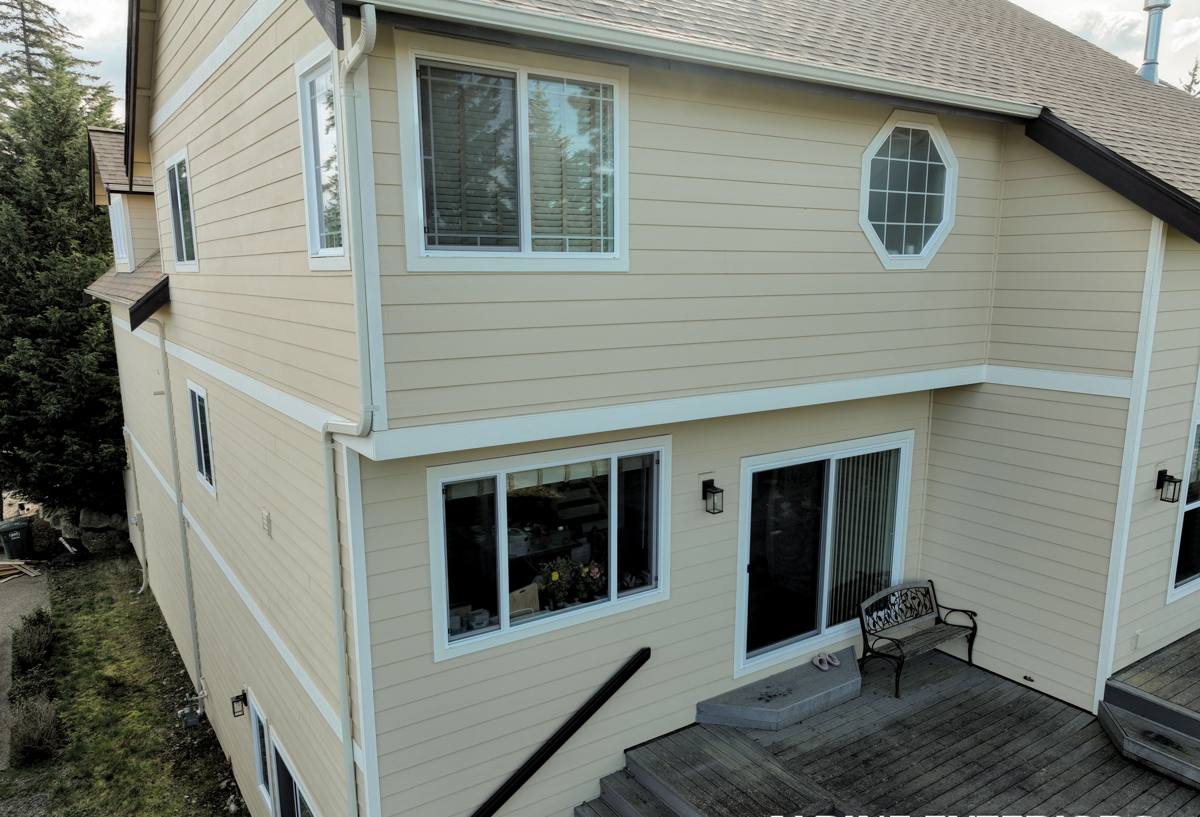
What Bellingham's Climate Does to a Deck
Salt-Tinged Marine Air
Constant low-grade salt exposure is harder on fasteners, hardware, and any wood surface than most homeowners expect. It's not the dramatic damage of a single storm — it's a slow, cumulative wear on metal connectors and exposed end grain that shows up as corrosion streaks and soft spots years before anyone planned to think about the deck again.
Wind-Driven Rain
Rain in this part of Whatcom County frequently comes in sideways, driven by wind off the water. On a deck, that means water gets pushed under railings, into ledger connections, and along board edges from angles a simple flat-surface drainage plan doesn't account for. Framing and flashing details that would be adequate in a calmer climate can still let water track into places it shouldn't be here.
A Long Moss and Algae Season
Shade, moisture, and mild temperatures are exactly what moss and algae need, and Bellingham has all three for most of the year. On a wood deck, that growth gets a foothold in the grain itself. On the wrong composite board, it can still take hold on the surface texture if the capping and surface finish weren't built with this kind of exposure in mind.
Why We Build with Composite Rather Than Wood
We don't offer a side-by-side menu of cedar, pressure-treated, and composite and let price alone decide. We build decks in composite because of what we've consistently seen happen to wood decking in this specific climate over a multi-year span, not because of anything wrong with wood as a material in general.
- Capped composite resists moisture absorption: A fully capped board has a polymer shell around the core, so it doesn't soak up rain and marine humidity the way bare or lightly finished wood does.
- No annual sealing or staining: Wood decking in a climate this wet needs a real, recurring maintenance schedule to hold up. Composite is engineered to skip that step entirely.
- Consistent, engineered board performance: Composite boards don't have the natural variability of milled lumber, so warping, cupping, and splintering that come from uneven wood grain aren't a factor.
- Better resistance to moss and algae growth: Modern capped composite surfaces are far less hospitable to organic growth than open wood grain, particularly on shaded, north-facing decks.
- Manufacturer warranties built around long-term ownership: Leading composite lines back their boards with lengthy structural and fade/stain warranties, which reflects real confidence in how the material ages.
We don't build decks out of cedar, redwood, or standard pressure-treated lumber as our default recommendation. Those are legitimate materials and plenty of contractors work with them well. Our professional position is simply that in a climate with this much sustained moisture, salt air, and moss pressure, a homeowner is generally better served by a capped composite system that doesn't depend on a maintenance routine being kept up perfectly every single year.
Where Wood Still Makes Sense
We're not going to tell you wood decking is a bad choice everywhere. On a covered, well-ventilated porch deck with real overhang protection from rain, or for an owner who genuinely enjoys the upkeep and wants a specific natural look, wood can still be the right call. What we won't do is install exposed, uncovered wood decking on a rain- and moss-exposed Bellingham lot and let a homeowner find out three summers later that the maintenance schedule they were told about didn't happen.
What a Correct Composite Deck Installation Requires
Composite decking only performs the way it's engineered to if what's underneath it is done right. The board is the visible part; the framing, flashing, and fastening underneath it is what actually determines whether the deck stays solid and dry for the long haul.
Framing and Structure
Composite boards are heavier than most wood decking, so joist spacing and beam sizing need to match the manufacturer's span tables for the specific product, not a generic wood-framing assumption. We check the existing substructure on any resurface project rather than assuming old framing is automatically fit to carry new material.
Ledger Board Flashing
Where a deck attaches to the house, that ledger connection is one of the most common points for hidden water intrusion, and it's exactly the kind of detail that gets rushed on a low-bid job. Correct flashing and waterproofing at the ledger keeps wind-driven rain from tracking behind the siding and rotting the rim joist or wall framing behind it, a problem that can go unnoticed for years.
Joist Protection
Wrapping or taping the tops of joists before decking goes down keeps water from soaking into the framing lumber through screw penetrations, which matters even more in a climate where the wood underneath rarely gets a chance to fully dry out between rain events.
Hidden Fastening and Board Spacing
Composite boards expand and contract with temperature more than most homeowners expect, and gaps need to be set correctly at install so boards don't buckle or pull loose later. Hidden fastener clip systems, installed to the manufacturer's spec, keep the surface clean and give the boards room to move without compromising the deck's structure.
Drainage Beneath the Deck
On decks built low to grade, or where the ground beneath doesn't shed water well, standing moisture under the deck keeps everything above it damp longer and feeds moss growth from below. We look at grading and under-deck drainage as part of the job, not as an afterthought.
Composite vs. Wood Decking in This Climate
| Factor | Capped Composite | Cedar / Pressure-Treated Wood |
|---|---|---|
| Moisture absorption | Resists absorption via polymer cap | Absorbs moisture, especially at cut ends and fastener holes |
| Moss and algae resistance | Smoother cap surface resists growth better | Open grain gives moss and algae an easy foothold |
| Annual maintenance | Occasional wash-down, no sealing or staining | Sealing or staining needed regularly to hold up in this climate |
| Long-term appearance | Stable color and surface over time | Grays, splinters, and can cup or warp with repeated wet cycles |
| Upfront material cost | Higher | Lower |
| Warranty structure | Long structural and fade/stain warranties from manufacturer | Typically no material performance warranty beyond initial defects |
What Drives Composite Decking Cost in Bellingham
| Factor | What It Affects | Why It Matters Here |
|---|---|---|
| Deck size and shape | Total board and framing material | Multi-level decks and irregular shapes common on hillside Bellingham lots add cuts and waste |
| Existing substructure condition | Whether framing can be reused or must be rebuilt | Years of trapped moisture under older wood decks often means hidden rot that only shows once boards come off |
| Board tier and color | Material cost and long-term fade resistance | Higher-tier capped boards handle salt air and UV exposure with less visible fading over time |
| Railing and fastening system | Labor and hardware cost | Corrosion-resistant hardware matters more here than in a drier, inland climate |
| Site access and grading | Labor time and drainage work needed | Sloped and shaded lots common in Bellingham may need extra grading or drainage attention |
Actual pricing depends on the specific deck, which is why we walk the property and look at the existing structure before quoting rather than estimating from square footage alone.
Our Process for a Bellingham Composite Deck
- On-site assessment of the existing deck or build area, including a check of the substructure if it's a resurface project
- Review of drainage, grading, and ledger connection to the house
- Written estimate that spells out framing scope, board selection, and hardware
- Framing repair or rebuild to current span and flashing standards where needed
- Joist protection, then composite board installation with hidden fastening per manufacturer spec
- Railing, stair, and trim finish work
- Final walkthrough so you know what maintenance, if any, the deck actually needs going forward
Signs Your Bellingham Deck Needs Attention
- Boards that feel spongy, springy, or soft underfoot, especially near the house or stairs
- Moss or dark green film that returns quickly after cleaning
- Visible gaps, cupping, or splintering across older wood boards
- Rust staining around fasteners or metal connectors
- Standing water or slow drainage underneath the deck after rain
- A ledger area at the house wall that looks stained, soft, or separated from the siding
Why Hiring a Crew That Already Works Bellingham Matters
A deck built to a generic national spec sheet isn't automatically wrong, but it's also not automatically right for this specific stretch of coastline. Framing spans, flashing details, and hardware choices that hold up fine in a dry inland climate get tested harder here, faster, by salt air, wind-driven rain, and a moss season that doesn't really end. Working regularly on Bellingham and Whatcom County properties means we're not guessing at what this climate does to a deck over five or ten years — we're building around what we've actually seen happen to decks in this exact setting.
If you're weighing a new composite deck or looking at replacing an aging wood one, we're glad to come take a look and give you a straight answer on what your specific property needs. Use the form below to request a free, no-pressure estimate.