 Blaine Exterior
 Why Board & Batten Fits Homes Near California Creek
The California Creek area sits low and close to water, with the kind of damp, shaded pockets that come from being near a creek corridor in Whatcom County. Board & batten siding has always suited homes like these — the vertical lines shed water differently than horizontal lap siding, and the style reads clean against the mix of wooded lots and open pasture common around this part of Blaine. But style is only half the equation. Out here, the siding also has to survive salt-laden air moving in off Semiahmoo Bay and Drayton Harbor, months of driving rain, and a moss season that can stretch from October into May. A board & batten job that isn't built for that combination will show problems within a few winters, regardless of how good it looks the day it goes up.
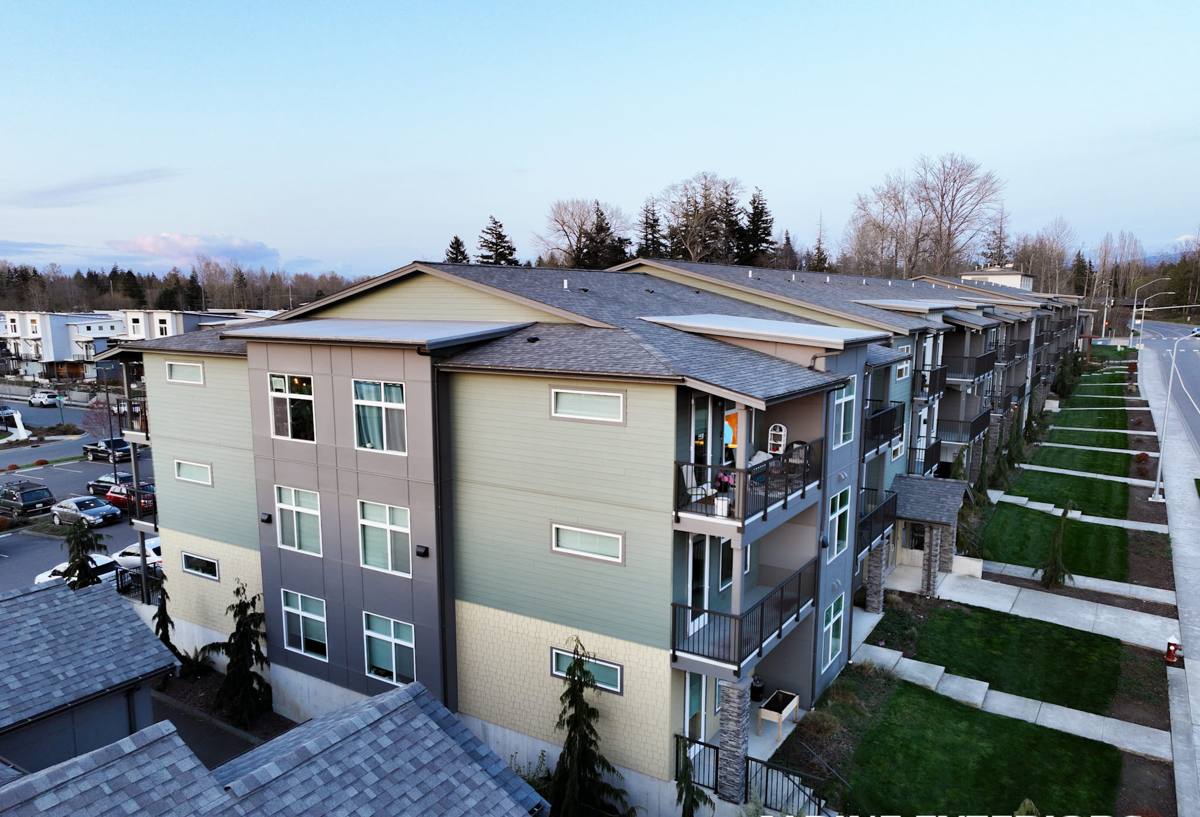
What Blaine's Climate Actually Does to Vertical Siding
We don't treat "coastal climate" as a marketing phrase. It's a specific set of stresses that vertical siding near California Creek has to be detailed for.
Salt Air
Airborne salt from the bay accelerates corrosion on anything metal — fasteners, flashing, trim screws. On board & batten specifically, the battens themselves are fastened through the panel joints, which means there are more penetration points per square foot than on standard lap siding. Every one of those fasteners is a spot where the wrong hardware starts rusting, staining the ColorPlus finish, and eventually losing its grip.
Driving Rain
Wind-driven rain off the water doesn't just run down a wall — it gets pushed sideways and up under laps and joints. Board & batten has vertical seams that need a real drainage path behind them, not just caulk at the surface. If that drainage plane isn't built correctly, water works its way behind the battens and stays there, since vertical siding dries slower than lap siding when trapped moisture can't run off cleanly.
Moss Season
Shaded, low-lying lots near the creek stay damp longer than open ground, which is exactly the environment moss and algae need. Vertical board & batten has flat batten faces and square joints that hold spores and moisture differently than lapped horizontal siding — north-facing walls and anything under tree cover will show growth first and worst.
What Correct Board & Batten Installation Actually Involves
Board & batten looks simple from the street — vertical panels with a batten strip covering each seam — but the assembly behind that look is what determines whether it lasts 10 years or 40.
The Rainscreen Gap
A true rainscreen — furring strips creating a small air gap between the siding and the weather-resistive barrier — lets any moisture that gets past the battens drain and dry out instead of sitting against the sheathing. This is non-negotiable for board & batten in a climate like ours. Without it, the wall assembly is relying entirely on caulk and paint to keep water out, and caulk is not a permanent seal.
Panels and Battens
We install HardiePanel vertical siding with Hardie batten strips over the seams, engineered specifically for this look. Because it's fiber cement rather than an engineered wood product, it doesn't swell, delaminate, or wick moisture at the cut edges the way wood-based panel products can — which matters most exactly where this style traps the most moisture: the seams.
Fasteners and Flashing
Every fastener on a coastal board & batten job should be corrosion-resistant hardware rated for the exposure, not standard galvanized. Flashing at window heads, roof-wall intersections, and the base of the wall has to be integrated with the rainscreen, not just caulked over the top. This is where most vertical siding failures actually start — not in the panel material, but in flashing details that were rushed or skipped.
Why We Install James Hardie for This Application
We only install James Hardie fiber cement siding, and board & batten is one of the applications where that decision matters most. Hardie's HZ5 product line is engineered for exactly this kind of climate — freeze-thaw cycling, sustained moisture exposure, and salt air — and the factory-applied ColorPlus finish holds color and resists the streaking that raw-cut edges on other materials can develop. Fiber cement is also non-combustible, which matters as more Whatcom County properties sit closer to dry-season wildfire risk even in a generally wet region. We don't install vinyl or engineered wood board & batten because the seams and battens in this style are unforgiving of any material that moves, swells, or wicks moisture — and near California Creek, that's not a theoretical concern.
Common Mistakes We See on Vertical Siding Jobs
- No rainscreen gap — panels fastened directly to the weather barrier with no drainage path
- Battens caulked at the top and bottom instead of flashed, trapping water inside the joint
- Standard fasteners used instead of corrosion-resistant hardware, leading to rust streaks within a few years
- Panel joints landing at random stud spacing instead of on a layout planned around window and door openings
- Cut edges left unsealed, which is where a fiber cement panel is most vulnerable to moisture intake
Our Process for California Creek Board & Batten Projects
- On-site assessment: we look at sun exposure, tree cover, drainage around the foundation, and how close the home sits to standing water or low ground, since all of that affects how the siding should be detailed.
- Substrate and moisture check: before anything new goes up, we confirm the sheathing underneath is dry and sound — installing new siding over a wet wall assembly guarantees problems later.
- Rainscreen and weather barrier install: furring strips and a weather-resistive barrier go on first, sized and fastened for this specific wall.
- Panel and batten installation: HardiePanel vertical siding goes up with a layout planned around openings, followed by battens set with the correct reveal and fastener spacing.
- Flashing and sealant details: every penetration, window, and transition is flashed to shed water, with sealant used only where it belongs — not as a substitute for flashing.
- Final walkthrough: we check reveals, fastener lines, and finish quality before calling the job done.
Maintenance in a Salt Air, High-Moss Environment
Correct installation gets you most of the way there, but board & batten near California Creek still benefits from a little seasonal attention. A soft wash once a year — not a pressure washer aimed directly at seams and battens — keeps moss and algae from getting established on shaded walls. Keeping gutters clear and vegetation trimmed back from the siding reduces the amount of standing moisture against the wall. And a quick visual check after major windstorms for any loosened trim or fastener heads catches small issues before they become water intrusion points.
Cost Factors for Board & Batten Siding
| Factor | Why It Affects Cost |
|---|---|
| Rainscreen / furring system | Adds labor and material but is essential for coastal moisture control |
| Home size and wall complexity | More corners, gables, and openings mean more layout and flashing work |
| Existing siding removal | Tear-off and disposal of old material adds time, especially if hidden damage is found |
| Substrate repair | Any rotten or wet sheathing found underneath must be repaired before new siding goes on |
| Trim and batten detail level | Reveal width, corner treatment, and window trim style all affect material and labor |
Choosing a Crew That Already Works This Neighborhood
Board & batten done wrong is expensive to fix, because the failure usually happens behind the battens where it isn't visible until it's serious. A contractor who already works around California Creek and the Blaine waterfront understands the specific combination of salt exposure, driving rain, and moss growth this area produces — not just general Pacific Northwest siding practices.
- Ask whether they install a true rainscreen gap on vertical siding, not just a weather barrier
- Ask what fastener material they use and whether it's rated for coastal exposure
- Ask how they handle flashing at batten joints, window heads, and the base of the wall
- Ask for their manufacturer certification and whether it applies to the exact product being installed
- Ask how they'd inspect and repair the substrate if moisture damage is found during tear-off
If you're weighing board & batten for a home near California Creek, we're happy to take a look and walk you through what your specific lot and wall exposure call for. Reach out for a free, no-pressure estimate using the form below.