 Blaine Exterior
 Windows Built for Birch Point's Coastline, Not Just Any Window Job
Birch Point sits close enough to the water that its homes take a different kind of beating than houses even a few miles inland. Salt-laden air off the Strait works into window frames, hardware, and seals year-round. Add Whatcom County's long wet season, driving rain that hits west- and north-facing walls at an angle, and the moss and algae growth that comes with months of shade and moisture, and you've got a climate that finds every weak point in a window system. A window that performs fine in a drier part of the state can fail early out here — not because it's a bad product, but because it wasn't sealed, flashed, or specified for this exposure.
This page is about one job, done right, in one place: energy-efficient window replacement for Birch Point homes. Not a general overview of window brands, not a sales pitch — just what actually matters when you're replacing windows on a house that sits in salt air and gets rained on sideways for half the year.
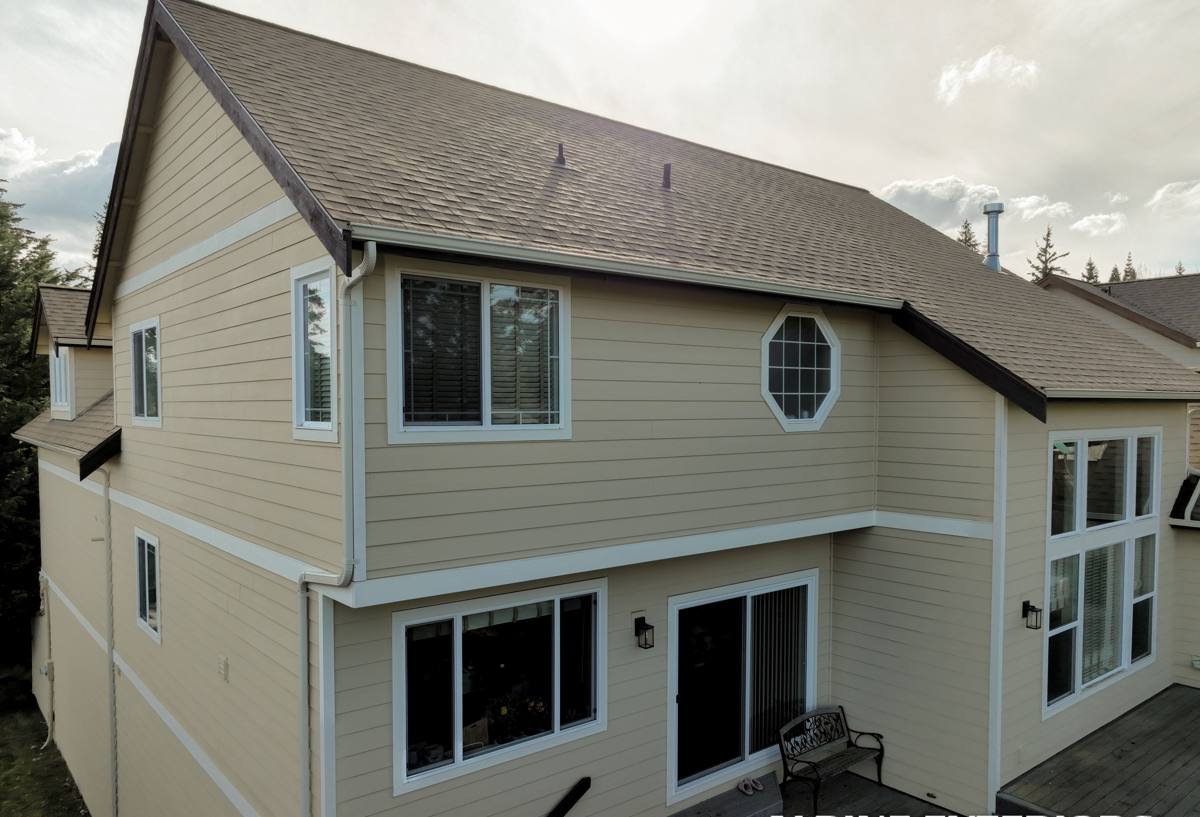
What Birch Point's Climate Actually Does to Windows
Salt Air and Hardware
Salt spray carries further inland than most homeowners expect, especially on bluff and waterfront lots. It settles on window hardware, tracks, and exposed fasteners, accelerating corrosion on anything that isn't rated for a marine-adjacent environment. Cheaper hinges, cranks, and locks can start sticking or pitting years before the glass or frame shows any wear. This is one of the most common reasons we get called out to "fix" a relatively young window — the frame is fine, the hardware isn't.
Driving Rain and Wind-Driven Water
Blaine gets weather that comes in off the water sideways, not just straight down. That means water is pushed against and up under window flashing in ways that a standard vertical rain assumption doesn't account for. If flashing, sill pans, and sealant details aren't done for wind-driven rain specifically, water finds its way behind the frame — and by the time you see a stain on the interior trim, it's often been happening for a while.
Moss, Algae, and Sustained Moisture
Shaded exposures and long stretches of damp weather grow moss and algae on window sills, exterior trim, and anywhere water sits instead of draining. Beyond the cosmetic issue, sustained moisture against wood trim or under-performing sealant is what eventually causes rot at sills and corners. Good drainage detailing at the window opening matters as much as the window unit itself.
What a Correct Energy-Efficient Window Job Includes
"Energy-efficient" gets used loosely. For a Birch Point home, it should mean a specific combination of glass performance and installation quality — either one without the other leaves you with a window that underperforms.
Glass and Frame Performance
- Low-E coatings tuned for the Pacific Northwest's mix of gray-sky heat gain and winter heat loss — not a generic hot-climate or cold-climate spec
- Dual or triple-pane construction with a warm-edge spacer system, which resists condensation and seal failure better than older aluminum spacers over time
- Frame materials chosen for their behavior in coastal, high-moisture conditions — vinyl and fiberglass options that don't require painted maintenance and resist salt-driven corrosion better than bare aluminum
- Proper NFRC ratings for U-factor and Solar Heat Gain Coefficient appropriate to each elevation of the house — a south-facing window and a north-facing window in the same home often benefit from different glass packages
Installation Details That Actually Determine Performance
- Sill pan flashing that sheds water out, not into, the wall assembly — critical given how much wind-driven rain this area gets
- Continuous, correctly lapped house-wrap and flashing tape integration around the rough opening
- Backer rod and sealant at the exterior trim line rated for UV and salt exposure, not a generic caulk that chalks and cracks within a couple of seasons
- Shimming and squaring that keeps the sash operating smoothly — misaligned frames are a major cause of premature seal wear on operable windows
- Insulation of the gap between frame and rough opening, so the window isn't undermined by an uninsulated void doing all the heat loss
A window can carry a great efficiency rating on paper and still perform poorly if any of the installation steps above are rushed. This is where most of the real-world difference between a good job and a problem job actually happens.
Our Process for a Birch Point Window Replacement
- On-site assessment. We look at each elevation of the house separately — sun exposure, wind exposure, existing water damage or staining, and current window condition — rather than quoting a blanket product for the whole home.
- Product recommendation by elevation. Where it makes a real difference, we'll suggest a different glass package for a south-facing wall versus a north- or west-facing wall that takes more direct weather.
- Removal and opening inspection. Old windows come out carefully so we can inspect the rough opening, sill, and surrounding sheathing for rot or prior water intrusion before anything new goes in. Problems found here get addressed, not covered up.
- Flashing and drainage first. Sill pan and flashing work is done to shed wind-driven rain, matched to how this specific property takes weather.
- Window installation and air-seal. Units are shimmed, squared, insulated, and sealed with materials suited to a salt-air environment.
- Exterior trim and finish. Trim is finished and sealed in a way that resists the moss and algae growth common on shaded, damp surfaces in this area.
- Walkthrough. We check operation of every sash, confirm weather sealing, and go over basic maintenance specific to a coastal property.
Cost Factors for Birch Point Window Replacement
Every home and opening is different, so we won't quote a number without seeing the job — but the factors that move price for this area are consistent enough to lay out honestly.
| Factor | Why It Matters Here |
|---|---|
| Frame material | Vinyl and fiberglass generally cost less over time to maintain in salt air than painted wood or bare aluminum |
| Glass package per elevation | Upgraded Low-E/triple-pane on exposed or west-facing walls costs more upfront but reduces long-term energy loss |
| Rough opening condition | Rot or water damage found during removal adds repair scope before new windows can go in correctly |
| Flashing and sill pan detailing | Proper wind-driven-rain flashing takes more labor time than a standard low-exposure installation |
| Number and size of openings | Larger or custom-sized units cost more per opening than standard stock sizes |
| Access and site conditions | Bluff-adjacent or multi-story openings can add scaffolding or staging time |
As a general guide, expect a wide range depending on these factors — this is a job where getting a specific, itemized quote for your actual house matters more than a ballpark number pulled from a national average.
Why Hiring a Crew That Already Works Birch Point Matters
Window installation isn't one-size-fits-all, and a crew that mostly works drier inland areas of Whatcom County won't automatically think about wind-driven rain flashing or salt-rated hardware unless they've been burned by skipping it. A crew that regularly works Birch Point and the surrounding Blaine waterfront has already seen which details cause callbacks in this exact environment — sill pans that weren't angled correctly, hardware that corroded within a couple of winters, sealant that failed under UV and salt exposure. That's knowledge you don't get from a spec sheet; it comes from doing the work here repeatedly and paying attention to what holds up.
It also means faster, more accurate assessments. We're not guessing at how a north-facing wall on a Birch Point lot handles weather — we've seen it on other jobs nearby, and we know what to check for before we ever pull an old window out.
Signs Your Current Windows Are Already Behind
- Condensation forming between panes, which usually means the seal has failed and the insulating gas is gone
- Visible corrosion or stiffness in locks, cranks, or hinges
- Drafts noticeable near the frame edge, especially during wind-driven rain events
- Soft or discolored trim at the sill or corners — an early sign of moisture getting behind the frame
- Moss or algae buildup on sills that keeps returning no matter how often it's cleaned
- Noticeably higher heating bills in winter compared to similar-sized rooms with newer windows
Any one of these on its own isn't necessarily urgent, but a few together usually means the windows are costing more in energy loss and repair risk than a replacement would.
Maintenance That Extends the Life of New Windows
Even a correctly installed, well-specified window benefits from basic upkeep in a salt-air environment. Rinsing accumulated salt spray off frames and hardware periodically, keeping weep holes clear of debris and moss so water drains as designed, and re-sealing exterior caulk lines when they start to show UV wear will meaningfully extend the life of the installation. None of this is complicated, but it's often skipped simply because homeowners aren't told it matters more here than it would inland.
Get a Straightforward Estimate
If your Birch Point home has windows that are drafty, fogging between panes, or showing hardware corrosion, it's worth having someone look at them who already understands what this stretch of Blaine coastline does to a window system. We'll walk the exterior with you, look at each elevation on its own terms, and give you a clear, no-pressure estimate for what a correctly installed, energy-efficient replacement would involve — use the form below to get started.