 Blaine Exterior
 Windows Built for Birch Bay's Waterfront Conditions
Birch Bay sits right up against the water, and that location shapes everything about how a window performs here. Salt-laden air moves off the bay and settles on every exterior surface, driving rain comes in sideways during winter storms, and the mild, damp climate that defines Whatcom County keeps moss and mildew active for most of the year. A window that was never designed with that combination in mind will show it early — through fogged glass, swollen sashes, corroded hardware, or drafts that show up the first time the wind picks up off the water.
Energy-efficient windows done right for this area aren't just about a lower heating bill, though that matters too. They're about a window assembly — glass, frame, seals, and flashing — that's matched to a marine climate and installed in a way that keeps water and salt air out of places they can do damage. That's the standard we hold every Birch Bay job to.
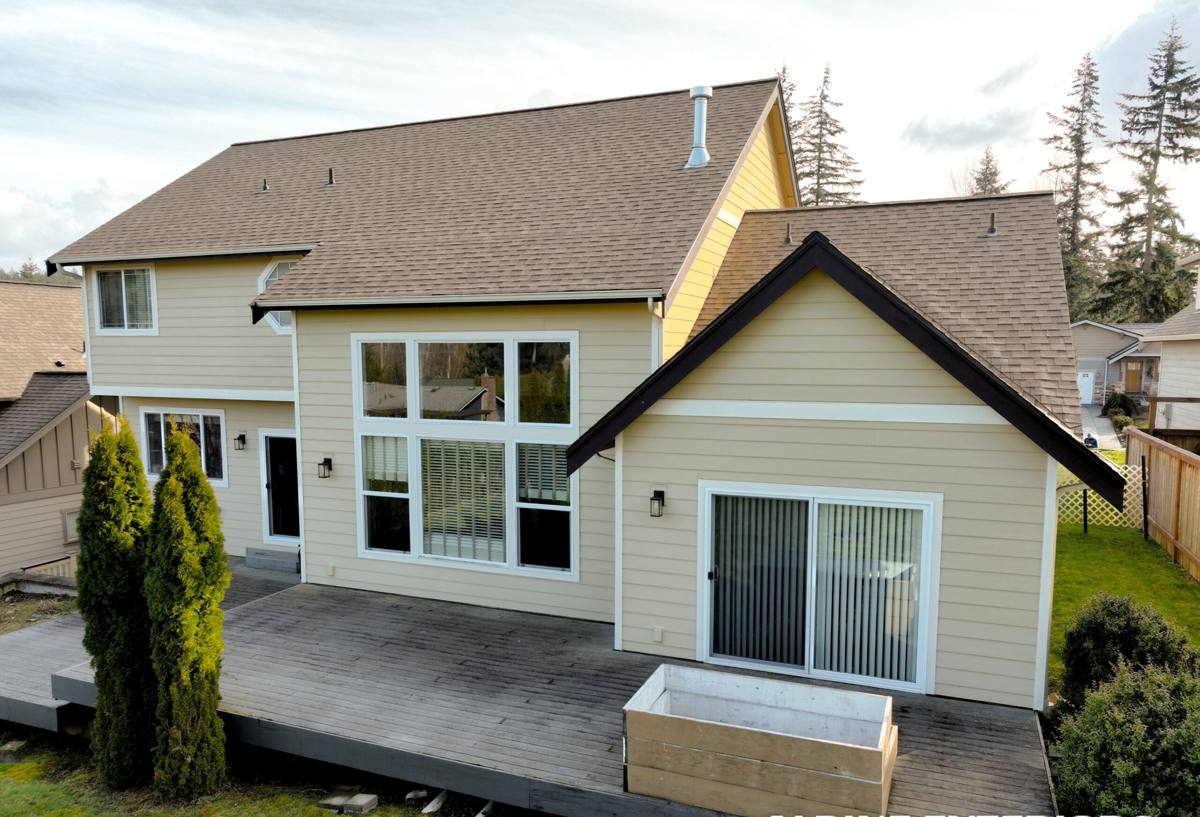
What Salt Air, Rain, and Moss Actually Do to Windows Over Time
Salt and Corrosion
Airborne salt is mildly corrosive, and it accumulates fastest on windows facing open water or prevailing wind. Over years, it attacks unprotected fasteners, weep system components, and lower-grade hardware — hinges get stiff, locks bind, and rollers on sliding sashes start to seize. It's a slow process, which is exactly why it's easy to ignore until a window won't latch properly anymore.
Driving Rain and Wind-Driven Water
Rain that comes in at an angle behaves differently than rain falling straight down — it gets pushed into gaps that would otherwise stay dry. If flashing, sill pans, or sealant joints aren't done correctly, that water finds its way behind the trim and into the wall assembly, where it causes rot and hidden damage long before it ever shows up as a visible stain indoors.
Moss and Sustained Moisture
Whatcom County's long wet season keeps humidity high around window perimeters, especially on north- and west-facing walls that don't get much direct sun. That's where moss and mildew take hold on frames, trim, and sills. Beyond the cosmetic issue, sustained moisture against wood components accelerates rot, and it can degrade sealants and gaskets faster than in a drier climate.
What "Energy-Efficient" Should Mean in This Climate
Whatcom County is heating-dominated most of the year, with a shoulder season where solar gain is actually welcome rather than a liability. That changes which performance numbers matter most.
- U-factor (how well the window resists heat loss) is the number to prioritize here — a lower U-factor means less heat escaping through the glass and frame during our long stretch of cool, wet weather.
- Solar Heat Gain Coefficient (SHGC) matters less aggressively than it would in a hot climate. We don't need to block solar heat the way a south-facing desert home would — some solar gain in winter is a benefit, not a problem.
- Air leakage rating is directly tied to comfort and draft complaints, and it's especially important on wind-exposed elevations facing the bay.
- Condensation resistance matters more in a damp marine climate, where interior humidity plus cold glass surfaces can lead to persistent moisture on the glass and sill if the assembly isn't built for it.
A window with a strong ENERGY STAR rating for the Northern climate zone is a reasonable starting point, but the installation quality matters just as much as the glass package — a great window installed with a poor seal will still leak air and water.
Frame Material Trade-offs Near the Water
There's no single "best" frame material — each has real trade-offs, and the right call depends on the home, the elevation's exposure, and the owner's maintenance preference.
| Frame Material | Behavior in Salt Air / Rain | Maintenance |
|---|---|---|
| Vinyl | Doesn't corrode or rot; performs consistently in coastal moisture | Low — occasional cleaning |
| Fiberglass | Very stable dimensionally, holds up well to moisture and temperature swings | Low |
| Aluminum-clad wood | Good weather protection on the exterior face, but any breach in the cladding can trap moisture against the wood core | Moderate — cladding seams need periodic inspection |
| All-wood | Warmest appearance, but most vulnerable to sustained moisture, mildew, and rot in this climate without diligent upkeep | High — regular refinishing and sealing |
For homes with direct exposure to wind off the bay, we generally steer owners toward vinyl or fiberglass for the field of window openings, reserving wood or wood-clad units for sheltered elevations where the owner specifically wants that look and is prepared for the upkeep. That's a maintenance and moisture-management recommendation, not a knock on any manufacturer — every material has a place, just not always on every wall of every house here.
What a Correct Installation Involves
In a climate where wind-driven rain is routine, the installation details matter as much as the window itself. A correct job includes:
- Removing the old unit and inspecting the rough opening for hidden rot or water damage before anything new goes in.
- Installing a proper sloped sill pan so any water that gets past the glass drains outward, not into the wall.
- Integrating flashing tape and the window's nailing flange with the existing weather-resistive barrier in the correct shingled order, so water sheds down and out at every layer.
- Sealing and insulating the gap between the frame and rough opening correctly — too little insulation leaves a cold spot and condensation risk; over-packing with the wrong material can bow the frame.
- Finishing exterior trim and sealant joints so they shed water and resist the salt exposure specific to a waterfront property.
Skipping or rushing any one of these steps is how a brand-new, high-performance window still ends up with a soft spot in the wall three years later. The window is only as good as the opening it's set into.
Our Process for a Birch Bay Window Project
1. On-Site Assessment
We walk the exterior and look at each opening's exposure — which walls take direct wind and rain off the water, where moss and staining are already showing up, and whether there's any sign of hidden moisture around existing frames.
2. Product Selection
We go over frame material, glass package, and hardware options based on that exposure, your budget, and how the house is used, rather than pushing one product line regardless of fit.
3. Installation
Our crew handles removal, opening prep, flashing integration, and finish work as one continuous process — not a same-day rush job, since getting the flashing and sealing right takes the time it takes.
4. Cleanup and Walkthrough
We clear debris, clean the new glass, and walk the finished openings with you so you know how the hardware operates and what routine maintenance to expect.
Signs Your Current Windows Are Already Failing
Homeowners often wait longer than they should because the signs show up gradually. Worth checking for:
- Visible fogging or moisture between the panes of a double- or triple-pane unit — the seal has failed and the insulating gas is gone
- Frames that feel cold to the touch or noticeable drafts near the sash when it's windy
- Difficulty latching, locking, or sliding a window that used to operate smoothly
- Soft or discolored trim and sill areas, or moss/mildew building up on the frame itself
- Condensation forming on the interior glass regularly during cool weather
- Rising heating costs without a clear other explanation
Why a Crew Already Working in Birch Bay Matters
A contractor who regularly works this specific stretch of coastline already knows which elevations take the worst of the weather, what typical rough-opening conditions look like in homes of this area's common age and construction, and how to sequence a job around the wet season instead of fighting it. That local familiarity shows up in fewer surprises once the old window comes out — and in a crew that isn't guessing at how much wind and rain exposure a given wall actually sees.
Cost Factors to Expect
Every project is different, but the main variables that move the price are consistent from house to house.
| Factor | Why It Affects Cost |
|---|---|
| Number and size of openings | More glass and more units means more material and labor |
| Frame material | Vinyl and fiberglass typically cost less than wood or wood-clad options |
| Glass package | Upgraded low-E coatings and gas fills add cost but improve performance |
| Condition of the rough opening | Hidden rot or damage found during removal adds repair work before the new window can go in |
| Access and elevation | Upper-floor or hard-to-reach windows take more time and equipment |
As a broad range, a single window replacement often falls somewhere in the low-to-mid thousands per opening depending on size and material, while a whole-house project can run considerably higher. We'll always give you a specific number for your home rather than a generic quote, since the variables above genuinely change the price.
If your Birch Bay home has windows showing their age — or you're just tired of the draft near the water-facing wall every winter — we're glad to come take a look. The estimate is free, there's no pressure to move forward, and you'll get a straight answer about what your windows actually need.