 Blaine Exterior
 Asphalt Shingle Roofing Built for Bellingham's Weather
Bellingham sits close enough to the water and the foothills that its roofs take a beating most inland Washington towns never see. Salt-laced air drifts in off the bay, driving rain comes sideways more often than straight down, and the long gray stretch from October through May keeps every north-facing slope damp for months at a time. Asphalt shingles can handle all of that, but only when they're specified, installed, and maintained with this specific climate in mind. A roof detailed for a dry inland subdivision will not hold up the same way here, and we've replaced enough prematurely failed roofs in this area to know the difference shows up in five years, not twenty.
This page covers what an asphalt shingle roof needs to actually perform in Bellingham, what a correct installation involves, and how we approach the work when a Whatcom County homeowner calls us for a new roof, a repair, or a second opinion.
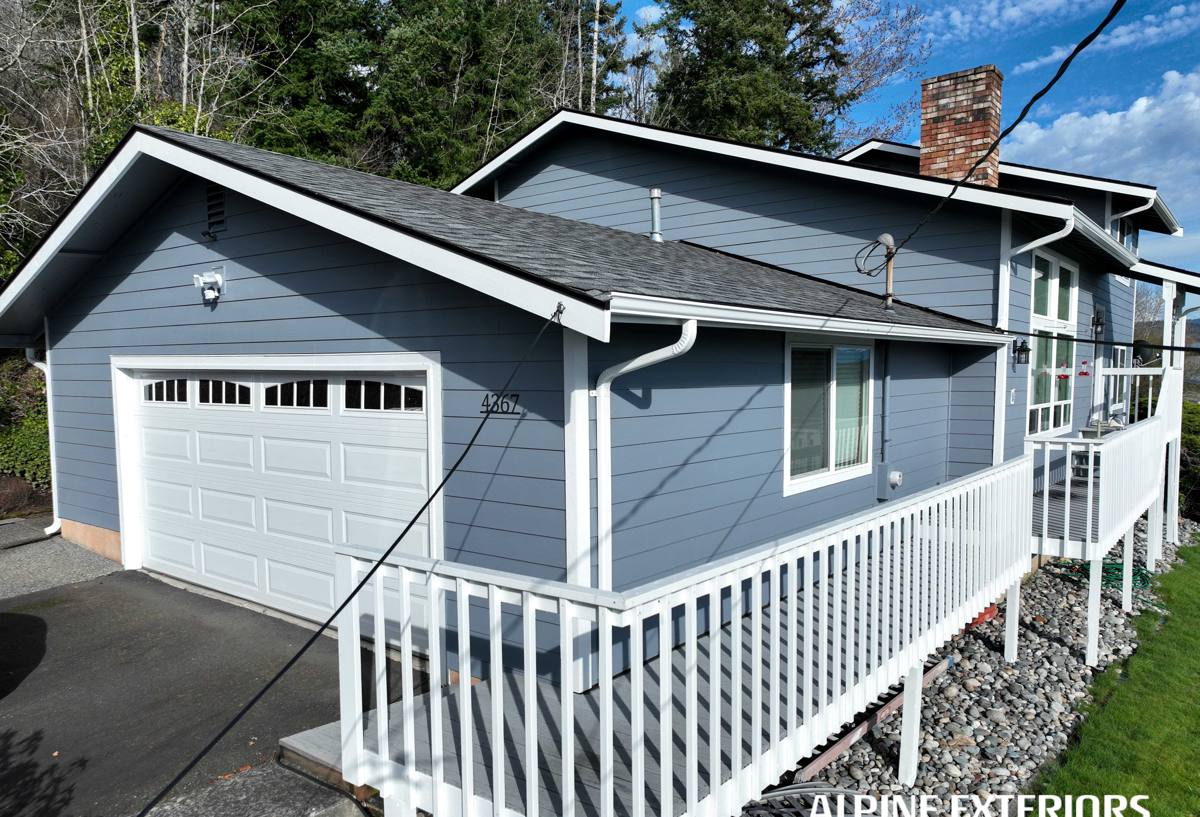
Why Bellingham's Climate Is Hard on Asphalt Shingles
Salt Air and Coastal Exposure
Homes closer to Bellingham Bay and the Salish Sea shoreline deal with airborne salt that settles on roofing, flashing, and fasteners. Over time it accelerates corrosion on unprotected metal — cheap nails, bargain-grade flashing, and exposed fastener heads all suffer here faster than they would forty miles inland. It doesn't ruin a shingle mat directly, but it shortens the life of everything metal that holds the roof system together, which is why we don't cut corners on fastener and flashing quality on jobs near the water.
Moss, Moisture, and the Long Wet Season
Whatcom County's wet season isn't just about total rainfall — it's about how many consecutive weeks a roof stays damp without a real drying window. Combined with the region's tree cover and shaded, north-facing rooflines, that adds up to a long moss season. Moss holds moisture against the shingle mat, works its way under tabs, and lifts granules loose over time. Left unchecked for a few years, it can shorten a shingle roof's service life by a decade or more, especially on lower-slope sections that never get direct sun.
Wind-Driven Rain
Storms coming off the water bring rain at an angle, not straight down. That matters because a roof that would shed water fine in a calm downpour can still leak under wind-driven rain if the underlayment, flashing laps, and shingle exposure aren't detailed correctly. This is one of the most common causes of "mystery leaks" we get called out for — the shingles look fine from the ground, but water is getting pushed sideways under a tab or around a poorly lapped flashing edge.
What a Correct Asphalt Shingle Roof Looks Like Here
A roof built for Bellingham's conditions isn't just "shingles nailed to plywood." The parts you don't see are what determine whether it holds up through a normal Whatcom County winter or starts failing early.
Underlayment and Water Barrier
We use synthetic underlayment as the standard layer under the shingle field, with self-adhered ice-and-water membrane at eaves, valleys, and any low-slope transitions where wind-driven rain is most likely to get pushed backward under the shingle mat. On homes with complex rooflines or shaded valleys that stay damp longer, we extend that membrane further than the minimum code call-out, because that's where we see the most moss and the slowest drying.
Ventilation
Balanced intake and exhaust ventilation keeps the attic temperature and moisture level in check, which matters twice over in this climate: it prevents condensation buildup during long damp stretches, and it keeps the shingle mat from cooking and curling during the occasional summer heat spell. A roof that looks fine from the street can still be failing from underneath if the attic never dries out properly.
Flashing and Detail Work
Step flashing at walls, counter-flashing at chimneys, and properly lapped valley flashing are where the vast majority of real leaks originate — not in the open field of shingles. We flash to shed water in the direction it actually travels during a wind-driven storm, not just straight downhill, which is a detail that gets skipped on a lot of production-built roofs.
Fasteners
Given the salt exposure closer to the water, we spec corrosion-resistant fasteners as standard rather than upgrading only on request. It's a small cost difference at install time and a meaningful difference in how the roof ages.
Choosing the Right Shingle for This Climate
Not every asphalt shingle product is built the same, and the right choice depends on your roof's exposure, slope, and how long you plan to stay in the home. Here's how the common categories compare for a Bellingham roof specifically.
| Shingle Type | Typical Lifespan Here | Best For | Trade-offs |
|---|---|---|---|
| 3-tab (economy) | 12–18 years | Budget-driven projects, secondary structures | Lower wind rating, less moss/algae resistance, thinner mat wears faster in wet climate |
| Architectural / laminate | 20–30 years | Most primary homes in this area | Higher upfront cost, but the standard we recommend for coastal and moss-prone roofs |
| Impact-resistant / high-wind rated | 25–30+ years | Exposed sites near the water, open hillside lots | Highest material cost; often pairs with insurance discounts |
| Algae-resistant (copper-granule) laminate | 20–30 years | Shaded, north-facing, or heavily treed lots | Slightly higher cost; meaningfully slows moss and algae staining |
For most Bellingham homes, we steer people toward a mid-to-upper-tier architectural laminate with algae-resistant granules, especially on shaded roof sections. It's a modest cost step up from economy shingles that pays for itself in avoided moss treatments and earlier replacement.
Our Bellingham Roofing Process
Whether it's a full replacement or a targeted repair, we run the same disciplined process on every job:
- On-site inspection — we get on the roof, not just look from the ground, and check the deck, flashing, ventilation, and any problem areas before quoting anything.
- Honest scope and estimate — you get a written breakdown of what's actually needed, not an upsell list.
- Tear-off and deck check — old shingles come off down to the deck so we can find and fix any rot or soft spots before new material goes down, rather than covering them up.
- Underlayment and flashing — ice-and-water membrane at vulnerable areas, synthetic underlayment across the field, new flashing at all penetrations and walls.
- Shingle installation — installed to manufacturer spec for nailing pattern and exposure, which is what keeps the warranty valid and the wind rating intact.
- Ventilation check — intake and exhaust confirmed balanced before we close the job out.
- Cleanup and walk-through — magnetic sweep for stray fasteners, debris hauled off, and a final walk-through so you know exactly what was done.
Repair, Replace, or Just Maintain?
Not every roofing call ends in a full replacement. Part of doing this honestly is telling you which situation you're actually in.
| Situation | Likely Path | Why |
|---|---|---|
| Isolated leak, roof under 15 years old, few missing/damaged shingles | Targeted repair | Localized damage from wind or a fallen branch doesn't mean the whole system has failed |
| Heavy moss coverage but shingles still intact underneath | Cleaning + preventive treatment | Moss removal and zinc/copper strips can buy years if the mat isn't already degraded |
| Widespread granule loss, curling tabs, roof 18+ years old | Full replacement | Once the mat is degrading broadly, patch repairs won't hold and cost more over time than a planned replacement |
| Recurring leaks in multiple spots, soft decking found | Full replacement | Deck damage usually means the underlayment has been compromised for a while |
Moss and Algae Prevention
Given how much of this region's roof damage traces back to moss and moisture rather than shingle age alone, prevention is worth taking seriously. A few habits make a real difference over the life of the roof:
- Keep overhanging branches trimmed back so roof sections get more direct sun and airflow.
- Have gutters cleared regularly — clogged gutters keep water sitting against the eave line longer than it should.
- Consider zinc or copper control strips near the ridge on shaded roofs; rain washes trace metal down the slope and slows new moss growth.
- Have moss physically removed by a professional rather than pressure-washed — high-pressure washing strips granules and shortens shingle life.
- Schedule a roof check every couple of years, even with no visible problems, so small issues get caught before they become deck damage.
Signs Your Bellingham Roof Needs Attention
Because leaks here often start slow and hidden — pushed in sideways by wind-driven rain rather than pooling obviously — it helps to know what to watch for:
- Granules collecting in gutters or at downspout outlets
- Dark streaking or thick moss growth, especially on north-facing slopes
- Shingle tabs that look curled, cupped, or lifted at the edges
- Daylight visible through the attic roof deck
- Musty smell or damp insulation in the attic during or after storms
- Ceiling stains that appear only after wind-driven rain, not calm rain
If any of those sound familiar, it's worth getting a real inspection before the next wet season rather than waiting for an active leak.
Why Local Experience in Bellingham Matters
A roofing crew that mostly works drier, inland areas will still build you a roof — but they're less likely to over-build the underlayment at valleys, upsize the ventilation, or flag a moss-prone north slope before it becomes a problem. Working this area regularly means we've seen which details actually matter here: where wind-driven rain tends to find its way in, which roof orientations grow moss fastest, and which fastener and flashing choices hold up against salt air near the water. That local pattern recognition is part of what you're paying for, not just the labor.
Warranty and Materials
Manufacturer warranties on asphalt shingles typically cover material defects for the shingle's rated lifespan, but workmanship warranties are separate and vary by installer — that's worth asking about directly whenever you're comparing quotes, from us or anyone else. We install to manufacturer specification specifically because it's what keeps both the material warranty and the wind-rating intact; shortcuts on nailing pattern or exposure are one of the most common ways homeowners unknowingly void coverage without realizing it until they need it.
If your roof is showing moss, granule loss, or you just want an honest read on how much life it has left, we're happy to take a look. Reach out for a free, no-pressure estimate — the form below gets you straight to us.