 Blaine Exterior
 Windows in Birch Point Face a Different Set of Conditions
Birch Point sits right up against the water in Whatcom County, and that location shapes everything about how windows perform there. Homes on or near the bluff get salt-laden wind straight off the bay; homes tucked back under trees fight shade, moisture, and moss instead. Either way, the windows on a Birch Point house are working harder than windows on a similar home twenty miles inland, and they show it sooner — swollen sashes, foggy double-pane glass, corroded hardware, and trim that's gone soft at the corners. We install windows all over Blaine, but Birch Point jobs get planned a little differently because the exposure is different from block to block.
This page is about window installation specifically for Birch Point homes: what the local climate actually does to a window over time, what a correct installation looks like given that, and how we run the job from first look to final walk-through.
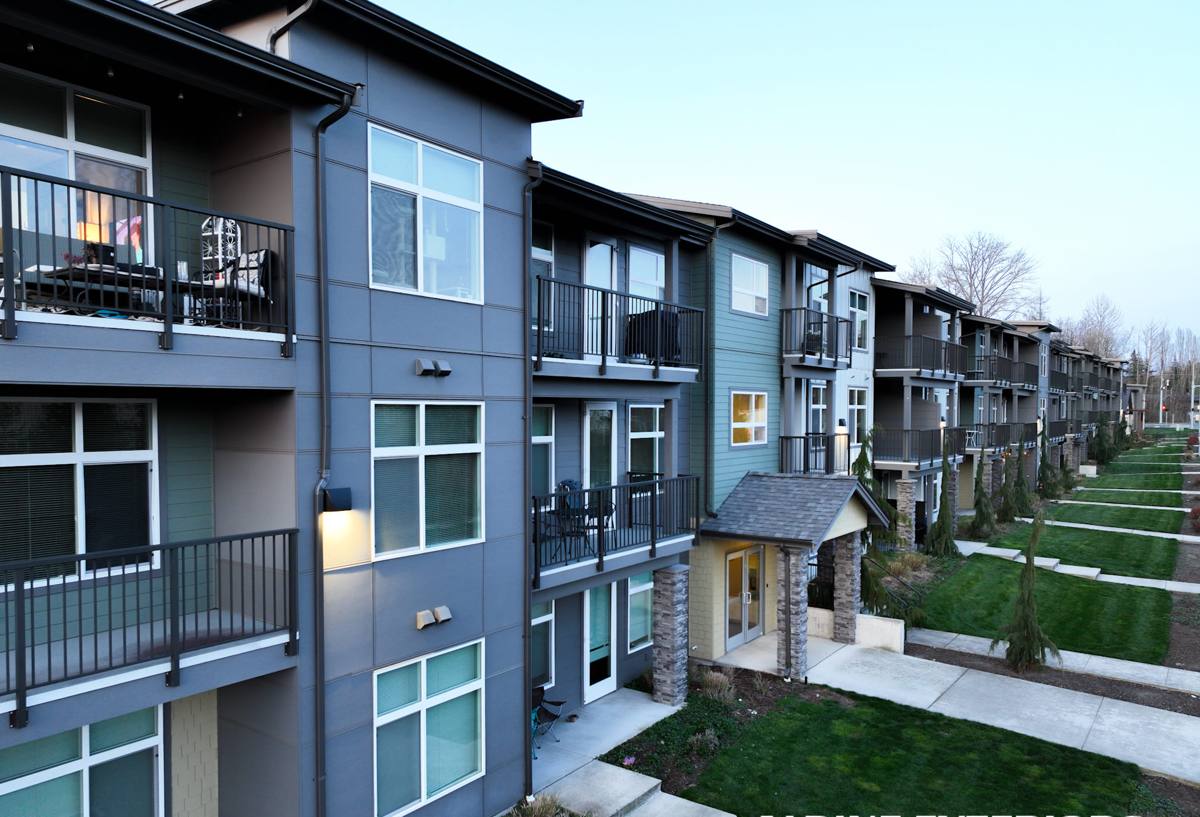
What Salt Air, Driving Rain, and Moss Actually Do to a Window
Salt Air and Corrosion
Airborne salt from the bay settles on everything, including window hardware, screen frames, and exposed fasteners. Over years it accelerates corrosion on lower-grade hardware and can pit or discolor certain metal finishes faster than a manufacturer's warranty documentation assumes for a "typical" installation. This matters most on waterfront and near-waterfront lots, where the exposure is constant rather than occasional. It's a real factor in which hardware finishes and cladding metals we recommend for these properties.
Driving Rain and Wind-Driven Water
Whatcom County storms don't always come straight down — wind off the water pushes rain sideways into west- and southwest-facing walls. A window that would stay dry in a calm rain can take water directly against the frame and sash during a Birch Point blow. That's a flashing and sealing problem more than a glass problem: if the water management around the opening isn't done correctly, water finds its way behind the trim and into the wall cavity, and you won't see it until there's already damage.
Moss, Shade, and Trapped Moisture
On the more wooded, tree-covered lots away from the immediate waterfront, the issue flips — less wind, more shade, more standing dampness. Moss and algae colonize north-facing trim, sills, and the caulk lines around windows, holding moisture against the wood or composite longer than it should sit. Left alone, that's a slow path to rot at the sill and jamb, which is often hidden behind trim until a window starts operating stiffly or a homeowner notices soft wood while repainting.
Signs a Birch Point Home Needs Window Attention
- Sashes that stick, drag, or won't stay up without a prop
- Fogging or a visible haze between panes of double- or triple-glazed glass — a sign the seal has failed
- Soft, spongy, or discolored wood at the sill, jamb, or exterior trim
- Visible moss or dark streaking on trim or siding directly around a window
- A cold draft near the window frame on windy days, even with the window fully latched
- Corroded, stiff, or hard-to-operate locks and cranks
- Condensation forming on the inside of the glass regularly through fall and winter
- Peeling or bubbling paint on the exterior trim immediately around the window opening
Any one of these can be a minor fix. Several at once, especially on a water-facing wall, usually means it's time to talk about replacement rather than another round of caulk and touch-up paint.
What a Correct Window Installation Involves
Flashing and Water Management First
The window unit itself is only part of the job. The flashing, house wrap integration, and sill pan underneath it are what actually keep water out of the wall long-term — and they're the parts that get skipped on rushed installs. For a Birch Point home taking direct weather off the bay, we treat the sill pan and flashing sequence as non-negotiable, not an upsell. Done right, water that gets past the exterior trim in a storm drains back out instead of sitting against the framing.
Correct Sizing and Fit
An undersized replacement window packed with extra shims and foam is a common shortcut that leaves gaps prone to leaking and drafts. We measure for a proper fit in the existing rough opening, or resize the opening cleanly when a different window style calls for it, so the unit sits square and the insulation and sealant around it are doing real work instead of covering a poor fit.
Frame Material Suited to the Exposure
Not every window product is a good match for salt air and constant damp. We steer homeowners toward frame materials and hardware finishes with a track record in coastal exposure, and we're upfront when a particular style or finish is a poor fit for a waterfront lot — that's a maintenance and longevity call, not a sales pitch for the priciest option.
Sealing and Trim Detail
Exterior caulking and trim work are where a lot of future moss and rot problems start or get prevented. We detail the trim so water sheds away from joints instead of collecting in them, and we use sealants rated for the temperature swings and UV exposure this stretch of coastline actually sees.
Comparing Frame Materials for a Waterfront-Adjacent Home
| Frame Material | How It Handles Salt Air & Damp | Maintenance | Typical Fit for Birch Point |
|---|---|---|---|
| Vinyl | Won't corrode or rot; performs consistently in salt exposure | Low — occasional cleaning | Strong all-around choice for most homes here |
| Fiberglass | Very stable in temperature swings and moisture; resists warping | Low | Good for larger openings and exposed elevations |
| Aluminum-clad wood | Attractive, but hardware and cladding seams need monitoring near salt air | Moderate | Workable on more sheltered elevations, less ideal on direct waterfront walls |
| Bare wood | Highest maintenance burden in this climate; prone to rot without diligent upkeep | High | We only recommend it where a homeowner wants the look and commits to the upkeep |
This isn't a knock on any manufacturer — it's about matching material behavior to a specific exposure. A bare wood frame can be a fine choice on a sheltered inland wall and a poor one facing open water, and we'll say so plainly during the estimate rather than let a homeowner find out the hard way.
How We Handle a Birch Point Job, Start to Finish
- On-site assessment. We look at the specific elevation being addressed — water-facing, shaded, or somewhere in between — because that exposure drives our recommendations, not a generic checklist.
- Checking for hidden damage. Before we quote replacement, we check the sill and framing around the existing window for soft wood or moisture damage that needs addressing as part of the job, not discovered mid-install.
- Material and style discussion. We walk through frame material, glass package, and hardware options against what that wall actually deals with — sun, wind, salt, shade — and give you honest trade-offs.
- Written estimate. Scope, materials, and price in writing before any work starts.
- Removal and opening prep. Old unit comes out, opening is inspected and prepped, and any rot or damaged framing found underneath gets addressed before the new window goes in.
- Sill pan, flashing, and install. The new window goes in plumb, level, and square, with a proper sill pan and flashing sequence integrated into the existing wall assembly.
- Insulation and sealing. Gaps are insulated correctly — not overpacked — and exterior sealant is applied where it will actually shed water.
- Trim and finish work. Interior and exterior trim finished to match the home, with attention to the details that keep moss and moisture from taking hold again.
- Final walk-through. We check operation, look, and seal with you before calling the job done.
What Drives the Cost of a Window Job Here
| Factor | Why It Matters in Birch Point |
|---|---|
| Number and size of openings | Larger or more numerous windows mean more material and labor |
| Frame material chosen | Salt-air-appropriate materials vary in upfront cost versus long-term maintenance savings |
| Condition of the existing opening | Hidden rot or damaged framing found during removal adds repair scope |
| Elevation and exposure | Water-facing walls often warrant a more robust flashing and sealing approach than sheltered walls |
| Access | Second-story, steep-lot, or bluff-adjacent access can affect labor time |
| Glass package | Double- versus triple-pane and coatings affect both cost and long-term energy performance |
We don't quote off a phone call for jobs like this — pricing depends on what we find at the opening once the old window is out, which is why the written estimate follows an actual site visit.
Why It Matters That We Already Work Birch Point
A crew that mostly works inland jobs can install a window correctly on paper and still miss what this specific stretch of coastline does to a house over the following five years. We've done enough work along Birch Point and the surrounding Blaine waterfront to know which elevations take the worst of the weather, which materials hold up and which don't, and where moss and hidden moisture tend to show up first. That's not a marketing line — it changes real decisions on the job, like where we spend extra time on flashing detail or which hardware finish we steer a homeowner away from.
It also means a faster, more accurate estimate. We're not guessing at how Whatcom County's marine climate treats a given product; we've seen it firsthand on homes like yours.
A Straightforward Approach to a Weather-Exposed Job
Window installation isn't complicated in concept, but doing it right on a home that takes direct salt air and driving rain takes more care at every step — the flashing, the fit, the material choice, the trim detail. Skipping any one of those is how a window that looks fine on installation day starts causing problems within a few winters. Our approach is to do those steps correctly the first time, explain the trade-offs honestly, and stand behind the work.
If your Birch Point home has windows showing their age — or you're planning ahead before the next storm season — we're happy to take a look and walk you through what we see. Use the form below to request a free, no-pressure estimate.