 Blaine Exterior
 Siding Built for the Sumas Stretch of Whatcom County
Homes in the Sumas area near Blaine sit in one of the more punishing microclimates for exterior materials in western Washington. You've got moisture-laden marine air moving in off the water, long stretches of driving rain through fall and winter, and short, damp-cool summers that never fully dry out the north sides of houses or the shaded ground beneath mature evergreens. That combination is exactly what breaks down the wrong siding material years before it should fail. It's also exactly what fiber cement, installed correctly, is built to handle.
This page is about one job in one area: replacing or installing fiber cement siding on Sumas-area homes near Blaine. Not a general siding overview — the specific conditions this material has to survive here, what a correct installation looks like, and why we only put James Hardie products on these houses.
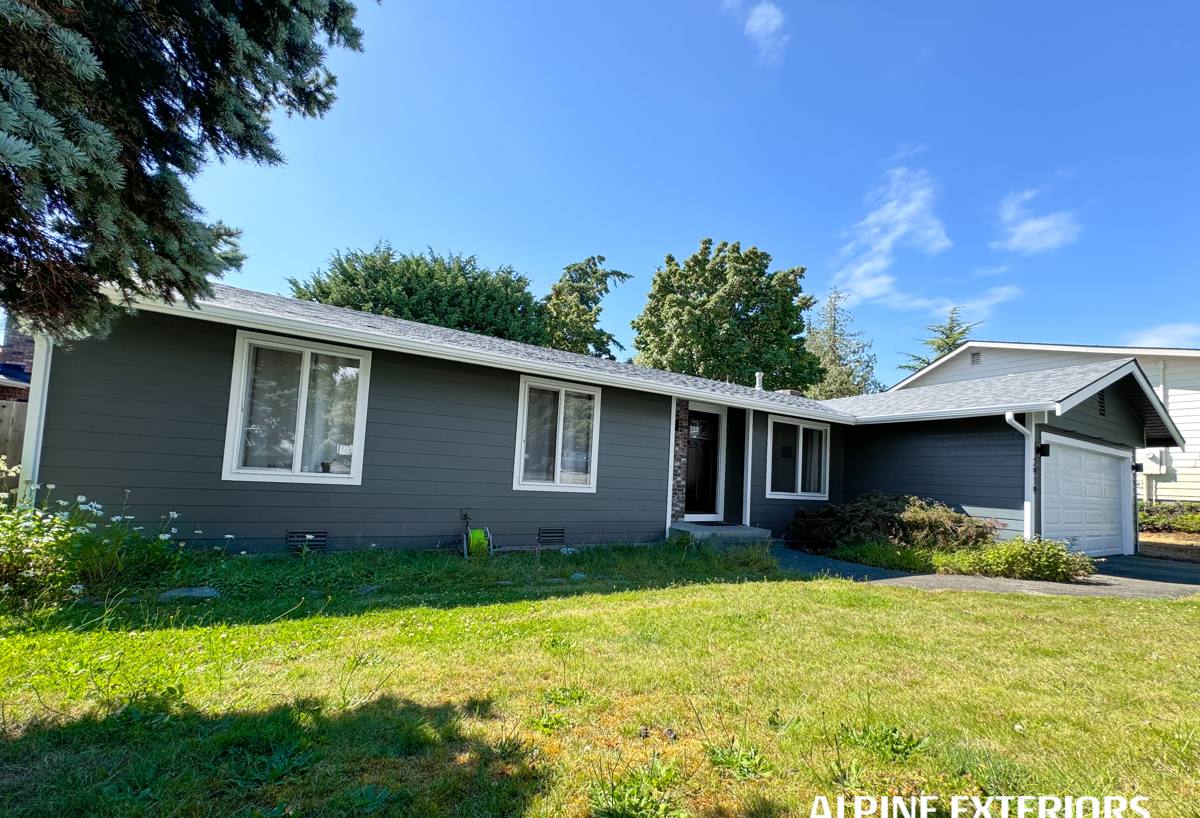
What Salt Air, Rain, and Moss Actually Do to Siding
Every siding material fails in its own way, and understanding the failure mode is more useful than any brand comparison. In this part of Whatcom County, three things do most of the damage:
Salt-influenced marine air
Airborne salt accelerates corrosion on fasteners, flashing, and any metal trim that isn't properly rated or protected. It also draws moisture into porous or poorly sealed surfaces, which keeps wood-based products damp longer after a storm than they would stay in a drier inland climate.
Driving, wind-blown rain
Rain here doesn't just fall — it gets pushed sideways into wall assemblies during winter storms. Any siding system with weak lap coverage, poor caulking at joints, or gaps around windows and trim will let water behind the cladding. Once water gets behind siding, the problem usually isn't visible until rot or mold has already taken hold in the sheathing.
Long moss season
Shaded, north-facing walls and anything near overhanging trees stay damp for months at a time. Moss and algae need exactly that: shade, moisture, and time. On the wrong substrate, moss doesn't just look bad — it holds water against the siding surface and keeps that panel wetter, longer, than an unshaded wall a few feet away.
None of this is unique to any one house. It's the baseline reality for exterior materials anywhere near this stretch of coastline, and it's why material choice matters more here than it would in a drier climate.
Why We Only Install James Hardie Fiber Cement
We don't install vinyl, LP SmartSide, primed spruce, cedar, or other fiber cement brands like Cemplank or Allura. That's a deliberate standard, not a sales pitch, and it's worth explaining honestly.
Vinyl siding is inexpensive and low-maintenance, but it's a thin plastic product that expands and contracts with temperature swings, can crack in impact or cold, and doesn't hold paint if you ever want to change the color. Wood-based composite siding like LP SmartSide performs reasonably well when it stays dry, but any engineered-wood product is more sensitive to sustained moisture exposure than cement-based siding — and sustained moisture is the one thing this climate guarantees. Primed spruce and cedar are beautiful natural materials, but they require an ongoing maintenance commitment — recoating, caulking, and moisture monitoring — that most homeowners underestimate until the first signs of rot show up at trim joints.
James Hardie fiber cement is a cement-and-cellulose composite. It doesn't rot, it's non-combustible, it holds paint and factory finish far longer than wood, and it doesn't expand and contract the way vinyl does. It's also the fiber cement brand with the deepest track record and the most climate-specific engineering for exactly this region — which is the next thing worth understanding before you pick a product line.
Other fiber cement brands
We get asked why we specify Hardie over Cemplank or Allura, since all three are technically fiber cement. The honest answer is consistency: manufacturing tolerances, factory finish durability, and warranty backing vary between brands, and Hardie's HZ5 product line and ColorPlus finish system are specifically engineered for this Pacific Northwest climate zone. We'd rather stand behind one system we know performs than stock multiple brands and hope.
Choosing the Right Hardie Line and Finish for This Climate
James Hardie makes climate-specific product lines, and the distinction matters more here than in a dry inland region.
- HZ5 product line — engineered for regions with freeze-thaw cycles and sustained damp conditions, which fits western Washington's winter weather pattern.
- ColorPlus factory finish — a baked-on finish applied under controlled conditions, which resists fading and holds up to moisture exposure better than field-applied paint, and it comes with its own finish warranty separate from the substrate warranty.
- Primed panels for field painting — still a legitimate option, especially for custom colors, but it puts more of the long-term finish performance on the quality of the paint job and the maintenance schedule after installation.
For homes with shaded north walls or tree cover — common in the Sumas area — we also pay attention to panel profile and trim detailing, since flat, tight-lapped installations shed water and resist moss buildup better than deep-shadow-line profiles that trap moisture in the reveal.
What a Correct Fiber Cement Siding Installation Involves
Fiber cement is only as good as its installation. A rushed or under-flashed job will fail in this climate regardless of the material behind it. A correct install includes:
- Removal of old siding and inspection of the sheathing underneath for existing moisture damage or rot before anything new goes up.
- A properly lapped and taped weather-resistive barrier (house wrap) behind the siding, with all seams sealed.
- Correct flashing at every window, door, and roof-to-wall transition — this is the single most common failure point we find on older installs in wet climates.
- Proper fastener spacing and type, driven to manufacturer specification, not overdriven or underdriven.
- Minimum clearance between the bottom of the siding and grade, decks, or roof lines, so water doesn't wick up into the panel edges.
- Correctly caulked and sealed joints at trim and panel seams, using sealants rated for exterior, high-moisture use.
- Factory-finished panels handled and cut in a way that preserves the ColorPlus coating, with touch-up product used only where the manufacturer allows it.
Skip any one of these steps and you can still end up with a house that looks right for a few years and starts showing moisture problems at year five or six — long after the crew that installed it is gone.
Our Process: From Estimate to Finished Job
We keep the process straightforward because most of the value is in the details, not the sales process:
1. On-site assessment
We look at your current siding, check for existing moisture or rot issues, and note the exposure conditions on each side of the house — sun, shade, wind direction, and tree cover all factor into product and detailing decisions.
2. Product and finish selection
We walk through Hardie's plank profiles, panel options, and ColorPlus color selections, and explain which choices make sense given how that specific wall gets weathered.
3. Written estimate
A clear scope of work — what's being removed, what's being repaired underneath if needed, what's being installed, and the flashing and sealing details included in the price.
4. Installation
Sheathing inspection and repair first, then house wrap, flashing, and siding installation to manufacturer spec — not a shortcut version of it.
5. Final walkthrough
We go over the finished job with you before we consider it done, including where warranties apply and what maintenance to expect going forward.
Cost Factors on a Sumas-Area Fiber Cement Job
Every house is different, but these are the factors that actually move the price on a project like this:
| Factor | Why It Matters |
|---|---|
| Existing sheathing condition | Rot or moisture damage found during tear-off adds repair scope before new siding can go up |
| Home size and wall complexity | More corners, dormers, and trim details mean more labor and more flashing points |
| Panel style (lap vs. panel vs. shingle profile) | Profiles vary in material cost and installation time |
| Factory finish vs. field paint | ColorPlus finished panels cost more upfront but reduce future painting costs |
| Trim and accessory scope | Corner boards, window trim, and fascia work are often bundled with a siding job |
| Access and site conditions | Tree cover, tight lot lines, and multi-story walls affect scaffolding and labor time |
We give straightforward written estimates that break these out, so you can see what you're paying for rather than a single lump number.
Maintenance in a Moss-Prone Climate
Fiber cement is low-maintenance compared to wood, but "low-maintenance" doesn't mean "no maintenance" — especially with a moss season as long as this one. A short annual routine keeps a correctly installed system performing for decades:
- Rinse siding annually with a garden hose and soft brush — avoid high-pressure washing, which can force water behind panels or joints.
- Trim back tree branches and shrubs that keep any wall shaded and damp longer than the rest of the house.
- Check caulked joints at trim and window edges once a year and re-caulk if you see cracking or separation.
- Watch gutters and downspouts — overflow during heavy rain is a common source of concentrated water damage on siding directly below.
- Address moss or algae growth early with a gentle, siding-safe cleaner rather than letting it establish and hold moisture against the surface.
Why a Crew That Already Works Sumas Matters
Fiber cement siding performs the same everywhere on paper. In practice, how it's detailed against a specific climate is what determines whether it lasts twenty-five years or needs attention in year eight. A crew that regularly works this part of Whatcom County already knows which walls take the worst of the driving rain, which shaded sides need extra attention to moss and moisture, and where flashing tends to get skipped on rushed jobs elsewhere. That local pattern recognition doesn't show up on a spec sheet, but it shows up in how the job holds up ten winters from now.
If you're weighing a siding replacement or new install in the Sumas area near Blaine, we're happy to take a look at your home, walk you through what James Hardie fiber cement would involve for your specific walls and exposure, and give you a clear, no-pressure written estimate. There's no cost or obligation to have us come take a look.