 Blaine Exterior
 Building Decks That Actually Hold Up in Sumas
A deck in Sumas has a harder job than a deck in a dry climate. Whatcom County sends long stretches of driving rain through the fall and winter, followed by a moss season that can stretch for months on any surface that stays shaded or damp. Add in the moisture-laden air that moves through this part of Washington and you have a set of conditions that will find every weak point in a deck within a few seasons — loose flashing, undersized footings, the wrong fasteners, decking that traps water instead of shedding it. We build decks for Sumas homeowners with those conditions in mind from the first stake in the ground, not as an afterthought once something starts to rot.
This page covers what a deck built for this area actually needs, what our process looks like from design to final walkthrough, and the questions worth asking any contractor before they touch your yard.
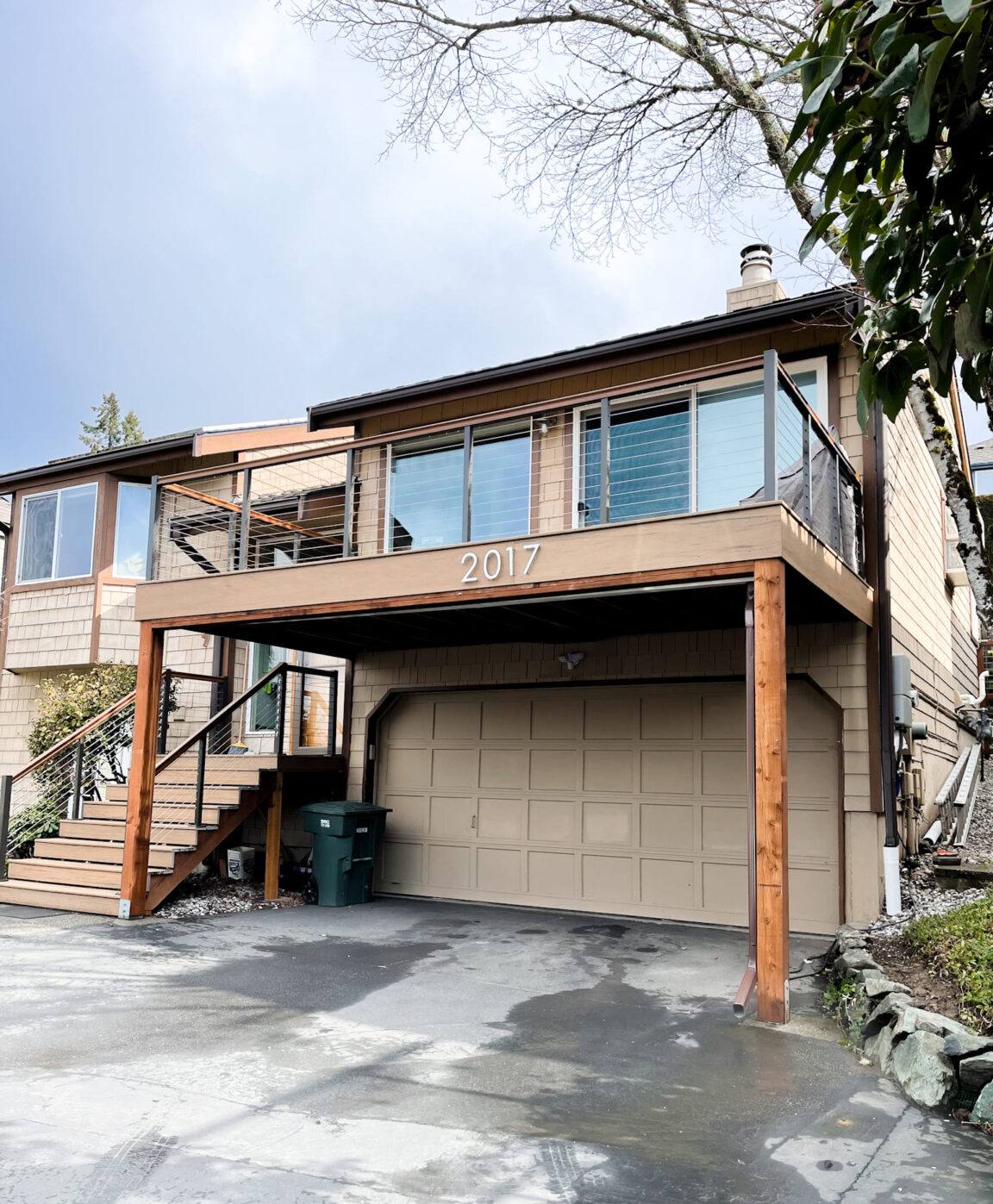
What the Climate Does to a Deck Built the Wrong Way
Most deck failures we get called out to inspect aren't caused by bad lumber or a bad design idea — they're caused by details that seemed fine on a dry day and fell apart under repeated wet-dry cycles. A few patterns show up again and again in this part of Whatcom County:
- Ledger board rot where the deck attaches to the house, caused by missing or poorly installed flashing that lets driving rain track behind the siding.
- Moss buildup on decking boards that stay shaded most of the day, which holds moisture against the wood and turns the surface slick and dangerous.
- Corroded fasteners — standard hardware that wasn't rated for constant moisture exposure, leaving rust streaks and weakened connections within a few years.
- Undersized or shallow footings that shift as the ground saturates and drains through repeated winter storms.
- Standing water under the deck from poor grading, which accelerates rot in framing that's already hard to inspect.
None of these are exotic problems. They're the predictable result of building a deck the same way you'd build one somewhere with a milder, drier climate.
Framing and Footings: The Part Nobody Sees
Footings Sized for Saturated Ground
Footings need to be sized and set below the frost line and deep enough to stay stable once the soil around them is fully saturated, which in this area can be much of the year. We check soil conditions on-site rather than assuming a standard footing size will work everywhere in Sumas — clay-heavy or poorly draining lots need different footing depths and, sometimes, different footing types than well-draining ground.
Ledger Attachment and Flashing
The ledger board — where the deck bolts to the house — is the single most common source of hidden rot on older decks. Correct installation means proper structural flashing integrated with the house's water-resistive barrier, not just a bead of caulk. We treat this connection as critical structural work, because it is.
Joist Protection
Joists and beams get treated with a moisture barrier tape at every cut end and fastener penetration. Untreated cut ends are where framing lumber starts to rot first, since the factory-applied preservative doesn't reach into a fresh cut.
Choosing Decking Material for Sumas Conditions
There's no single right answer here — it depends on your budget, how much upkeep you want to do, and how much shade and moss exposure the deck will get. Here's how the common options actually perform under this area's rain and moss pressure:
| Material | Moss & Moisture Resistance | Maintenance | Typical Lifespan Here |
|---|---|---|---|
| Pressure-treated wood | Fair — needs regular sealing to shed water and resist moss | Annual cleaning and re-sealing recommended | 10–15 years with upkeep |
| Cedar | Good natural rot resistance, but surface still hosts moss without upkeep | Periodic cleaning and oil/sealer | 15–20 years with upkeep |
| Capped composite | Very good — dense cap sheds water and resists moss adhesion | Occasional washing, no sealing or staining | 25+ years |
| PVC decking | Excellent — fully synthetic, doesn't absorb moisture | Occasional washing | 25+ years |
Composite and PVC cost more up front, but for a deck that sits in shade for part of the day — common on tree-lined Sumas lots — the reduced moss adhesion and lower maintenance often make the extra cost worth it over the life of the deck. Wood is still a legitimate choice if you're comfortable with the sealing schedule it requires; we'll tell you honestly what that schedule looks like rather than downplaying it to make a sale.
Railings, Fasteners, and Hardware
Hardware is where a lot of otherwise well-built decks quietly fail. Standard zinc-coated fasteners corrode faster than most homeowners expect once they're exposed to sustained damp conditions, and rust stains bleeding through decking boards are one of the most common complaints we hear about decks built by crews that cut corners here. We use fasteners and structural connectors rated for continuous outdoor moisture exposure — typically hot-dip galvanized or stainless steel depending on the connection — and we match hardware to whatever decking material is actually being installed, since composite and PVC manufacturers often specify particular fastener types to keep warranty coverage intact.
Railings get the same attention. A railing system that looks solid on installation day but relies on undersized posts or the wrong post-to-frame connection is a safety issue waiting to surface, especially once wood posts start absorbing moisture at the base.
Drainage and Site Grading
A deck doesn't exist in isolation from the ground under it. If water pools underneath instead of draining away, the framing stays wet longer after every storm, which accelerates rot even on treated lumber. Before we build, we look at how water actually moves across your lot — not just where the deck footprint sits, but where runoff from the roof, downspouts, and yard grading ends up. On lots where drainage is already marginal, we'll talk through options like adjusting grading near the footings or adding drainage before the deck goes in, rather than building on top of a problem that will just get worse.
Our Deck Building Process
- On-site assessment — we look at your lot's drainage, sun/shade exposure, soil conditions, and how the deck will tie into the house.
- Design and material selection — we walk through decking, railing, and finish options based on your budget and how much maintenance you want to take on.
- Permitting — we handle the permit application and coordinate required inspections with Whatcom County so nothing gets built out of code.
- Footings and framing — footings are set to the depth the soil and frost conditions call for, with flashing and moisture barriers installed at every vulnerable connection.
- Decking, railing, and finish work — installed to the fastening standards the material manufacturer specifies, keeping any product warranty intact.
- Final walkthrough — we go over the finished deck with you, including what maintenance it will actually need and on what schedule.
Permits and Local Requirements
Most new decks and significant deck rebuilds in unincorporated Whatcom County require a building permit, and setback requirements from property lines can affect exactly where and how large a deck can be built on a given lot. Requirements can also differ depending on whether a property falls inside city limits versus unincorporated county land near Sumas. We pull permits as part of every project and coordinate inspections directly, so you're not the one tracking down paperwork or scheduling county inspectors.
Why Local Experience on Sumas Lots Matters
A contractor who mostly builds decks in drier parts of the state can still build something that looks right on the day it's finished. The difference shows up two or three winters later, once wet-dry cycling, moss, and constant moisture exposure have had time to work on every shortcut. We build decks in this part of Whatcom County regularly, which means the footing depths, flashing details, and fastener choices described above aren't extra steps we add for this page — they're just how we build here, because we've seen what happens when they're skipped.
We also know that soil and drainage conditions can vary a fair amount from lot to lot in and around Sumas, so we assess each site rather than applying a one-size-fits-all plan.
Keeping Your New Deck in Good Shape
A well-built deck still needs some seasonal attention, especially through a long wet season. A short maintenance routine goes a long way toward protecting the investment:
- Sweep debris and standing leaves off the deck surface regularly through fall to reduce moss growth and staining.
- Check and clear any drainage paths or gaps between boards that can trap water and organic debris.
- Inspect railing posts and stair connections annually for looseness or movement.
- Look for rust staining around fasteners, which can signal hardware that needs attention before it affects the surrounding material.
- Re-seal wood decking on the schedule appropriate to the product — don't wait until it's visibly graying or absorbing water.
- Keep gutters and downspouts near the deck clear so runoff doesn't discharge directly under the structure.
If you're planning a new deck or need an existing one evaluated, we're happy to come take a look and give you a straightforward, no-pressure estimate — just fill out the form below.