 Blaine Exterior
 Asphalt Shingle Roofing for Sumas Homes
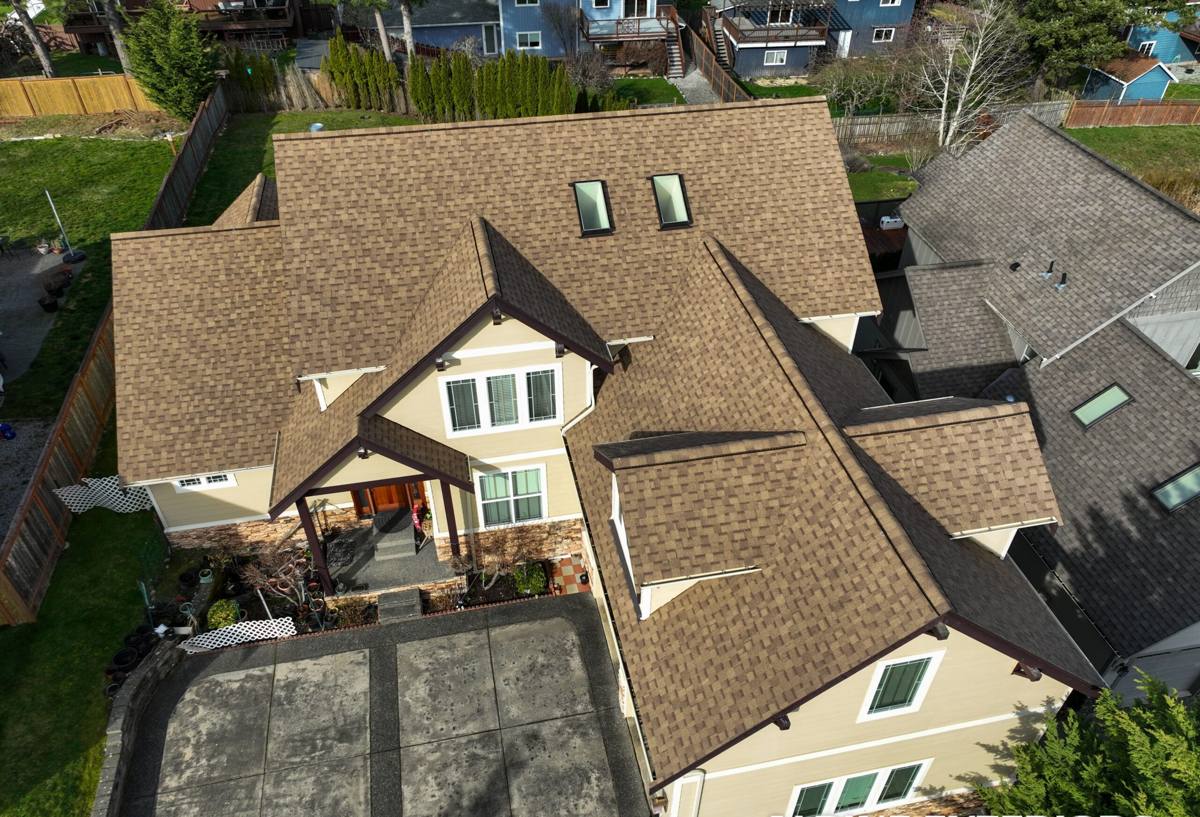
Sumas homes sit in a part of Whatcom County that takes a steady, year-round beating on the roof plane. Salt-laden air moving in off the Sound corrodes exposed metal faster than homeowners expect, driving rain pushes water sideways into laps and flashing that a calmer climate would never test, and a moss season that runs most of the year works its way into any shingle surface that stays damp too long. Asphalt shingle roofing is still the most practical, cost-effective roofing choice for the large majority of homes in this area — but only when it's installed with this specific climate in mind, not treated as a generic product swap.
This page is about one job, done right, in one place: asphalt shingle roofing for houses in and around Sumas. Not a general roofing overview, and not advice that applies equally to a dry inland climate. What follows is what we've learned putting shingle roofs on homes that face salt air, sideways rain, and persistent moss, year after year.
What This Climate Does to an Asphalt Shingle Roof
Salt Air and Metal Corrosion
Airborne salt doesn't just affect homes right on the water — it travels inland on wind and settles on every exposed metal component of a roof: flashing, drip edge, nail heads, and vent stacks. Left unaddressed, that corrosion shows up first as rust streaking below flashing points, then eventually as pinholes that let water track behind the shingle field. A roof built for this climate uses corrosion-resistant metal and fastener choices from the start, rather than relying on standard hardware and hoping it holds up.
Driving Rain and Wind-Driven Moisture
Rain in this part of Washington rarely falls straight down for long. Wind pushes it sideways into shingle laps, ridge caps, and every transition where the roof meets a wall, chimney, or vent. A shingle roof that would perform fine under calm, vertical rainfall can still leak here if the underlayment, flashing, and shingle overlap aren't detailed for lateral water movement. This is one of the most common reasons a roof that "looks fine" from the ground develops a slow leak nobody can trace for months.
A Long Moss Season
Mild temperatures, tree cover, and near-constant moisture add up to a moss and lichen season that runs most of the year in this part of Whatcom County. Moss doesn't just sit on top of shingles — its root structure lifts granules and edges, holding water against the shingle surface long after the rest of the roof has dried out. Left long enough, that trapped moisture accelerates granule loss and shortens the usable life of an otherwise sound roof.
Freeze-Thaw and Temperature Swings
Winter here isn't extreme, but it's not stable either. Shingles that go through repeated freeze-thaw cycles while already carrying trapped moisture from moss or poor drainage become brittle faster than shingles that get a chance to dry out between storms. It's a slower, quieter form of wear than a dramatic leak, but it's just as real over a roof's lifespan.
What a Correct Shingle Roof Installation Actually Involves
A shingle roof is a system, not a single product. The shingle itself gets the most attention from homeowners, but the layers underneath and the details around penetrations are what actually determine whether the roof performs in this climate.
Tear-Off vs. Overlay
Overlaying new shingles on top of an old roof is faster and cheaper, but it traps whatever moisture, rot, or granule debris is already in the old roof deck, and it prevents any real inspection of the decking underneath. In a climate where moss and driving rain both create hidden moisture problems, we treat a full tear-off as the standard for anything beyond a minor patch — it's the only way to actually see the condition of the deck before new material goes down.
Underlayment
Synthetic underlayment, properly lapped and fastened, is the roof's real first line of defense against wind-driven rain that gets past the shingle surface. In wind-exposed areas and along eaves, we pay particular attention to ice-and-water shield-style membrane at vulnerable transitions, since that's where sideways-driven moisture causes the most damage over time.
Flashing at Every Penetration
Chimneys, vent stacks, skylights, and roof-to-wall transitions are where the large majority of shingle roof leaks actually originate — not the open field of shingles. Flashing has to be correctly lapped, sealed, and integrated with the underlayment and shingle courses around it, using corrosion-resistant metal given the salt exposure in this area. A shingle roof with perfect shingles and sloppy flashing will still leak.
Ventilation
An attic and roof deck that can't breathe stay damp longer after every rain event, which speeds up moss growth, granule loss, and deck rot from the underside. Balanced intake and exhaust ventilation lets the roof assembly dry out between storms instead of holding moisture indefinitely — something that matters more here than in a drier climate where roofs get more chances to dry naturally.
Fastening
Shingles fastened with the wrong nail pattern, placement, or exposure to weather during installation are one of the most common causes of early failure, including blow-off during winter wind events. Correct fastening isn't visible once the job is done, which is exactly why it matters who's doing the work and how much care they put into a step no one will ever inspect from the ground.
Choosing the Right Shingle for a Sumas Roof
Not every asphalt shingle product is built the same way, and the differences matter more in a climate this demanding.
| Shingle Type | Typical Lifespan | Fit for This Climate |
|---|---|---|
| 3-Tab Shingles | 15–20 years | Lower upfront cost, but thinner profile handles wind uplift and moisture less well over time |
| Architectural (Laminate) Shingles | 25–30+ years | Heavier, more wind-resistant, better suited to driving rain and gusty conditions common here |
| Algae-Resistant (AR) Shingles | Varies by base product | Copper- or zinc-infused granules slow moss and algae growth, a real advantage in a long moss season |
| Impact-Resistant (Class 4) Shingles | Varies by base product | More resistant to debris impact from wind events; higher upfront cost, sometimes offset by insurance discounts |
For most Sumas homes, we recommend a quality architectural shingle with algae-resistant granules as the baseline — the added upfront cost is modest compared to a 3-tab product, and it directly addresses the two biggest local stressors: wind-driven rain and persistent moss.
Our Process, Start to Finish
- Inspection and honest assessment: We walk the roof, check the attic and decking where accessible, and tell you plainly whether you need a full replacement, a repair, or nothing at all right now.
- Written estimate: A clear scope of work and price before anything starts — no vague allowances that turn into surprise change orders.
- Tear-off and deck inspection: Old material comes off, and any soft, rotted, or damaged decking gets identified and repaired before new material goes down.
- Underlayment and flashing installation: Synthetic underlayment and corrosion-resistant flashing go in at every penetration and transition, matched to this climate's wind and moisture load.
- Shingle installation: Correct nail pattern, exposure, and course alignment, installed to the manufacturer's spec so the warranty stays intact.
- Ventilation check: Intake and exhaust airflow confirmed or corrected so the finished roof can actually dry out between storms.
- Final walkthrough: We review the finished roof with you, including care and maintenance notes specific to a moss-prone climate.
Signs a Sumas Roof Needs Attention
- Moss or dark streaking that returns quickly after cleaning
- Granules collecting in gutters or at downspout outlets
- Curling, cupping, or cracked shingles, especially on shaded or north-facing slopes
- Rust staining below flashing points or vent stacks
- Soft spots or sagging visible from the attic side of the roof deck
- Daylight visible around chimney or vent flashing from inside the attic
- Shingles missing or lifted after a windstorm
Maintenance That Actually Extends Roof Life Here
A shingle roof in this climate benefits from periodic moss treatment and gentle debris removal, done in a way that doesn't strip granules or damage the shingle surface — pressure washing a shingle roof is generally a bad idea and can shorten its life rather than extend it. Keeping gutters clear so water sheds properly during heavy rain events, and trimming back tree cover that keeps roof sections shaded and damp, both make a measurable difference in how long a well-installed roof actually lasts here.
Cost Factors for a Sumas Roofing Project
| Factor | Why It Matters |
|---|---|
| Roof size and pitch | More area and steeper pitches increase material and labor time |
| Number of penetrations and valleys | Each chimney, vent, or valley adds flashing work and labor |
| Tear-off vs. overlay | Full tear-off costs more upfront but reveals and fixes hidden deck problems |
| Shingle grade selected | Architectural and algae-resistant products cost more than basic 3-tab but last longer in this climate |
| Decking repair needed | Rot or soft decking found during tear-off adds material and labor cost |
| Ventilation upgrades | Adding or correcting intake/exhaust venting protects the new roof's lifespan |
We don't quote off a generic per-square price list — every Sumas roof we look at gets walked in person before we give you real numbers, because pitch, penetrations, and deck condition vary enough house to house that a phone estimate isn't an honest one.
Why a Local Crew Matters for This Job
A crew that works Sumas roofs regularly has already seen how salt air, driving rain, and moss actually behave on real houses in this specific area, not just how a shingle performs on a spec sheet. That means knowing which slopes stay shaded and damp longest, which flashing details need extra attention given the wind exposure here, and which shingle products hold up versus which ones look fine on a sample board but underperform once they've been through a few winters. It also means being reachable if a storm causes damage and you need someone who already knows your roof, rather than starting from zero with an out-of-town crew.
If your Sumas home needs a roof inspection, repair, or full replacement, we're happy to take a look and give you a straightforward, no-pressure assessment. Reach out using the form below to schedule a free estimate.