 Blaine Exterior
 Storm Damage Roof Repair for Everson-Area Homes
Roofs in this corner of Whatcom County don't fail because of one bad storm. They fail because one bad storm hits a roof that was already tired from years of salt-laden wind, driving rain, and moss creeping under the shingle tabs. When we get a call for storm damage repair in the Everson area, we're rarely looking at a single clean problem. We're usually looking at wind damage that found a weak spot the weather had already been working on for a couple of seasons. Understanding that is the difference between a repair that holds and one that fails again at the next windstorm.
This page covers what storm damage repair actually means for homes in and around Everson, what a correct repair looks like, and how we approach the job from the first phone call to the final walk-through.
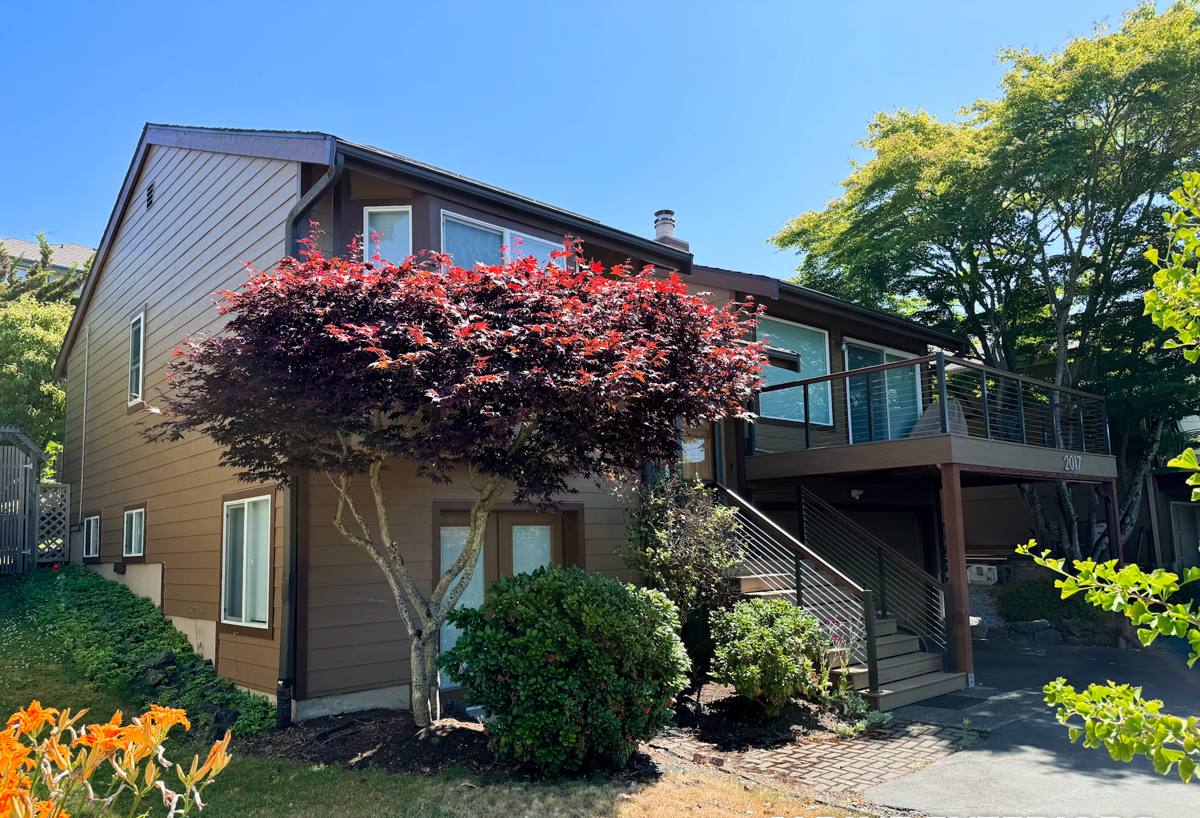
What the Local Climate Does to a Roof
Whatcom County weather is hard on roofing in a few specific, cumulative ways. None of them are dramatic on their own — that's exactly why they get missed until a storm turns a small weakness into an active leak.
Salt Air and Metal Fatigue
Proximity to the Strait of Georgia and Puget Sound means the air carries salt further inland than most homeowners expect. Salt air accelerates corrosion on exposed fasteners, flashing, and any unpainted metal roof edge. A nail head or flashing seam that would last decades in a dry inland climate can start pitting and weakening years sooner out here. Once fasteners corrode, they lose their grip, and that's often where wind gets its first foothold during a storm.
Driving Rain and Wind-Driven Water
Storms coming off the water don't just drop rain straight down — they push it sideways under shingle tabs, around chimney flashing, and into any gap that wouldn't leak in a calm rain. This is why a roof can pass a casual inspection on a dry day and still leak badly during the next windstorm. Wind-driven rain finds every shortcut in the original installation.
The Long Moss Season
Mild, wet winters and shaded lots mean moss has a long growing window here — often most of the year on north-facing slopes and anywhere tree cover keeps a roof from drying out between rains. Moss doesn't just look bad. It lifts shingle edges as it grows, holds moisture directly against the roofing material, and works its way under tabs that wind can then peel back further. A roof with heavy moss going into a storm is a roof primed for damage.
Common Types of Storm Damage We See
Not every storm-related repair looks the same. Knowing what you're actually dealing with matters because the right fix depends on the cause, not just the symptom.
| Damage Type | Typical Cause | What It Usually Needs |
|---|---|---|
| Lifted or missing shingles | Wind catching an edge already loosened by age or moss | Section replacement, re-securing surrounding tabs |
| Flashing separation | Corroded fasteners, thermal movement, wind uplift at edges | Flashing removal and proper re-installation, not just re-caulking |
| Granule loss / bare spots | Wind-driven debris, hail, or long-term wear exposed by a storm | Spot repair if isolated, broader evaluation if widespread |
| Active leaks after a storm | Water forced sideways under compromised shingles or flashing | Trace the actual entry point, not just patch the ceiling stain |
| Fascia or soffit damage | Overflowing gutters combined with wind pressure | Gutter correction plus wood/trim repair |
| Debris impact damage | Branches or limbs during high wind events | Deck inspection first — impact damage can go deeper than it looks |
Warning Signs Worth Checking After a Storm
Most storm damage doesn't announce itself with an obvious hole. It shows up as small, easy-to-miss signs that get worse with the next round of rain. After any significant wind event, it's worth a quick visual check from the ground:
- Shingles or shingle pieces in the yard or gutters
- Dark streaks or shiny bald patches where granules have worn or blown off
- Flashing that looks bent, lifted, or separated around the chimney, vents, or roof edges
- Gutters pulling away from the fascia or sagging under debris
- New or spreading water stains on interior ceilings, especially near exterior walls
- Moss that looks freshly disturbed or lifted at the edges rather than flat and undisturbed
- Daylight visible through the attic roof deck (checked from inside, on a dry day)
Any one of these on its own might be minor. Two or three together after the same storm usually means it's time for a real inspection rather than a wait-and-see approach.
What a Correct Storm Damage Repair Actually Involves
A lot of storm repairs that fail again within a year or two failed because someone patched the visible symptom without checking what was underneath it. A repair done right follows the same order every time.
1. Full-Roof Assessment, Not Just the Reported Leak
We start by inspecting the whole roof plane, not just the spot where the leak showed up inside. Wind damage rarely stays contained to one shingle — if one tab lifted, the ones around it took the same stress and may be loosened even if they haven't visibly failed yet.
2. Deck Inspection
Any time there's been sustained water intrusion or impact from debris, we check the roof decking itself for soft spots or rot before replacing anything on top of it. Reinstalling new shingles over a compromised deck is how a repair turns into a bigger, more expensive problem down the line.
3. Underlayment and Flashing, Not Just Surface Material
Shingles are the visible layer, but underlayment and flashing are what actually keep wind-driven rain out. A repair that replaces shingles without addressing damaged or improperly lapped flashing is treating half the problem.
4. Matching Materials Correctly
Where we're doing a section repair rather than a full replacement, matching the existing shingle profile, color, and exposure matters — both for appearance and because mismatched materials can create their own water paths.
5. Verifying the Fix Under Real Conditions
Before we call a repair finished, we check the surrounding fasteners, seams, and transitions — not just the specific spot that failed — so the same storm pattern doesn't just find the next weak point.
How Our Process Works
We keep the process straightforward because homeowners dealing with storm damage usually don't want another complicated decision on top of the one they're already managing.
- Call or request an estimate. Tell us what you're seeing — missing shingles, a new leak, visible debris damage — and roughly when the storm hit.
- On-site inspection. We walk the roof (or use safe elevated inspection where roof access is limited) and check the areas most likely to have taken damage: edges, valleys, penetrations, and anywhere moss or debris was already present.
- Honest scope and estimate. We tell you what actually needs repair, what's cosmetic, and what to keep an eye on. If the damage is limited, we won't push a full replacement — and if the deck or underlayment is compromised, we won't hide that behind a quick patch either.
- Repair work. Materials matched to your existing roof where possible, proper flashing and underlayment work where it's actually the source of the problem, and cleanup when we're done.
- Final walk-through. We show you what was done and why, so you're not left guessing what you paid for.
Repair vs. Replacement: What Actually Drives the Decision
Storm damage doesn't automatically mean a new roof, and it doesn't automatically mean a small patch either. The honest answer depends on a handful of factors we walk through with every homeowner.
| Factor | Leans Toward Repair | Leans Toward Replacement |
|---|---|---|
| Roof age | Under roughly two-thirds of expected material lifespan | Already near or past expected service life |
| Extent of damage | Isolated to one section or slope | Spread across multiple planes or the whole roof |
| Decking condition | Solid, no rot found on inspection | Soft spots or rot found in multiple areas |
| Pre-existing wear | Storm was the main cause of damage | Storm exposed damage that was already widespread — heavy moss, granule loss, prior patch history |
| Material availability | Close match to existing shingles available | Discontinued or badly weathered material makes matching impractical |
We'll always start from the assumption that a repair is the right call unless the inspection tells us otherwise. There's no benefit to us in overselling a replacement a roof doesn't need — but there's also no honesty in patching a roof that's genuinely past the point where repairs make financial sense.
Why It Matters to Hire a Crew That Already Works This Area
Storm damage repair isn't generic work. A crew that already works roofs around Everson and the rest of Whatcom County has seen how salt air, moss, and wind-driven rain actually behave on roofs out here — not in a textbook, but on the specific mix of shingle types, roof pitches, and tree coverage common to this part of the county. That matters when it comes to spotting damage that isn't obvious, and it matters when it comes to knowing which fixes actually hold up through the next wet season instead of just looking finished on the day the work wraps up.
It also matters for response time. Storm damage that sits exposed for weeks waiting on a contractor tends to get worse — a lifted shingle becomes a soaked deck, a small flashing gap becomes a stained ceiling. A local crew can typically get eyes on the roof faster than someone traveling in from outside the area, which matters most in the days right after a storm.
Insurance and Documentation
Many storm damage repairs are covered in whole or part by homeowners insurance, depending on your policy and the cause of the damage. We're not a public adjuster and won't promise a specific coverage outcome, but we can document what we find during the inspection — photos of the damage, a written scope of what needs repair, and an honest read on whether the damage pattern is consistent with the storm date you're reporting. That documentation is often what your insurer needs to process a claim fairly. What they ultimately approve is between you and your policy.
Get a Straight Answer on Your Roof
If a recent storm left you with missing shingles, a new leak, or just a nagging feeling that something's not right up there, it's worth getting a real inspection before the next round of Whatcom County weather rolls through. We'll give you a straightforward, no-pressure estimate — what needs fixing, what doesn't, and why — using the form below.