 Blaine Exterior
 Why Decks Wear Out Faster in Sandy Point
Sandy Point sits close enough to the water that every deck out here is fighting a different battle than one built a few miles inland in Blaine or elsewhere in Whatcom County. Salt-laden air corrodes fasteners and hardware from the inside out, long before the wood itself looks obviously bad. Add in the region's driving rain, which gets pushed sideways into ledger boards and railing posts by wind off the water, and you have two forces working against the deck at the same time: metal fatigue and moisture intrusion.
Then there's the moss and algae season, which in this part of Washington runs longer than most homeowners expect. A shaded, north-facing deck near the water can stay damp for days after a storm, and that constant dampness is exactly what moss, mildew, and rot need to take hold. On older decks, we regularly find the structural damage is worse than the surface suggests, because the boards holding moisture the longest are also the ones getting walked on the least.
Repair or Replace? Reading the Signs Correctly
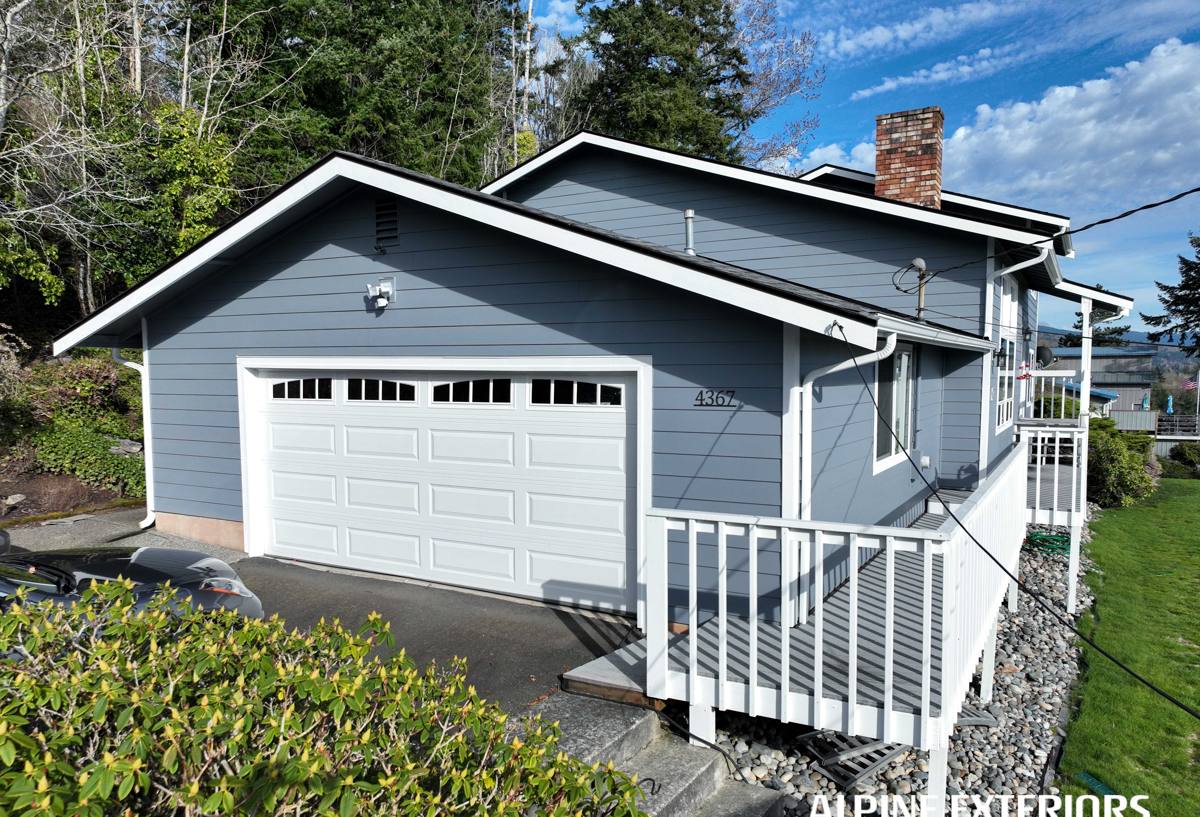
Not every tired-looking deck needs a full replacement, but in a salt-air environment, surface problems tend to point to deeper ones. Here's how we sort it out on a typical visit.
Signs a Repair Might Still Work
A handful of cupped or splintering boards on an otherwise sound frame, cosmetic graying on a deck less than 10-15 years old, or a single soft spot near a downspout can often be addressed without tearing the whole structure out.
Signs You're Looking at a Replacement
Rust streaking down from screw heads or bolts, a ledger board that's soft or separating from the house, joists that flex noticeably underfoot, or rot that shows up in more than one area of the frame are all signs the deck has moved past the point where patching makes sense. When the framing itself is compromised, replacing the decking boards alone just delays the real problem and puts new material on a foundation that won't support it long-term.
What a Correct Deck Replacement Actually Involves
A deck replacement isn't just swapping old boards for new ones. Done right, it starts underneath, with the parts you won't see once the project is finished.
Ledger and Flashing
The ledger board — where the deck attaches to the house — is the single most important connection on the whole structure, and it's also the most common failure point on older Pacific Northwest decks. Correct flashing detail here keeps water from working its way behind the siding and into the rim joist. We treat this connection as non-negotiable, even when it adds a step the old deck skipped.
Framing and Footings
Joists, beams, and posts get inspected and replaced as needed, sized to current load requirements rather than just matched to whatever was there before. Footings are checked for depth and condition, since ground movement and moisture over the years can shift or weaken a deck's foundation even when the visible posts look fine.
Fasteners and Hardware
This is where salt air does the most damage, and it's where a lot of lower-cost replacements cut corners. Standard hot-dip galvanized fasteners can corrode faster near the water than their rated lifespan suggests. We spec stainless steel or coated fasteners rated for coastal exposure at every structural connection, not just where it's easy to see.
Decking Material Options for a Coastal Property
There's no single "best" decking material for every home — the right choice depends on budget, maintenance tolerance, and how much sun and moisture a particular deck sees. Here's how the common options actually compare in a salt-air, high-moisture environment like Sandy Point.
| Material | Salt Air Performance | Maintenance | Typical Lifespan |
|---|---|---|---|
| Pressure-treated wood | Moderate — needs consistent sealing to resist salt and moisture | Annual cleaning and re-sealing recommended | 10-15 years with upkeep |
| Cedar | Good natural rot resistance, but surface grays and softens faster near salt spray | Periodic cleaning, oiling if color retention matters | 15-20 years with upkeep |
| Composite decking | Strong — resists moisture absorption and doesn't need sealing | Occasional washing to prevent surface mildew | 25-30 years, manufacturer-dependent |
| PVC/capped polymer | Very strong — fully resists moisture intrusion and salt corrosion | Low; mainly rinsing off salt residue and organic buildup | 25-30+ years, manufacturer-dependent |
We're generally cautious about recommending uncapped composite in this specific setting — early-generation composite products without a full polymer cap can absorb moisture at cut edges and fastener points over time, which shows up as swelling or dark staining. That's less about the material being bad and more about matching the product's design to the exposure it'll actually face here. If a homeowner wants composite, we talk through capped versus uncapped options honestly before ordering anything.
Railings and Hardware Near the Water
Railing posts and their connections take the brunt of wind-driven rain and salt spray, since they're the most exposed vertical surfaces on the deck. Aluminum and vinyl railing systems tend to hold up well with minimal upkeep, while wood railings need the same sealing discipline as wood decking. Whatever the material, the connection hardware matters as much as the railing itself — a good-looking railing on corroding brackets is a problem waiting to surface.
Our Deck Replacement Process
We keep the process straightforward and communicate at each stage, since a deck rebuild affects how a family uses their outdoor space for a season or more.
- On-site assessment — we inspect the ledger, framing, footings, and existing decking to determine the real scope, not just what's visible from the surface.
- Material discussion — we walk through decking, railing, and fastener options suited to a Sandy Point property's specific sun and wind exposure.
- Demolition and disposal — the old deck comes out, including any hidden rot or damaged framing found once boards are removed.
- Structural rebuild — ledger flashing, framing, and footings are corrected or replaced to current standards before any new decking goes down.
- Decking and railing installation — installed with coastal-rated fasteners and proper spacing for drainage and material expansion.
- Final walkthrough — we go over the finished deck together and cover any maintenance steps specific to the material chosen.
Permits and Local Code Considerations
Deck replacement in Blaine and unincorporated areas of Whatcom County typically requires a permit once the project involves structural work, height above grade, or attachment to the home — the exact threshold depends on the specific project and jurisdiction. We handle the permitting conversation as part of the process rather than leaving homeowners to sort it out, and we build to current code rather than simply matching whatever the original deck was built to years ago.
Keeping a New Deck in Good Shape
A properly built deck in this environment can last decades, but it still needs some seasonal attention to get there. A few habits go a long way toward protecting the investment:
- Sweep debris and standing water off the deck surface regularly, especially after storms
- Rinse salt residue off railings and hardware a few times a year, particularly on waterfront-facing sides
- Check for moss buildup in shaded corners before it spreads across boards
- Reseal wood decking on the manufacturer or installer's recommended schedule — don't wait until it looks dry and gray
- Inspect fasteners and railing connections annually for rust streaking or looseness
- Keep gutters and downspouts clear so runoff isn't draining directly onto the deck
Why Local Experience Matters for This Job
A deck built to a generic spec sheet can look fine for the first year or two anywhere in the country. What separates a deck that holds up in Sandy Point from one that doesn't is whether the crew building it actually accounted for the salt exposure, the wind direction, and the moss season this specific stretch of Whatcom County deals with every year. We work in this area regularly, which means we're not guessing at what fasteners hold up, which flashing details actually keep water out, or which decking materials are worth the extra cost near the water. That local pattern recognition is hard to substitute for, no matter how good the materials are on paper.
If your deck is showing rust, soft spots, or persistent moss, or if it's simply reached the age where a rebuild makes more sense than another round of patching, we're happy to take a look and give you an honest read on what it actually needs. Reach out for a free, no-pressure estimate using the form below.