 Blaine Exterior
 Roofing in Birch Bay Is Its Own Job
Birch Bay sits right on the water, and that changes what a roof has to deal with compared to a house a few miles inland. Homes here take a steady mix of salt-laden air, wind-driven rain, and shaded, moisture-holding conditions that push moss growth most of the year. A roofing system that would hold up fine in a drier, more sheltered part of Whatcom County can wear out faster here if it wasn't built with the local exposure in mind.
We work in Blaine and the surrounding Whatcom County waterfront communities regularly, and Birch Bay roofs are a recurring part of that work. That means we're not guessing at what fails first on a coastal roof — we've pulled off enough of them to know where the weak points usually are.
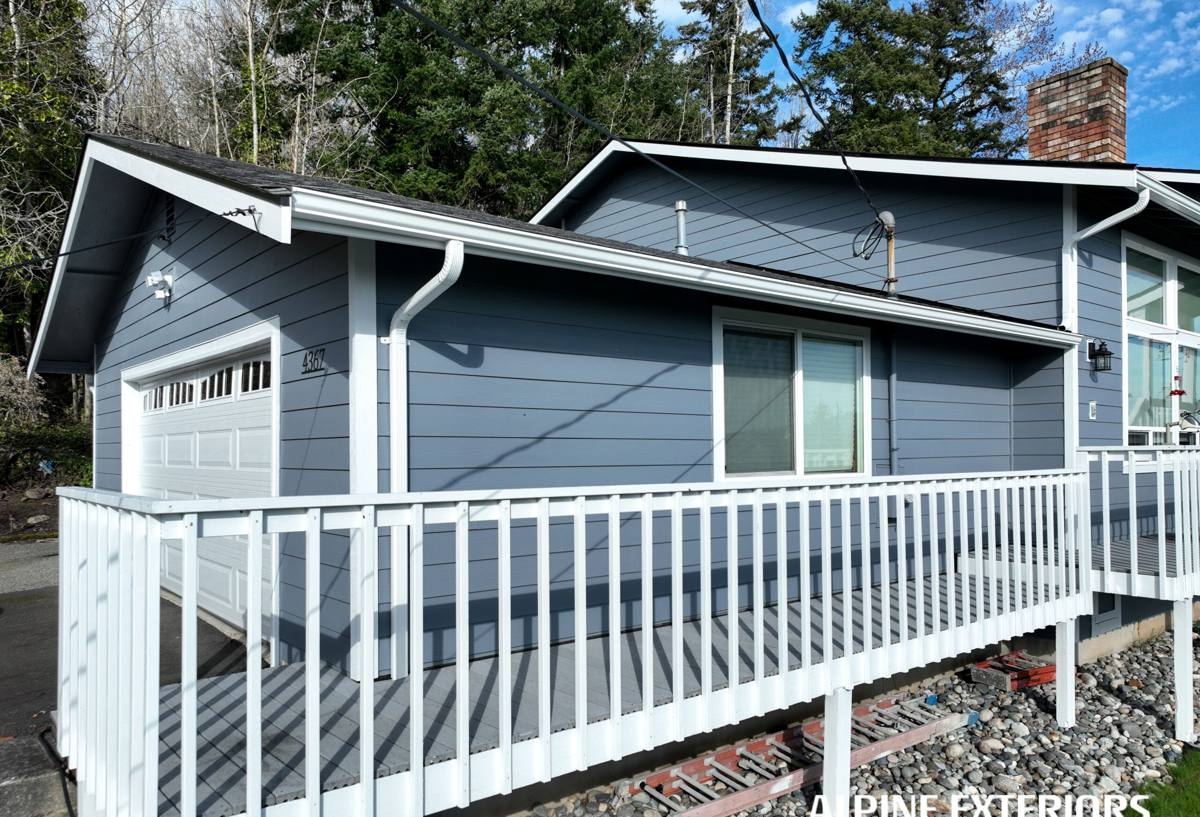
What the Coastal Climate Actually Does to a Roof
Salt Air
Airborne salt from the Salish Sea settles on roofing surfaces and, more importantly, on exposed metal — fasteners, flashing, vent caps, and gutter hardware. Over years, that accelerates corrosion on anything that isn't rated for coastal exposure. A roof can look fine from the ground while its flashing and fastener heads are quietly rusting underneath.
Driving Rain and Wind
Storms off the water tend to come with wind, which pushes rain sideways instead of letting it run straight down. That kind of exposure finds every weak seam, under-lapped shingle, or poorly sealed penetration a standard installation might get away with in a calmer setting. Wind uplift at eaves, ridges, and roof edges is also a bigger factor this close to open water.
Moss and Shade
Birch Bay's tree cover and marine humidity are a good combination for moss, and moss is bad news for a roof. It holds moisture directly against the shingle surface, works its way under tabs and shakes, and lifts material over time. A roof that stays damp longer than it should — because of shade, low slope, or poor airflow — will grow moss faster and age faster, regardless of what it's made of.
Signs a Birch Bay Roof Needs Replacement, Not Just Repair
Not every roof problem calls for a full replacement, but a few signs usually mean patching is just delaying the inevitable:
- Granule loss heavy enough that you're finding grit in gutters every time it rains
- Moss established across large sections rather than a few isolated patches
- Curling, cupping, or cracked shingles spread across multiple roof planes
- Soft spots or sagging in the decking when walked on
- Rust staining or visible corrosion at flashing, valleys, or fastener heads
- Leaks that keep reappearing in new spots after repairs
- A roof at or past its expected service life for the material it's made of
If it's just a handful of missing shingles or a single damaged flashing detail, a repair is the right call. If several of the items above are showing up together, replacement is usually the more honest recommendation — and the more cost-effective one over time.
Choosing a Roofing Material for This Exposure
There's no single "best" roofing material for Birch Bay — the right choice depends on your home's slope, budget, and how much upkeep you want to take on. What matters is understanding the trade-offs specific to a salt-air, high-moisture environment before you decide.
| Material | Salt Air / Corrosion | Moss Resistance | Typical Lifespan Here | Trade-Offs |
|---|---|---|---|---|
| Asphalt composition shingle | Good with corrosion-resistant fasteners and flashing | Moderate; better with algae-resistant granules | 20–30 years | Most economical upfront; needs periodic moss and gutter upkeep |
| Standing seam metal | Very good when properly coated and detailed | Excellent; moss struggles to hold on smooth metal | 40–60 years | Higher upfront cost; installation quality matters even more near salt air |
| Cedar shake | Fair; needs regular maintenance to hold up | Poor without diligent upkeep | 20–30 years with upkeep | Natural look, but high moisture retention makes it demanding in this climate |
| Synthetic/composite shingle | Good | Good | 30–50 years | Mid-to-high cost; performance varies by product line |
We'll walk through what makes sense for your specific roof rather than pushing one product line. A steep, sun-exposed south face and a shaded, low-slope north face on the same house sometimes call for different detailing even if the material stays consistent.
What a Correct Replacement Actually Involves
A roof replacement is more than swapping old shingles for new ones. In a coastal environment, the details underneath the visible surface are what determine whether the new roof actually outperforms the old one.
Full Tear-Off and Deck Inspection
We remove the existing roofing down to the deck so we can actually see what's there — not guess at it. Any decking that's soft, delaminated, or water-damaged gets replaced before anything new goes down. Covering a compromised deck with new shingles just hides a problem that will resurface.
Underlayment Built for Wind-Driven Rain
Given how much sideways rain this area gets, underlayment choice and coverage matter. Self-adhered ice-and-water membrane at eaves, valleys, and around penetrations gives an extra layer of protection where wind-driven water is most likely to find a way in, backed by synthetic underlayment across the rest of the field.
Corrosion-Resistant Metal Details
Flashing, drip edge, and fasteners are chosen with the salt-air exposure in mind rather than defaulting to whatever's cheapest. This is one of those details that's invisible once the roof is finished but is exactly what determines how the roof ages over the next decade.
Ventilation That Actually Dries the Roof Out
Balanced intake and exhaust ventilation lets a roof deck dry between rain events instead of staying damp, which slows both moss growth and deck rot. On homes with shaded or low-slope sections, we pay extra attention to airflow since those areas are naturally slower to dry.
Moss-Conscious Detailing
Where it fits the roof design, zinc or copper strips near the ridge use rainwater runoff to naturally inhibit moss regrowth over time. It's not a substitute for keeping the roof clean, but it's a low-effort layer of prevention worth discussing on shaded roofs.
Our Process, Start to Finish
- On-site inspection. We look at the roof, the attic or deck access where possible, and talk through what we're seeing and why it matters.
- Written estimate. A clear breakdown of material options, scope of work, and cost — no pressure to decide on the spot.
- Scheduling around the weather. Roof replacements need a dry window. We plan around Whatcom County's forecast rather than rushing a job into a rain system.
- Tear-off and deck check. Old roofing comes off, the deck gets inspected, and any needed repairs are handled before new material goes down.
- Installation. New underlayment, flashing, ventilation, and roofing material installed to manufacturer specification and local code.
- Cleanup and walkthrough. Site cleared of debris and nails, and we walk the finished roof with you before calling the job done.
Why a Crew That Already Works Birch Bay Matters
Roofing crews that mostly work drier, inland areas sometimes underestimate what a marine environment does to a roof over time. A crew that regularly works Blaine and Birch Bay knows to spec corrosion-resistant hardware without being asked, knows which roof orientations on this coastline tend to hold moisture and moss longest, and has already seen how different materials actually perform here — not just how they're rated on paper.
There's also a practical side to local familiarity: knowing the county's permitting expectations, being reachable if a question comes up after the job, and being a crew you can actually find again in five or ten years if you need warranty work or a repair.
Protecting Your Investment After Installation
A well-installed roof still benefits from basic upkeep, especially in a moss-prone, salt-air location. A few habits go a long way:
- Keep gutters clear so water isn't backing up under the roof edge
- Trim back overhanging branches to cut down on shade and debris buildup
- Have moss treated or gently removed before it spreads, rather than after
- Schedule a roof check after major windstorms, especially ones off the water
- Avoid pressure washing shingles — it strips granules and shortens roof life
- Have flashing and fasteners inspected periodically for early signs of corrosion
None of this requires a big time investment, but it's the difference between a roof that hits its full expected lifespan and one that needs early intervention.
Get a Straightforward Estimate
If your Birch Bay roof is showing its age, or you just want an honest read on how much life it has left, we're glad to take a look. The estimate is free, there's no pressure attached to it, and you'll get a clear explanation of what we see and what your options actually are. Use the form below to get started.