 Blaine Exterior
 Roof Replacement Built for Bellingham's Climate
Bellingham sits close enough to the water that salt-laden air is part of daily life, and close enough to the Cascades' rain shadow gap that driving rain off the Strait and Bellingham Bay hits roofs hard and often. Add the heavy tree canopy found in so many Bellingham neighborhoods, and you get a climate that is genuinely tough on roofing systems. Moss season here isn't a minor nuisance — it's a months-long condition that starts working on a roof almost as soon as the wet fall weather sets in and doesn't really let up until late spring.
A roof replacement done right in this part of Whatcom County has to account for all three of those pressures at once: the corrosive effect of salt air on fasteners and metal components, the sheer volume of wind-driven rain that finds every weak seam, and the moisture-holding moss and organic debris that shortens the life of even a well-installed roof if the details aren't handled correctly. This page covers what that actually looks like for a Bellingham home, not a generic reroof.
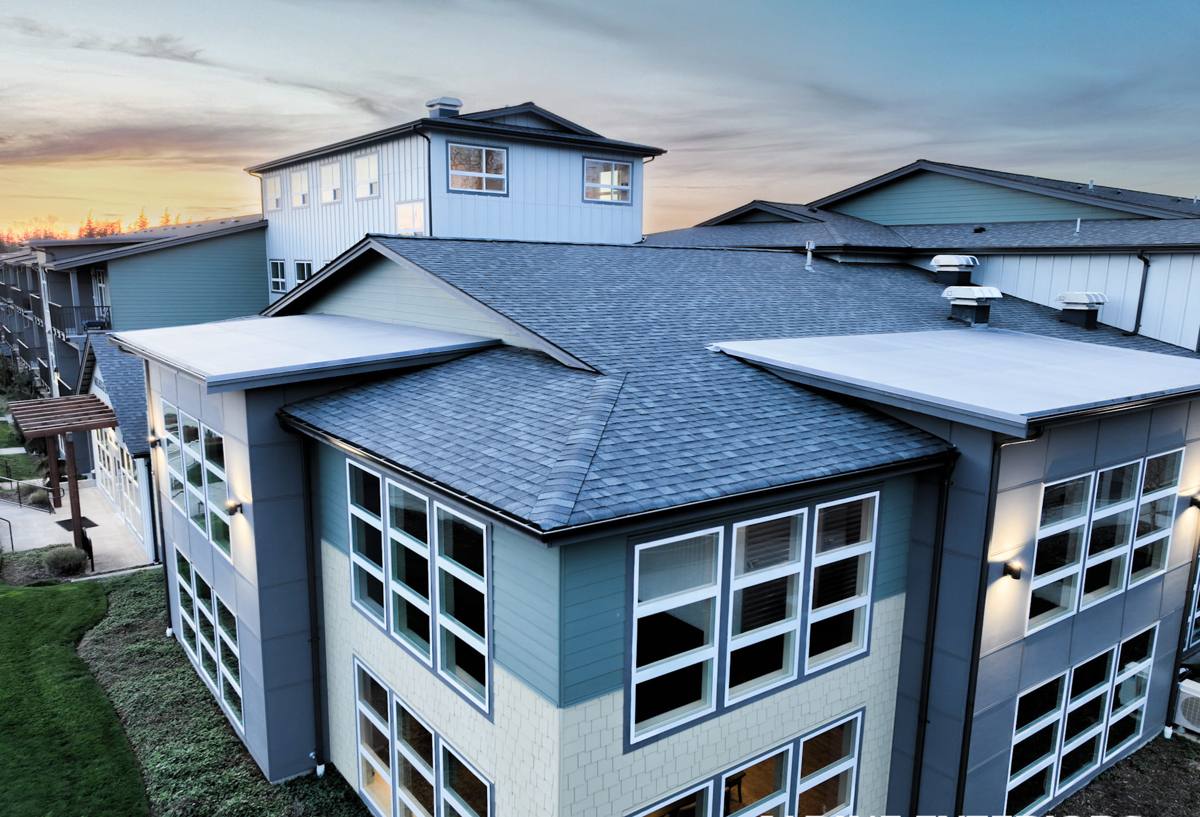
What Bellingham Homes Need From a New Roof
Standing Up to Salt Air
Homes closer to Bellingham Bay and the shoreline corridors deal with airborne salt that accelerates corrosion on exposed metal — nail heads, flashing, vent stacks, and gutter hardware all take the hit over time. That's why fastener choice and flashing material matter more here than in a dry inland climate. Galvanized or coated fasteners, corrosion-resistant flashing, and properly sealed penetrations aren't upgrades in this area — they're the baseline for a roof that's supposed to last.
Shedding Driving Rain, Not Just Falling Rain
Wind-driven rain doesn't just land on a roof, it pushes sideways and upward under shingle edges, around vents, and into any gap in the underlayment or flashing. A roof that looks fine in a light drizzle can still leak in a real Whatcom County windstorm if the underlayment, valley protection, and edge details weren't installed with that in mind. This is where a lot of underperforming reroofs fail — not because the shingles were bad, but because the water management details underneath them were rushed.
Managing a Long Moss Season
Bellingham's tree cover, mild temperatures, and long wet stretch from fall through spring create ideal conditions for moss and algae growth on north-facing slopes and shaded sections of roof. Moss holds moisture against the roofing material, lifts shingle edges, and works its way into seams — and once it's established, it accelerates wear well beyond what the shingles were rated for. A replacement is the right time to build in moss resistance from the start rather than fighting it after the fact.
What a Correct Roof Replacement Actually Involves
A roof replacement is more than swapping old shingles for new ones. Done correctly, it's a system — deck, underlayment, flashing, ventilation, and roofing material all working together. Skipping any one of those steps is how homeowners end up with a roof that looks new but fails early.
Deck Inspection and Repair
Once the old roofing is stripped, the plywood or board decking underneath gets inspected for rot, delamination, or soft spots — common on older Bellingham homes where a slow leak may have gone unnoticed for years under moss or debris. Any compromised decking should be replaced before new roofing goes down; covering over bad decking just hides a problem that will resurface.
Underlayment and Water Barrier
Given how much wind-driven rain this area sees, we treat underlayment as a real second line of defense, not a formality. That includes ice-and-water shield or equivalent membrane at eaves, valleys, and around penetrations — the spots most likely to take on water under pressure.
Flashing at Every Transition
Chimneys, skylights, dormers, and wall-to-roof transitions are where most leaks actually start. Correct flashing — properly lapped, sealed, and tied into the underlayment — matters more than the shingle brand on top of it.
Ventilation
Balanced intake and exhaust ventilation keeps the attic dry and temperature-regulated, which protects the decking from the inside and helps prevent condensation issues that are common in our humid, mild climate. Poor ventilation shortens roof life even when everything else is done well.
Moss-Resistant Material Choices
Algae-resistant shingle granules, and in some cases zinc or copper strips at the ridge, help slow moss and algae regrowth on shaded slopes — a detail worth building in during a replacement rather than adding later.
Comparing Roofing Material Options for This Climate
| Material | How It Handles Moss & Moisture | Maintenance | Best Fit |
|---|---|---|---|
| Architectural asphalt shingle | Good with algae-resistant granules; needs clean valleys and gutters | Low to moderate; periodic moss removal recommended | Most Bellingham homes; strong value and wide style options |
| Standing seam metal | Sheds moisture fast; moss struggles to hold on smooth panels | Low; occasional fastener and sealant checks | Homes prioritizing longevity and steep or complex rooflines |
| Cedar shake | More moisture-sensitive; needs consistent airflow underneath to avoid rot | Higher; regular treatment and inspection | Homeowners committed to the traditional PNW look and upkeep |
| Synthetic shake/slate | Resists moisture well; consistent performance across slopes | Low | Homeowners wanting the shake look without the maintenance load |
We'll walk through these trade-offs honestly based on your roof's pitch, sun exposure, and how much shade your lot gets — a heavily treed Bellingham property has different needs than an open one closer to the water.
Signs Your Bellingham Roof Needs Replacement, Not Just Repair
- Shingles that are cupping, cracking, or losing granules across large sections rather than one isolated spot
- Moss that keeps returning to the same areas even after cleaning
- Soft or spongy spots on the roof surface, which usually signal decking damage underneath
- Daylight visible through the attic decking or consistent staining on interior ceilings
- Flashing that's rusted, lifted, or separated from the roofline around chimneys and vents
- A roof approaching or past the expected service life of its material, especially with a history of storm exposure
- Rising frequency of small repairs that no longer feel worth patching individually
What Drives the Cost of a Roof Replacement
| Factor | Why It Matters Here |
|---|---|
| Roof size and pitch | Steeper roofs take longer and require more safety setup, especially common on Bellingham's hillside lots |
| Decking condition | Moisture-related rot from moss or old leaks often isn't visible until tear-off, and adds material and labor |
| Material choice | Asphalt, metal, and shake carry different material and installation costs and different long-term maintenance |
| Roof complexity | Valleys, dormers, skylights, and chimneys each add flashing work and time |
| Access and tree cover | Heavy canopy common in Bellingham neighborhoods can affect staging, debris removal, and cleanup time |
Every roof and every property is different, which is why we walk the roof and attic in person before giving a real number — broad online estimates rarely hold up once decking condition and access are factored in.
How Our Process Works
1. Inspection and Assessment
We start with a full roof and attic inspection, checking decking condition, ventilation, flashing, and any signs of moss-related wear or moisture intrusion specific to your home's exposure.
2. Material and Scope Discussion
We go over material options suited to your roof's slope and shade, explain the trade-offs honestly, and put together a clear scope — no vague line items.
3. Scheduling Around the Weather
Given how much of the year here brings rain, we schedule tear-off and dry-in carefully so your home isn't left exposed. Tear-off happens in sections when needed, with the roof dried in the same day whenever conditions allow.
4. Installation
Deck repair, underlayment, flashing, ventilation, and final roofing material go in as a coordinated system — not a checklist rushed to get shingles on before the next rain.
5. Cleanup and Walkthrough
We clear debris, run a magnetic sweep for stray fasteners, and walk the finished roof and attic with you before calling the job done.
Why a Bellingham-Familiar Crew Matters
A roofing crew that regularly works in and around Bellingham already understands things a visiting or out-of-area crew has to learn on the fly: how much moss buildup is normal to expect on shaded northern slopes here, how tree canopy affects debris load and staging, and how driving rain off the bay stresses valleys and flashing differently than it does further inland. That familiarity shows up in fewer surprises during tear-off and a roof that's built with this specific climate in mind, not a generic specification.
It also means knowing the practical realities of scheduling around Whatcom County's wet stretches, working respectfully around mature trees many homeowners want to keep, and coordinating any permitting or inspection steps that apply to your specific property.
Get a Straightforward Roof Estimate
If your roof is showing wear, holding onto moss, or simply due for replacement, we're happy to take a look and give you an honest assessment — no pressure, no upsell. Fill out the form below to schedule a free estimate for your Bellingham home.