 Blaine Exterior
 Roof Repair in Lynden: Built for a Valley That Doesn't Dry Out Fast
Lynden sits inland in the Nooksack River valley, in northern Whatcom County near the Canadian border. It doesn't take the same direct salt exposure as our waterfront territory closer to Blaine, but it sits inside the same marine-influenced weather system, and a roof here still deals with frequent, often wind-driven rain and a moss season that runs long into the year on shaded slopes. We're based in Blaine and work Lynden on a regular basis, which means our crew has seen how roofs in this valley actually fail over time, not just how a shingle performs on a spec sheet.
This page is about roof repair specifically, not a full tear-off and replacement. Most roofs that come to us with a leak, a storm-damaged section, or a patch of moss-related wear don't need a new roof. They need the actual source of the problem found and fixed correctly, with materials and flashing details that match what this climate demands. That's a different job than replacement, and it deserves its own approach.
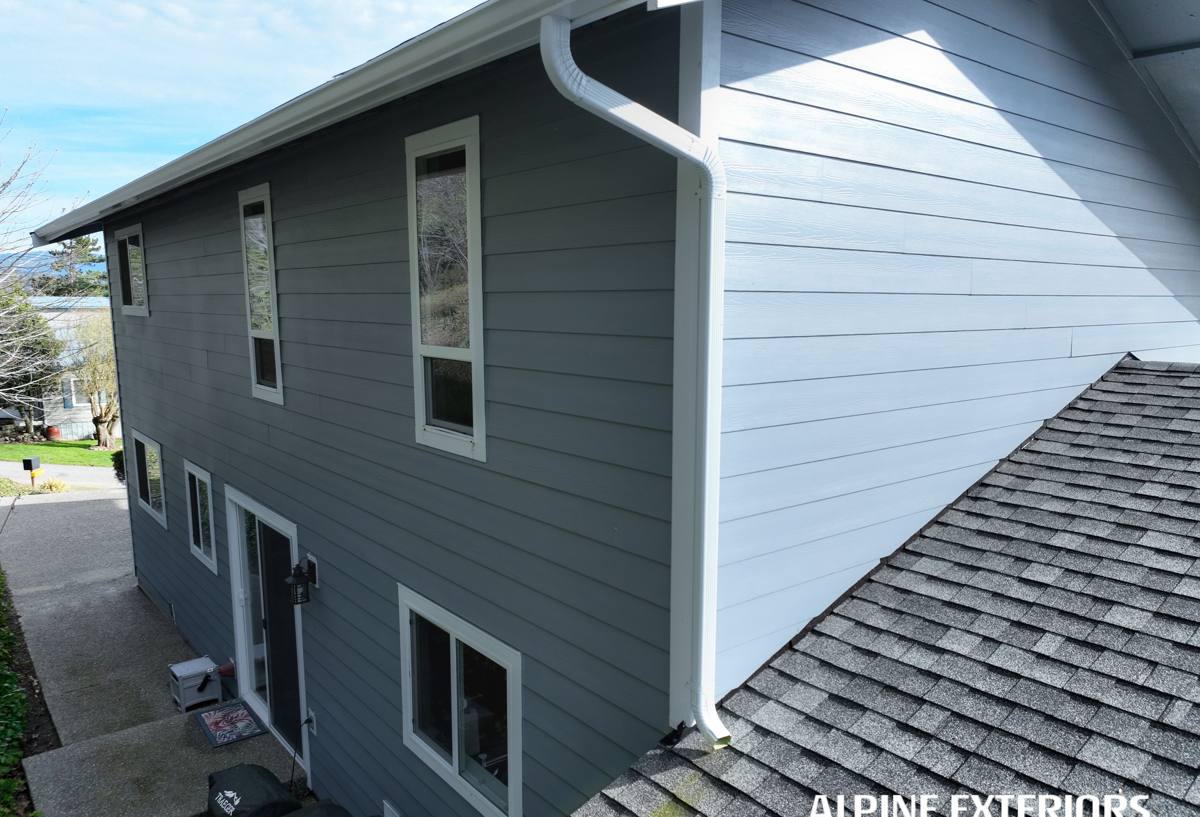
What This Climate Does to a Lynden Roof That Needs Repair
Moss That Traps Moisture Against the Roof
Shaded slopes, north-facing roof planes, and anything under mature trees hold moisture longer than sun-exposed sections. Over time that turns into moss, and moss doesn't just sit on top of a roof — it works its way under shingle tabs, holds standing water against the surface, and can lift or loosen roofing at the edges. A repair that only clears the moss without addressing what's underneath it tends to have the same problem show up again within a season or two.
Wind-Driven Rain and Valley Flashing
Rain in the Nooksack valley doesn't always fall straight down. Wind pushes it sideways into roof valleys, around chimneys and vent pipes, and under flashing that isn't lapped correctly. That's exactly where most of the repair calls we run in Lynden actually originate — not from worn-out field shingles, but from a flashing detail that was never quite right, or that's worked loose after years of that sideways load.
Temperature Swings and Material Fatigue
Whatcom County doesn't see extreme heat or deep cold most years, but the repeated cycle of damp, mild days and occasional cold snaps still stresses roofing materials. Shingles that stay saturated more often than they fully dry out become brittle and prone to cracking faster than the same product would in a drier climate, which is part of why a roof here can need a repair well before it's actually reached the end of its rated life.
What a Correct Roof Repair Actually Involves
Finding the Real Source, Not Just the Symptom
A ceiling stain or a wet spot in the attic rarely shows up directly under the actual leak. Water travels along the underlayment, a rafter, or a truss before it drips somewhere visible, so a repair that just patches the spot where the damage appeared often misses the actual entry point. A correct repair starts with tracing the water back to where it's actually getting in, which usually means getting on the roof, not just looking at the ceiling from inside.
Matching Materials Without Creating a New Weak Point
Patching a section of roof with the wrong shingle profile, an incompatible underlayment, or flashing that doesn't tie into the existing system properly can leave a repair that looks fine for a season and then fails at the new seam. Matching the repair to what's already there, or making a clear, honest call that a section needs a broader fix, is part of doing the job right the first time.
Flashing Done Right, Every Time
Most of the repair work that holds up long-term in this valley comes down to flashing: at valleys, chimneys, vent pipes, skylights, and anywhere a roof plane meets a wall. Getting the laps, the sealant, and the underlying membrane right in these spots matters more to a repair's longevity than almost anything else on the job.
Common Roof Repairs We Handle in Lynden
- Valley leaks from worn or improperly lapped valley flashing
- Leaks around chimneys, vent pipes, and roof penetrations
- Storm damage: lifted, cracked, or missing shingles after high wind
- Moss-related shingle damage on shaded or north-facing slopes
- Skylight and roof window flashing repairs
- Soft or rotted decking discovered during a repair, addressed before it's covered back up
- Gutter and fascia issues that are letting water back up under the roof edge
Some of these are quick fixes. Others turn up more extensive damage once we're actually up there, and we'll tell you plainly which is which before any work starts, not after.
Storm Damage and Emergency Repairs
Wind events strong enough to lift shingles or knock loose flashing happen most often in the late fall through winter stretch, when Whatcom County sees its wettest, windiest weather. When that happens, the priority is stopping active water intrusion first — a temporary tarp or seal over the damaged section — and then scheduling the permanent repair once the immediate risk to the interior of the house is under control. We treat that first step as separate from the final fix rather than rushing a permanent repair in bad weather just to close out the job quickly. A patch installed correctly under dry conditions holds up far better than one installed in a hurry between storm systems.
Materials That Belong in a Lasting Repair
A repair is only as good as what goes into it. That means underlayment and ice-and-water shield rated for sustained moisture exposure, not a bare-minimum product; corrosion-resistant fasteners and flashing metal suited to a consistently damp climate; and shingles or flashing profiles that actually match, or reasonably approximate, what's already on the roof so the repair doesn't stand out as a weak seam. None of this adds much cost relative to the labor of getting up on the roof in the first place, but skipping it is exactly what turns a repair into a callback.
Repair or Replace? How We Help You Decide
Not every roof problem in Lynden calls for a full replacement, and we don't default to recommending one just because we're already on the roof. The honest answer depends on a handful of factors we walk through with every homeowner.
| Factor | Points Toward Repair | Points Toward Replacement |
|---|---|---|
| Roof age | Well within its rated lifespan | Nearing or past its expected service life |
| Extent of damage | Localized to one section or penetration | Spread across multiple slopes or the whole roof |
| Decking condition | Solid, dry decking under the affected area | Soft or rotted decking found in more than one spot |
| Repair history | First or second repair on this roof | Repeated patches over several years with no lasting fix |
| Moss and moisture pattern | Isolated to one shaded slope | Widespread across the roof with visible granule loss |
We'll explain what we find on your roof against this list and give you the real trade-offs, including what a repair buys you in time versus what a replacement buys you in peace of mind. The goal is a decision you understand, not one we've talked you into.
Our Repair Process in Lynden
- Inspection: We get on the roof and in the attic where possible, not just a look from the ground or a drone photo.
- Diagnosis: We trace the actual water path and identify the real cause, which is sometimes different from where the damage first appeared.
- Written scope and price: You get a clear explanation of what's wrong and what fixing it actually involves, before any work starts.
- The repair itself: Matched materials, correct flashing details, and attention to the parts of the job that don't show once it's finished.
- A straightforward follow-up: If something related turns up after the fact, we want to hear about it directly rather than have you chase down a callback.
Signs Your Lynden Roof Needs a Repair Call
- Water staining on interior ceilings, especially near exterior walls or chimneys
- Moss buildup in valleys or on shaded slopes that returns quickly after cleaning
- Granules collecting in gutters or at the base of downspouts
- Missing, curling, or cracked shingles, especially after a windstorm
- Daylight visible through the roof deck from inside the attic
- Flashing that looks lifted, rusted, or missing sealant around chimneys or vents
- A soft spot or give underfoot when walking near a valley or penetration
Any one of these is worth a call. Left through another wet season, most of them get more expensive to fix, not less.
Why a Blaine Crew That Already Works Lynden Matters
We're based in Blaine, on the water, where salt air and direct storm exposure shape most of our work. Lynden is different — it's inland, in the Nooksack valley, with less salt exposure but its own combination of shade, wind-driven rain, and a long moss season. Working both areas regularly means our crew doesn't apply a one-size-fits-all approach to either. We know which roof orientations in Lynden tend to hold moss longest, which valley and flashing details cause the most repeat calls in this specific valley, and how a Lynden roof's problems tend to differ from what we see on a house a few miles away near the coast. That familiarity comes from being on these roofs regularly, season after season, not from a single visit.
Get a Free, No-Pressure Estimate
If your Lynden roof has a leak, storm damage, or a spot of moss that's turned into something more, we're glad to take a look and give you a straightforward read on what it actually needs. Reach out using the form below to schedule a free estimate — no pressure, no upsell script.