 Blaine Exterior
 Why Peace Arch Roofs Wear Differently Than Roofs Inland
Homes near Peace Arch sit close enough to Semiahmoo Bay and the Strait of Georgia that salt-laden air is a daily fact of life, not an occasional weather event. Combine that with Whatcom County's long wet season, driving rain that comes in sideways off the water, and shade from mature evergreens that keeps roof surfaces damp for weeks at a stretch, and you get a roofing environment that's tougher on materials than most manufacturers' warranty testing assumes. Fasteners corrode faster near salt air. Moss and algae get a longer growing window because the roof deck rarely gets a full dry-out between rain systems. And wind-driven rain finds gaps in flashing and underlayment that would never leak in a drier, calmer climate.
None of this means Peace Arch homes need exotic materials or special engineering. It means the installation details — the ones that are invisible once the roof is finished — have to be done right the first time. A roof that's "good enough" for a dry inland town will show its weaknesses here within a few winters.
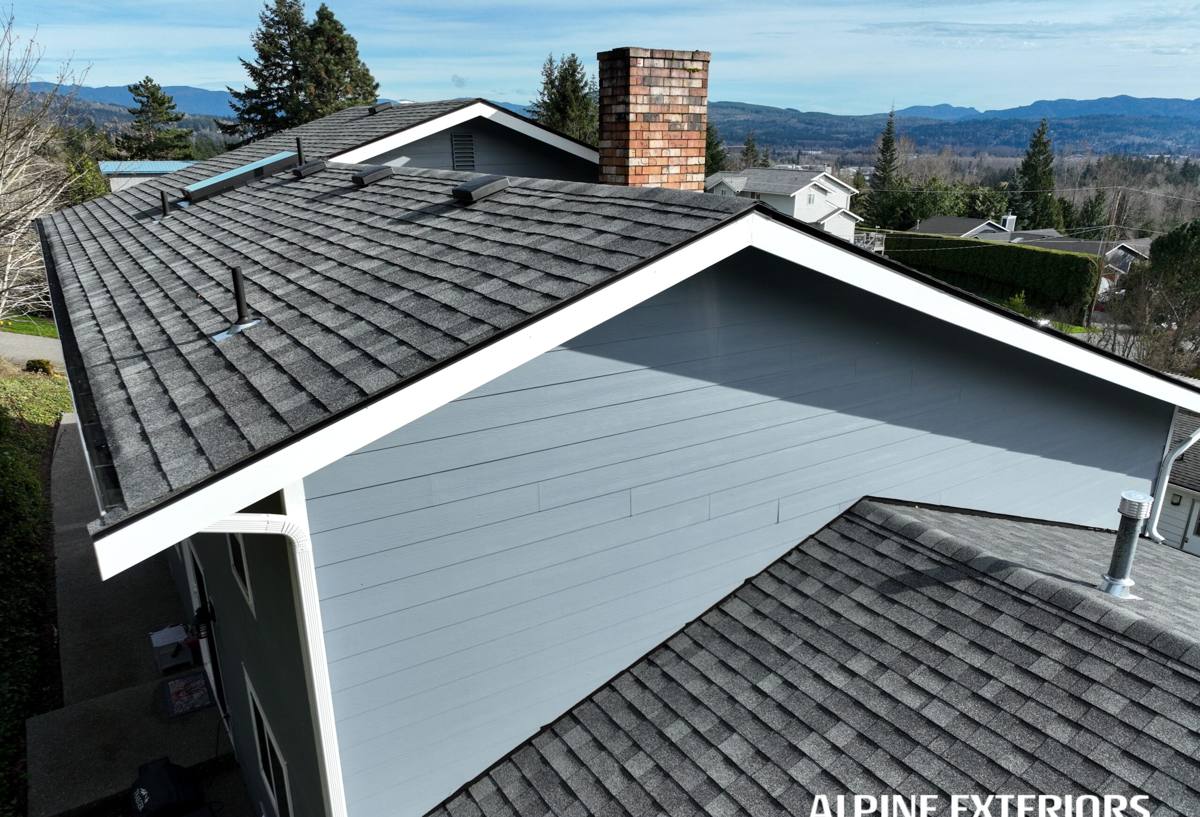
Signs a Peace Arch Roof Needs Replacement, Not Another Repair
Not every roof problem calls for a full tear-off. But there's a point where patching becomes throwing money at a roof that's already lost the fight against moisture. Homeowners in this area should treat these as replacement signals rather than repair projects:
- Granule loss heavy enough that you're finding shingle grit in gutters every season, not just after a storm
- Shingles that are cupping, curling, or cracking across large sections rather than one isolated area
- Soft or spongy decking felt underfoot in the attic, especially near valleys or eaves
- Moss that keeps returning within a year of cleaning, which usually means the roof surface no longer dries out between rains
- Daylight visible through the roof deck from inside the attic, or water staining on rafters
- A roof approaching or past 20-25 years old on asphalt composition, even if it "looks fine" from the ground
If you're only seeing one or two of these and the roof is under 15 years old, a repair may still be the right call. We'll tell you that honestly during an inspection rather than push a replacement a roof doesn't need yet.
What a Correct Roof Replacement Actually Involves
Full Tear-Off, Not Overlay
In this climate, we don't recommend installing new shingles over an old layer. Overlaying traps moisture that's already worked its way into the old roofing system, and it hides deck problems instead of fixing them. A full tear-off lets us inspect every square foot of decking and address rot or soft spots before they're covered up for another 20 years.
Deck Inspection and Repair
Once the old roofing is stripped, the plywood or board decking underneath gets inspected panel by panel. Near Peace Arch, we routinely find soft decking at valleys, around old vent penetrations, and along eaves where ice-dam-style backup or wind-driven rain has been getting past worn flashing for years. Any compromised decking gets cut out and replaced before anything new goes down — skipping this step is the single most common cause of a "new" roof leaking within a year or two.
Underlayment Built for Wet Climates
We install synthetic underlayment as the primary water-resistive barrier, with self-adhered ice-and-water shield membrane at the vulnerable spots: eaves, valleys, roof-to-wall transitions, and around every penetration. This isn't a code minimum choice — it's what actually holds up against the extended damp periods and wind-driven rain that define a Blaine winter.
Flashing Done Right
Flashing failures, not shingle failures, cause the majority of roof leaks we get called out for. Every chimney, skylight, sidewall, and valley gets new metal flashing, properly lapped and integrated with the underlayment — never just caulked over old flashing to save time.
Ventilation That Matches the Home
A roof that can't breathe traps moisture in the attic, which speeds up moss growth on the surface and rot from underneath. We calculate intake and exhaust ventilation based on your attic's square footage and existing vent points, then correct any imbalance as part of the installation rather than leaving it as-is.
Choosing the Right Roofing Material for This Location
There's no single "best" roofing material — the right choice depends on your home's structure, your budget, and how much long-term maintenance you're willing to take on. Here's how the common options actually compare for a home in this specific coastal, high-moisture setting:
| Material | Performance Near the Water | Maintenance Burden | Typical Lifespan Here |
|---|---|---|---|
| Architectural asphalt shingle | Good with proper underlayment and flashing; needs periodic moss treatment | Low to moderate — occasional cleaning and gutter checks | 20-30 years |
| Standing seam metal | Excellent — sheds moss growth and handles wind-driven rain very well | Low — infrequent cleaning, no granule loss to manage | 40-50+ years |
| Cedar shake | Struggles in constant damp shade; needs diligent upkeep to avoid rot | High — regular treatment and inspection required | Highly variable, often shorter here without upkeep |
| Synthetic/composite shingle | Good; resists moisture absorption better than wood | Low to moderate | 30-50 years, product-dependent |
We're generally cautious about recommending cedar shake in the shadier, damper pockets around Peace Arch — not because it's a bad product everywhere, but because our professional standard is to match the material to the microclimate. A north-facing roof under tree cover holds moisture longer than a manufacturer's national warranty testing accounts for, and that shows up as accelerated wear regardless of installation quality. We'll walk you through the honest trade-offs for your specific roof rather than steer you toward whatever's easiest to install.
Our Installation Process, Start to Finish
- On-site inspection and estimate — we walk the roof and attic, document existing conditions, and give you a written scope before any work starts
- Material selection — we go over the comparison above in the context of your home's exposure, roof pitch, and budget
- Scheduling around weather windows — tear-off only proceeds when we can get the deck dried in and protected the same day; we don't leave a roof open overnight in this climate
- Tear-off and deck inspection — old roofing removed, decking assessed and repaired as needed
- Underlayment and flashing installation — synthetic underlayment plus ice-and-water membrane at vulnerable areas, new flashing throughout
- Roofing material installation — installed to manufacturer specification, not shortcuts, to keep your warranty valid
- Ventilation correction — intake and exhaust balanced for the attic
- Final walkthrough and cleanup — magnetic sweep for stray fasteners, debris hauled off, and a walkthrough of the finished roof with you
Cost Factors Worth Understanding
Roofing quotes vary widely, and the sticker price alone doesn't tell you what you're getting. These are the factors that most often move a Peace Arch roofing estimate up or down:
| Factor | Why It Matters |
|---|---|
| Roof pitch and access | Steeper roofs and limited equipment access take longer and require more safety setup |
| Deck condition | Rotted or soft decking found during tear-off adds material and labor not visible in a pre-tear-off estimate |
| Number of penetrations | Chimneys, skylights, and vents each need individual flashing work |
| Material choice | Asphalt, metal, and composite carry very different material costs per square |
| Existing layers to remove | Tearing off multiple old layers costs more in labor and disposal than a single layer |
| Ventilation upgrades | Adding intake or exhaust vents where none existed is a smaller add-on cost with a real payoff in roof longevity |
We give a broad range during the initial estimate and firm it up once the deck is exposed — that's the only honest way to price a project where some of the real cost drivers aren't visible until tear-off.
What to Check Before Hiring Any Roofing Crew
Whatcom County has plenty of roofing contractors, but not all of them work this specific coastal microclimate regularly. Before hiring anyone for a Peace Arch home, it's worth confirming:
- They're licensed and insured to work in Washington State, and can show proof without hesitation
- They inspect the attic and decking, not just the roof surface, before quoting
- They specify underlayment and flashing details in writing, not just "shingles and labor"
- They can explain how they'll handle ventilation, not just replace what's already there
- They have direct experience with salt-air exposure and moss-prone, shaded roofs specifically — not just general roofing experience inland
- Their warranty covers workmanship separately from manufacturer material warranty, and they explain the difference clearly
A crew that's used to working this stretch of the coast will flag things a general contractor might miss — like where wind-driven rain typically finds a gap, or which roof orientations need extra ventilation because of shade and moss history in the area.
Warranty and Long-Term Care
A new roof is a long-term investment, and the warranty structure matters as much as the installation. Material manufacturers typically warranty the shingles or panels themselves; workmanship warranties cover the installation separately, and that's the part that protects you if flashing or underlayment work fails down the road. We'll explain both in plain terms before you sign anything, including what voids each one — improper attic ventilation is a common warranty gap that catches homeowners off guard years later.
After installation, a roof in this climate benefits from an annual look at gutters, valleys, and any moss regrowth, especially on shaded sections. Catching small issues early is far cheaper than letting driving rain and salt air work on a small gap for a full winter.
Ready for a Straight Answer About Your Roof
If you're weighing repair versus replacement, or just want an honest read on how much life is left in your current roof, we're glad to take a look. Fill out the form below for a free, no-pressure estimate — we'll tell you what your roof actually needs, not what's easiest to sell.