 Blaine Exterior
 Building New in Peace Arch: Why Window Installation Timing Matters
Peace Arch sits close enough to the water and to the border crossing that homes here take a steady beating from moisture — salt-laden air off the bay, wind-driven rain rolling in off the Strait of Georgia, and a wet season that runs long even by Whatcom County standards. If you're building new in this neighborhood, the window installation isn't a standalone task you bolt on later. It's tied directly into the framing, the weather-resistive barrier, and the siding sequence. Get that sequence wrong and you won't see the consequences for a year or two — by which time water has already found its way behind the cladding.
New-construction windows are a different job than replacement windows. A replacement window gets set into an existing opening, often without disturbing the exterior finish. A new-construction window has a nailing flange that gets integrated directly into the wall assembly — the house wrap, the flashing, the sheathing — before siding or trim ever goes on. That flange is either your best friend or your biggest liability, depending on how it's flashed. On a home exposed to Peace Arch's weather, we don't treat that step casually.
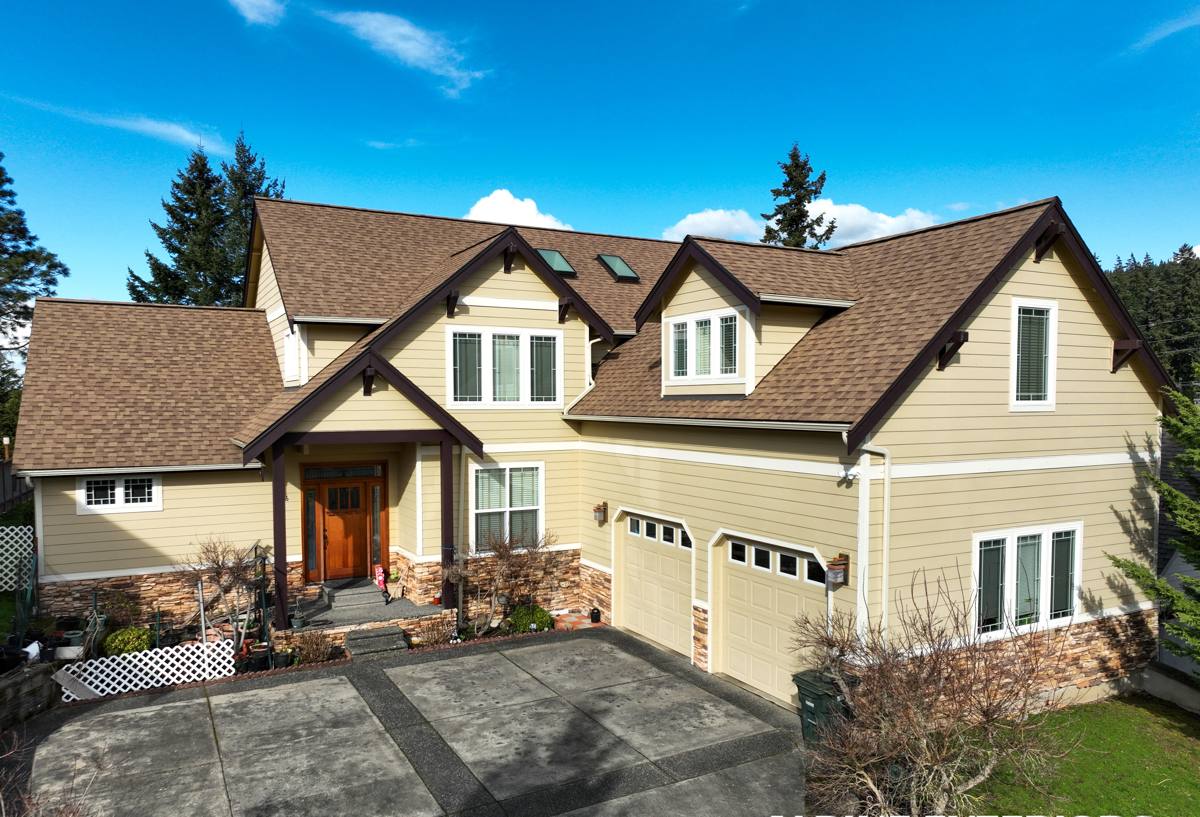
What This Climate Actually Demands From a Window Install
It helps to be specific about what "coastal exposure" means for a builder rather than just a marketing phrase. In Peace Arch, three conditions show up again and again:
- Salt air corrosion — fasteners, hinges, and unprotected metal components degrade faster near the water than they would inland.
- Driving rain — wind-blown rain doesn't fall straight down; it hits window units at an angle and pushes water sideways and upward at flanges and sill joints.
- Extended damp season — long stretches of moist air and shade encourage moss and mildew growth on anything that doesn't shed water and dry out between rains.
None of this means new-construction windows in Peace Arch need to be exotic or overbuilt. It means the flashing details, fastener choices, and drainage paths need to be right the first time, because this is the one part of the build where redoing the work later means tearing into finished siding.
The Install Sequence That Actually Keeps Water Out
Sill Pan Flashing Comes First
Before a window ever sits in the rough opening, the sill needs a sloped, sealed pan — not just a bead of caulk. A proper sill pan directs any water that gets past the window (and some always will, eventually) back outside the wall assembly instead of down into the framing. This is the single most common shortcut we see skipped on production builds, and it's the one that causes the most rot down the line.
Shingle-Lap Order With the Weather-Resistive Barrier
The window flange has to integrate with the WRB in the correct overlap order — sill flashing first, then the window, then jamb flashing over the sides of the flange, then head flashing over the top, lapped so every layer sheds water onto the layer below it, like shingles on a roof. Reverse that order anywhere and you've built a pocket that collects water instead of shedding it.
Head Flashing and Drip Caps
Given how much driving rain this area sees, we don't skip a proper head flashing or drip cap above each window, even under covered eaves. Wind can push rain sideways and upward under a soffit far more easily than most homeowners expect.
Fastening and Shimming for Drainage
Windows need to be shimmed square and plumb without over-driving fasteners, which can bow the frame and compromise the seal around the sash. We also leave the designed drainage paths at the sill clear — weep holes and drainage gaps are there for a reason, and they're easy to accidentally block with insulation or sealant during installation.
Material and Hardware Choices That Hold Up Near the Water
Not every window product is built the same way, and in a salt-air environment the difference shows up in five to ten years, not on day one. Here's how the common frame materials compare for a project like this:
| Frame Material | Salt Air / Moisture Behavior | Maintenance | Typical Cost Tier |
|---|---|---|---|
| Vinyl | Won't corrode; UV and heat can affect long-term stability | Low — occasional cleaning | Lower |
| Fiberglass | Excellent resistance to moisture and salt exposure; stable dimensionally | Low | Mid to upper |
| Aluminum-clad wood | Good exterior protection, but any breach in the cladding exposes wood to rot | Moderate — depends on cladding integrity | Upper |
| Bare aluminum | Prone to pitting and corrosion in salt air over time without upgraded coatings | Higher | Varies |
We also spec corrosion-resistant fasteners and hardware — stainless or coated screws rather than standard galvanized — anywhere a window is within a few blocks of open water or exposed to prevailing wind off the bay. It's a small cost difference at the framing stage and a real difference in how the hardware looks and functions a decade out.
Glass Packages and Frame Performance for a Marine Climate
Whatcom County's marine climate is mild compared to inland Washington, but it's persistently damp, which changes what matters in a glass package:
- U-factor matters for keeping heat in during the cool, wet months that dominate the calendar here.
- Solar heat gain coefficient (SHGC) is less critical than in sunnier climates, but still worth balancing against window orientation, especially on south- and west-facing walls.
- Condensation resistance is worth asking about directly — homes with a lot of interior moisture (bathrooms, kitchens, laundry areas) benefit from a warmer edge-of-glass spacer system, which cuts down on interior condensation and the mildew that follows it.
We'll walk through glass package options against your home's orientation and layout rather than defaulting to one spec across every opening — a window facing prevailing wind and rain off the water doesn't need the same treatment as one tucked under deep eaves on a sheltered wall.
Coordinating With Your Builder or General Contractor
New-construction window work happens on someone else's schedule — the framer's, the GC's, the siding crew's. Delays or sequencing errors on our end can hold up an entire build. We work directly with the builder to confirm:
- Rough opening sizes match approved window schedules before units arrive on site
- WRB installation and window flashing happen in the correct order, not whichever crew shows up first
- Flashing details are inspected and photographed before siding closes them in for good
- Any change orders (size, style, or glass package swaps) get confirmed in writing before install day
On a lot in Peace Arch, we also plan install timing around weather windows where we can — driving rain during an open flashing sequence is exactly the scenario the sill pan and shingle-lap order are designed to protect against, but there's no reason to test that when we can wait for a drier stretch.
Common Mistakes We See in New-Construction Window Installs
Most of the water intrusion problems we get called out to diagnose in newer homes trace back to a handful of repeat issues:
- Caulk used as a substitute for proper sill pan flashing
- WRB and flashing layers overlapped in the wrong order, creating a trap instead of a drain path
- Over-driven fasteners bowing the frame and breaking the factory seal
- Drainage weeps and gaps sealed shut or packed with insulation
- Standard fasteners and hardware used within sight of open water, leading to early corrosion and staining
Every one of these is avoidable, and every one of them is far cheaper to get right at framing stage than to correct after siding, trim, and interior finish are complete.
Our Process on New-Construction Projects in Peace Arch
We approach every new build the same structured way, adjusted for the specific lot and orientation:
- Review the window schedule and rough openings against approved plans before ordering
- Confirm frame material and glass package choices against the home's orientation and exposure to wind and rain
- Install sill pan flashing, then windows, then jamb and head flashing in correct shingle-lap order with the WRB
- Verify square, plumb, and proper shim placement without over-fastening
- Confirm drainage paths and weep holes remain clear before sign-off
- Document flashing details before the siding crew closes the wall
That documentation step matters more than it sounds — it gives the homeowner and builder a record of what's behind the siding, which is useful for warranty purposes and for any future work on the home.
A Quick Checklist Before Your Windows Go In
- Has the window schedule been double-checked against actual rough openings?
- Is there a sloped sill pan detail specified for every opening, not just the exposed ones?
- Are fasteners and hardware upgraded for proximity to open water?
- Has the glass package been matched to each wall's orientation rather than applied uniformly?
- Will flashing be photographed before siding closes the wall assembly?
If you're building or finishing a new home in Peace Arch and want a crew that treats window installation as part of the water-management system rather than a standalone task, we're happy to walk your plans and framing schedule with you. Reach out for a free, no-pressure estimate — the form below gets you started.