 Blaine Exterior
 New Roof Installation for Sumas Homes
Sumas sits at the eastern edge of Whatcom County, in the low valley near the Sumas Prairie farmland and the border crossing into Canada. It's a different setting than the waterfront in Blaine, but the roof over a Sumas home is up against the same basic problem every roof in this county has to solve: long stretches of steady moisture, driving rain riding in off the Pacific storm track, and a moss season that runs most of the year. Blaine Exterior Co installs new roofs in Sumas built for that reality, not for whatever climate a shingle brochure was written for.
A new roof installation is one of the few home projects where doing it "mostly right" isn't good enough. A roof that's 90% correct still leaks, still grows moss in the same low spots, and still fails early in exactly the places a rushed crew skipped. This page walks through what a Sumas home actually needs from a new roof, what a correct installation involves, and how our process works.
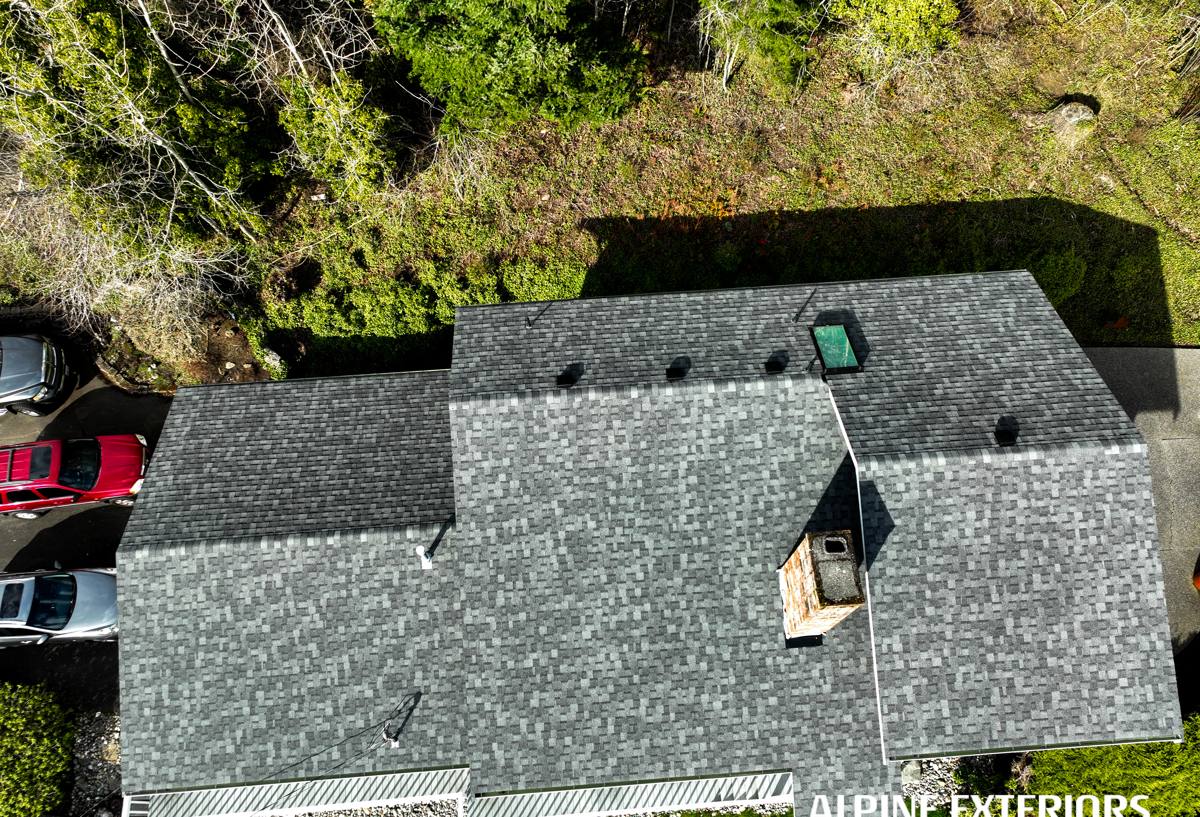
What Whatcom County's Climate Does to a Roof Over Time
Sumas is inland compared to Blaine, but it isn't dry. Marine air off the Salish Sea still pushes through the county for most of the year, and the valley setting adds its own wrinkle: mornings here tend to hold onto fog and heavy dew longer than a roof right on the coast would, simply because there's less wind to burn it off. That extra dwell time of moisture sitting on a roof surface is exactly what moss spores and algae need to take hold.
Layer on top of that the driving, wind-driven rain that comes through with fall and winter storms, and you get a climate that attacks a roof from three directions at once:
- Standing moisture — fog, dew, and light drizzle that lingers on north-facing and shaded slopes far longer than on a sunnier roof elsewhere in the state.
- Wind-driven rain — storms that push water sideways and upward under shingle edges, into fascia, and around any flashing that isn't properly lapped.
- Moss and organic growth — a near year-round season that eats away at shingle granules, lifts shingle tabs, and holds water against the deck long after the surface looks dry.
None of that is unusual for Whatcom County. What it means is that a roofing system installed here needs correct ventilation, correct underlayment, and correct flashing details a lot more than it needs a fancy shingle color.
Signs a Sumas Roof Needs Replacement, Not Another Patch
Roofs rarely fail all at once. In this climate, the pattern is usually gradual: a repair here, a patch there, until the roof is a patchwork of fixes that no longer work together. Some signs that a repair won't hold much longer include:
- Granule loss visible in gutters or downspouts, especially after a heavy rain
- Moss established in mats rather than a light surface film, particularly on north-facing slopes
- Curling, cupping, or cracked shingles across large sections rather than a single spot
- Soft or spongy decking felt underfoot in the attic, or daylight visible through the roof deck
- Repeated leaks around the same valley, chimney, or vent boot despite prior repairs
- A roof that's simply reaching the end of its material's realistic service life in this climate
If more than one or two of those apply, a new installation usually costs less over time than another round of patchwork.
Choosing a Roofing System for This Climate
There's no single "best" roofing material for every home — it depends on the roof's pitch, the home's structure, and what the homeowner wants long-term. What we won't do is recommend a system just because it's cheaper to install and let the homeowner discover its weaknesses in five years. Here's how the common options stack up for a Sumas roof specifically:
| Material | Typical Lifespan (this climate) | Moss & Moisture Behavior | Best Fit |
|---|---|---|---|
| Architectural (laminate) asphalt shingle | 20–30 years | Good when installed with proper ventilation; needs periodic moss treatment | Most homes — best balance of cost and performance |
| 3-tab asphalt shingle | 15–20 years | More prone to early granule loss and curling in wet, mossy conditions | Budget-driven projects; shorter expected service life |
| Standing seam metal | 40–50+ years | Sheds moisture fast; very resistant to moss because water doesn't sit on the surface | Homeowners planning to stay long-term or wanting minimal moss maintenance |
| Synthetic/composite shingle | 30–50 years | Strong moisture resistance; performance varies by manufacturer and installation quality | Homes wanting a shake or slate look without the maintenance |
Whatever material a homeowner chooses, we install it with the underlayment, ventilation, and flashing details that this climate actually requires — not the bare minimum the material's warranty allows.
Why Ventilation Isn't Optional Here
A roof that isn't properly ventilated traps warm, moist attic air against the underside of the deck. In a climate that's already damp outside, that's a recipe for premature deck rot, shortened shingle life, and moisture problems that show up as stains on interior ceilings long before anyone sees a leak from outside. Every new roof we install includes a ventilation plan matched to the attic's actual size and layout — not a generic vent count pulled from a chart.
What a Correct New Roof Installation Actually Involves
A new roof is more than shingles nailed to plywood. Done correctly, it's a layered system where each component protects the one under it:
- Full tear-off of the old roofing down to the deck — never a layover, which traps moisture and hides deck damage.
- Deck inspection and repair, replacing any soft, delaminated, or rotted sheathing found underneath.
- Ice-and-water shield at eaves, valleys, and around penetrations — the areas where wind-driven rain and ice damming cause the most damage.
- Synthetic underlayment across the full deck as the roof's real waterproof backstop, not just the shingles themselves.
- New flashing at every chimney, wall intersection, skylight, and valley — reused old flashing is one of the most common causes of early leaks.
- Balanced intake and exhaust ventilation sized to the attic, not just whatever vents were already there.
- Shingle or panel installation per manufacturer specification, including proper nailing pattern and exposure — details that directly affect wind and warranty performance.
- Final inspection of flashing, fasteners, ventilation, and cleanup before the job is called done.
Skip any one of these steps and the roof may still look fine from the driveway for a year or two — the problems just show up later, usually as a leak that's harder to trace back to its real cause.
Our Process, Start to Finish
Homeowners in Sumas working with us can expect the process to run in a consistent order:
- On-site assessment — we walk the roof and attic, note the pitch, ventilation, and any deck concerns visible from inside.
- Written estimate — material options, scope of work, and timeline laid out plainly, with no vague allowances.
- Scheduling around the weather — in this climate, timing a tear-off to avoid getting caught with an open deck in the rain matters more than it does in drier regions.
- Tear-off and deck repair — old roofing removed, deck inspected, and any damaged sheathing replaced before anything new goes on.
- Installation — underlayment, flashing, ventilation, and roofing material installed per the plan.
- Site cleanup — magnetic sweep for nails, debris hauled off, gutters checked for stray material.
- Walkthrough — we go over the finished roof with the homeowner before considering the job complete.
Cost Factors for a New Roof in Sumas
Every roof is priced on its own specifics, but the same handful of factors drive most of the variation from one Sumas home to the next:
| Factor | Why It Matters |
|---|---|
| Roof size and number of facets | More square footage and more valleys, hips, and dormers mean more material and labor |
| Pitch and accessibility | Steep or hard-to-access roofs require more safety setup and slower installation |
| Deck condition | Rotted or delaminated sheathing found during tear-off adds repair cost not visible from the ground |
| Material choice | Asphalt, metal, and composite systems have very different material and labor costs |
| Ventilation upgrades | Older homes often need added intake or exhaust venting to meet current best practice |
| Layers of old roofing | Multiple existing layers add tear-off time and disposal cost |
As a broad range, a full tear-off and replacement on a typical single-family home in this area runs roughly in the low five figures to the low twenties of thousands of dollars, depending heavily on the factors above. We'll never quote a number without walking the roof first.
Why Hiring a Crew That Already Works in Sumas Matters
Roofing crews that mainly work drier climates or dense urban areas don't always carry the same instincts for this valley's conditions — how long fog sits on a north slope, how fast moss re-establishes after a treatment, or how a wind-driven storm off the Pacific behaves differently than a straight-down rain event. A crew that regularly works Whatcom County roofs, including homes in and around Sumas, brings a few practical advantages:
- Familiarity with Whatcom County permitting and inspection expectations for reroofing
- Realistic scheduling around this region's rain patterns, so decks aren't left exposed longer than necessary
- Material and ventilation choices already matched to local moss and moisture conditions rather than a generic national spec
- Faster response if a warranty question or storm-related issue comes up after the job is done
It also just means less guesswork. A crew that's already seen how roofs in this area age has a much better sense of where problems actually start.
Keeping a New Roof Performing After Installation
A correctly installed roof still benefits from basic upkeep in this climate. A short list worth keeping in mind:
- Clear gutters and downspouts at least twice a year so wind-driven rain has somewhere to go
- Check for moss buildup each fall before the wet season sets in, and treat it early rather than letting it mat
- Trim back overhanging branches to cut down on shade, debris, and moss-friendly moisture
- Have the attic checked periodically for proper airflow, especially after any insulation work
- Address any small leak or stain immediately rather than waiting to see if it gets worse
If your roof in Sumas is showing its age or you're planning ahead for a replacement, we're glad to take a look and lay out honest options. Reach out for a free, no-pressure estimate using the form below.