 Blaine Exterior
 New Roof Installation Built for Dakota Creek's Climate
Dakota Creek sits close enough to the water that salt air, wind-driven rain, and a moss season that runs longer than most homeowners expect all show up in the condition of a roof faster than they do just a few miles inland. A roof that would hold up fine in a drier part of Whatcom County can start showing granule loss, soft decking, or moss colonies years ahead of schedule out here. When it's time for a full roof replacement, the material choices, the underlayment system, and the details around flashing and ventilation all need to account for that reality — not just meet a generic building code minimum.
This page covers what a correct new roof installation looks like specifically for homes in and around Dakota Creek: what the local climate does to roofing systems over time, how to know when repair stops making sense, what a properly installed roof actually includes, and how our process works from first look to final cleanup.
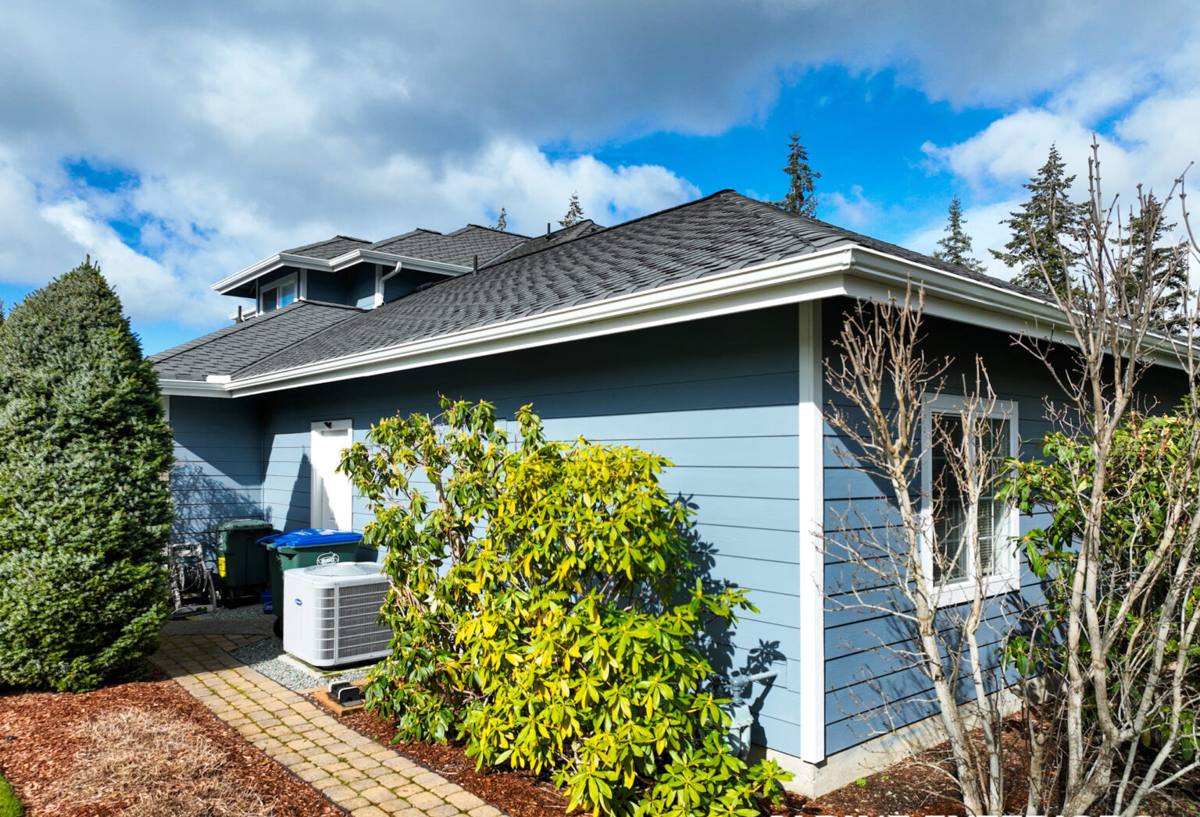
What Salt Air, Rain, and Moss Actually Do to a Roof
Salt Air and Metal Fatigue
Homes near the water take on airborne salt that settles on roofing surfaces and accelerates corrosion of exposed metal — flashing, fasteners, vents, and gutter hardware in particular. Standard galvanized fasteners can start rusting well before the shingles above them are due for replacement, and once a fastener corrodes, the seal around it goes with it. That's often where a roof starts leaking long before the field of the roof looks worn.
Driving Rain and Wind-Driven Water
Blaine gets its share of storms that push rain sideways rather than straight down. Wind-driven rain finds any gap in flashing, any lifted shingle edge, or any undersized underlayment lap and works it into a leak. A roof designed for calmer weather elsewhere in the country often doesn't hold up the same way here — the difference is usually in the underlayment system and flashing detail work, not the shingle brand.
Moss and a Long Growing Season
Whatcom County's damp, mild climate gives moss a long window to establish itself, especially on north-facing slopes and anywhere shade keeps a roof from drying out between rain events. Moss isn't just cosmetic — its root structure lifts shingle edges and holds moisture against the roof deck, which shortens the life of both the shingles and the wood underneath them. A new roof installed without moss-resistant materials or proper ventilation is fighting an uphill battle from day one in a location like Dakota Creek.
Signs a Dakota Creek Home Needs Replacement, Not Another Repair
Repairs make sense when a roof has isolated damage and years of usable life left. Full replacement makes more sense once the damage is spread out or the underlying materials are failing. Common signs we see on homes in this area include:
- Granule loss heavy enough that shingles look patchy or bald in sun-exposed areas
- Persistent moss growth that returns within a season or two of cleaning
- Soft or spongy spots in the roof deck, usually found during a close inspection
- Rusted or corroded flashing and fasteners around chimneys, vents, and valleys
- Multiple past repairs in different areas rather than one contained problem
- Daylight visible through the roof deck from inside the attic
- Shingles curling, cracking, or lifting at the edges, especially on wind-exposed slopes
If you're seeing two or more of these, it's worth getting an honest look before spending more money chasing individual leaks.
Choosing the Right Roofing Material for This Climate
There's no single "best" roofing material for every home — it depends on your roof's exposure, your budget, and how long you want to go before the next major project. Here's how the common options compare for a coastal Whatcom County property:
| Material | Performance in Salt Air & Rain | Moss Resistance | Typical Lifespan Here |
|---|---|---|---|
| Architectural asphalt shingle | Good with correct flashing and fasteners | Fair; benefits from algae/moss-resistant granules | 20-30 years |
| Standing seam metal | Very good when properly coated fasteners are used | Very good; sheds moisture quickly | 40-50+ years |
| Cedar shake | Moderate; needs regular maintenance in damp conditions | Poor without diligent upkeep | 20-25 years with maintenance |
| Synthetic shake/slate composite | Good; resists moisture absorption | Good | 30-50 years |
We install architectural asphalt and metal roofing most often on Dakota Creek homes because both hold up well against wind-driven rain when installed correctly, and both take moss-resistant treatment well. Cedar shake can still be the right call for the right homeowner, but we're upfront that it asks more of you in ongoing maintenance in this climate — that's a trade-off worth knowing before you commit, not a knock on the material itself.
What a Correct New Roof Installation Actually Includes
Tear-Off and Deck Inspection
We remove the existing roofing down to the deck rather than layering over it. That lets us check the sheathing for soft spots, rot, or delamination caused by long-term moisture — issues that are common on older roofs near the water and that get hidden, not fixed, if you install over them. Any damaged decking gets replaced before anything new goes on.
Underlayment and Water Barrier
Given how much wind-driven rain this area sees, underlayment choice matters more here than in drier climates. We use synthetic underlayment across the field for its tear resistance and consistent water-shedding, with self-adhered ice-and-water barrier at vulnerable points — eaves, valleys, and around penetrations — where wind-driven rain is most likely to find a way in.
Flashing Details
Flashing around chimneys, skylights, sidewalls, and valleys is where most roof leaks actually start, not in the open field of shingles. We use corrosion-resistant flashing and fasteners suited to a coastal environment, and we take the extra time on step flashing and counter-flashing details that a rushed installation tends to skip.
Ventilation
A roof needs balanced intake and exhaust ventilation to let moisture escape from the attic space. Without it, trapped moisture condenses against the underside of the deck, which feeds rot and, indirectly, the same damp conditions that let moss take hold on the roof surface above. We evaluate existing ventilation on every replacement and correct it where it's undersized.
Our Installation Process, Start to Finish
- On-site inspection and estimate: We walk the roof, check the attic, and give you a written scope and price — no pressure, no inflated urgency.
- Material selection: We go over the options that fit your home, your budget, and how much maintenance you want to take on long-term.
- Scheduling around weather: We plan installation windows with realistic margin for Whatcom County's rain patterns so the deck isn't left exposed longer than necessary.
- Tear-off and deck repair: Old roofing comes off, the deck is inspected, and any compromised sheathing is replaced.
- Underlayment, flashing, and ventilation installation: The systems that actually keep water out go in before the finish material.
- Installation of new roofing material: Installed to manufacturer specification, not shortcut for speed.
- Cleanup and final walkthrough: Site cleared of debris and fasteners, and we walk the finished roof with you.
Cost Factors for a New Roof in Dakota Creek
Every roof is priced on its own specifics, but the main variables we see driving cost on local homes are:
- Roof size and pitch — steeper roofs take longer and cost more in labor
- Number of layers being removed during tear-off
- Extent of deck repair needed once old roofing comes off
- Material selected — asphalt, metal, and synthetic composites all carry different price points
- Complexity of the roofline — valleys, dormers, chimneys, and skylights all add flashing work
- Access — trees, tight lot lines, or difficult staging areas can add time
We'll break these out clearly in your written estimate so you know what you're paying for, not just a bottom-line number.
Why Local Experience in Dakota Creek Matters
A roofing crew that regularly works this specific area already knows which slopes hold moss longest, which fastener types hold up against the salt air coming off the water, and how local wind patterns tend to drive rain into flashing details that get overlooked elsewhere. That's the kind of judgment that doesn't come from a spec sheet — it comes from having done the work on homes with the same exposure yours has. It also means we're a known, local business you can reach easily if a question comes up after the job is done, rather than a crew that drove in from outside the county for one project.
Keeping a New Roof Performing Long-Term
A correctly installed roof still benefits from basic upkeep, especially in a climate that pushes moss and moisture this hard. A short annual routine goes a long way:
- Clear debris from valleys and gutters at least twice a year
- Watch shaded, north-facing slopes for early moss regrowth
- Check attic ventilation isn't blocked by insulation or storage
- Have flashing points inspected after major storms
- Address small leaks immediately rather than waiting for a dry stretch to pass
None of this requires a large ongoing budget — it's mostly about catching small issues before Dakota Creek's weather turns them into bigger ones.
If your roof is showing its age or you just want an honest opinion on where it stands, we're glad to come take a look. The estimate is free, there's no pressure to commit on the spot, and you'll walk away with a clear picture of your options — just fill out the form below to get started.