 Blaine Exterior
 Metal Roofing Built for Blaine Harbor's Coastline
Blaine Harbor sits right where the Strait of Georgia meets Semiahmoo Bay, and that location shapes everything about how a roof ages here. Homes and waterfront properties in this part of Blaine take on salt-laden air, wind-driven rain coming off the water, and long stretches of gray, damp weather that keep roof surfaces wet for days at a time. A roofing material that performs fine twenty miles inland can struggle here. Metal roofing, installed correctly with the right coatings and fasteners, is one of the few systems that genuinely holds up to this specific combination of exposure — but "metal roofing" covers a wide range of quality, and the difference between a roof that lasts three decades and one that corrodes at the fasteners in eight years comes down to material choice and installation detail.
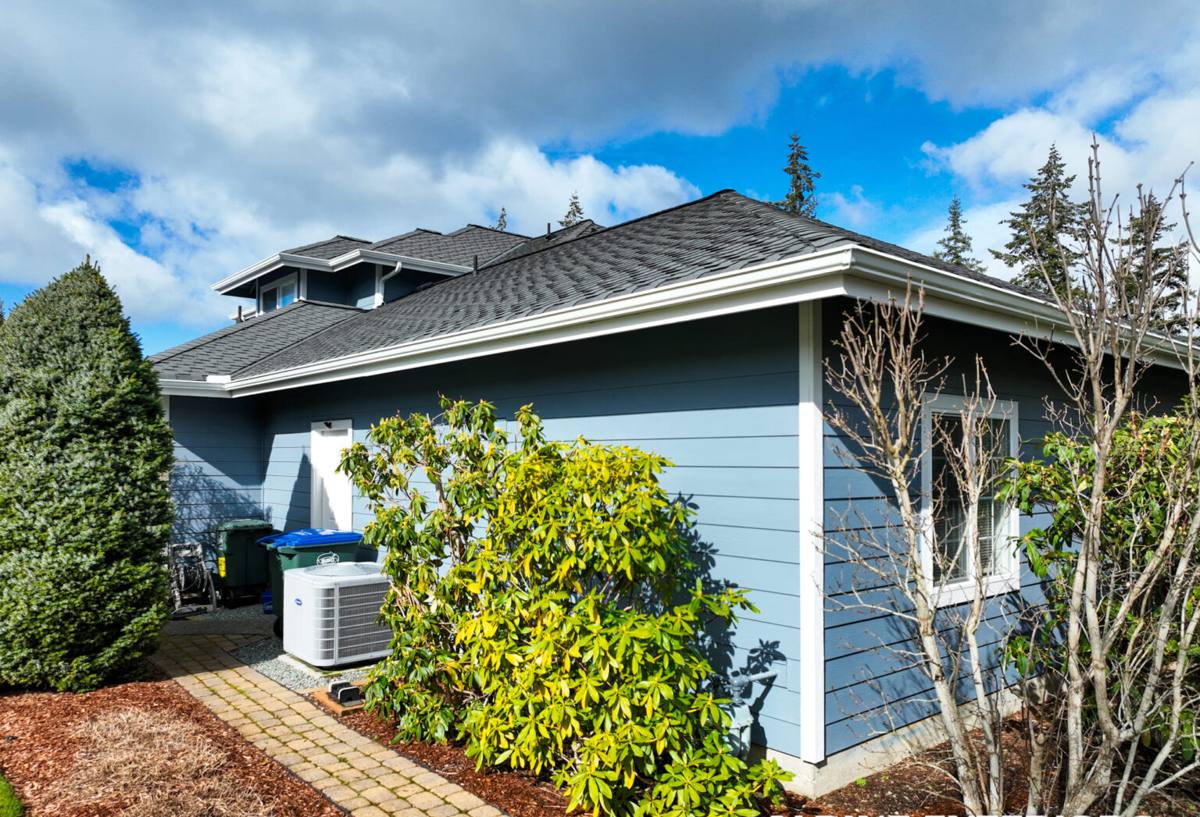
What Blaine Harbor's Climate Actually Does to a Roof
Whatcom County's marine climate is milder than most of the country, but mild doesn't mean easy on a roof. Three things drive premature roof failure in the Harbor area specifically:
Salt Air and Corrosion
Airborne salt from the harbor and the Strait settles on every exterior surface, including roofing. On uncoated or poorly coated steel, that salt accelerates corrosion at cut edges, screw heads, and any spot where the protective coating has been scratched during installation. This is why the coating system and the fastener spec matter more here than they would on a roof twenty miles from salt water.
Driving Rain
Storms coming off the water aren't just wet, they're wind-driven, which pushes rain sideways and up under laps, flashing, and fastener points that would stay dry in a calmer rain. A roof detailed for vertical rainfall alone will eventually leak here. Underlayment quality, lap direction, and flashing at every penetration have to account for wind-driven moisture, not just water running downhill.
Moss and Prolonged Moisture
Blaine's moss season runs long — shaded, north-facing, and low-slope sections of roof stay damp for extended periods, especially under tree cover common in and around the Harbor. Moss and algae growth isn't just cosmetic. On organic roofing materials it holds moisture against the surface and shortens lifespan; on metal roofing it's largely a non-issue on the panel itself, though debris buildup in valleys and at panel laps still needs to be kept clear so water keeps moving.
Why Metal Roofing Fits This Environment
Metal roofing has real advantages for a coastal Whatcom County home, provided it's the right metal, the right coating, and the right install:
- Sheds wind-driven rain efficiently when laps and seams are installed correctly
- Doesn't absorb moisture the way wood shakes or aging composition shingles do, so it doesn't stay saturated through our wet stretches
- Resists moss and algae growth on the panel surface itself, cutting down on organic buildup that plagues shaded roofs
- Handles wind uplift well when properly fastened — a real factor on exposed harbor-adjacent lots
- Long service life reduces how often a roof is reopened for re-roofing, which matters on a coastline where every penetration is a future leak risk
The trade-off is that metal roofing is unforgiving of installation shortcuts. A shingle roof with a slightly imperfect flashing detail might weep slowly for years before anyone notices. A metal roof with the same shortcut in a salt-air, wind-driven-rain environment tends to show problems faster, because the failure points (fastener backout, coating breach, improperly lapped seams) are directly exposed to the two things that cause the fastest damage here: salt and driving moisture.
Choosing the Right Metal System for Blaine Harbor
Not all metal roofing is built the same, and the differences matter more in a marine environment than they do inland.
| System | Corrosion Resistance | Best Fit for Harbor Exposure | Trade-offs |
|---|---|---|---|
| Standing seam (concealed fastener) | High — fasteners are hidden under the seam, out of direct salt spray | Strong fit for waterfront and exposed lots | Higher upfront cost; requires experienced crew for clean seams |
| Exposed-fastener metal panel | Moderate — depends entirely on fastener quality and gasket condition | Workable on more sheltered lots, less ideal directly on the water | Fasteners need periodic inspection; gaskets degrade over time |
| Aluminum panel systems | Very high — aluminum doesn't rust, only forms a stable oxide layer | Excellent for direct salt exposure | Softer than steel, more susceptible to denting from debris or hail |
| Steel panel with premium coating (e.g. PVDF-type finishes) | High, contingent on coating integrity | Good general-purpose choice for most Harbor-area homes | Coating can be compromised by scratches during fabrication or install if the crew isn't careful |
For most homes in Blaine Harbor, we lean toward standing seam with a quality factory-applied coating, or aluminum for properties with the most direct water exposure. The right call depends on your specific lot, roof slope, and how close you sit to the water — that's a conversation we have on-site, not a one-size answer.
Fasteners and Flashing: Where Failures Actually Start
On a salt-air roof, the fastener is usually the weak link before the panel is. We spec fasteners rated for coastal exposure with matched gaskets, and we pay close attention to flashing at every penetration — vent stacks, chimneys, skylights, and roof-to-wall transitions. These are the spots wind-driven rain finds first, and they're also the spots that get rushed on a roof crew in a hurry. We don't rush them.
What a Correct Metal Roof Installation Involves
A metal roof is only as good as what's underneath it and how it's put together. Here's what we control on every Blaine Harbor project:
- Deck inspection and repair — any soft, rotted, or moisture-damaged decking gets replaced before a single panel goes down. Installing over a compromised deck just hides a bigger problem.
- Underlayment selection — a synthetic or high-temp ice-and-water-style underlayment appropriate for a marine climate, with extra coverage at eaves, valleys, and penetrations where wind-driven rain concentrates.
- Panel layout and seam direction — panels run and lapped to shed water with prevailing wind and rain direction in mind, not just gravity.
- Fastening to spec — corrosion-resistant fasteners, correct spacing, correct torque so gaskets seal without over-compression.
- Flashing detail at every penetration — hand-formed or properly fabricated flashing at chimneys, vents, skylights, and wall transitions, not generic stock pieces forced to fit.
- Ventilation check — proper intake and exhaust airflow so moisture doesn't get trapped in the attic space, which causes problems independent of the roof surface itself.
- Final walk-through — a full inspection of seams, fasteners, and flashing before we call the job done.
Our Process for Blaine Harbor Homeowners
We keep the process straightforward because a roof project shouldn't feel like a mystery:
1. On-Site Assessment
We walk the roof (or inspect from ladder and drone where slope or access requires it), check the current deck condition, note existing moss or moisture damage, and look at your specific exposure — how close you sit to the water, how much tree cover you have, and which direction your roof faces prevailing storms.
2. Honest Recommendation
We'll tell you which metal system fits your home and your budget, and why — including where a lower-cost option is genuinely fine for your situation versus where it would be a mistake given your exposure.
3. Written Estimate
Clear scope, clear material spec, no vague line items.
4. Installation
Deck repair as needed, underlayment, panels, flashing, and fastening done to the standard above — not the fastest standard, the correct one.
5. Walk-Through and Cleanup
We review the finished roof with you, clear the site of debris and fasteners, and make sure you know what (if any) maintenance your specific system needs going forward.
Maintenance: What a Metal Roof Actually Needs Here
One of the appeals of metal roofing in a moss-prone climate is how little maintenance the panel surface itself demands. But "low maintenance" isn't "no maintenance," especially in Blaine Harbor:
- Keep valleys and gutters clear of needles, leaves, and moss debris so water keeps moving off the roof
- Check sealant at penetrations every year or two — sealant degrades faster under UV and salt exposure than the metal itself does
- After major windstorms, a quick visual check for lifted panel edges or loosened fasteners is worth the ten minutes
- Keep overhanging branches trimmed back to reduce debris load and moss spore contact, particularly on shaded sections
- Rinse accumulated salt film periodically if your property sits especially close to the water
Cost Factors Specific to Blaine Harbor Projects
We don't publish blanket pricing because roof cost depends on real variables, but here's what actually moves the number on a Harbor-area project:
| Factor | Why It Matters Here |
|---|---|
| Roof complexity (valleys, dormers, penetrations) | More flashing detail work in an environment where flashing quality is critical |
| Deck condition | Moisture-damaged decking from prior roof issues is common on older Harbor-area homes and adds repair scope |
| Metal type and coating grade | Aluminum and premium coatings cost more upfront but reduce corrosion risk in direct salt exposure |
| Access and site conditions | Waterfront lots and steep sites can add staging and safety requirements |
| Tear-off vs. overlay | A full tear-off lets us properly inspect and repair the deck — usually the right call on a coastal home |
Why Hire a Crew That Already Works This Neighborhood
A roofing crew that mostly works inland doesn't build the habit of specifying coastal-grade fasteners, thinking through wind-driven rain paths, or recognizing early salt corrosion on a fastener before it becomes a leak. We work Blaine and the surrounding Whatcom County coastline regularly, so these details aren't an afterthought — they're the baseline spec we start from. That local familiarity also means we're not guessing at how your specific stretch of the Harbor behaves in a winter storm; we've seen it.
If you're weighing a metal roof for a home in or near Blaine Harbor, we're glad to come take a look and give you a straight, no-pressure estimate — no obligation, just an honest read on what your roof actually needs. Use the form below to get started.