 Blaine Exterior
 New-Construction Windows in Lynden: Getting It Right the First Time
Lynden is a builder's town — new homes, additions, and shop-houses go up steadily on lots that used to be farmland, and a lot of that construction happens on a schedule that doesn't leave room for callbacks. New-construction window installation is different from replacing windows in an existing wall: there's no old frame to work around, no compromise on flashing because the siding is already up. You get one shot to integrate the window with the house wrap, framing, and drainage plane correctly before the exterior finish closes it all in. Do that well and the window will perform for decades with almost no attention. Do it poorly — even with a good window — and you're looking at rot, staining, or a warranty claim inside a few years.
This page is about that one job: installing new-construction windows correctly in Lynden, in the context of Whatcom County's weather, and what our crew actually does on site to get it right.
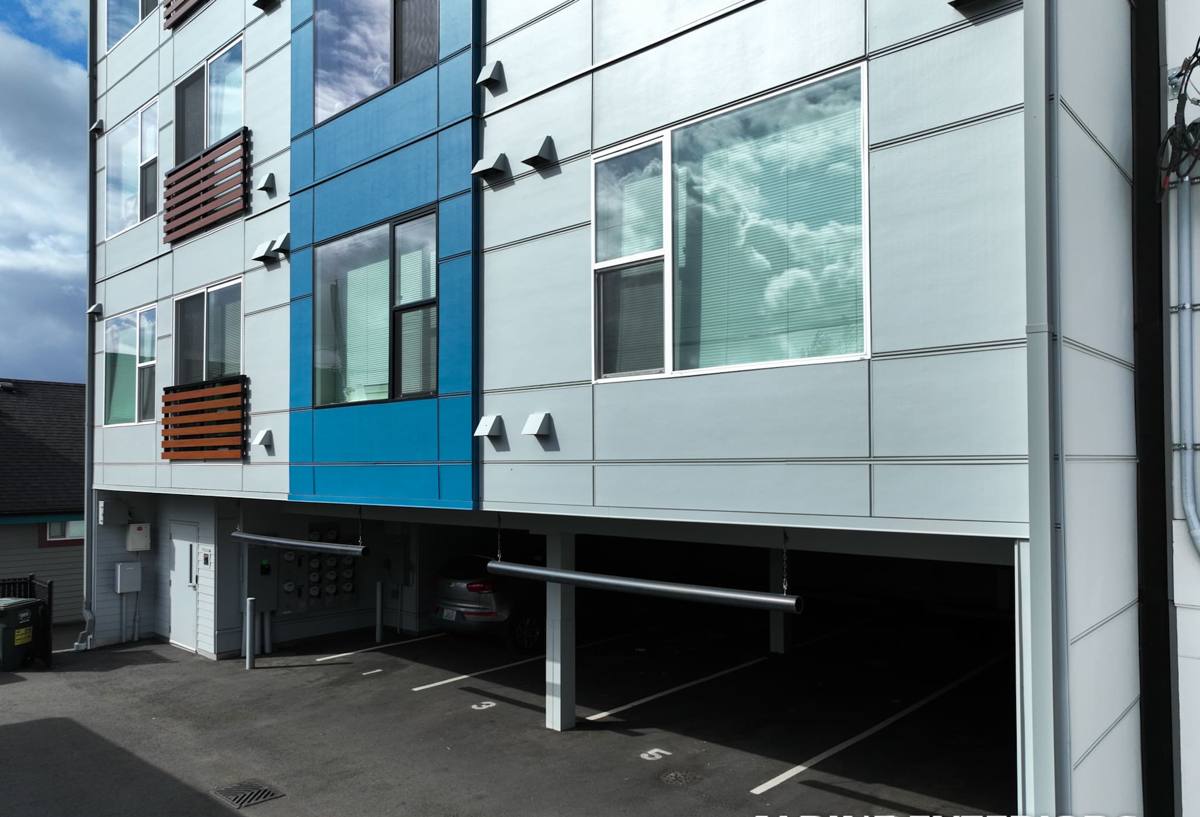
Why Whatcom County's Climate Changes How This Job Should Be Done
Lynden sits inland from the coast, so it doesn't take the direct salt-air exposure that homes closer to Blaine's shoreline deal with — that's a real difference worth being honest about, and it means corrosion-sensitive hardware choices matter a bit less here than they do a few miles west. What Lynden does share with the rest of Whatcom County is the rain pattern: long stretches of steady, wind-driven rain rather than short heavy downpours, plus the humidity and shade that bring on a genuine moss season on roofs, siding, and anything that stays damp too long. That combination is what actually drives window failures around here — not one storm, but months of low-grade moisture pressure finding any gap in the flashing and staying there.
For a new-construction window, that means the flashing and sill pan details matter more here than they would in a drier climate. A window that's "close enough" on flashing in Arizona will leak in Lynden within a couple of wet winters. We build every install around the assumption that water will reach the window opening — the job is making sure it can't get past the flashing plane, not hoping it never shows up.
What This Looks Like Day to Day
- Extended wet seasons mean sill pans and back-dam flashing aren't optional extras — they're the difference between a dry wall cavity and a hidden rot problem.
- Shaded north and east elevations (common on Lynden lots with mature trees or close neighboring structures) hold moisture longer and are where we see moss and mildew start first.
- Wind-driven rain pushes water sideways, not just down — that changes how side and head flashing need to lap.
New-Construction vs. Retrofit — Why We Treat Them Differently
A retrofit (or "pocket") window goes into an existing, already-clad wall — the new unit is sized to fit inside the old frame, and the surrounding trim and siding stay in place. A new-construction window is installed before the exterior finish goes on, with a nailing fin that gets integrated directly into the house wrap and flashing system. New-construction windows generally perform better long-term because the flashing is built as one continuous system rather than patched around an existing opening — but only if that integration is done correctly. On a new build in Lynden, we're not working around anyone else's old mistakes; we're setting the standard the house will live with for its whole life. That's exactly why we're careful about sequencing with the framer, the house-wrap installer, and the siding crew — a new-construction window is only as good as its weakest handoff between trades.
What a Correct New-Construction Install Actually Involves
Rough Opening and Sill Pan
Before a window ever goes in, the rough opening gets checked for square, level, and correct dimension. We install a sloped sill pan — not just a strip of tape — so any water that gets past the window sill has a path back out instead of pooling against the framing. This is the single most common shortcut we see skipped on production-built homes, and it's the one that causes the most damage over time.
Flashing Integration
The house wrap and window flashing need to shingle-lap correctly — meaning water always sheds from the top layer down over the layer below it, never the reverse. Head flashing goes in last, over the top nailing fin, so water is directed out and away from the opening rather than behind it. In a climate with as much sustained rain as Whatcom County sees, a reversed lap is a leak waiting for its first wet winter.
Fastening and Shimming
Windows get shimmed at the right points to stay square and avoid stressing the frame, then fastened per the manufacturer's schedule — skipping fasteners or over-driving them are both common causes of warranty denial later. A frame that's out of square binds sashes and stresses weatherstripping, which shows up as air and water infiltration long before it shows up as a visible problem.
Interior and Exterior Sealing
Low-expansion foam or backer rod and sealant around the frame perimeter handles air sealing without bowing the frame — full-expansion foam can distort a vinyl or fiberglass frame enough to affect operation. Exterior sealant joints get tooled properly so they shed water instead of holding it against the trim.
Choosing Windows for a Lynden New Build
Frame material and glass package both affect how a window handles Whatcom County's wet, moderate-temperature climate. None of these are wrong choices — they're trade-offs, and the right one depends on the house, the budget, and how the homeowner wants to maintain it.
| Frame Material | How It Handles Local Climate | Maintenance |
|---|---|---|
| Vinyl | Good moisture resistance, stable in our humidity range, budget-friendly | Low — occasional cleaning |
| Fiberglass | Very stable dimensionally, holds paint well, strong long-term option | Low — repaint interval longer than wood |
| Wood / wood-clad | Best appearance for period or high-end builds, needs correct detailing to manage moisture | Higher — exterior finish needs upkeep |
| Aluminum | Strong and slim sightlines, but a poor thermal performer without a thermal break in our climate | Moderate — watch for condensation without a break |
On glass, we typically recommend double-pane, low-E units with argon fill as the baseline for new construction here — it's a solid balance of energy performance and cost for the temperature swings Whatcom County actually sees. Triple-pane is worth discussing for north-facing rooms or homes prioritizing energy efficiency, but it adds weight and cost that isn't always justified by the payback.
Our Process, Start to Finish
- Plan review — we confirm rough opening sizes and window schedule against the actual framing before ordering, not after.
- Coordination with the builder — we time our install with the house-wrap and siding sequence so flashing laps correctly, no gaps in coverage.
- Sill pan and flashing install — sloped pan, back dam, and shingle-lapped flashing at every opening.
- Window set, shim, and fasten — squared, shimmed, fastened to spec, operation checked before moving on.
- Air seal and exterior trim-out — low-expansion sealing, exterior caulking, and trim details finished cleanly.
- Final walkthrough — every window operated, checked for square and smooth function, and reviewed with the builder or homeowner before we leave the site.
Mistakes We See on New Builds — and Fix Before They're Sealed In
- Sill pans skipped or replaced with tape alone, leaving no drainage path if water gets past the sash.
- Flashing laps installed backwards, directing water behind the house wrap instead of over it.
- Windows fastened out of square, causing binding sashes and premature weatherstripping wear.
- Full-expansion foam used around the frame, bowing vinyl and affecting how sashes close.
- Exterior sealant applied over dirty or wet surfaces, failing to bond within the first year or two.
After Move-In: Keeping New Windows Performing
A correctly installed window doesn't need much — but Lynden's damp, shaded stretches (especially through the winter months) mean a little seasonal attention pays off.
- Check exterior caulk lines each fall for cracking or separation before the wet season sets in.
- Clear debris and moss buildup from window sills, tracks, and nearby trim so moisture doesn't sit against the frame.
- Operate every window through its full range at least once a season — a sash that sticks is often the first sign of frame movement worth checking.
- Watch for condensation between panes, which signals a failed seal on an insulated glass unit, not a cleaning issue.
- Keep gutters and downspouts clear near window openings — overflow is a common, avoidable source of water reaching flashing it was never meant to handle.
Why a Local Blaine Crew Working Lynden Matters
We're based in Blaine and work new construction throughout Whatcom County, including Lynden's steady pace of new builds. That matters for two practical reasons: we know how this region's rain and moss season actually stress a building envelope over years, not just on install day, and we're close enough to show up for a warranty check or a builder walkthrough without it being a special trip. A crew that only passes through once doesn't have the same stake in how the flashing they installed is holding up two winters later. We do.
If you're framing a new build in Lynden or planning window scope with your builder, we're happy to walk the plans, talk through frame and glass options, and give you a straightforward, no-pressure estimate. Use the form below to get started.