 Blaine Exterior
 Siding Replacement for Ferndale Homes
Ferndale sits low in Whatcom County, close enough to the Strait of Georgia and Bellingham Bay that salt-laden air reaches most neighborhoods, and shaded enough by fir and cedar canopy that north- and west-facing walls stay damp for days after a storm passes. That combination is hard on exterior siding. Paint fails early, seams swell, and moss and algae find a foothold on any surface that doesn't dry out fast. We run crews through Ferndale regularly as part of our Blaine-area service territory, and siding replacement here is one of the most common calls we get — usually from homeowners who've patched and repainted a wall for years and are finally ready to solve the problem instead of managing it.
This page is about doing that job right for this specific climate: what actually wears out old siding in Ferndale, what a correct replacement involves, and why we install James Hardie fiber cement exclusively rather than the vinyl, LP SmartSide, or cedar you'll see quoted elsewhere.
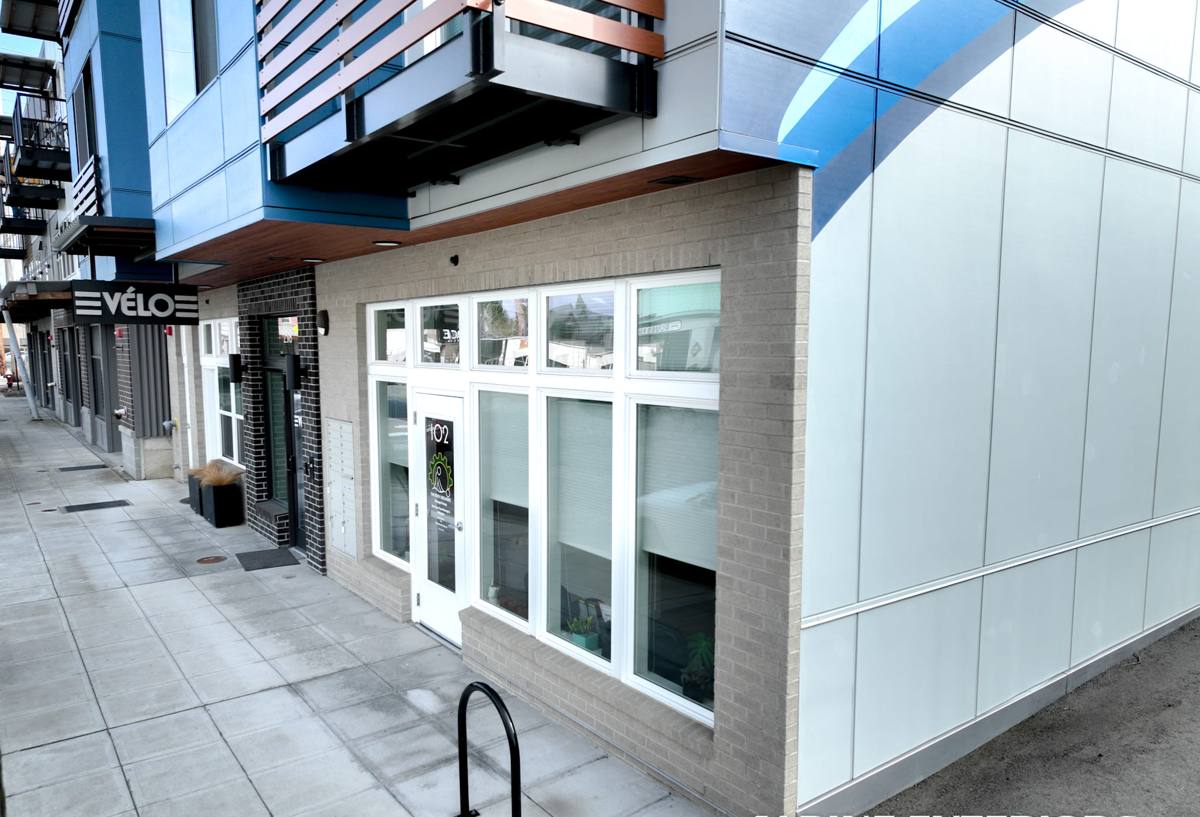
What Ferndale's Climate Does to Siding
Salt Air
Airborne salt from the Strait doesn't have to sit right on the water to cause damage — it travels with the prevailing wind and settles on siding, trim, and fasteners across Ferndale and the surrounding lowlands. Over years, it accelerates corrosion on unprotected metal fasteners and trim, and it breaks down cheaper paint and coating systems faster than inland climates would.
Driving Rain
Pacific storms here don't just fall straight down — wind-driven rain gets pushed sideways into wall assemblies, especially on exposed second stories and gable ends. Siding systems that rely on face-sealed joints or loose overlap without proper flashing and water-resistive barrier detailing eventually let moisture behind the cladding, where it does the real damage: rotted sheathing, stained interior walls, and mold you don't see until it's expensive.
Long Moss Season
Whatcom County's wet season runs long, and shaded siding rarely gets a full dry-out between rain events from fall through spring. Moss and algae growth on siding isn't just cosmetic — it holds moisture against the surface, and on wood-based or fiberboard products it can accelerate rot at the exact spots where growth takes hold.
Signs a Ferndale Home Needs Siding Replaced, Not Patched
- Paint that fails within 2-3 years of repainting, especially on north or west walls
- Soft or spongy spots when you press on the siding, particularly near the bottom courses and around window trim
- Visible swelling, delamination, or bubbling at seams and butt joints
- Persistent moss or dark streaking that returns within a season of cleaning
- Warping, cupping, or gaps opening up between boards
- Interior signs — musty smell, staining, or peeling paint on inside walls that back up to exterior siding
- Visible rot at the bottom edge of walls or around penetrations (hose bibs, vents, light fixtures)
One or two of these might be fixable with spot repair. Several at once, especially combined with soft sheathing underneath, usually means the wall assembly has been taking on moisture for a while and full replacement is the honest recommendation.
What a Correct Siding Replacement Involves
Tearing off old siding and nailing up new boards is the easy part to see and the easy part to get wrong if it's rushed. A replacement that's actually built for this climate includes:
Full Tear-Off and Inspection
Removing the old siding down to the sheathing so we can actually look at what's underneath — soft sheathing, rotted framing, or old water damage doesn't show up until the wall is open. This is also when we find out if a "siding problem" was really a flashing or drainage problem that will keep causing damage no matter what cladding goes back on.
Water-Resistive Barrier and Flashing
A correctly lapped weather-resistive barrier, properly integrated window and door flashing, and kick-out flashing at roof-wall intersections are what actually keep driving rain out of the wall. Siding is the visible layer; the drainage plane behind it is what does the structural work.
Rainscreen or Proper Ventilation Gap
Given how long walls here stay damp, a ventilated gap behind the siding that lets any incidental moisture drain and dry is worth the extra step, especially on shaded elevations that never get direct sun.
Correct Fastening and Clearances
Corrosion-resistant fasteners driven to the manufacturer's spec, proper nail placement, and correct clearance between siding and grade, roofing, and decks — these details are boring to talk about and are exactly what separates a 30-year installation from a callback in five years.
Manufacturer-Spec Finish Work
Caulking only where it's supposed to be used, factory-finished edges installed correctly, and trim details that shed water instead of trapping it against the wall.
Why We Only Install James Hardie
We get asked why we don't offer vinyl or LP SmartSide as a lower-cost option. The honest answer is that we've standardized on one product because it's the one we're confident will still be performing correctly on a Ferndale home fifteen and twenty years out, and we don't want to sell something we'd have to caveat.
| Material | How It Handles This Climate | Trade-Off |
|---|---|---|
| James Hardie Fiber Cement (HZ5) | Non-combustible, engineered for wet Pacific Northwest conditions, factory ColorPlus finish resists salt-air fading and moisture-driven paint failure | Higher upfront material and install cost than vinyl |
| Vinyl Siding | Sheds rain on the face but relies on loose overlap rather than a sealed system; can warp in temperature swings and doesn't stop moisture that gets behind it | Lower cost, but limited service life and no real repair option once damaged |
| LP SmartSide (engineered wood) | Treated to resist moisture better than raw wood, but it is still a wood-based product; edge and cut-end sealing has to be perfect and maintained, especially in a long wet season | Requires more disciplined maintenance and caulk upkeep than fiber cement |
| Cedar / Primed Spruce | Traditional look, but untreated wood in a damp, mossy, salt-air climate needs frequent refinishing to avoid rot | Highest long-term maintenance burden of the group |
Every product on that list has a place somewhere. We just don't think most of them are the right long-term bet for a Ferndale wall that faces salt air, sideways rain, and months of shade every year — so we don't install them.
HardieZone HZ5
James Hardie engineers its siding by climate zone, and this part of Washington falls in HZ5, the wetter, freeze-capable zone. HZ5 formulations are built to handle sustained moisture exposure without the swelling or cracking you'd see from a product engineered for a drier region. The ColorPlus factory finish also matters here specifically — it's baked on under controlled conditions, which holds up to salt air and UV better than field-applied paint, and it comes with its own finish warranty separate from the product warranty.
Our Process
- On-site assessment — we look at the current siding, check for soft spots, and get a sense of what's likely underneath before we quote anything
- Written estimate — a clear scope covering tear-off, any sheathing repair contingency, siding, trim, and flashing detail, with no vague allowances
- Tear-off and inspection — old material removed, sheathing and framing inspected, any rot addressed before anything goes back up
- Weather barrier and flashing installation — the part of the job that determines whether the wall stays dry for the next few decades
- Hardie installation — installed to manufacturer spec for fastening, clearance, and joint treatment
- Final walkthrough — we go over the finished work with you before calling the job done
Why a Crew That Already Works Ferndale Matters
Siding replacement isn't just about the product — it's about knowing how a specific area behaves. A crew that regularly works Ferndale and the broader Blaine area already knows which elevations in this part of Whatcom County take the worst of the wind-driven rain, how fast moss comes back on shaded walls near mature tree lines, and what kind of moisture damage to expect once a wall is opened up. That familiarity shows up in fewer surprises mid-project and a more accurate estimate up front, because we're not guessing at what a typical Ferndale wall assembly looks like — we've opened up plenty of them.
It also matters for logistics. A local crew can get back out for a warranty check or a follow-up question without it being a special trip, and we're not learning the permitting and inspection expectations for Whatcom County on your project.
What Affects the Cost
| Factor | Why It Matters |
|---|---|
| House size and wall complexity | More corners, dormers, and roof-wall intersections mean more cutting, flashing, and labor time |
| Condition of the sheathing underneath | Rot discovered during tear-off adds repair scope that can't be accurately priced until the wall is open |
| Siding profile and trim selection | Lap width, panel vs. lap, and trim detailing all affect material and labor cost |
| Color and finish | Factory ColorPlus finishes cost more than primed-for-paint options but eliminate a future repaint |
| Access and site conditions | Tight lots, second-story work, and limited staging space add labor time |
We won't quote a number without seeing the house — anyone who does is guessing, and on a full re-side, that guess can be off by a lot once tear-off reveals what's actually behind the old siding.
After Installation: Keeping It Looking Right
- Rinse siding annually, and more often on shaded north- or west-facing walls where moss and algae are more persistent
- Trim back vegetation and tree branches that keep a wall in constant shade or hold moisture against it
- Check caulking at trim joints and penetrations periodically — caulk fails long before the siding itself does
- Address any new soft spots or damage quickly rather than letting them sit through another wet season
A correctly installed Hardie system needs far less of this than the wood or vinyl siding it's usually replacing, but no siding in this climate is truly maintenance-free.
Get an Estimate
If your Ferndale home's siding is showing paint failure, soft spots, or moss that keeps coming back, we're happy to take a look and give you a straight assessment of what's going on and what it would take to fix it right. The estimate is free, there's no pressure, and you'll get a clear answer either way. Use the form below to get started.