 Blaine Exterior
 Why Decks in Ferndale Wear Differently Than Decks Inland
Ferndale sits close enough to Puget Sound and the Strait of Georgia that salt-laden air is a constant, low-grade stressor on anything built outdoors. Add Whatcom County's long wet season — months where a deck can stay damp under a film of moss and shade — and you get a very specific set of failure patterns: corroded fasteners, soft spots at ledger boards, slick moss-covered boards, and finishes that fail years before their warranty says they should. A deck built the way it would be built in a dry inland climate simply doesn't hold up the same way here.
We build decks in Ferndale and the surrounding Blaine area regularly enough to know which details matter and which are cosmetic. This page focuses specifically on deck building for Ferndale homes — not a generic overview — because the right choices for this microclimate are narrower than most material brochures suggest.
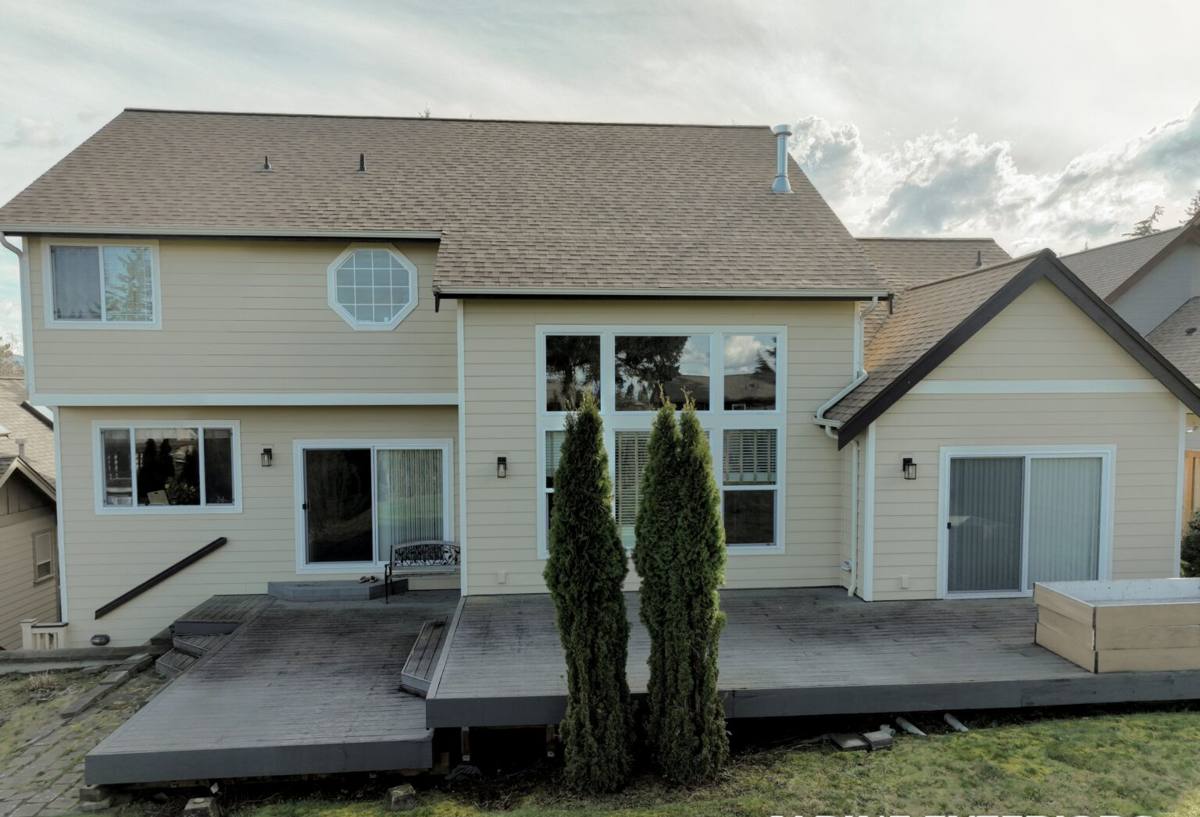
What Salt Air, Driving Rain, and Moss Actually Do to a Deck
Salt Air and Metal Hardware
Salt in the air accelerates corrosion on any exposed metal — nails, screws, joist hangers, post bases, railing brackets. Corrosion doesn't announce itself; it works quietly inside connections you can't see until a railing wobbles or a board lifts. Hardware rated for general outdoor use often isn't rated for a coastal-influenced environment, and using it anyway is one of the most common shortcuts we see on decks that fail early.
Driving Rain and Water Intrusion
Wind-driven rain doesn't just fall straight down — it gets pushed sideways into ledger connections, under railing posts, and into any gap where flashing was skipped or installed loosely. Once water gets behind a ledger board or into a post base, it stays there far longer than it would in a drier climate, because the air itself doesn't dry things out quickly for much of the year.
Moss and Algae Growth
Whatcom County's moss season runs long. Shaded decks, north-facing decks, and decks under tree cover accumulate moss and algae on the deck surface and in the gaps between boards. Beyond the appearance issue, moss holds moisture against the wood or composite surface, and a moss-covered deck is genuinely slippery — a real safety issue on stairs and near steps.
Choosing a Decking Material That Fits This Climate
There's no single "best" decking material — there's a best fit for a given home, budget, and how much upkeep the owner wants to do. Here's how the common options actually perform in a Ferndale-type climate, based on how each one behaves in practice:
| Material | Moisture/Moss Behavior | Maintenance | Typical Lifespan Here |
|---|---|---|---|
| Pressure-treated wood | Absorbs moisture, prone to moss/algae in shaded areas, can cup or split if not sealed regularly | Annual cleaning and re-sealing recommended | 10–15 years with upkeep |
| Cedar | Naturally more rot-resistant than pine, still needs sealing to resist moss staining | Sealing every 1–2 years | 15–20 years with upkeep |
| Composite decking | Doesn't absorb water like wood, but surface moss/algae can still grow and needs washing | Occasional washing, no staining/sealing | 20–25+ years |
| PVC decking | Fully non-absorbent, most resistant to moisture damage; surface film still needs periodic washing | Lowest — occasional washing | 25+ years |
We're upfront with homeowners about trade-offs rather than pushing one product line. Wood costs less upfront and looks great, but in this climate it demands real maintenance discipline — skip a season of sealing and moss gets a foothold fast. Composite and PVC cost more initially but remove most of the moisture-related maintenance burden, which matters a lot on a deck that's shaded for much of the year or exposed to salt-air drift.
What Correct Framing and Structure Look Like Here
The decking boards are what everyone sees, but the framing underneath is what determines whether a deck lasts. In this climate, a few structural details matter more than they would elsewhere:
- Ledger flashing: Where the deck attaches to the house, proper flashing (not just caulk) keeps driving rain from tracking behind the ledger board into the house framing — one of the most common sources of hidden rot.
- Stainless or coated hardware: Joist hangers, structural screws, and post hardware should be rated for the corrosion exposure the site actually has, not just the minimum code-grade fastener.
- Post base drainage: Post bases should hold posts up off standing water, not bury them in a footing where moisture collects against the wood or metal.
- Joist spacing and blocking: Correct spacing matters more with composite decking, which has different span ratings than wood and will sag or bounce if joists are spaced for lumber instead.
- Ventilation underneath: Airflow under the deck helps framing dry out between rain events instead of staying damp for weeks at a time.
Railings and Stairs
Railing posts see constant wind load and take the brunt of driving rain at the point where they meet the deck surface. We pay particular attention to how railing posts are fastened and flashed, since a loose or corroded railing connection is both a moss/moisture problem and a real safety issue.
Our Deck Building Process
Deck building for a Ferndale home follows a consistent process, adjusted for the specific site conditions — how much shade the deck gets, how exposed it is to wind and salt drift, and what's already happening with the existing structure if this is a replacement.
- On-site assessment: We look at sun/shade exposure, existing drainage, ledger condition (on replacements), and any moss or rot already present.
- Material conversation: We walk through the honest trade-offs between wood, composite, and PVC for that specific deck — budget, maintenance appetite, and how shaded the space is.
- Permitting: Deck projects generally require permits depending on size and height; we handle the permit process so the homeowner isn't stuck navigating it alone.
- Demolition (if replacing): Old decking, framing, and hardware are removed and the substructure is inspected before anything new goes in.
- Framing and flashing: Ledger flashing, joist layout, hardware selection, and post bases are installed to hold up to the site's actual moisture and salt exposure.
- Decking installation: Boards are installed with correct gapping for the material — wood needs different spacing than composite to account for expansion and drainage.
- Railings and finish work: Railings, stairs, and any fascia or skirting are completed and checked for solid attachment.
- Final walkthrough: We go over maintenance expectations specific to the material chosen — sealing schedule for wood, or washing frequency for composite/PVC — so there are no surprises.
Living With a Deck Through Moss Season
No decking material is maintenance-free in Whatcom County's climate — even PVC and composite decks benefit from a periodic wash to keep moss and algae film from building up on the surface. A few habits go a long way toward keeping a deck safe and good-looking year-round:
- Sweep leaves and debris off the deck surface before they sit through a rainy stretch and trap moisture underneath.
- Wash the deck surface at least once a year, more often in shaded areas prone to moss.
- Check railing posts and stair connections periodically for looseness — an early sign of hardware corrosion or wood movement.
- Keep gutters and downspouts near the deck clear so runoff isn't dumping extra water onto or near the structure.
- For wood decks, stick to a sealing schedule rather than waiting until the wood visibly grays or cups.
- Trim back overhanging branches that keep sections of the deck shaded and slow to dry.
Why a Crew That Already Works Ferndale Matters
Deck building isn't just carpentry — it's making material and hardware decisions that hold up to the specific conditions of a site. A crew that works Ferndale and the broader Blaine area regularly has already seen which hardware corrodes too fast, which shaded lots grow moss aggressively, and which framing details actually matter versus which are just code minimums. That local pattern recognition shows up in fewer callbacks and a deck that's still solid well past year ten, not just at the final walkthrough.
It also means straightforward permitting and inspection coordination with the jurisdictions that cover this area, without the guesswork of a crew that's unfamiliar with local requirements.
Signs an Existing Deck Needs Attention
If you're not sure whether a current deck needs repair or full replacement, a few warning signs are worth checking for before moss season sets in again:
| What You Notice | Likely Cause | Typical Fix |
|---|---|---|
| Soft or spongy boards | Trapped moisture, early rot | Board replacement or full resurfacing depending on extent |
| Rust streaks near fasteners | Corroding hardware not rated for the exposure | Hardware replacement with corrosion-rated fasteners |
| Persistent green film | Moss/algae buildup in a shaded, slow-drying area | Cleaning, plus improved airflow/drainage where possible |
| Wobbly railing posts | Loose or corroded post connections | Reinforcement or replacement of post hardware |
| Gaps or cupping at ledger | Water intrusion behind the ledger board | Flashing repair or ledger replacement |
If you're planning a new deck in Ferndale or need an honest read on whether an existing one is worth repairing or replacing, we're happy to take a look and walk through the options. Reach out for a free, no-pressure estimate using the form below.