 Blaine Exterior
 New Roof Installation for Everson-Area Homes
Everson sits inland from Blaine but still shares the same Whatcom County weather pattern that wears down roofs faster than homeowners expect: long stretches of driving rain off the Pacific, salt-laden air that migrates further inland than most people assume, and a moss season that can run eight or nine months out of the year in shaded, north-facing roof sections. A new roof installed here has to be built for that reality from day one, not just for a dry, sunny afternoon during the estimate.
We install new roofs for homes in and around Everson as part of our regular service area out of Blaine. This page covers what actually matters for a correctly installed roof in this specific climate, how our process works from tear-off to final inspection, and why a crew with local install history matters more than a low bid from an out-of-area company.
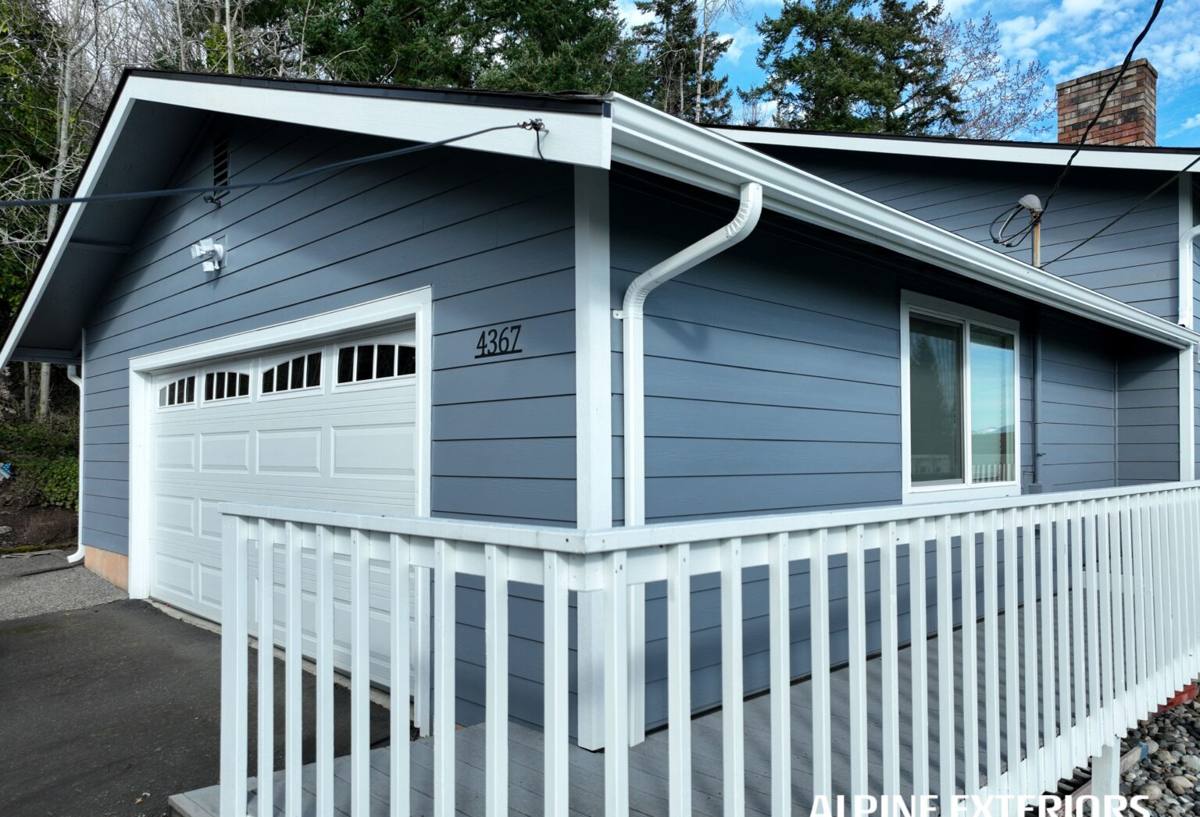
What Everson's Climate Does to a Roof
Moss and Organic Growth
Whatcom County's damp shoulder seasons — spring and fall especially — create ideal conditions for moss, algae, and lichen to take hold on roofing material. Moss isn't just cosmetic. As it grows, it lifts shingle tabs, holds moisture against the roof deck, and works its root structure into granule layers and seams. A roof that isn't detailed correctly at install — proper flashing, adequate ventilation, the right underlayment — gives moss more places to gain a foothold and speeds up the whole cycle.
Driving Rain and Wind-Driven Moisture
Rain in this part of Washington rarely falls straight down. Wind off the strait pushes it sideways, which means water finds its way into laps, valleys, and fastener penetrations that a purely vertical rain event never would. New roof installation here needs to account for wind-driven rain at every transition point — not just the field of the roof, but eaves, rakes, valleys, and any place a pipe, vent, or chimney breaks the roof plane.
Salt Air, Even Inland
Everson is set back from the water compared to Blaine's coastal edge, but salt-laden air still travels on prevailing winds and settles on exposed metal — flashing, fasteners, vents, and any exposed hardware. Salt accelerates corrosion on lower-grade metal components, which is why we're selective about the flashing and fastener materials we use on installs in this region, even for homes that aren't directly on the water.
What a Correctly Installed Roof Includes
A new roof is more than shingles nailed to a deck. Every install we do covers the same core components, regardless of the roofing material chosen:
- Deck inspection and repair — checking for soft spots, rot, or delamination before anything new goes down
- Ice-and-water shield in valleys, eaves, and other vulnerable areas where wind-driven rain concentrates
- Synthetic underlayment rated for the exposure time and moisture load our climate produces
- Corrosion-resistant flashing and fasteners appropriate for salt-air exposure
- Balanced attic ventilation — intake and exhaust sized to the home, not just whatever vent was already there
- Proper valley, ridge, and penetration detailing — the spots where most roof failures actually start
Skipping any one of these doesn't always show up right away. It shows up in year three or four, as a soft spot in the decking, a stain on a ceiling, or moss taking hold faster than it should on a roof that's supposedly new.
Roofing Material Options for This Climate
We don't push one material on every home. The right choice depends on the roof's pitch, the home's exposure to shade and moisture, and the homeowner's budget and maintenance expectations. Here's how the common options stack up for a moss-prone, salt-air, high-rainfall area like Everson:
| Material | Moss Resistance | Salt-Air Durability | Maintenance |
|---|---|---|---|
| Asphalt composition shingle | Moderate — algae-resistant granules help, but shaded areas still need attention | Good, with corrosion-resistant flashing and fasteners | Periodic moss removal on shaded slopes |
| Standing seam metal | High — smooth surface sheds debris and holds less moisture | Depends on coating and fastener quality; we specify materials rated for coastal exposure | Low; occasional debris clearing |
| Composite/synthetic shake | Moderate to high, varies by product | Good with proper flashing detail | Low to moderate |
| Cedar shake | Lower — natural wood holds moisture and is more susceptible to moss and rot in shaded, damp conditions | Requires more frequent treatment near salt air | Higher; regular treatment and inspection |
Asphalt shingle remains the most common choice for Everson homes because it balances upfront cost, performance, and warranty structure well — as long as it's installed with the moisture and ventilation detailing this climate demands. For homes with significant tree cover or persistent shade, we'll talk through whether a lower-maintenance material makes more sense long-term, even at a higher upfront cost.
Our Installation Process
1. On-Site Assessment
We walk the roof and attic, not just the exterior. Deck condition, existing ventilation, signs of past moisture intrusion, and moss or algae staining all factor into the plan and the estimate. We also look at shade patterns from nearby trees, since that directly affects how the roof will perform over time.
2. Tear-Off and Deck Inspection
Old roofing comes off completely so we can inspect the deck directly rather than roofing over hidden problems. Any soft, rotted, or delaminated sheathing gets replaced before new material goes down — this is one of the most common places corners get cut, and it's not one we cut.
3. Underlayment and Flashing
Ice-and-water shield goes in at valleys, eaves, and penetrations. Synthetic underlayment covers the rest of the field. All flashing — step, valley, chimney, and vent — is installed or replaced with corrosion-resistant material suited to salt-air exposure, not just whatever's cheapest.
4. Ventilation Check and Correction
Balanced intake and exhaust ventilation is set up or corrected as needed. Poor attic ventilation traps moisture, which shortens the life of the new roof and increases the odds of moss and mold taking hold from underneath, not just from the surface.
5. Roofing Material Installation
Material goes down to manufacturer specification, with attention to nailing pattern, exposure, and valley/ridge detailing — the parts of an install that determine how well the roof handles wind-driven rain over the next 20-plus years.
6. Final Walkthrough
We walk the finished roof and the site with the homeowner, cover warranty documentation, and confirm the job site is cleaned up — magnet sweep for nails included.
Why a Local Blaine-Area Crew Matters for This Job
Roofing crews that work Whatcom County regularly build a working knowledge of which details matter here versus in a drier or less coastal region. That shows up in small but real ways: knowing which flashing grades hold up against salt exposure, sizing ventilation for a genuinely damp climate rather than a generic spec sheet, and recognizing moss and moisture damage patterns before they become structural problems. A crew that installs one roof in this area a year doesn't build that pattern recognition. A crew based out of Blaine, working Everson and the surrounding communities regularly, does.
There's also a practical side to this: warranty follow-up, storm damage response, and general accessibility all get easier with a contractor who's local rather than a two-hour drive away.
Signs Your Roof May Need Replacement, Not Repair
Not every roof problem calls for a full replacement — but in this climate, some signs point clearly toward it rather than a patch job:
- Granule loss heavy enough that shingles look bald in patches, especially on south- and west-facing slopes
- Soft or spongy spots underfoot on the roof deck
- Persistent moss growth that returns quickly after cleaning
- Daylight visible through the roof deck from inside the attic
- Multiple layers of shingles already on the roof from past overlays
- Roof age at or beyond the manufacturer's expected service life, combined with visible wear
If your roof is showing one or two of these signs, a repair may still make sense. If several are present together, replacement is usually the more cost-effective path once you account for repeated repair visits.
What to Expect on Cost
Roof replacement cost varies by roof size, pitch, material choice, deck condition, and how much tear-off and disposal is involved. Rather than quote a number that won't reflect your specific roof, we walk every home in person and provide a detailed written estimate before any work begins. Steeper pitches, multiple layers of old roofing to remove, and extensive deck repair are the factors that most commonly move a project's cost, and we'll flag any of those clearly during the assessment — no surprise add-ons after the contract is signed.
Get a Free, No-Pressure Estimate
If you're weighing a new roof for your Everson-area home, we're happy to come take a look, answer questions honestly, and give you a written estimate with no obligation attached. Use the form below to get started.