 Blaine Exterior
 Why Sandy Point Windows Wear Differently Than Windows Inland
Sandy Point sits close enough to the water that its homes take a different kind of beating than a house a few miles inland in Whatcom County. Salt-laden air corrodes hardware and pits aluminum components. Wind-driven rain off the Strait finds every gap in a tired seal or a poorly flashed frame. And the long, damp moss season here keeps humidity levels high against exterior walls for months at a stretch, which is exactly the condition that turns a marginal window into a failed one. None of this is exotic — it's just steady, cumulative exposure — but it means a window that would last 25 years in a drier, calmer climate can start failing at the seals in half that time out here if it wasn't built or installed with this environment in mind.
"Energy-efficient" gets thrown around as a marketing term, but for Sandy Point homeowners it's really a practical question: does this window keep conditioned air in, keep moist salt air and wind-driven rain out, and keep doing both after five winters of storms off the water? That's the standard we install to.
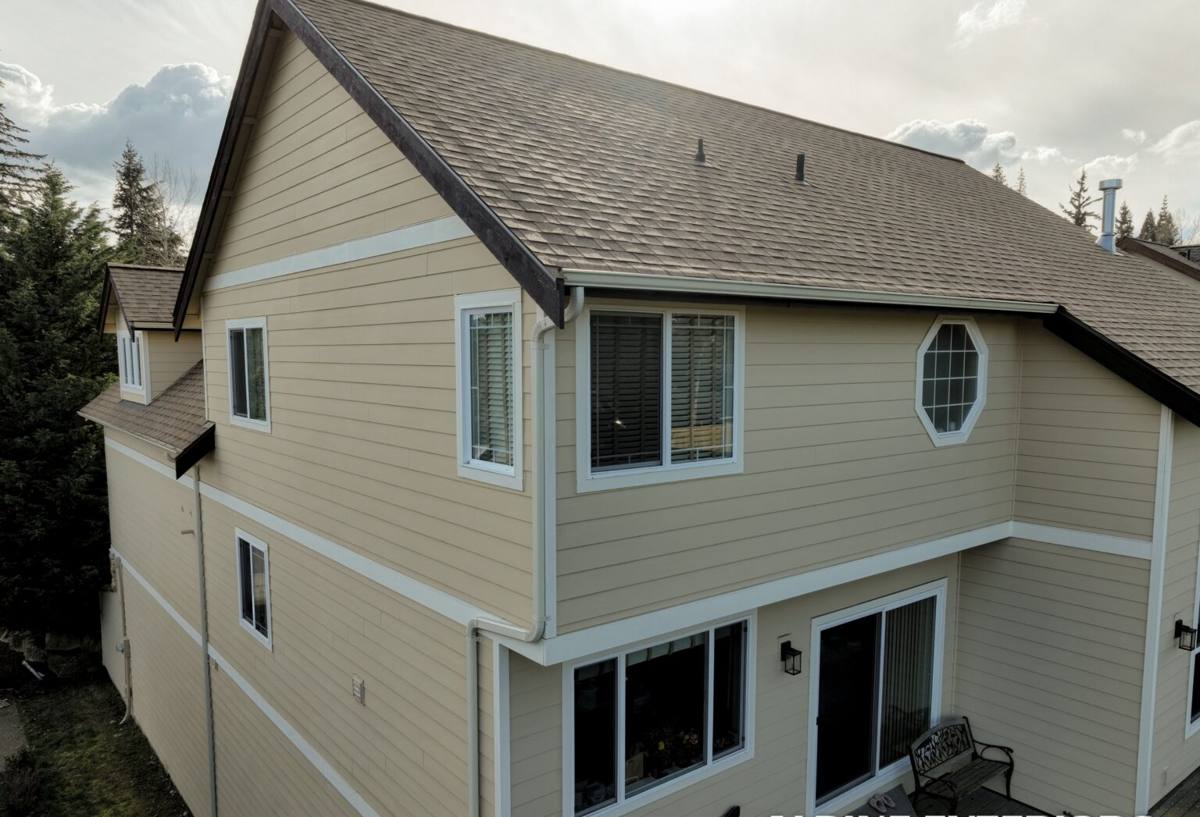
What Actually Matters in This Climate
Air infiltration over solar gain
In a lot of the country, window efficiency conversations focus heavily on solar heat gain — keeping sun-driven heat out in summer. That matters less here. Blaine's marine climate means summers are mild and winters are the bigger energy driver. For Sandy Point homes, the two numbers that matter most are the U-factor (how well the window resists heat loss) and the air infiltration rating (how much air leaks through the frame and sash under wind pressure). A window with a strong U-factor but a sloppy seal against wind-driven rain will still cost you on both comfort and your heating bill.
Moisture behavior, not just insulation value
A window's insulating performance is only half the story here. What happens at the frame-to-wall junction over time — whether water that gets driven against the glass and frame during a storm is shed and drained rather than trapped — determines whether that window is still performing well in year eight or has already let moisture into the wall cavity. We treat proper flashing and drainage as part of "energy efficiency," not a separate concern, because a window that's leaking moisture into the wall is not an efficient window no matter what its lab-rated U-factor says.
Signs Your Current Windows Are Losing the Battle
- Condensation or fogging between the panes of a double- or triple-pane unit — this means the seal has failed and the gas fill (or simple air gap) is gone
- A noticeable draft near the frame edges on a windy day, even with the window latched
- Soft, discolored, or swelling wood at the sill or bottom corners
- Visible pitting, chalking, or corrosion on aluminum frames or hardware
- Difficulty latching or a frame that's visibly out of square, often from years of moisture cycling in the wall framing
- A noticeable jump in heating costs without any other explanation
- Interior condensation on the glass itself during cold, damp stretches — a sign of both an aging window and a humidity issue worth addressing at the same time
Any one of these on its own might not mean full replacement. Several together, especially on a wall that faces prevailing wind and rain, usually does.
Frame Material: What Holds Up on This Stretch of Coast
We get asked a lot whether vinyl, fiberglass, or wood-clad windows are "the right choice" for a place like Sandy Point. The honest answer is that all three can perform well here if they're installed correctly — but they carry different long-term trade-offs in salt air and constant damp.
| Frame Material | How It Handles Salt Air & Moisture | Maintenance Burden | General Notes |
|---|---|---|---|
| Vinyl | Doesn't corrode; performs consistently in salt air | Low — occasional cleaning | Good value; quality varies a lot by manufacturer, so we're selective about which lines we install |
| Fiberglass | Very stable dimensionally, resists moisture-driven expansion/contraction | Low | Higher upfront cost; holds paint well if a custom color is wanted |
| Aluminum-clad wood | Attractive, but the wood interior needs the exterior seal to stay intact — a failed seal lets moisture reach the wood | Moderate — sealant and finish need periodic inspection | We're careful about install detailing here specifically because of our rain exposure |
| Bare aluminum frame | Prone to pitting and corrosion in direct salt air over time | Higher — needs regular attention | We generally steer homeowners in exposed coastal spots away from this unless it's a specific architectural requirement |
We're not going to tell a homeowner one material is universally "bad" — every option above has legitimate uses. What we will do is walk through how exposed your specific wall or elevation is to wind and salt spray and match the frame material and installation detailing to that reality, rather than installing the same spec on every wall of the house regardless of exposure.
What a Correct Installation Actually Involves
The window unit itself is maybe half the job. The other half — the part that determines whether it performs well through Whatcom County storm seasons — is the installation detailing.
Our process
- Assessment — We look at each opening individually: which direction it faces, how exposed it is to wind-driven rain, what condition the existing framing and sheathing are in once the old window is out.
- Removal and inspection — Old windows come out carefully so we can check the rough opening for hidden water damage or rot before anything new goes in. This step catches problems that would otherwise get sealed behind a new window and cause trouble later.
- Flashing and drainage — Proper flashing tape and a drainage path at the sill so any water that does get behind the exterior cladding has somewhere to go, rather than pooling against the frame.
- Air sealing — Low-expansion foam and backer rod at the frame perimeter, sized correctly so the window isn't bowed out of square by over-filled foam.
- Setting and leveling — Shimmed and fastened so the frame stays square under seasonal wood movement, which matters more here given how much moisture cycling the framing goes through.
- Exterior seal and trim — Sealant compatible with both the window frame and the siding material, applied so it sheds water rather than trapping it against the frame.
- Final check — Operation, latch alignment, and a visual check of the exterior seal line before we call the job done.
Skipping or rushing any one of these steps is how a good window ends up performing poorly. It's also the most common reason we get called to look at a window that's "only a few years old" and already showing drafts or staining.
What Drives Cost
We're not going to quote numbers on a page like this — every house and every opening is different — but the honest factors that move the price up or down are worth knowing before you start getting quotes.
| Factor | Why It Matters |
|---|---|
| Frame material | Vinyl is generally the most budget-friendly; fiberglass and clad-wood cost more upfront |
| Window size and configuration | Large picture windows, bays, or custom shapes cost more than standard operable units |
| Number of openings | Per-window cost typically drops somewhat as the total job size increases |
| Condition of the existing opening | Hidden rot or framing damage found during removal adds repair work before a new window can go in |
| Exposure of the wall | Elevations facing prevailing wind and rain sometimes warrant extra flashing detail or a more moisture-tolerant frame material |
| Trim and finish work | Matching existing interior or exterior trim adds labor beyond the window install itself |
| Access | Second-story or hard-to-reach openings take more time and equipment |
A reasonable estimate accounts for all of these up front rather than surprising you with add-ons mid-project. That's what a walk-through and written estimate are for.
Why Local, Sandy Point-Familiar Experience Matters
A crew that mostly works drier, inland jobs can install a window that looks fine and passes inspection, and still have it under-perform on an exposed Sandy Point wall within a few years. The difference isn't the window brand — it's whether the installer understands how much wind and rain pressure a given elevation actually sees, how salt air affects hardware choices, and how to detail the flashing so driving rain doesn't find a way behind the frame.
Working regularly in Blaine and along this part of Whatcom County means we've seen which installation habits hold up here and which ones fail early. That shows up in small decisions — sealant selection, how flashing is lapped, which hardware finishes we recommend for a wall that takes direct salt spray — that don't show up on a spec sheet but matter a lot after a few winters.
Maintenance That Extends the Life of New Windows
- Rinse salt residue off exterior frames and glass periodically, especially on walls facing the water
- Keep moss and organic buildup cleared from sills and tracks — trapped moisture against a seal shortens its life
- Check exterior caulk lines once a year for cracking or separation and have gaps resealed before they become leaks
- Operate hardware a few times each season so mechanisms don't seize from disuse and humidity
- Watch for early condensation between panes — it's the clearest sign a seal has failed and worth addressing before moisture damages surrounding trim
A Practical Checklist Before You Decide
- Have you identified which walls of the house face prevailing wind and rain?
- Do you know the current condition of the framing behind your existing windows, or has anyone checked?
- Are you comparing frame materials based on your home's actual exposure, not just price?
- Is the contractor you're considering explaining their flashing and sealing approach, or just the window brand?
- Does your estimate account for possible hidden repair work if rot is found during removal?
- Have you asked how the installer's approach differs (if at all) for exposed coastal walls versus sheltered ones?
Getting Started
If your windows are drafty, fogged between the panes, or just past their useful life, the first step is a straightforward walk-through — not a sales pitch. We'll look at your specific openings, talk through frame options that make sense for how exposed your home is, and give you a clear, honest estimate. If you're in Sandy Point or elsewhere around Blaine and want a second opinion on windows you're already being quoted elsewhere, we're glad to take a look at that too. Reach out using the form below for a free, no-pressure estimate.