 Blaine Exterior
 Why Sandy Point Decks Wear Differently
Sandy Point sits close to the water, and that changes what a deck goes through year after year. Homes just a few miles inland in Blaine deal with plenty of rain, but a deck out here also takes on near-constant salt air, wind-driven moisture that gets pushed sideways under railings and into joints, and a moss and algae season that runs long into the year. None of that shows up as a single dramatic failure. It shows up as fasteners that rust years before they should, ledger connections that stay damp longer than they were designed to, and decking boards that turn slick and start breaking down from the surface in.
We're not describing a worst-case scenario — this is the normal life cycle of an untreated or poorly maintained deck in this specific location. A repair plan that would work fine on a deck in a drier, more sheltered part of Whatcom County often isn't enough here. That's the main reason we treat Sandy Point deck repair as its own job, not a smaller version of a generic deck repair visit.
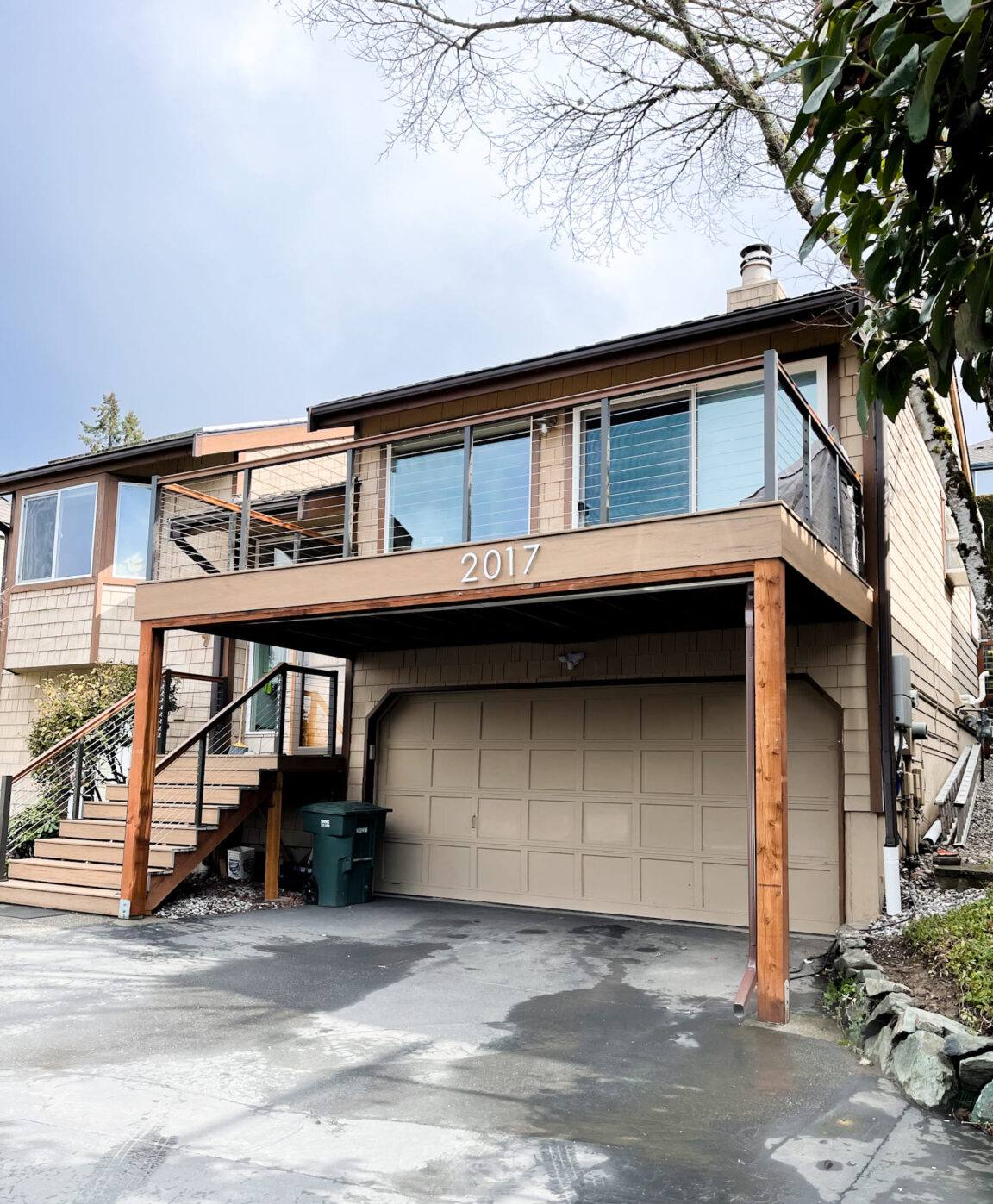
Signs a Sandy Point Deck Needs Attention
Most deck problems out here start small and stay hidden under a board or behind a railing post for a long time before they become visible. A few minutes of a close look, done before the wet season sets in, catches almost everything worth catching.
- Boards that feel soft, spongy, or slightly springy underfoot, especially near the house or along the outer edge
- Rust streaks running down from screw heads, joist hangers, or bolts
- A guardrail or stair rail that has any side-to-side movement when you push on it
- Green or black film on boards that stays damp well after the rest of the yard has dried
- Gaps opening up where the deck meets the house, or daylight visible where the ledger board attaches
- Stair stringers that look cupped, split, or pulled away from their connection points
- A musty smell coming from underneath the deck, which usually means trapped moisture below the boards
Any one of these on its own might be minor. Two or three together, especially involving the structural framing rather than just the surface boards, usually means it's time to have someone look underneath, not just walk across the top.
Surface Problems vs. Structural Problems
It's worth separating these two categories early, because they call for different responses. Surface problems — graying wood, moss film, a few popped screws — affect how the deck looks and how safe it feels to walk on, but they're usually straightforward to correct. Structural problems — a rotted ledger board, corroded joist hangers, an undersized or failing post footing — affect whether the deck is actually safe to load. A deck can look presentable on top while having real structural issues underneath, which is exactly why a repair estimate should always include time under the deck, not just a walk-around.
What a Correct Deck Repair Actually Involves
A repair that's done right starts with figuring out why the damage happened, not just replacing the damaged part. Swapping out a rotted board without addressing the drainage or ventilation issue that rotted it just buys a few more years before the same spot fails again.
A proper repair typically covers:
- Inspecting the ledger board connection to the house — this is one of the most common failure points on any deck, and it's a structural connection, not a cosmetic one
- Checking joists, beams, and posts for rot, checking, or corrosion at connection points
- Confirming post footings haven't shifted, heaved, or lost their bearing
- Replacing damaged decking boards with attention to proper spacing for drainage, not just a tight, gap-free look
- Upgrading fasteners and hardware to a corrosion rating that matches the site, not just what's standard elsewhere
- Rechecking guardrails and stair railings for code-compliant height and spacing, since older decks are often out of date on both
- Making sure water has somewhere to go — regrading a low spot, adding a drip edge, or opening up airflow underneath
Skipping that last step is one of the most common shortcuts in deck repair generally, and it's especially costly this close to the water, where trapped moisture doesn't get the drying window it would somewhere less humid.
Common Problem Areas We See on Decks Near the Water
Ledger Board Connections
The ledger board bolts the deck to the house, and it's usually the least visible, most safety-critical part of the whole structure. Constant moisture and salt exposure accelerate corrosion on the flashing and fasteners at this joint faster than almost anywhere else on the deck.
Fasteners and Hardware
Screws, nails, and joist hangers that aren't rated for this kind of exposure corrode from the inside of the wood outward, so the surface can look fine while the fastener underneath has already lost most of its holding strength.
Moss and Algae on Walking Surfaces
Beyond looking bad, a mossy deck surface is a slip hazard and traps moisture against the board, which speeds up surface breakdown. Regular cleaning is maintenance, but ongoing algae growth in shaded or low-airflow spots is often a sign the deck needs better drainage or spacing, not just a wash.
Post Bases and Footings
Posts that sit in standing water or damp soil for long stretches of the year are prone to base rot even when the rest of the post looks sound. This is one of the areas most often missed in a surface-level inspection.
Repair or Replace: Weighing the Factors
Not every deck with problems needs to come down. The right call depends on what's actually failing and how much of the structure it affects.
| Factor | Leans Toward Repair | Leans Toward Replacement |
|---|---|---|
| Extent of damage | Isolated to a few boards, railings, or stairs | Widespread rot across multiple framing members |
| Structural framing condition | Joists, beams, and posts test solid | Ledger, beams, or footings are compromised |
| Age of the deck | Under 10-15 years, built to a decent original standard | Original construction is older or was undersized to begin with |
| Code compliance | Railings and stairs already meet current spacing/height rules | Guardrails, stairs, or footings are significantly out of code |
| Cost relative to new build | Repair cost is a fraction of full replacement | Repair costs start approaching what a rebuild would cost |
A straightforward answer isn't always possible until someone has actually opened up a section and looked at the framing. That's why we'd rather give you a real recommendation after a look underneath than guess from the surface.
Materials That Actually Hold Up Here
Material choice matters more in a waterfront setting like Sandy Point than it does further inland, and it's worth being upfront about the trade-offs rather than pushing one product as a cure-all.
Fasteners and Hardware
Standard galvanized fasteners are fine in a lot of the country, but in consistent salt air they corrode faster than their rated lifespan suggests. Stainless steel fasteners cost more up front and are our standard recommendation for repairs in this area — the extra cost is small compared to redoing the work in a few years.
Decking Material
Pressure-treated lumber, cedar, and composite decking all have a place, and each comes with real trade-offs rather than one being simply "better":
- Pressure-treated lumber is the most affordable option and holds up well if properly sealed and resealed on a regular schedule — the maintenance commitment is the trade-off
- Cedar handles moisture naturally better than most softwoods and looks the part of a Pacific Northwest deck, but it still needs periodic finishing to keep that resistance up over time
- Composite decking largely removes the sealing and staining maintenance cycle and resists moss growth better than wood, but it comes at a higher material cost and some products are more sensitive to proper spacing and ventilation during installation than others
We'll walk through these options honestly based on your budget and how much ongoing maintenance you actually want to take on — there's no single right answer for every homeowner.
Our Deck Repair Process
We keep the process straightforward because most homeowners just want to know their deck is safe and know what they're paying for.
- Full inspection — we check the surface, the framing underneath, the ledger connection, footings, and railings, not just the parts that are obviously damaged
- Written recommendation — a clear explanation of what needs repair now, what's worth watching, and what a repair versus a partial rebuild would involve
- The repair itself — matching materials and fasteners to this specific site's exposure, not a one-size-fits-all approach
- Code and safety check — confirming railings, stair spacing, and structural connections meet current requirements before we consider the job done
- Cleanup — your yard and deck area left the way we found it, minus the moss and the problem
Why Hire a Crew That Already Works in Sandy Point
A contractor who's worked on decks throughout Blaine and the surrounding Whatcom County waterfront knows what to check first because they've already seen the pattern play out on other homes nearby — where moisture tends to collect, which connections corrode first, and which materials actually hold up versus which ones just look good on the shelf. That local pattern recognition saves time during the inspection and helps avoid repairs that look fine for a season but don't account for what this specific location will do to them over the following few years.
It also matters for something more practical: a crew that's already familiar with the area's access points, typical lot conditions, and the kind of weather windows available for outdoor work can plan a repair that actually gets finished before the next stretch of driving rain rolls in, rather than leaving a deck half-open to the weather.
Keeping a Repaired Deck in Good Shape
Once a deck is repaired correctly, a little regular upkeep goes a long way toward making that repair last, especially in a climate that supports moss growth for much of the year.
- Sweep debris off the deck regularly so moisture doesn't sit trapped under leaves or needles
- Clean moss and algae off the surface at the first sign of growth, before it gets a foothold
- Check railings and stair connections for movement once or twice a year
- Reseal or restain wood decking on the schedule the product actually calls for, not just when it looks faded
- Keep gutters and downspouts near the deck clear so runoff isn't draining straight onto or under it
If you're noticing soft spots, rust stains, moss that won't quit, or a railing that doesn't feel as solid as it used to, we're happy to take a look. We offer free, no-pressure estimates for Sandy Point homeowners — just fill out the form below and we'll set up a time to come take a real look, above and below the boards.