 Blaine Exterior
 Building New in Dakota Creek Means Building for the Weather You Actually Have
If you're framing a new home in the Dakota Creek area, you already know this stretch of Whatcom County doesn't play by the same rules as the rest of Washington. You're close enough to the water that salt-laden air is a daily fact of life, storms roll in off the Strait of Georgia with real wind-driven rain, and the long stretch of gray, wet months here keeps everything damp for far longer than most of the country ever deals with. Windows installed during new construction have to be chosen and installed with that environment in mind from the very first day — not patched up for it later.
New-construction windows are not the same product or the same job as a replacement window dropped into an existing opening. On a new build, the window is part of the wall assembly itself — it has to integrate with the weather-resistive barrier, the flashing, the framing tolerances, and the siding detail all at once. Get that integration wrong on a house near Dakota Creek, and the consequences show up as hidden rot, corroded hardware, or streaked and mossy sightlines within a few winters, long before most warranties would ever catch it.
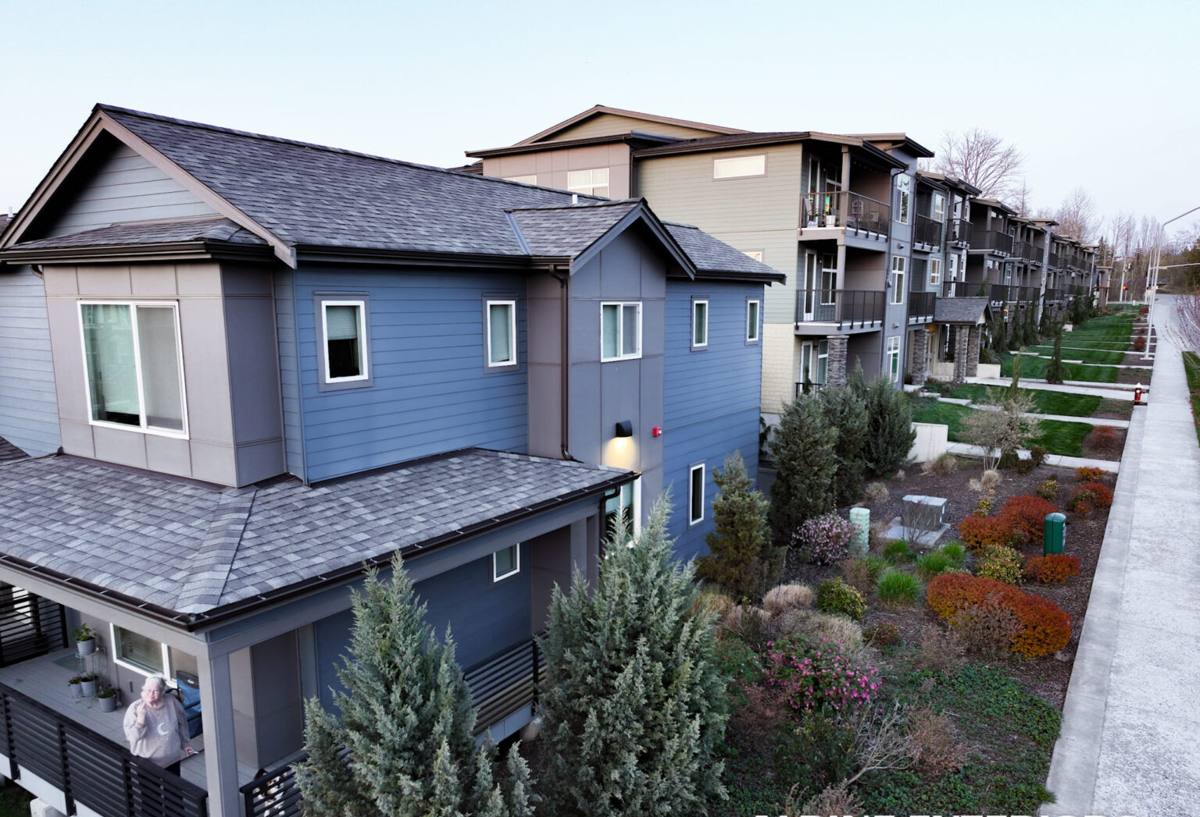
Why New Construction Is the Best — and Only — Time to Get This Right
Once siding, trim, and interior finish are closed up around a window, correcting a bad flashing detail means tearing into finished work. New construction is the one point in a home's life where the window opening is fully exposed, the sheathing is visible, and every layer of the water-management system can be built in the correct order without cutting into anything. That's the whole advantage of doing it right the first time — and the whole risk if it's rushed.
In a marine climate like Blaine's, that first-time correctness matters more than it would in a dry inland town. Wind-driven rain doesn't just fall straight down — it gets pushed sideways and upward against the wall, which means it finds any gap in the flashing sequence that a calmer climate would never expose. A window installed to a "good enough" standard inland can still fail here.
What "Correct" Actually Means on a New Build
- Sill pan flashing installed and sloped to drain water back out, not into the wall cavity
- Weather-resistive barrier integrated with the window flange in the correct shingle-lap order — bottom, sides, then top
- Head flashing that sheds water over the top of the window, not one that traps it against the frame
- Rough openings sized and squared to the manufacturer's tolerance, not forced or shimmed to fit
- Fasteners and hardware rated for coastal/marine exposure, not standard-grade parts that corrode early
- Sealant used only where the manufacturer specifies it — over-sealing can trap moisture instead of releasing it
What Dakota Creek's Climate Specifically Does to Windows
Three conditions matter more here than almost anywhere else in the state, and each one points to a different part of the installation:
Salt Air
Airborne salt accelerates corrosion on hardware, fasteners, and lower-grade metal components. It doesn't take a house sitting right on the water — homes throughout the Blaine area get enough salt exposure over time that hardware quality and fastener selection genuinely matter, not just frame material.
Driving Rain
Storms pushing in off the water put real lateral pressure on wall assemblies. Flashing sequencing and sill pan drainage aren't optional details on a house exposed to this kind of weather — they're the difference between water shedding away from the structure and water finding its way behind the siding.
Moss and Persistent Moisture
Whatcom County's long wet season keeps surfaces damp for months at a time, which is exactly what moss and algae need to take hold. On windows, that shows up as staining on sills and trim, and on the broader wall it shows up as slower-drying sheathing if the drainage plane behind the siding isn't doing its job. Correct installation gives the wall a way to dry out between storms instead of staying saturated.
Comparing Frame Materials for a Marine Climate Build
There's no single "best" window material for every new build — it depends on budget, the home's design, and how much long-term maintenance an owner wants to take on. Here's how the common options actually perform in a salt-air, high-rainfall environment like Dakota Creek's:
| Frame Material | Salt Air / Corrosion Resistance | Moisture & Moss Resistance | Long-Term Maintenance |
|---|---|---|---|
| Vinyl | Good — won't corrode, though hardware quality varies by manufacturer | Good — non-porous surface, easy to rinse | Low — occasional cleaning |
| Fiberglass | Very good — dimensionally stable, corrosion-resistant | Very good — holds paint/finish well over time | Low to moderate |
| Wood-Clad | Depends entirely on cladding integrity — any breach exposes wood underneath | Moderate — exterior clad protects, but seams need monitoring | Higher — periodic inspection of cladding seams |
| Aluminum | Fair — conducts salt corrosion faster unless properly coated | Fair — prone to condensation in cold, wet conditions | Moderate |
We'll talk through these trade-offs against your budget and design goals rather than pushing one material — the right call depends on exposure on your specific lot, your siding choice, and how much upkeep you want to plan for down the road.
Our New-Construction Window Process
On a new build, we coordinate directly with your builder or general contractor so window installation lands at the right point in the framing sequence — not too early, not after the weather-resistive barrier is already closed up around the openings.
- Rough opening check. We verify every opening is square, plumb, and sized correctly before a window ever shows up on site — catching framing issues now is far cheaper than after the window is set.
- Sill pan flashing. Every opening gets a sloped sill pan so any water that gets past the window drains back outside instead of pooling in the frame.
- Window setting and shimming. Windows are set plumb, level, and square, shimmed at manufacturer-specified points — never forced into an opening that isn't ready.
- Flashing integration. Side and head flashing tie into the weather-resistive barrier in the correct shingle-lap sequence so water always sheds downward and outward.
- Fastening and sealing. Corrosion-resistant fasteners go in per manufacturer spec, and sealant is applied only where it's meant to be — not as a blanket fix for a sloppy fit.
- Final inspection. Before siding closes the wall up, we check that every opening is fully integrated and ready to be covered — because once it's covered, it's covered for decades.
Energy Performance and Washington Code on a New Build
New construction in Whatcom County has to meet Washington State Energy Code requirements for window U-factor and solar heat gain, and those minimums exist for a reason beyond a code checkbox — a well-rated window keeps a home comfortable through the marine chill and reduces condensation risk on cold, damp days, which matters directly for indoor moisture and mold prevention in a climate this wet. We'll help you select glazing packages that clear code comfortably and perform well for the specific orientation and exposure of your lot, rather than the bare minimum that just barely passes.
Why a Crew That Already Works Dakota Creek New Construction Matters
A window crew that mostly works drier inland projects can install a technically fine window and still get the flashing sequence wrong for this climate, because the failure mode here is different — it's slower, and it's hidden behind siding until the damage is already done. A crew that regularly works new construction in the Blaine area knows to size up salt-air hardware needs before they're asked, knows how driving rain off the water behaves against a wall assembly, and knows what a wall needs to actually dry out during a Whatcom County winter instead of staying damp for months.
That local pattern recognition is the real value of hiring a crew with a track record in this specific area — not a sales pitch, just familiarity with how this climate actually treats a house over time.
What to Ask Before You Sign a New-Construction Window Contract
- Who installs the sill pan flashing, and is it sloped to drain outward?
- What fastener and hardware grade is used, and is it rated for coastal/marine exposure?
- How is the window flange integrated with the weather-resistive barrier — what's the lap sequence?
- What U-factor and solar heat gain coefficient do the proposed windows carry, and do they clear Washington code with margin?
- Who coordinates scheduling with the builder so windows go in at the right framing stage?
- What's covered under the installation warranty versus the manufacturer's product warranty?
Let's Talk About Your Build
Every lot near Dakota Creek has its own wind exposure, tree cover, and orientation to the water, and that affects which window details matter most for your specific house. If you're framing a new home in the area and want windows installed to hold up against salt air, driving rain, and a long moss season instead of just looking good on move-in day, we're happy to walk the site with you and put together a free, no-pressure estimate.