 Blaine Exterior
 Dakota Creek Sits in a Tougher Climate Than Most Siding Is Built For
Homes in and around Dakota Creek sit close enough to the water that salt-laden air is a daily fact of life, not an occasional nuisance. Add in Whatcom County's long stretch of driving rain each fall and winter, plus a moss season that can run for months on north- and west-facing walls, and you've got a combination that wears out ordinary siding faster than homeowners expect. Paint chalks and peels sooner near salt air. Wood-based products absorb moisture at seams and edges. Vinyl becomes brittle and can warp under repeated wet-dry cycles. None of this is dramatic on any single day — it's cumulative, and it shows up as bubbling paint, soft trim, or streaked, mossy siding five or ten years earlier than it should.
We install James Hardie fiber cement siding exclusively, and a page like this exists because Dakota Creek is a good example of why that choice matters. This isn't a general overview of James Hardie — it's what the product needs to do specifically for homes in this pocket of Blaine, and what a correctly installed system looks like here.
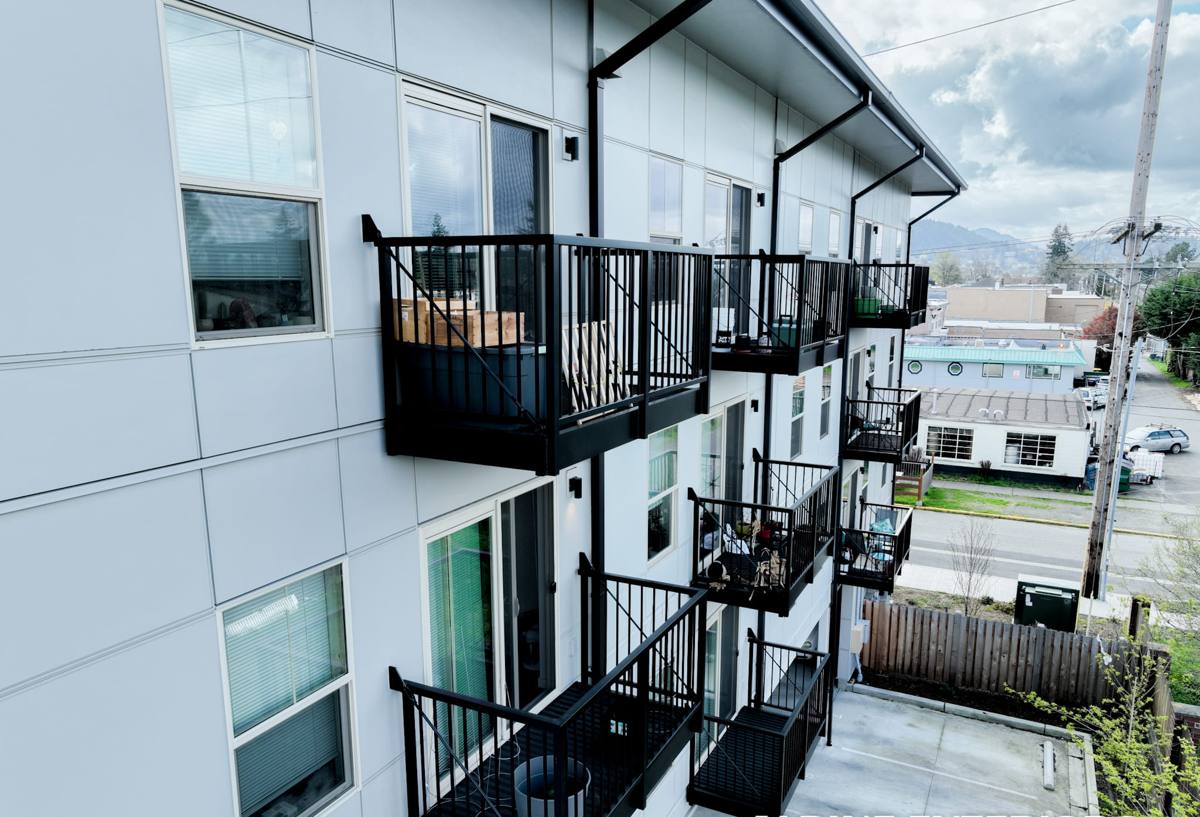
What Salt Air, Rain, and Moss Actually Do to a House
Salt Air
Airborne salt accelerates the breakdown of paint film and can corrode unprotected fasteners over time. It's most aggressive on the sides of a house that face open water or prevailing wind, but it settles on every exposed surface eventually. Siding material that isn't dimensionally stable, or fasteners that aren't corrosion-resistant, are the two most common failure points we see on coastal Whatcom County homes.
Driving Rain
Blaine's rain doesn't just fall — wind pushes it sideways into wall assemblies, seams, and trim joints. A siding system that isn't installed with proper flashing, gapping, and drainage behind it will eventually let water track behind the cladding, where it can sit against sheathing and framing unnoticed for years.
Moss and Prolonged Damp
Shaded, north-facing walls near tree lines or water stay damp longer after every storm. That constant moisture is what moss and mildew need to establish themselves. On porous or poorly sealed materials, that dampness works its way into the substrate itself, not just the surface.
Why James Hardie Is the Right System for This Environment
James Hardie fiber cement is non-combustible, dimensionally stable, and doesn't absorb and swell with moisture the way wood-based products do. For a climate like Dakota Creek's, that stability matters more than almost any other property. The ColorPlus factory finish is baked on and engineered to resist fading and chalking better than field-applied paint, which is a real advantage on walls that take direct salt spray and UV exposure.
Hardie also builds region-specific product lines through its HZ5 engineered-for-climate system, which accounts for freeze-thaw cycling and moisture exposure patterns typical of the Pacific Northwest. That's not a marketing detail — it affects the actual composition and performance of the board you're putting on your house.
We don't install LP SmartSide, vinyl, Cemplank, Allura, primed spruce, or cedar. Each of those has situations where it performs adequately, but none of them combine the fire resistance, moisture stability, and factory-finish durability that a salt-air, high-rainfall property like the ones around Dakota Creek benefits from most. We'd rather install one product correctly and stand behind it than offer five options and hope the cheaper ones hold up.
What a Correct Installation Involves Here
Fiber cement siding is only as good as the assembly behind it. This is where most of the difference between a siding job that lasts 30+ years and one that fails at year 10 actually happens — and it's largely invisible once the job is done.
Drainage Plane and Rainscreen Gap
Given how much wind-driven rain this area gets, we install a proper water-resistive barrier and maintain a drainage gap behind the siding so that any moisture that does get past the cladding can drain and dry instead of sitting against the wall.
Flashing at Every Penetration
Windows, doors, hose bibs, light fixtures, and vents all need correctly lapped flashing so water sheds outward and downward, never inward. This is the single most common point of failure we find when we tear off older siding on Whatcom County homes.
Fasteners and Hardware
We use corrosion-resistant fasteners appropriate for coastal exposure. In a salt-air environment, the wrong fastener can rust and stain the siding face or lose holding strength years before the siding itself would otherwise need attention.
Joints, Gaps, and Caulking Discipline
Hardie's installation specifications call for specific gaps at butt joints and trim, sealed with the right sealant — not caulked solid in ways that trap moisture. Following the manufacturer's spec exactly is also what keeps the warranty intact.
Our Process for a Dakota Creek Project
- On-site assessment — we look at wall orientation, exposure to wind and water, existing moisture damage, and trim/window condition before quoting anything.
- Tear-off and substrate check — old siding comes off and we inspect sheathing for rot or soft spots before anything new goes up. Problems found here get addressed, not covered over.
- Water-resistive barrier and drainage plane — installed to current best practice for this climate, not the minimum code requirement.
- Flashing and trim work — done before siding installation begins, at every window, door, and penetration.
- Hardie panel or plank installation — installed to manufacturer spec for fastener spacing, gapping, and clearance from grade and roof lines.
- Final inspection and cleanup — walk-through with the homeowner, site cleaned of debris and old material.
James Hardie vs. Common Alternatives for This Climate
| Factor | James Hardie Fiber Cement | Vinyl | Wood / Cedar / Primed Spruce |
|---|---|---|---|
| Moisture stability | Dimensionally stable, doesn't swell or rot | Stable but can warp with heat/cold cycling | Absorbs moisture; prone to rot without diligent upkeep |
| Salt air resistance | Factory finish resists chalking and fading | Can become brittle and discolor over time | Finish breaks down faster; needs frequent repainting |
| Fire resistance | Non-combustible | Combustible, can melt/deform near heat | Combustible |
| Maintenance | Occasional wash, repaint only if desired decades out | Low maintenance but limited repair options when damaged | Regular repainting/staining and moisture monitoring |
| Typical lifespan when installed correctly | 30+ years | 20-30 years, variable | 15-25 years with consistent upkeep |
Living With Hardie Siding in a Salt Air, High-Moss Environment
James Hardie siding is low-maintenance, not zero-maintenance. A little seasonal attention goes a long way toward getting the full lifespan out of the product in this specific climate.
- Rinse siding periodically to clear salt residue and organic buildup, especially on walls facing water or prevailing wind
- Keep gutters clear so overflow doesn't run down the siding face repeatedly
- Trim back vegetation and tree cover that keeps any wall shaded and damp longer than necessary
- Check caulking at trim and penetrations every year or two and have any cracked sealant redone promptly
- Address moss on adjacent roofing or hardscape before it spreads onto siding surfaces
- Have any impact damage (branches, equipment, debris) repaired rather than left exposed
Why Local Experience in Dakota Creek Matters
A crew that regularly works this specific stretch of Blaine already understands how wall orientation to the water changes exposure from one side of a house to another, how much rain this area actually gets in a typical winter, and which flashing and gapping details actually hold up here versus in a drier inland climate. That's different from installer knowledge that's generic to fiber cement in the abstract. It shows up in the small decisions — where extra flashing goes, how tight the drainage gap is kept, which fasteners get used — that a homeowner won't see but will absolutely feel in year fifteen.
It also means we're not guessing at what "normal wear" looks like for a Dakota Creek home versus a genuine installation problem. We've seen enough siding come off houses in this area to know the difference.
Cost Factors Worth Understanding Before You Get a Quote
Every project is different, but the same handful of factors drive most of the cost variation we see on jobs in this area:
| Factor | Why It Matters |
|---|---|
| Existing siding removal | Tear-off, disposal, and any substrate repair add labor beyond a straight install |
| Wall complexity | Dormers, multiple gables, and cut-up elevations take more time and material than a simple rectangular wall |
| Product line and profile | Lap siding, panel systems, and trim/accessory choices carry different material costs |
| Trim and finish work | Window and door trim, fascia, and soffit work often gets addressed at the same time as siding |
| Access and site conditions | Steep grades, limited driveway access, or tight lot lines can affect staging and labor time |
We walk through all of this on-site rather than quoting from a distance, since so much of it depends on the actual condition of the walls once the old siding comes off.
Get a Straight Answer for Your Dakota Creek Home
If your siding is showing chalking, moss staining, soft trim, or you're just planning ahead for a home that holds up to this stretch of coastline, we're happy to take a look and walk you through what we'd actually recommend — no pressure, no upsell to a product we don't stand behind. Use the form below to request a free estimate.