 Blaine Exterior
 Why Dakota Creek Roofs Age Differently Than Roofs Inland
Dakota Creek sits close enough to the water that a roof here is doing a different job than a roof twenty miles inland. Homes along the creek corridor and the surrounding Blaine neighborhoods deal with salt-laden air blowing in off Boundary Bay and the Strait of Georgia, long stretches of driving rain that comes in sideways more often than straight down, and heavy tree cover in places that keeps roof decks shaded and damp for days after a storm passes. None of that is unusual for Whatcom County, but it adds up faster than most homeowners expect, and it shows up first in the shingles.
Salt air is corrosive to exposed metal — nails, flashing, vent stacks, gutter hardware — well before it does anything visible to the shingles themselves. Driving rain finds the weak points in a roof system that would never leak in a calmer climate: laps that are an inch short, nail placement that's slightly high, valleys that weren't woven or closed correctly. And shade plus moisture is exactly what moss wants. A roof on a sunny, open lot might go years without a moss problem; a roof tucked under fir and cedar near the creek can start growing a mat within a couple of seasons if nobody's watching it.
None of this means shingle roofing is a poor choice for Dakota Creek — it's still the most practical, cost-effective roofing material for most homes in this area. It means the roof has to be built and maintained with this specific climate in mind, not installed the same way it would be in a dry inland town.
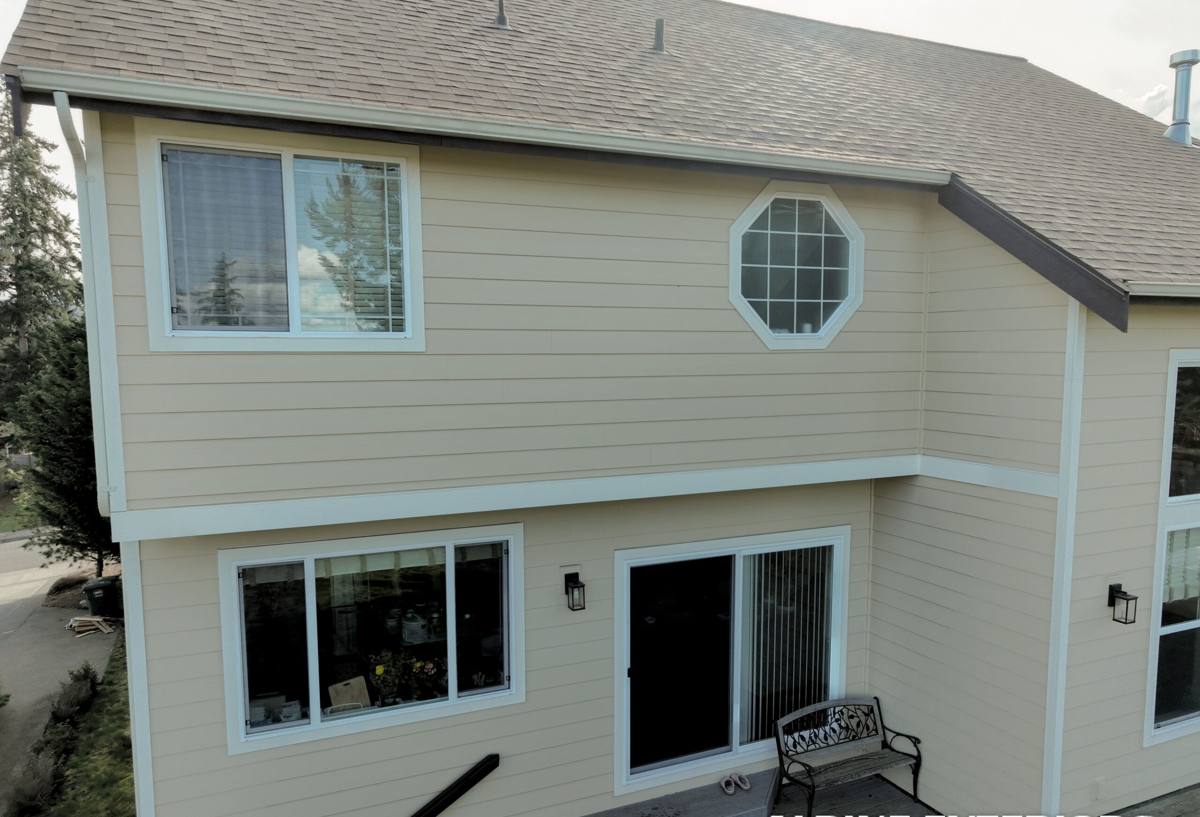
What a Correctly Built Shingle Roof Looks Like Here
A shingle roof that's going to hold up near the water is built in layers, and every layer matters more here than it does somewhere drier.
Underlayment
The underlayment is the roof's real waterproofing layer — the shingles are the weather shell, but the underlayment is what keeps a roof dry if wind drives rain up under a shingle edge, which happens regularly on exposed sites near open water. We use synthetic underlayment for full-field coverage and self-adhered ice-and-water membrane at the vulnerable spots: eaves, valleys, around penetrations, and along any low-slope transitions. That membrane matters more here than in most of the state, because wind-driven rain doesn't behave like a normal rain event — it can push water uphill under a shingle course that would otherwise shed it fine.
Flashing
Flashing is where most roof leaks near the coast actually start, not the shingles themselves. Step flashing at walls, counter-flashing at chimneys, and properly formed valley metal all need to be corrosion-resistant material, not the cheapest galvanized stock, and installed so water has nowhere to back up. Reused old flashing is one of the most common corners cut on a "reroof" — it looks fine from the ground and fails quietly two winters later.
Ventilation
A shingle roof needs balanced intake and exhaust ventilation to let the attic breathe. Near the creek, where humidity sits higher for longer stretches, poor ventilation doesn't just shorten shingle life from the underside — it also feeds condensation and mold in the attic. We check soffit intake and ridge or box-vent exhaust as part of every job, not as an upsell.
Fastening
Nail placement and count matter more in wind-exposed areas. We fasten to the manufacturer's high-wind pattern as standard on Dakota Creek homes, not the minimum pattern, because open exposure toward the water means gusts that a sheltered inland roof rarely sees.
Our Process, Start to Finish
- Inspection and honest assessment. We get on the roof, check the deck condition, flashing, ventilation, and how much moss or granule loss is present, and tell you plainly whether you need a full replacement, a repair, or nothing at all yet.
- Written estimate. Materials, scope, and price in writing before any work starts — no verbal-only agreements.
- Tear-off and deck check. Old roofing comes off down to the deck so we can actually see what's underneath, not layer new shingles over old problems. Soft or rotted decking gets flagged and replaced before anything else goes on.
- Underlayment and flashing install. Ice-and-water membrane at eaves and valleys, synthetic underlayment across the field, new flashing at every penetration and wall intersection.
- Shingle installation. Installed to manufacturer spec with the fastening pattern appropriate to the site's wind exposure.
- Ventilation check. Intake and exhaust confirmed balanced before we call the job done.
- Cleanup and magnetic nail sweep. Yard, driveway, and gutters cleared of debris and stray fasteners.
- Final walkthrough. We go over the finished roof with you before we consider the job complete.
Shingle Options for a Coastal Whatcom County Home
Not every shingle product is a good fit for a site with this much moisture and salt exposure. Here's how the common options stack up for a Dakota Creek home specifically.
| Shingle Type | Typical Lifespan | Best For | Trade-Offs Near the Coast |
|---|---|---|---|
| 3-tab asphalt | 15–20 years | Budget-conscious replacements | Lower wind resistance; less algae resistance than upgraded lines |
| Architectural (dimensional) asphalt | 25–30 years | Most Dakota Creek homes | Heavier profile handles wind better; worth the upgrade cost in this exposure |
| Algae-resistant (AR) architectural | 25–30 years | Shaded, damp, tree-covered lots | Copper-infused granules slow algae growth; doesn't stop moss on its own |
| Impact-rated architectural | 25–30 years | Homes wanting storm/hail resistance | Higher upfront cost; may qualify for insurance discounts |
For most homes we work on near the creek, we recommend an architectural shingle with algae-resistant granules as the baseline, not the upgrade. On heavily shaded lots, that AR granule technology is doing real work — it doesn't make moss impossible, but it measurably slows the algae staining that shows up as those dark streaks on north-facing slopes.
Moss, Algae, and Salt Air: What Actually Helps
A new roof doesn't make moss and algae go away permanently — it resets the clock and gives you a roof that's easier to keep clean. A few things genuinely make a difference in this climate:
- Trim back overhanging branches. Less shade and debris on the roof means faster drying between rain events, which moss needs to establish.
- Keep gutters and valleys clear. Trapped needles and leaves hold moisture against the shingle surface longer than open runoff would.
- Rinse, don't pressure-wash. A gentle rinse or approved moss treatment removes surface growth without stripping granules; pressure washing can shorten shingle life significantly.
- Consider zinc or copper strips at the ridge on heavily shaded roofs — rain washing over the metal helps suppress regrowth downhill of the strip.
- Have the roof looked at annually, not just when a leak shows up. Catching moss or granule loss early is a maintenance job; catching it late is a repair job.
Salt air adds a separate maintenance item: metal components. Vent stacks, flashing edges, and gutter fasteners near the water benefit from an annual visual check for early corrosion, since that's usually where a coastal roof shows wear before the shingles do.
Signs Your Dakota Creek Roof Needs Attention
Some of these are obvious from the ground; others you'll only catch on the roof itself.
- Granules collecting in gutters or at downspout outlets
- Shingles that look cupped, curled at the edges, or cracked
- Dark streaking on north-facing or shaded slopes (algae staining)
- Visible moss mats, especially in valleys and along the eaves
- Daylight visible through the roof deck from inside the attic
- Soft or spongy spots when walked on
- Rusted or lifting flashing around chimneys, vents, or skylights
- A roof approaching or past 20–25 years old with no major work done
Any one of these is worth a look. Several at once usually means it's time to plan a replacement rather than another round of patch repairs.
What Drives the Cost of a Shingle Roof Here
| Factor | Why It Matters in This Climate |
|---|---|
| Roof size and pitch | Steeper roofs take longer and require more safety setup, especially in wet conditions common here |
| Deck condition | Moisture exposure near the creek means a higher chance of hidden deck rot found at tear-off |
| Shingle grade | 3-tab vs. architectural vs. AR/impact-rated changes both material cost and long-term durability |
| Flashing and ventilation scope | Coastal exposure often means more flashing detail work than a basic reroof elsewhere |
| Number of penetrations | Chimneys, skylights, and multiple vent stacks each add flashing and labor time |
| Access and tree cover | Shaded, tree-heavy lots near the creek can add setup and cleanup time |
We won't quote a number without seeing the roof — anyone who does is guessing. What we can say honestly is that the biggest cost swings we see on Dakota Creek jobs come from deck condition discovered at tear-off and from how much flashing and ventilation work a roof actually needs versus what a quick estimate assumes.
Why It Matters That We Already Work This Area
A roofing crew that works Dakota Creek and the surrounding Blaine area regularly knows things a crew driving in from out of the county has to learn on your roof. We know which slopes in this area tend to hold moss longest based on tree cover and sun exposure. We know how far wind-driven rain can push water on an exposed, open-water-facing roof versus a sheltered one. We know which local suppliers stock the AR and impact-rated shingle lines that actually make sense for this climate, so we're not substituting a lesser product because the right one isn't on the truck.
Just as important, we're not a crew that shows up once and disappears. If a flashing detail needs a second look after the first hard driving rain of the season, or you want an honest opinion on whether that moss patch is cosmetic or a real problem, we're a local call, not a search for whoever answers the phone next.
Get a Straight Answer About Your Roof
If you're not sure whether your Dakota Creek home needs a repair, a partial reroof, or a full replacement, the fastest way to find out is to have someone look at it who actually understands what salt air, driving rain, and a long moss season do to a shingle roof in this part of Whatcom County. We'll give you a straightforward assessment and a written estimate — no pressure, no upsell for its own sake. Use the form below to request your free estimate.