 Blaine Exterior
 Building Decks That Hold Up in Birch Bay
Birch Bay sits close enough to the water that every deck we build there has to answer to conditions a deck fifteen miles inland doesn't face. Salt-laden air off the bay accelerates corrosion on anything metal. Driving rain off Georgia Strait and the Salish Sea finds its way into joints and connections that would stay dry in a more sheltered yard. And the long, damp shoulder seasons here — fall through spring — give moss and algae months to establish themselves on any surface that doesn't shed water and dry out quickly. A deck built to a generic spec sheet can look fine for a year or two and then start showing problems that trace straight back to decisions made before the first board went down.
This page is about what a custom deck actually needs to hold up in Birch Bay specifically — not decking in general. We'll cover material selection, framing and fastener choices, how our process works from design through walkthrough, and what upkeep looks like once the deck is yours.
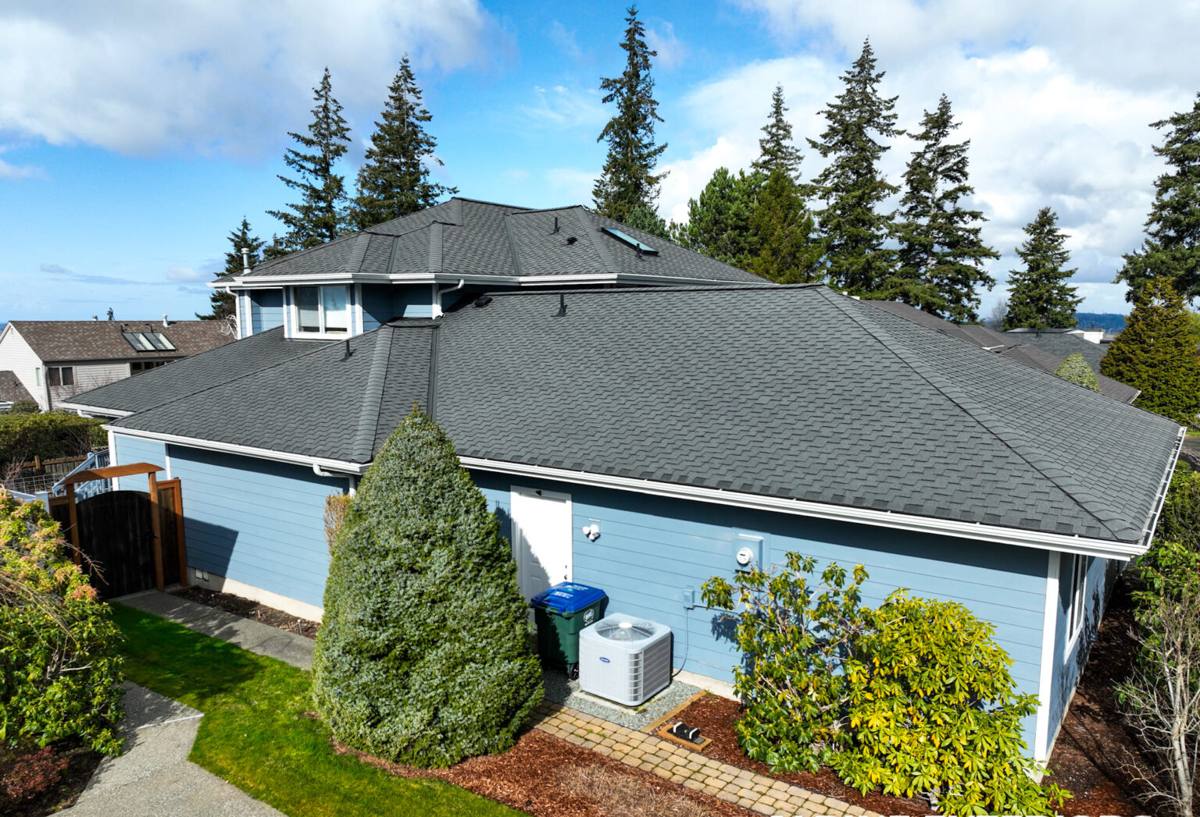
What Birch Bay Properties Demand From a Deck
Whatcom County's coastal edge isn't uniform. A lot in Birch Bay a few blocks from the water gets a steady dose of salt spray and wind-driven rain, while a lot set back among trees deals more with shade, dampness, and moss than with corrosion. Both situations call for real decisions, not defaults.
Wind and Salt Exposure
Homes with direct or near-direct water exposure see faster breakdown of untreated or poorly coated fasteners, and wind-driven rain that gets pushed sideways under railings and around ledger boards. Flashing details and fastener grade matter more here than almost anywhere else in the county.
Shade, Moss, and Slow Drying
Tree-covered lots trade salt exposure for a different problem: decks that stay damp longer after every rain. Moss and algae take hold fastest where a deck surface can't dry between storms, which in this area can mean long stretches from October through April where a poorly ventilated deck barely dries out at all.
Ground Conditions
Coastal soils in low-lying areas near Birch Bay can hold more moisture at footing depth than inland lots. That affects how footings are sized and set, and it's one more reason a generic build plan pulled off the shelf isn't the right starting point for every yard.
Choosing Decking Material for This Climate
There's no single "best" decking material — there's the right material for a given budget, look, and exposure. Here's how the common options actually perform under Birch Bay conditions:
| Material | How it handles salt air & rain | Moss/algae resistance | Maintenance |
|---|---|---|---|
| Pressure-treated lumber | Good if properly sealed and re-coated; hardware is the weak point | Needs regular cleaning and re-sealing to resist growth | Annual cleaning, re-sealing every 1-2 years |
| Cedar | Naturally rot-resistant but softer; benefits from sealing near the water | Moderate — still needs periodic cleaning | Sealing/staining every 1-2 years |
| Capped composite | Very good — doesn't absorb moisture like wood | Good, though grime can still build up on the surface | Periodic washing, no sealing or staining |
| PVC decking | Excellent — fully synthetic, doesn't take on water | Good, similar cleaning needs to composite | Periodic washing, no sealing |
Composite and PVC cost more up front but remove the sealing/staining cycle that a coastal wood deck demands to stay ahead of moisture and moss. Wood costs less initially and can look excellent, but it only performs as well as the maintenance schedule behind it — skip a couple of sealing cycles near the water and you'll see it in the grain faster here than you would inland. We'll walk through the honest trade-offs for your specific lot rather than push one product line by default.
Framing and Structure: Where Decks Actually Fail
Most deck failures we get called out to inspect aren't decking-surface problems — they're framing and connection problems that took a few years to show themselves. In a climate like this one, three details matter more than the rest:
Ledger Board Flashing
The ledger board attaches the deck to the house, and it's the single most common source of hidden rot on any deck, coastal or not. Correct flashing — installed so water is shed away from the house band board rather than trapped against it — is not optional, and it's not something that shows in a finished photo. It's also one of the fastest things to get wrong on a rushed job.
Joist Protection
Joist tape or an equivalent moisture barrier over the top of each joist keeps standing water from sitting in fastener holes and end grain, which is exactly where rot starts under decking boards that otherwise look fine from above.
Footings and Post Bases
Footings need to be sized and set to local frost and soil conditions, and post bases should hold posts up off the deck surface or ground rather than let them sit in standing water. In damper, low-lying yards this detail is the difference between a post base doing its job for decades and one that starts wicking moisture within a few seasons.
Railings, Fasteners, and Hardware
Salt air is hardest on metal, and hardware is usually the first thing to show wear on a coastal deck — well before the decking or the framing underneath it. We spec fasteners and connectors rated for coastal/marine exposure (typically stainless steel or a heavier-duty coated fastener, depending on the application) rather than standard-grade hardware that's fine inland but corrodes visibly within a couple of years near the water. The same logic applies to railing systems: cable rail and metal balusters need a finish that's actually rated for salt exposure, not just "exterior-rated" in a general sense. It costs more at the hardware level and it's worth it — replacing corroded connectors after the decking is already installed is a much bigger job than specifying the right hardware the first time.
Our Process, Start to Finish
- Site visit and design. We look at your specific exposure — how close you are to the water, how much shade and tree cover you have, drainage patterns in the yard — before recommending materials or layout.
- Material and layout plan. You get an honest rundown of the material options above, with real cost and maintenance trade-offs for your situation, not a single default recommendation.
- Permitting. Deck permitting requirements vary by scope, height, and jurisdiction. We handle the paperwork with the applicable local building department so you're not chasing that down yourself.
- Framing and flashing. This is where the work that actually determines the deck's lifespan happens — ledger flashing, joist protection, footing depth, and post bases, done correctly before any decking goes down.
- Decking, railing, and finish work. Surface material and railing system installed to spec, with coastal-rated hardware throughout.
- Final walkthrough. We go over the finished deck with you, including what maintenance it needs and on what schedule.
Maintenance: What a Birch Bay Deck Actually Needs
The right build reduces maintenance — it doesn't eliminate it. Here's a realistic checklist for keeping a coastal Whatcom County deck in good shape year-round:
- Sweep debris and standing leaves off the surface regularly, especially under tree cover where moss gets a head start
- Rinse salt residue off decking and railings periodically if you're close to the water, particularly after storms
- Check and re-seal or re-stain wood decking on the schedule your material calls for — don't let it run a season past due
- Inspect fasteners and metal hardware annually for early corrosion, especially on railings and stair connections
- Keep gutters and downspouts near the deck clear so runoff isn't dumping extra water onto or under the structure
- Check that ledger flashing and any visible framing connections still look sound after major storm seasons
- Clean composite or PVC surfaces periodically — they don't need sealing, but grime and moss film still build up
Permits and Local Requirements
Deck projects in and around Blaine and Whatcom County typically require a permit once you're past a certain size or height, and requirements can shift based on setbacks, proximity to shoreline areas, and the specifics of your property. Rather than guess at what applies to your lot, we handle that determination and the permitting process directly with the local building department as part of the job, so you're not left figuring out code requirements on your own.
Why Local Experience in Birch Bay Matters
A crew that only occasionally works near the water treats every coastal job as a one-off — relearning the same lessons about flashing, hardware grade, and drainage each time. A crew that regularly works Birch Bay and the surrounding Blaine coastline already knows which details actually matter here versus which ones are fine to relax on an inland build. That shows up in fastener selection, in how footings get sized for damp low-lying soil, and in flashing details that don't get shortcuts because the crew already knows what driving rain off the bay does to a deck that skips them. It's the difference between a deck that looks right on install day and one that's still performing the way it should five and ten years in.
If you're planning a new deck or replacing one that hasn't held up to the Birch Bay climate, we're happy to take a look at your property and talk through options — no pressure, no obligation. Use the form below to request a free estimate.