 Blaine Exterior
 Bellingham Decks Face a Different Set of Problems Than Most of the Country
A deck in Bellingham doesn't fail the way a deck in a dry climate fails. It doesn't usually crack from sun exposure or bake apart from heat. What actually takes a Whatcom County deck down is moisture that never fully leaves the wood, corrosion working on fasteners and hardware year after year, and moss finding every shaded, damp surface it can grip onto. Add in the salt-laden air that comes off the Strait of Georgia and Puget Sound, and you've got a climate that's genuinely tougher on outdoor structures than most homeowners realize until they're standing on a deck that's spongy at the ledger or has a railing post that's rusted through at the base.
None of that means a deck can't last for decades here. It means the build has to account for those conditions from the footings up, not just from the decking boards down. That's the difference between a deck that needs real repair work in eight years and one that's still solid at twenty-five.
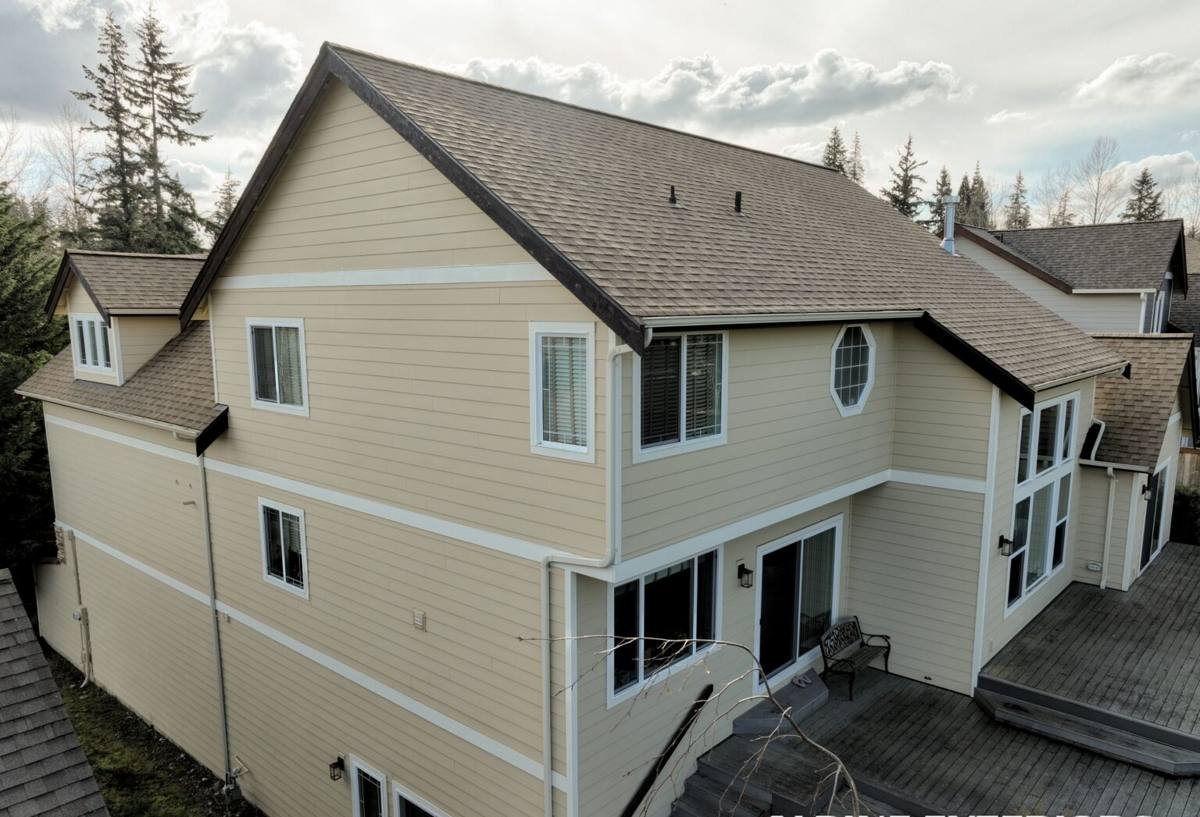
What a Correctly Built Deck Needs in This Climate
Ledger Flashing Is the Single Biggest Factor
The ledger board — where the deck attaches to the house — is where most rot problems in this region actually start. If water gets behind that ledger and into the house's band board or rim joist, it can sit there for years before anyone notices, because the damage happens on the inside face where nobody's looking. A correct install uses proper flashing (metal or high-quality flashing tape, not just caulk) integrated with the house's existing water-resistive barrier, with the flashing lapped so water sheds outward and down, never back toward the house. This is the detail we spend the most time getting right, because it's the one detail that's expensive and disruptive to fix later if it's done wrong.
Footings Below the Frost and Wet Zone
Footings need to be sized and set to local frost depth and soil conditions, not just poured to a minimum someone eyeballed. Undersized or shallow footings in the kind of saturated soil common around Bellingham can shift over a few wet winters, which shows up later as a deck that feels slightly different underfoot or a railing that's gone a little out of plumb.
Fasteners and Hardware That Can Handle Salt Air
Standard fasteners corrode faster here than they would inland, and that process speeds up further if the deck is anywhere with direct salt air exposure. We use hot-dip galvanized or stainless hardware rated for exterior and coastal-adjacent use, and we pay attention to fastener compatibility with treated lumber — modern treated wood chemicals can accelerate corrosion on the wrong metal type, which is a detail that gets missed more often than it should.
Choosing a Decking Material That Actually Suits This Climate
There's no single "best" decking material — there's a best material for a given budget, maintenance appetite, and how much shade and moisture the specific deck location deals with. Here's how the common options actually compare once you factor in Whatcom County conditions rather than a generic climate.
| Material | Upfront Cost | Maintenance Needed Here | How It Handles Moss/Damp Shade |
|---|---|---|---|
| Pressure-treated lumber | Lowest | Regular cleaning and periodic sealing/staining | Prone to moss and surface graying if not cleaned; needs airflow underneath |
| Cedar | Moderate | Sealing/staining every couple of years to hold color and resist moisture uptake | Naturally more rot-resistant than pine, but still needs cleaning in shaded, damp spots |
| Capped composite | Highest | Occasional washing; no staining or sealing | Resists moisture absorption well; still needs washing to keep surface algae/moss film from building up |
We're upfront that composite costs more to install but takes far less annual upkeep, which matters if you don't want to be out there scrubbing and re-staining every year. Wood costs less initially but only holds up if someone actually keeps up with the maintenance — a wood deck that gets ignored in this climate will show it faster than one in a drier region. Neither choice is wrong; it's about matching the material to how much maintenance time you actually want to put in.
Board Spacing and Airflow Matter More Than the Material Itself
Whatever decking you choose, the gap between boards and the airflow underneath the deck have a bigger effect on moss and mildew than the material brand does. Tight-spaced boards over a low, poorly ventilated substructure will grow moss regardless of what they're made of. Proper gapping and keeping the space under the deck open to air movement is one of the cheapest, most effective things we build in from day one.
Substructure and Framing Standards We Build To
The framing underneath is where corners get cut on decks that don't hold up. We build to joist spacing appropriate for the decking material and expected load (a composite board typically needs tighter joist spacing than a solid wood board of the same thickness), use joist tape or flashing on top of joists to keep water from wicking into end grain, and make sure ledger, beam, and post connections use rated structural hardware rather than just nails or lag screws driven by feel. Guardrail posts get attached with a connection method that's actually been tested to hold under lateral load — this is a common weak point on older decks in the area, and it's a code and safety issue, not just a cosmetic one.
Permits and Inspections in Whatcom County
Most new decks and significant deck replacements in and around Bellingham require a building permit, and elevated decks typically need a footing inspection and a final inspection before they're signed off. Requirements can vary depending on deck height, size, and whether it's attached to the house, so the honest answer for any specific project is to check with the local building department rather than assume. We handle the permit process as part of the job rather than leaving homeowners to sort it out — it's one less thing to chase down, and it means the deck gets built to what the inspector actually expects to see, the first time.
How We Approach a Bellingham Deck Project
- Site visit and assessment — we look at drainage, sun/shade exposure, existing structure (if it's a rebuild), and how the deck ties into the house.
- Material and design conversation — honest trade-offs on wood versus composite, layout, railing style, and what fits the budget without surprises later.
- Permitting — we prepare and submit what's needed and schedule required inspections.
- Demo (if replacing an existing deck) — including a real look at the ledger and framing behind it, since that's often hidden until the old decking comes off.
- Footings and framing — built to span and load requirements, with flashing and fastener choices suited to this climate.
- Decking, railings, and finish work — installed with the spacing and detailing that holds up to years of PNW rain and shade.
- Final walkthrough — so you know what maintenance (if any) the material you chose actually needs going forward.
Keeping a Deck Ahead of Moss and Rot Once It's Built
Even a well-built deck needs some seasonal attention in this region. A short, realistic maintenance routine goes a long way:
- Sweep off leaves and debris regularly, especially in fall — trapped organic matter is what feeds moss and holds moisture against the boards.
- Wash the deck surface at least once a year (more often in shaded areas) to remove the algae film before it turns into visible moss.
- Check that gaps between boards haven't filled in with debris, which blocks drainage and airflow.
- For wood decks, reseal or restain on the schedule the product actually calls for — skipping a cycle in this climate shows up fast.
- Look at fastener heads and visible hardware once a year for early rust or corrosion, especially if the deck gets any salt air exposure.
- Keep gutters and downspouts near the deck clear so runoff isn't dumping extra water onto or under the structure.
Why It Matters to Hire a Crew That Already Works This Area
A deck built to a generic national standard will meet code almost anywhere. A deck built for Bellingham and the surrounding Whatcom County area accounts for things a crew only learns by working here repeatedly: which yards hold water long after everyone else's has drained, how much shade and moss pressure a north-facing deck under mature trees is actually going to see, and what corrosion looks like on hardware that's been through a few wet seasons near the water. That local pattern recognition is what separates a deck that just passes inspection from one that's still tight and solid well past when a lot of decks in this climate start needing real repair.
If you're planning a new deck or need to replace one that's showing its age, we're happy to take a look and give you a straightforward, no-pressure estimate — including an honest read on materials, what your specific site needs, and what upkeep to expect afterward. Use the form below to get started.