 Blaine Exterior
 Why Cherry Point Siding Takes a Different Kind of Beating
Cherry Point sits out on the Strait of Georgia coastline just outside Blaine, in a stretch of Whatcom County where the weather doesn't play by the same rules as an inland neighborhood. Homes here catch salt-laden wind straight off the water, take on driving, wind-pushed rain instead of gentle vertical rainfall, and sit under a marine layer that keeps everything damp for long stretches of the year. Add in the tree cover common to the area's more wooded lots, and you get long stretches of shade that never quite dry out — which is exactly the recipe for a moss season that can run most of the year instead of just a few soggy months.
None of that is a problem a siding product can ignore. Salt air accelerates corrosion on fasteners and trim. Wind-driven rain finds every gap in flashing and caulk that a calmer climate would never test. And moss doesn't just look bad — it holds moisture against a wall, works into seams, and keeps siding wet long after a normal rain event would have dried out. A siding system that isn't built and installed with this specific combination in mind will show it early, usually with staining, soft spots, or seams that start separating years before they should.
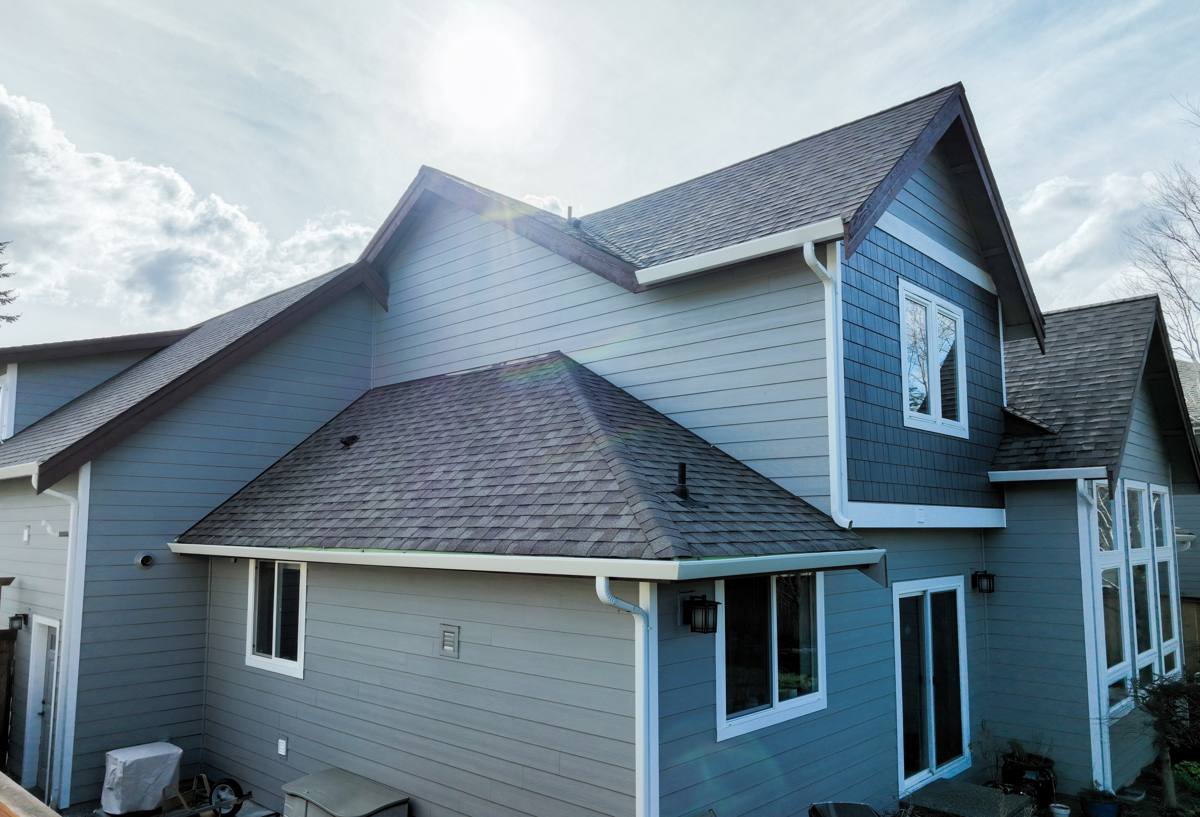
Signs Your Current Siding Is Losing the Fight
Because Cherry Point's exposure is more aggressive than a typical inland property, siding problems tend to show up earlier and more visibly. Before you decide whether you need a full replacement or a patch job, walk your exterior and look for these signs.
- Dark streaking or green-black staining that comes back within weeks of being cleaned
- Moss or algae growth that's thick enough to hold moisture against the wall, not just surface discoloration
- Soft, spongy, or bubbling spots when you press on the siding, especially near the bottom courses and around window trim
- Paint that's failing in patches rather than evenly, which often points to moisture getting in from behind
- Visible cupping, warping, or separation at panel seams and corners
- Rusting or streaking nail heads, a sign fasteners weren't rated for a coastal environment
- A musty smell or visible mold near the interior of exterior walls
Any one of these on its own might be a maintenance issue. Several together, especially on a wall that faces the prevailing wind and weather, usually means the siding system itself has reached the end of its useful life.
What a Correct Siding Replacement Actually Involves
Replacing siding isn't just swapping old boards for new ones. In a climate like Cherry Point's, most of what makes a job last — or fail early — happens in the parts you never see once the new siding is up.
Tearing Off Without Hiding What's Underneath
A proper tear-off removes the old siding down to the sheathing so we can actually see what's there. On coastal properties we routinely find soft sheathing, rusted fasteners, or water staining behind siding that looked fine from the street. Covering that up with new siding just traps the problem — it has to be addressed before anything new goes on.
Water Management: The Part No One Sees
This is the piece that matters most in a wind-driven-rain environment. That means a correctly lapped weather-resistive barrier, properly integrated window and door flashing, kick-out flashing where rooflines meet walls, and consistent drainage gaps so any moisture that does get behind the siding has somewhere to go instead of sitting against the wall. Skipping or rushing this step is the single most common reason siding fails early on exposed coastal homes.
Fastening and Field-Cutting to Spec
Fiber cement siding has manufacturer-specified nailing patterns, fastener types, and clearances for a reason — get them wrong and you void the warranty and invite problems. In a salt-air environment, fastener corrosion resistance matters even more than usual, and cut edges need to be primed and sealed before installation, not after.
Why We Install Only James Hardie Fiber Cement
We don't offer vinyl, LP SmartSide, cedar, or other fiber cement brands as options — not because those products don't have their place, but because we've made a professional call about what holds up best on the coastal homes we work on, including here in Cherry Point. Vinyl is affordable and low-maintenance, but it can warp under sustained heat and impact, and its seams give wind-driven rain more opportunities to work its way in over time. Cedar has real appeal, but it demands ongoing staining or sealing to resist moisture and moss, and a busy season or two of neglect shows fast in this climate. Primed wood products face similar upkeep demands, and other fiber cement brands vary in how well their factory finish and moisture engineering hold up long-term.
| Material | Coastal moisture behavior | Maintenance demand | Typical lifespan in this climate |
|---|---|---|---|
| Vinyl siding | Seams allow wind-driven rain intrusion over time; can warp under heat/impact | Low, but limited repair options | Moderate |
| Cedar siding | Absorbs moisture; prone to moss and rot without upkeep | High — regular sealing/staining | Shorter without diligent care |
| Primed spruce/wood | Similar moisture sensitivity to cedar | High | Shorter without diligent care |
| James Hardie fiber cement | Engineered moisture and freeze-resistance; factory ColorPlus finish resists moss staining | Low | Long, when installed to spec |
James Hardie is non-combustible, holds its factory finish far longer than field-applied paint, and its warranty structure reflects a manufacturer standing behind long-term performance rather than just initial appearance. For a property exposed to Cherry Point's combination of salt, rain, and moss, that's the trade-off we're willing to stand behind.
HZ Products Engineered for This Specific Climate
James Hardie doesn't make one siding formulation for the whole country — its HZ5 product line is engineered specifically for climates with sustained moisture and freeze-thaw cycling, which describes the Pacific Northwest coastline well. That engineering affects how the product resists moisture absorption, how it holds paint adhesion over time, and how it performs through repeated wet-dry cycles rather than a single hard freeze. Choosing the right HZ formulation for the region is part of doing the job correctly, not an upsell.
Our Process, Start to Finish
- On-site inspection: we assess the current siding, sheathing condition, flashing, and trouble spots specific to your exposure and lot.
- Written scope and estimate: a clear, itemized plan — no surprise change orders once the walls are open.
- Tear-off and sheathing repair: old siding comes off, any damaged sheathing gets replaced, and we document what we find.
- Weather barrier and flashing install: the water-management layer goes in correctly, before a single piece of siding is hung.
- Hardie siding installation: installed to manufacturer nailing, clearance, and fastening specifications.
- Final walkthrough: we review the finished work with you and confirm everything is sealed, caulked, and finished to spec.
Cost Factors for a Cherry Point Siding Replacement
Every home is different, but the same general factors drive cost up or down on most projects in this area.
| Factor | Why it matters |
|---|---|
| House size and wall complexity | More corners, gables, and dormers mean more cutting, flashing, and labor time |
| Sheathing/structural repair needed | Coastal moisture exposure often means some hidden repair before new siding goes on |
| Access and site conditions | Sloped lots, tree cover, or tight setbacks affect staging and scaffolding needs |
| Trim and detail work | Window and door trim, fascia, and corner details add material and labor |
| Product selection within the Hardie line | Plank profile, texture, and factory color options vary in cost |
We walk every property in person before quoting, because these factors vary more than most homeowners expect from house to house.
Why Local Experience in Cherry Point Matters
A crew that mostly works drier, inland jobs can still install siding — but they may not build in the extra flashing details, fastener choices, or drainage gaps that a coastal Whatcom County exposure actually needs. Working this stretch of coastline regularly means knowing which walls take the worst of the wind and rain, where moss tends to build up fastest, and what level of water management a given lot actually calls for. That experience shows up in fewer callbacks and siding that's still performing well a decade or two down the road, not just on installation day.
Living With Hardie Siding After Installation
Correctly installed Hardie siding is low-maintenance, but "low" isn't "none" in a moss-prone climate. An occasional gentle rinse to keep moss and algae from getting established, keeping gutters clear so runoff doesn't sheet down the wall, and trimming back vegetation that keeps a wall shaded and damp all go a long way toward protecting your investment. None of this is heavy upkeep — it's the kind of seasonal attention that any coastal Whatcom County home benefits from regardless of siding material.
If your Cherry Point home is showing signs of siding failure, or you're planning ahead before it gets worse, we're happy to walk the property and give you a straightforward, no-pressure estimate — just fill out the form below.