 Blaine Exterior
 Cherry Point's Marine Climate Puts Extra Load on Windows
Homes along Cherry Point sit right up against the Salish Sea, and that shoreline exposure changes what a window has to deal with day to day. It's not just rain — it's salt-laden air moving off the water, wind-driven moisture that finds its way into gaps most inland homes never test, and a long stretch of gray, damp months where windows rarely get a chance to fully dry out. In Whatcom County's marine climate, a window isn't just a piece of glass in a frame. It's a system that has to manage water, air pressure, and temperature swings for years without maintenance drama. When that system is worn out, undersized, or was never installed correctly in the first place, the house pays for it in energy bills, condensation, and slow water damage that's hard to see until it's expensive.
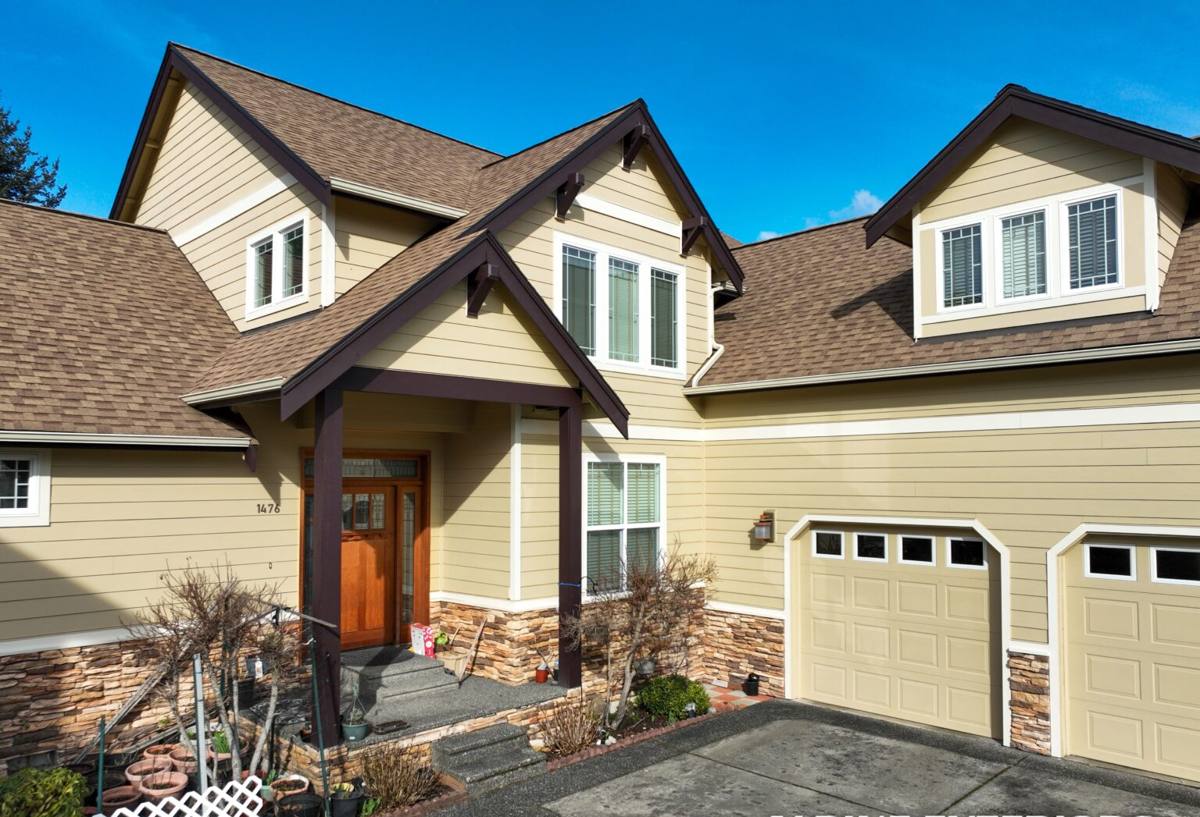
What Salt Air, Driving Rain, and Moss Season Actually Do to a Window
Salt and Corrosion
Salt in the air settles on hardware, tracks, and fasteners. On lower-grade window hardware, that means corrosion starts earlier than it would a few miles inland — hinges bind, locks get stiff, and rollers on sliders start dragging. It's usually gradual enough that homeowners chalk it up to "the window just got old," when really it's a materials and hardware issue specific to living this close to the water.
Wind-Driven Rain and Water Intrusion
Straight-down rain is easy for almost any window to shed. Wind-driven rain coming in sideways off the water is a different problem — it tests the flashing, the sill pan, and every sealant joint around the frame. If any of those details were skipped or done poorly during the original install, this is where it shows up: staining below the sill, soft trim, or a musty smell in the wall cavity long before you ever see visible mold.
Moss, Algae, and UV in the Shoulder Seasons
Whatcom County's long wet season keeps surfaces damp for extended stretches, which is exactly what moss and algae need to take hold on north-facing trim, sills, and anywhere water sits instead of draining. That constant moisture also breaks down cheap exterior sealants and low-quality vinyl surfaces faster than a drier climate would, which is why product choice and detailing matter more here than in a lot of the country.
What "Energy-Efficient" Should Actually Mean in This Climate
"Energy-efficient" gets used as a marketing label a lot, but for a Cherry Point home it should mean something specific: a window that keeps conditioned air in, keeps driving moisture out, and doesn't turn into a cold, drafty liability the first time a winter storm comes off the water. Two ratings matter most:
- U-factor — how well the window resists heat loss. Lower is better for our climate, since we're heating far more months of the year than we're cooling.
- Solar Heat Gain Coefficient (SHGC) — how much solar heat passes through the glass. In the Pacific Northwest this matters less than in sunnier climates, but it still affects comfort on the exposed sides of a house.
Beyond the glass package, frame material has a real impact on how a window holds up to salt air and constant moisture over time. Here's how the common options stack up for a coastal Whatcom County home:
| Frame Material | Upfront Cost | Coastal Durability | Maintenance Needs |
|---|---|---|---|
| Vinyl (standard grade) | Lowest | Fair — can warp or discolor under prolonged UV and salt exposure | Low, but hardware may corrode sooner near the shoreline |
| Vinyl (reinforced, marine-rated hardware) | Moderate | Good — resists moisture well, corrosion-resistant hardware | Low |
| Fiberglass | Moderate to higher | Very good — dimensionally stable, handles temperature swings and moisture without warping | Low |
| Wood-clad | Highest | Good if detailed and finished correctly, but the wood core is the most sensitive to moisture intrusion | Higher — finish and joints need periodic attention |
None of these is automatically "wrong." The right call depends on the home's exposure, the budget, and how much upkeep the owner actually wants to do. Our job is to walk through those trade-offs honestly rather than push whatever has the best margin.
Signs Your Current Windows Are Working Against You
Most homeowners don't replace windows because they woke up thinking about U-factors — they replace them because something's been bothering them for a while. If any of these sound familiar, it's worth having the windows looked at:
- Condensation building up between the panes (a sign the seal has failed and the gas fill is gone)
- A noticeable draft near the frame even when the window is fully latched
- Rooms near exterior windows that are harder to heat than the rest of the house
- Visible staining, soft wood, or bubbling paint on the trim below a window
- Locks, cranks, or rollers that have gotten stiff or corroded
- Moss or algae buildup on sills or trim that keeps coming back within a season of cleaning
- Street noise or wind noise that seems louder than it should be
Any one of these on its own might not mean much. Several of them together, especially on the sides of the house that face the water or catch the prevailing wind, usually means the windows are past the point where caulk and weatherstripping fix the problem.
What a Correct Installation Involves
The window unit itself only does half the job — the other half is how it's tied into the wall. This is where most of the long-term water problems in this climate actually start, not with the product itself.
Flashing and Water Management
A sill pan and properly lapped flashing (so upper layers overlap lower layers, the way water actually runs) give any water that gets past the window a way out instead of a way in. Skipping or reversing this step is one of the most common causes of hidden rot behind a window that "looks fine" from the outside.
Sealing and Insulating the Rough Opening
The gap between the window frame and the rough opening needs to be air-sealed and insulated correctly — not just stuffed with fiberglass, which does little to stop air movement, and not over-filled with expanding foam, which can bow the frame and cause the window to operate poorly. Getting this detail right is a big part of why two houses with the "same" window can perform very differently.
Fastening and Structural Considerations
Wind exposure near the water means fastening schedules matter — enough attachment points, in the right locations, to keep the window performing under wind loads that push and pull on the frame during storms. This is a detail that's easy to shortcut and hard to catch after the trim goes back on.
Our Process for Cherry Point Homes
We keep the process straightforward and try to remove the guesswork for the homeowner:
- On-site assessment — we look at each window's current condition, the exposure on each side of the house, and any existing water or draft issues before recommending anything.
- Product selection based on exposure — the side of the house facing the water or prevailing wind may call for a different frame material or hardware grade than a sheltered side.
- Proper opening prep — removing the old unit carefully, inspecting the sheathing and framing underneath for hidden moisture damage before anything new goes in.
- Flashing, sealing, and fastening to spec — done in the order that actually manages water, not just what's fastest.
- Interior and exterior finish work — trim, caulking, and cleanup so the job looks as good as it performs.
- Final walkthrough — operating every window with the homeowner and answering questions about care and warranty before we consider the job done.
Why Hiring a Crew That Already Works This Area Matters
A contractor who mostly works drier, more sheltered inland areas can still install a window competently on paper and still get the details wrong for Cherry Point's conditions — because the failure points here are different. Knowing which sides of a coastal home take the worst of the wind-driven rain, which hardware grades actually hold up to salt air over years rather than months, and how to detail flashing for a site that stays damp longer than most of the region isn't something you learn from a spec sheet. It comes from doing the work here repeatedly and seeing how installations perform a few winters later. That local track record is also why we're comfortable being straightforward about trade-offs instead of just selling the highest-margin product — we're the ones who'd hear about it if a shortcut failed.
Living With New Windows: Maintenance in a Salt and Moss Climate
Even a correctly installed, high-quality window benefits from a little seasonal attention in this environment. Rinsing salt residue off frames and hardware a few times a year helps hardware last longer. Keeping weep holes (the small drainage openings along the bottom of the frame) clear of debris and moss lets the window shed water the way it's designed to. And keeping an eye on caulking around the frame — recaulking when it starts to crack or pull away — is a small task that prevents a much bigger repair down the road. None of this is heavy maintenance, but skipping it in a climate like ours shortens a window's useful life faster than it would somewhere drier.
If your Cherry Point home has windows that feel drafty, foggy between the panes, or just older than they should be, we're happy to take a look and give you a straightforward assessment — no pressure, no upsell script. Fill out the form below for a free estimate.