 Blaine Exterior
 Storm Damage Roofing in the California Creek Area
California Creek sits close enough to the water and open farmland that homes here take weather from more than one direction. Wind comes off the Strait and rolls across open fields with little to slow it down, salt air works into fasteners and flashing faster than it does further inland, and the long stretch of wet months keeps roofs saturated for days after a storm passes. If you've had a wind event, a hard rain that found its way inside, or a branch come down on the roof, the repair needs to account for all of that — not just patch the visible damage and move on.
This page covers storm damage roof repair specifically for the California Creek neighborhood in Blaine, Washington, Whatcom County. It's meant to help you understand what actually happened to your roof, what a correct repair looks like, and how to tell a thorough job from a rushed one.
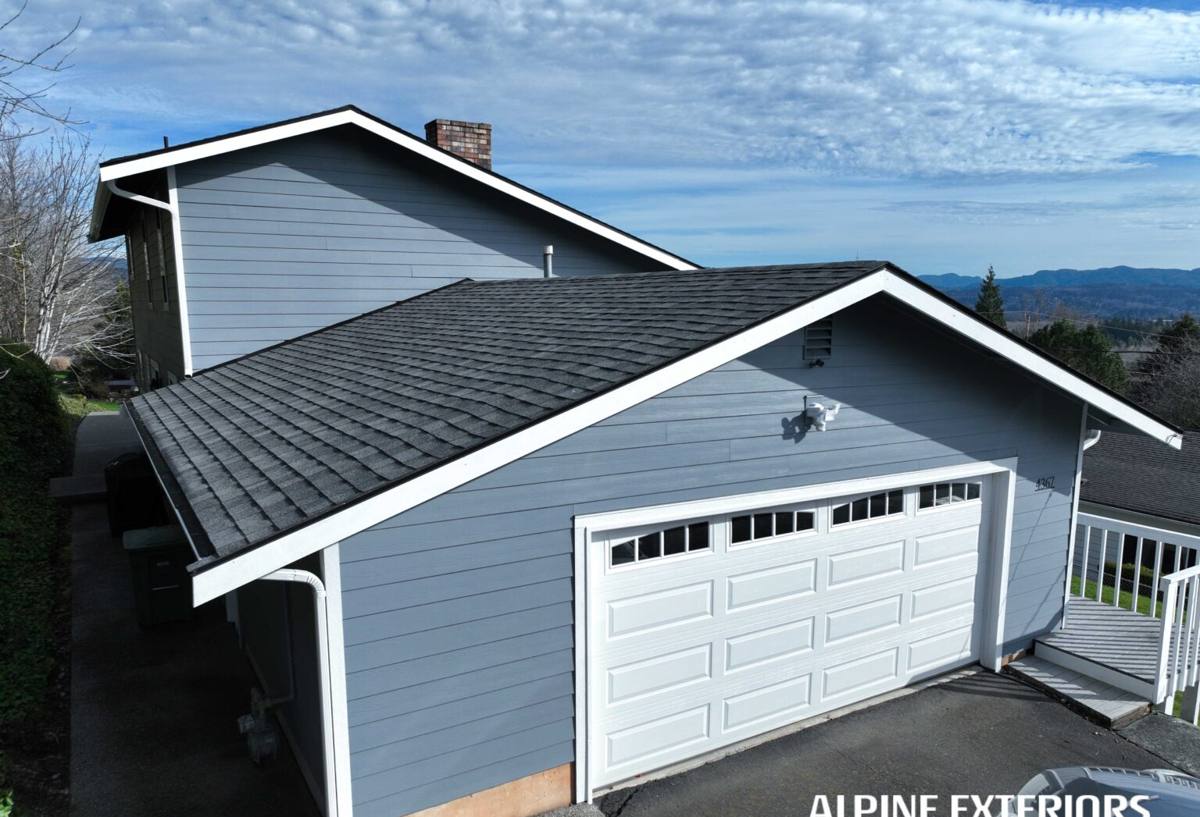
Why California Creek Roofs Take a Different Kind of Beating
Salt Air and Metal Fatigue
Homes in this part of Whatcom County are close enough to Semiahmoo Bay and the Strait of Georgia that salt-laden air is a constant, low-grade stressor on anything metal. Nails, screws, flashing, and gutter hardware corrode faster here than they would twenty miles inland. A storm doesn't have to be severe to expose weaknesses that salt air has already been working on for years — a fastener that's lost half its holding strength to corrosion can pop loose in a moderate gust that a fresh fastener would shrug off.
Driving Rain and Wind-Driven Water
Open exposure means wind-driven rain, not just rain falling straight down. That matters because a roof covering can be intact and still leak if water is being pushed sideways and upward under shingle tabs, around vent boots, or into flashing laps that were only ever built to shed water moving downhill. After a storm, we're checking those pressure points specifically, not just scanning for missing shingles.
Moss and Extended Wet Season
Whatcom County's moss season runs long. Moss holds moisture against the roof surface for weeks at a time, which softens shingle mat, lifts edges, and gives wind something to grab onto during a storm. A roof with heavy moss going into a windstorm is more likely to lose material than a clean one, and moss-related lifting can look like storm damage even when weather only finished what moss started. Part of an honest inspection is telling you which is which.
What Storm Damage Actually Looks Like Here
Not all storm damage is obvious from the ground. Some of what we find on California Creek roofs after a wind or rain event:
- Shingles that are lifted, creased, or torn but not fully missing — easy to miss from the driveway
- Fasteners backed out or corroded loose, letting shingles shift without falling off
- Flashing pulled away from chimneys, walls, or roof-to-roof transitions
- Vent boots and pipe collars cracked or torn loose by wind flex
- Gutters pulled off their hangers or packed with debris, backing water up under the roof edge
- Granule loss in the debris at the base of downspouts, a sign of impact or abrasion damage
- Soft spots or staining on interior ceilings that show up days after the storm, once water has worked its way through
That last one is why we recommend an inspection even when nothing looks obviously wrong from outside. Water can travel a surprising distance under a roof covering before it shows up as a stain indoors, and by the time it's visible on the ceiling, it's usually been there a while.
Our Process for Storm Damage Calls
1. Emergency Response and Tarping
If the roof is actively leaking or has an open area exposed to weather, the first priority is stopping further water intrusion — a properly secured tarp, not a quick staple job that tears loose in the next gust. This buys time to do the repair right instead of rushing it.
2. Full Roof Inspection, Not Just the Damaged Spot
We walk the whole roof, not just the area you're worried about. Storms rarely damage one isolated spot — if wind lifted shingles on one slope, it's worth checking whether it stressed flashing or fasteners elsewhere too. We also note pre-existing wear (moss lift, aging flashing, worn boots) separately from storm damage, so you know what's from this event and what was already heading toward a repair.
3. Documentation for Insurance
We document what we find with enough detail to support an insurance claim if you're filing one — clear notes on the type of damage, likely cause, and location. We're not an insurance adjuster and don't represent the insurance company, but a clear, honest inspection record makes the claims conversation easier.
4. The Repair Itself
Repairs are matched to what's actually needed: replacing damaged shingles with compatible material, resetting or replacing corroded fasteners, rebuilding flashing details rather than just caulking over a gap, and reattaching or replacing damaged gutter sections. Caulk and sealant have a place in roofing, but they're not a substitute for proper flashing work — we use them as a finishing detail, not as the repair itself.
5. Follow-Up Check
For larger repairs, we recommend a follow-up look after the next significant rain to confirm the fix is holding under real conditions, not just dry-weather inspection conditions.
Repair vs. Replace: How We Make That Call
| Factor | Leans Toward Repair | Leans Toward Replacement |
|---|---|---|
| Roof age | Under roughly 12–15 years, healthy field shingles elsewhere | Near or past expected service life for the material |
| Damage extent | Isolated to one slope or a handful of shingles | Scattered across multiple slopes or repeated storm events |
| Underlying deck condition | Deck is sound, no rot found during inspection | Soft decking or rot found once shingles are pulled back |
| Moss and wear history | Minimal moss, roof otherwise well-maintained | Heavy moss history with widespread granule loss |
| Insurance scope | Claim covers targeted repair | Claim scope or adjuster assessment supports full replacement |
We'll walk you through where your roof falls on this before recommending either path — the goal is the option that actually solves the problem, not the bigger invoice.
What a Rushed Storm Repair Misses
After a widespread storm, it's common to see crews moving fast through a neighborhood doing surface patches — a shingle swapped here, a bead of caulk there. In an area like California Creek, that approach tends to miss the things that actually caused the damage:
- Corroded fasteners left in place because they're not visibly "broken," even though they're weakened
- Flashing laps that weren't rebuilt, just sealed over — a fix that fails again in the next wind-driven rain
- Moss left under repaired shingles, guaranteeing the same lifting problem returns
- No check of the roof beyond the immediately visible damage
A repair that doesn't account for the salt air, wind exposure, and moss conditions specific to this area is a repair that's likely to need redoing after the next storm season.
Why a Crew That Already Works California Creek Matters
A crew that regularly works this stretch of Whatcom County knows which roof ages and materials tend to show wind damage first, how far wind-driven rain typically travels up a roof slope here, and what normal moss buildup looks like versus damage. That local pattern recognition speeds up the inspection and makes the repair more targeted — less guessing, less over-scoping, less missing something that shows up as a leak three storms later.
Storm Damage Repair Checklist
- Tarp any active leak or exposed area before it rains again
- Photograph visible damage from the ground for your own records
- Check attic or ceiling areas below the damaged section for early staining
- Get a full-roof inspection, not just a look at the obvious spot
- Ask whether findings are storm-related or pre-existing wear, and get that in writing
- Confirm whether the scope is a targeted repair or if replacement makes more sense
- Keep inspection documentation for your insurance file
Get an Honest Look at Your Roof
If a recent storm has left you with missing shingles, a leak, or just a nagging feeling something's not right up there, we're glad to come take an honest look. We'll tell you plainly what's storm damage, what's pre-existing wear, and what your real options are — no upsell, no guesswork. Reach out below for a free, no-pressure estimate.